Wednesday, May 13, 2020

Audio + the inevitable

 
Lots of trouble sleeping since the temporary suspension of my before-dawn commute through hellish traffic forty miles to Irvine, down the perpetually under-construction Golden State Freeway aka Interstate-5 (only Angelenos by the way seem to append "the" before a freeway or highway name, an echo of the days when we had names for freeways--even parkways in the first in the world, my local Pasadena Freeway/ originally Arroyo Seco Parkway, and not those ugly numbers). Thus, audiobooks or podcasts as soporifics multiply.

On that commute, I'd been forever listening to at last count 52% of The Count of Monte Cristo. It started out great in prison scenes after the arrest, but they were over soon and the rest of this feels like an endless gaslighting of protagonist's accomplices who framed him.

Having finished similar weighty books from then, Les Miserables, The Hunchback of Notre Dame, Anna Karenina, The Idiot, (half of--gave up) David Copperfield, Middlemarch, Adam Bede, Bleak House (half--will resume), Dracula, Gulliver's Travels, Redburn, The Betrothed, and both Notes from Underground and Notes from a Dead House, well, I needed a break from classics. I had Paul Murray's novel Skippy Dies on my shelf and when the Audible cast of characters for it appeared, I figured--as casts generally satisfy (even if Dracula despite their efforts was surprisingly boring on re-reading as hearing it decades on), to give it a try. The fact its length was about what I'd already invested in Count dissuaded me a bit. But nearly anything save, maybe, Atlas Shrugged or Dune (the former is a joke, but my elder son likes the latter, as he's immersed in it now; one of those I've been asked if I've ever read it and no, I have not--I keep thinking of Sting in a metal thong), seemed a wise choice. As an aside, showing how small the old sod is, I gave a paper on Beckett at an Irish Studies conference a decade back; the eminent drama scholar who's Paul's father was there. Not sure if he felt like he had to hear my talk before he left to prepare his keynote speech for dinner that night, but he did without comment; he did not seem enthused. Not the first or the last presentation in which I received no questions at all from anyone. But I had sat on a panel with him years before, at another one in Hungary, and that I recall went well. His biography on Sean O'Casey's great, by the by, so check it out.

Well, deep into the pages of Skippy, all about a school standing in for the very prestigious boy's "college" in Irish terms, the preparatory Dublin academy Blackrock run once by the now-disappearing ranks of the Holy Ghost Fathers (renamed Spiritans), it's Seabrook staffed by their equivalents home from the African missions, the Paracletes. Lots of accurately rendered off-color to say the least enjoyable adolescent banter and insults pepper the conversations of the lads, while their instructors and erstwhile mentors try to deal with their own marital, personal, and institutional difficulties. The plot spins about into quantum physics, sexual awakenings, drugs, and the usual drudgery universal now of teaching to the test. Deviating from this, Howard Fallon decides to bring his restive history class out into the streets, trekking up to the abandoned (which it was back then in fact at Kilmainham) WWI memorial in Islandbridge, a derelict neighborhood of scrap metal and seedy pushers.

The gist of this is Howard's passionate narration of the "D Company" of that city's elite schoolboys who'd enlisted en masse to sail off to glory in 1914 on. They were decimated at Suvla Bay, shadowed by the now-more-famous Gallipoli, and their survivors returned to be ignored at best and derided even more by an Irish nationalism bent on elevating the sacrifices of those who'd fought the British rather than those who joined their imperial cause. The episode Murray conjures up powerfully, especially as heard after dark in my bed.

Which brings me to my guest access a couple of years ago. I used Ancestry-com to find out that my grandfather served in that war. From what I can gather, he'd been born in Co Roscommon at our family's farm. He'd left to mine coal in Bolton. While in England, he'd have been about 19, I estimate, when in 1917 he entered the ranks of the King's Own Lancashire Regiment. I'm not sure if he willingly joined or was conscripted. Records do not indicate place-of-birth for British Army ranks, strangely to me, so the estimates of how many Irish-born men served in the war cannot be discerned. As Kevin Myers' study which I am reading now explains, about 40,000 died from purportedly "Irish" regiments, although not all of them were even Irish. Contrarily, a lot of "English" or Scottish or Welsh formations supplemented their recruits, volunteering or not, with Irish. So, it's jumbled. I'd like to find out more, but even the Ancestry site could only show me the dim page of his enlistment. And that vanished, as even the photo thumbnail I have of it seems to have disappeared no less irretrievably than the spirit of the titular Skippy, who as we know from page one, like Malone in Beckett's trilogy, gets taken off this mortal coil too soon. Is death ever on time?

Image credit.

Tuesday, May 12, 2020

Death + Didascalicon


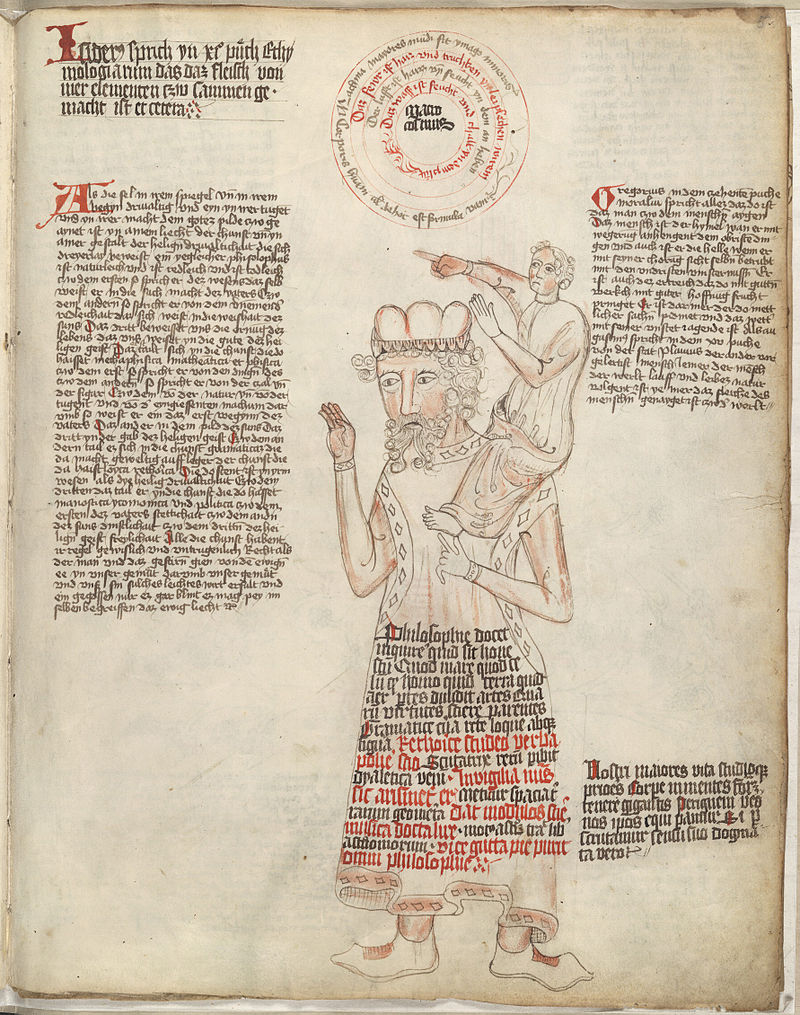
Last post began with a promised juxtaposition that stayed delayed. Too much grading intervened, too many importuning appeals. Here's the connection. In Rik Van Nieuwenhove's An Introduction to Medieval Theology (2012), the Didascalicon of Hugh of St Victor (ca. 1096-1141; pictured above) gets its moment. Don't be scared off by the title, as it's a guide to what, as you can see in my self-description on this very blog, is the medieval progression of study. The trivium's triple way from grammar to rhetoric to logic, whose remnant may be Freshman Comp (now "First-Year" to avoid gender), and then the more abstract realms of the four paths as the quadrivium into arithmetic, astronomy, geometry, and music. In turn, wisdom under the guise of theologia rules as Queen over the sciences. Literally, the fields of knowledge, from the Latin scire, to know, not our modern convention.
These seven liberal arts show the student freed from manual labor the direction to follow.

"The start of learning, thus, lies in reading, but its consummation lies in meditation; which, if any man will learn to love it very intimately and will desire to be engaged very frequently upon it, renders his life pleasant indeed, and provides the greatest consolation to him in his trials. This especially it is which takes the soul away from the noise of earthly business and makes it have even in this life a kind of foretaste of the sweetness of the eternal quiet."

That last phrase lingers like poetry. With less noise lately, more of us get squirrely, but some of us stay content. Turning off the machine and tuning in to nature, and the mind, and soul.

I'm trying to write shorter pieces for the blog, as looking back I can see I wrote ones that the ruder folk online dismiss as tl;dr (too long, didn't read). Philistines leaving graffiti, IMHO.

All the same, I am not attempting always to weave together various threads. More like the commonplace book I originally thought this blog'd be, I'll be inserting some reviews from the past couple of years stored up, as well as some even before that, Italian focused often as they were preparation for my visit there in what seems, given our already altered, or at least interrupted, collective memory, a while ago, rather than the few years on the calendar count.

What I'm musing about for much of my life: how we construct our notions of death and what either does or does not await us afterwards. Teaching a Contemporary Fine Arts, I offer a dozen very flexible theme choices so students can select an approach to slot in their own works to analyze. At first, when I added to the boring original six the course designer plunked down, another much more engaging, naturally six, and revising the six previous ones, I hesitated a second before creating one centered around death and mortality. It's been the most chosen by far each term. Sometimes half of those enrolled opt for it eagerly.

And in an already annoying to me media blitz where infection rates rise next to CNN sharing only one topic for two-plus months and counting, and where "uncertain times" came two weeks into this shutdown in two separate brands of cars advertised on air, and then a month in, the "we're with you poor brutes who have to go out and be nurses and DoorDash drivers" self-congratulatory missives, and now products pitched at the housebound or unsheltered in place, eager as the latest off-road jeep spiel starts, "from Park to Drive"--well, it's more apt than averring as I might let's have neighborhood book reads of Defoe's Journal of the Plague Year (can't get it from the library e-books as it's way booked) and the Decameron. I leave aside Camus' The Plague as it's allegory, but I do add to the shelf my own pick at the end.

Of course, I've been musing on this mortal coil and its contortions. I have my own loss that I keep private. Not sure if not being able to attend what would have been three (so far) funerals indirectly hastened to be sure by the virus and the ripple effect on hospitals, nursing homes, and the speed at which a kid drives a McLaren sports car and kills a certain pedestrian on an empty downtown L.A. street is a blessing or curse. But I am leaving off prognostications. Only noting my bemusement when a "Plan-demic" video was posted on a discussion forum, and seeing at the bottom of its conspiratorial manifesto a tag line to go to Alex J's Info-W's to purchase a 95-whatever mask. Profiting off panic, survivalist suckers.

For now, I'm reflecting, not predicting. And trying to parse if "through July" as issued by the California governor just now means shut-in until the end of June or of July itself. So, my reading will, deo volente, live on. As in this via Harper's weekly archive of arch finds from its 160 or so years of publication. As a subscriber, I unlock the magic door behind a paywall.

This pdf reveals the late John Berger's Sept. 2008 list "On the Economy of the Dead." I've been mulling it over as the past week I'd watched too the Amazon series Upload, all about the attempts of corporations in 2033 to create theme-park-resorts for those whose consciousness has been beamed onto a hard drive. Then the simalacra of the un-dead, as avatars, roam above in their digitally run paradise. With the supervision of their customer service reps in human form at keyboards who oversee their accounts--and as long as their earthbound relatives or loved ones foot the bill for their continued upkeep and fancy AI digs.

Which in turn reminds me strongly, in this lockdown phase of our own time, this 2006 novel. See my (admittedly mixed, may be spoilers) review of The Brief History of the Dead.
Have fun matching up which number you choose to align with long-gone Hugh of St. Victor.
  1. The dead surround the living. The living are the core of the dead. In this core are the dimensions of time and space. What surrounds the core is timelessness.
  2. Between the core and its surroundings there are exchanges, which are not usually clear. All religions have been concerned with making them clearer. The credibility of religion depends upon the clarity of certain unusual exchanges. The mystifications of religion are the result of trying to produce such exchanges systematically.
  3. The rarity of clear exchange is due to the rarity of what can cross intact the frontier between timelessness and time.
  4. To see the dead as the individuals they once were tends to obscure their nature. Try to consider the living as we might assume the dead to do: collectively. The collective would accrue not only across space but also throughout time. It would include all those who had ever lived. And so we would also be thinking of the dead. The living reduce the dead to those who have lived, yet the dead already include the living in their own great collective.
  5. The dead inhabit a timeless moment of construction continually rebegun. The construction is the state of the universe at any instant.
  6. According to their memory of life, the dead know the moment of construction as, also, a moment of collapse. Having lived, the dead can never be inert.
  7. If the dead live in a timeless moment, how can they have a memory? They remember no more than being thrown into time, as does everything which existed or exists.
  8. The difference between the dead and the unborn is that the dead have this memory. As the number of dead increases, the memory enlarges.
  9. The memory of the dead existing in timelessness may be thought of as a form of imagination concerning the possible. This imagination is close to (resides in) God, but I do not know how.
  10. In the world of the living there is an equivalent but contrary phenomenon. The living sometimes experience timelessness, as revealed in sleep, ecstasy, instants of extreme danger, orgasm, and perhaps in the experience of dying itself. During these instants the living imagination covers the entire field of experience and overruns the contours of the individual life or death. It touches the waiting imagination of the dead.
  11. What is the relation of the dead to what has not yet happened, to the future? All the future is the construction in which their “imagination” is engaged.
  12. How do the living lie with the dead? Until the dehumanization of society by capitalism, all the living awaited the experience of the dead. It was their ultimate future. By themselves the living were incomplete. Thus living and dead were interdependent. Always. Only a uniquely modern form of egotism has broken this interdependence. With disastrous results for the living, who now think of the dead as eliminated.

Saturday, May 9, 2020

Dwarf, Shoulder, Giant


Finding in juxtaposition very divergent commentary can reveal surprising connections. These serendipitous discoveries, one of my M.A. profs warned us, did not please him when inserted into essays. He taught us Shakespeare, the Jacobeans, some recondite philosophy in truth-claims I hated, and Milton. He hated it when he'd read an academic foray that suddenly, say, for example as this was a seminar back in 1984, brought in a passage said critic had just been perusing on her pillow the night before from, say, the bestselling Stephen King yarn Pet Semetary to illustrate a passage of, I dunno, Areopagitica. The fact I had to look up what reached the NY Times top of the charts that Orwellian year shows how out of touch I was with what the Anglophone world enjoyed beyond my academia.

Nonetheless, with a shock the other day, I tallied up my own chronicle of a life spent among admittedly far less sylvan and delightfully liberal arts campus classrooms as that one in Claremont, and I figured out I'm in my thirty-sixth (I thought it was thirty-three, the age of perfection for medievals as that is when Jesus died) year of teaching. Having begun it, as a 7-12 grade sub while attending said grad school, my first year out of college, before entering UCLA that fall for my Ph.D.

I've been taken with an odd compulsion to finally read a book that helped nudge Thomas Merton towards his faith and vocation. A sign of the times when one'd pass Scribner's window display in Manhattan and see none other than Etienne Gilson's The Spirit of Mediaeval Philosophy staring back. Merton bought it. His life took the direction we know, for better as well as for his own dangers to his quest along the uneven path as a monk towards learning and folly, holy wisdom and human passion.

Anyhow, I had a battered secondhand copy (rescued from the UCLA Newman Cente's discard bin, tellingly, of my own collegiate era) of that 1938 translation of his Gifford Lectures given, admitted in Gilson's casual aside in the book's afterward, to an audience of non-philosophers (replete with Latin untranslated and all the erudition expected of undergrads like Merton, I suppose, of Cambridge and Columbia eminence, as well as whomever Gilson delivered his twenty talks to back in 1932 or so at Edinburgh university. To think that such a title would 1) be sold like a Stephen King novel by a bookseller 2) be bought instantly on impulse by an admittedly brilliant college student 3) furthermore comprehended by him, boggles my mind, perched as if a dwarf on the shoulders of giants, as Bernard of Chartres (living at least until 1124) is said to have invented that analogy, in the words of John of Salisbury. Of course, Gilson uses that enduring image in his own lessons, and that's a neat turnabout.

For, after having finished the lapidary construction, where no sentence sidled in as superfluous, of Gilson's study, I wanted more context on intellectual history back then. Rik Van Nieuwenhove's An Introduction to Medieval Theology filled that gap. I'd had assigned David Knowles' The Impact of Medieval Thought and Friedrich Heer's The Medieval World for respectively my Medieval Philosophy and my history of ideas in the Middle Ages undergrad electives (maybe I had a bit of Merton's aspiration in me, despite the decline of Western civ), but as for a specifically theological survey, surprisingly there's none to balance the philosophical ones of Fr Copleston, Anthony Kenny, Gilson himself, his student Armand Maurer, or the podcast-turned-popularizations of Peter Adamson.

More about what I found by that professor, who intriguingly to me teaches at tech-heavy University of Limerick, where I'd once given explored the archives by the Shannon one day, next blog posting.

Friday, May 8, 2020

Distancing + Dao


I've been off the blog for a while. As I mentioned to a few faithful friends, I've kept a lower profile. My employment is not guaranteed and my tendency to speak frankly has met with my diminished expression of opinions on subjects deemed too controversial or retrograde for comfort. And, I teach about the dangers of groupthink and the necessity for caution and reason in putting out one's ideas. My students get my mini-rants about the challenges of honest communication in what's lately been deemed a "cancel culture." A visit to contrarian contributors at Quillette documents its impacts.

However, there's a lot I've wanted to chime in on. So, I am earning back online. My article in OnePeterFive yesterday represents my interest in a long-standing phenomenon, which I've been fascinated with for decades. How countercultural or marginal figures in the media and in activism may drift in their views as they mature. Not a facile "right" leaning or a "libertarian" niche, but one instead that takes from what's been called for lack of better phrasing the place in political typography charted as "left-libertarian." Not as communal as principled anarchism, maybe more an interpretation of the Daodejing (fka Tao te ching) as a collection of suggestions for not tuning out or dropping out, but rather a meditative anthology on the wisdom of opting out of the maniacal version of "social justice" which denigrates nobody but those of a particular category, which happens to be my own.

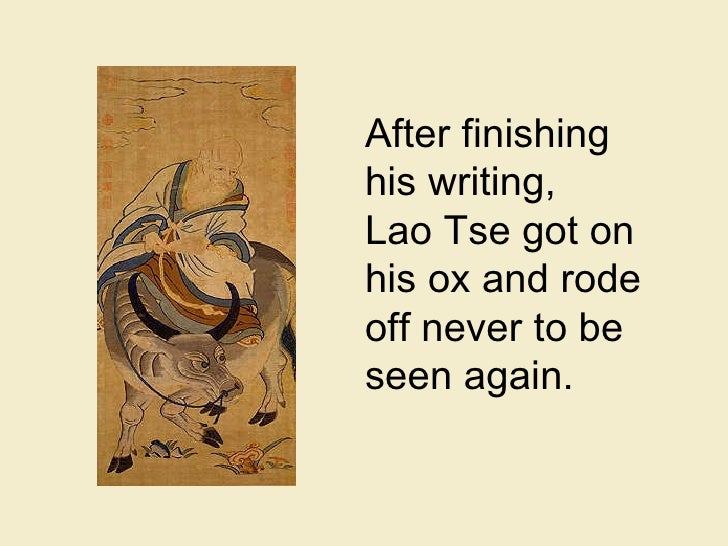
How can concepts attributed legendarily to Lao Tse's dictation as he stepped off of his ox and dictated to the gatekeeper before the sage departed China (his insights in about 5000 characters can be read in English in about 70 minutes) be tied into a situation as we find ourselves in, dodging each other's rhetorical brickbats and even before the phrase "social distancing" became literally overnight the new normal for billions of us, seeking a safe space from those we offend simply by being born this way?

That was some convoluted sentence. But as I think as I type, for better or worse, I found I have a theme to contemplate. How much do we distance ourselves from what threatens us, or unsettles us?

“The Intelligent Catholic’s Guide to John Waters.”

 john waters

“The Intelligent Catholic’s Guide to John Waters.” OnePeterFive 5/7/20

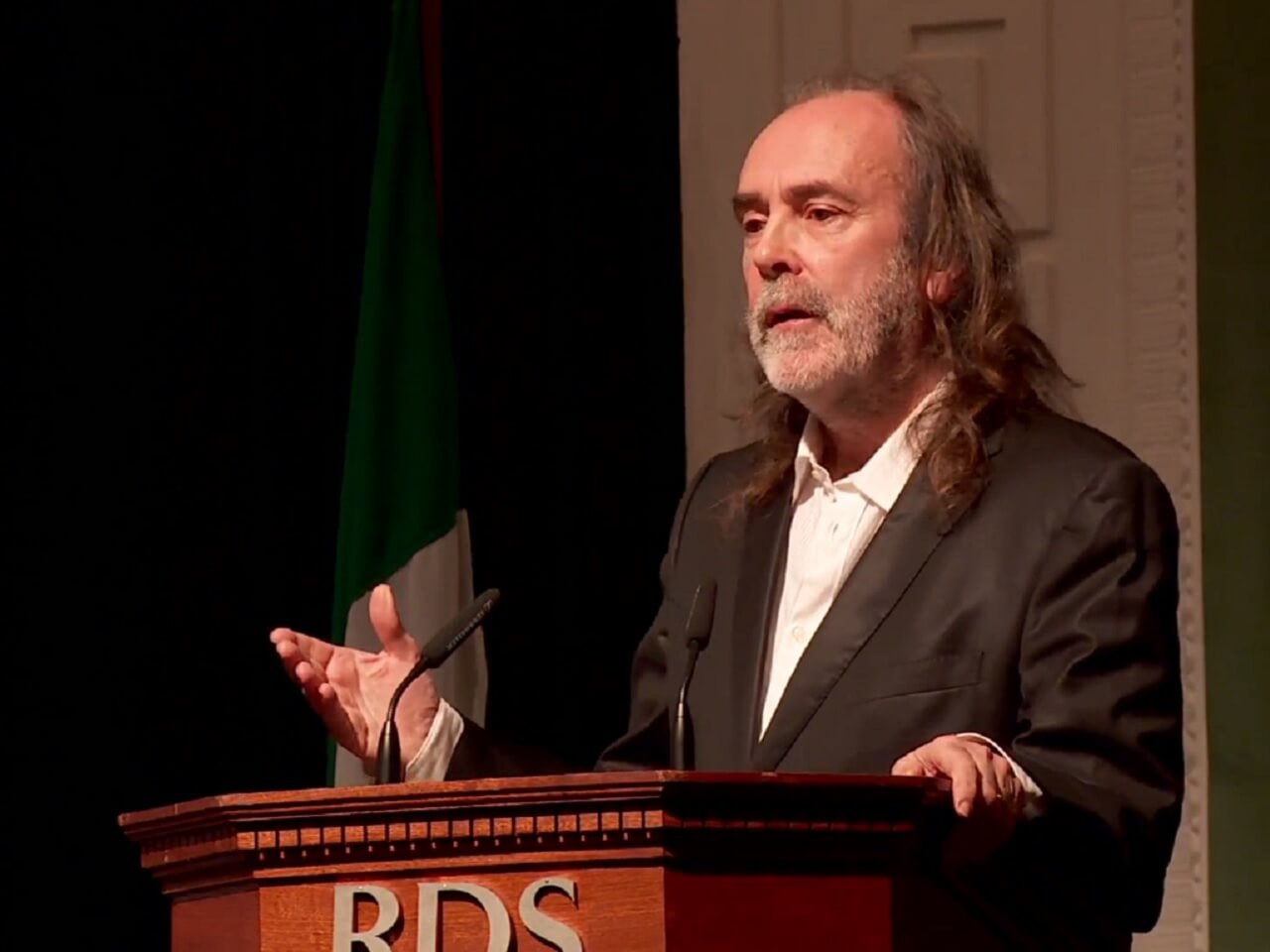
When a maverick journalist opposes popular opinion, at least as promoted by prominent media, what happens next? For rock critic turned cultural commentator John Waters, it's condemnation followed by self-imposed exile from Dublin's left-liberal, bien-pensant paper-of-record, The Irish Times.

This unrepentant dissident, not to be confused by Americans with Baltimore's cult icon and iconoclastic filmmaker, defends his patch of emerald turf against our new world order. Not (only) that of the Bushes, but of those who banish any trace of transcendence. As a longtime correspondent, Waters speaks for a “Peter Pan generation” who entered a dream-scape never glimpsed by their progenitors. Born in 1955, he and his peers from the 1960s through the 80s found themselves, boosted by a Celtic Tiger economic engine, “as foreigners working from home and emigrants in our own land.” They ushered in an “unassailable” secular agenda, rejecting Catholic, communal, rural-dominant mores once and for all.

John Waters continues his assault on post-Christian Ireland in Give Us Back the Bad Roads, his ninth book (2019). His first, a surprise bestseller Jiving at the Crossroads (1990) roughly coincided with his father's death. The period since both events unfolds in fits and starts, as the son addresses that humble mail-coach driver in a small town in Co. Roscommon, who taught him the value of manual labor and the trust in tradition. (As a relevant aside, to show how small Ireland’s networks of who-knows-who remain, my family at their farmhouse—now abandoned as all my relatives emigrated—would have gotten their post delivered by Waters and son, near the first village north of their own market-town.)

John’s career began covering music gigs for Hot Press, an upstart newspaper whose emergence proved well-timed with the punk explosion, hedonistic excess, and the demands of those raised in the wake of Vatican II to become not “the Pope’s children” addressed by John Paul II in his hyped 1979 tour, but a generation freed from clerical submission, censored expression, and class-bound economic stagnation. The results of this leap into liberation led not to freedom but to incarceration within a cunning and callow bureaucracy bent on enforcing standards of a politically-correct generation, his mates, and heirs.

This blow-back fuels Waters' longstanding determination in print and by his own interventions with similarly suffering fellow Irish families to defend the “blood link” of relationships, against referenda on “divorce-by-demand,” government intervention in the cause of “children's rights,” same-sex marriage, and legal abortion. Quixotic as this principled opposition remains in Ireland's Anglo-Americanized monoculture demolishing its customary “moral paradigm” that a younger, brash, “up from the country” Waters had volunteered to undermine, his mature self favors “common sense.” Although caricatured as a Catholic bigot by his former colleagues--“hired guns”-- and their “progressive” political-clerical cronies, Waters grounds his critique against the imposition of consumerism and corporate “rewards.”

These have obliterated his father's craft and his native town's legacy of community, sly solidarity, and respect for humble dignity. Waters witnesses the transition from his job as a railway clerk to those he and his eager counterparts sought as if Euro-topia at last, but winding up a “screen slave” or a “cubicle hostage.” The trajectory Waters has mapped in his seven intervening books gradually finds its aim. He tires of the distracted, profit-mad, sex-and-drug addled consumerism aided and abetted by his cohort.

Waters' focus, despite the repetitions (common as his many collections blending reporting, research, memoir, and cultural critique often resurrect his past and present predicaments as a prophet without honor in his homeland) sharpens. Returning to his paternal townland in a “strange collision of farmland and wilderness” overlooking Ben Bulben on the Atlantic shore (and Yeats' grave), John Waters watches turf “smoulder like Gabriel Byrne.” Bent on avoiding school on Monday, he had tried to “concentrate like Uri Geller until I conjured up a pain in my stomach.” Tellingly, Waters warns of what will transpire if the embattled “capacity to be human” gets trodden down by an Irish mob sworn to steamroller over the valuable contributions of a tradition rooted in centuries of hard-won verities rather than clogged with the media's “effluent and lies.” Waters imagines a lawn laid atop a yard of concrete: “it may briefly give the impression of health, but eventually, for obvious reason, it withers away.” Without a “consciousness of the absolute,” people will fail to nourish a mentality devoid of religion and dismissive of this venerable “public expression of the total dimension of human nature.”

Waters’ reversion to a measure of Catholic practice emerged gradually. He attended traditional Latin Mass services held at St. Kevin’s in Dublin, which were approved back in 2007. He concludes Lapsed Agnostic (2008), by documenting his growing attraction to the conservative, post-conciliar successor to Italy’s Catholic Action, Fr. Luigi Guissani’s Community and Liberation movement. Since early 2017, he contributes regularly to First Things. Last autumn, he was featured in E. Michael Jones’ Culture Wars. However, a careful parsing of John Waters’ writing presents his quest as one driven arguably far more by his own standards for uncompromising truth as any dogma. As he asks: what happens when a third generation in Ireland, and by extension, the formerly catechized realms across the world, matures with no exposure to the Faith? What follows for Ireland when the “don’ts” of Catholicism fade away?

These questions merit wise responses. Many who serve as leaders in the alternative Catholic media enter from other denominations, and, of course, perhaps none. Yet, intelligent and articulate insights from those left adrift in the last fifty-odd years, brought up in families still faithful, but who themselves fell away suddenly of slowly, often gain less vocal attention or press promotion. John Waters’ halting pilgrimage away from progressive piety might, thus, be guided well by an exchange from a once “center-left” Italian colleague in the Fourth Estate, Aldo Maria Valli (b. 1958), and composer-liturgist Aurelio Porfiri (b. 1968). Their narrative, translated last year as Uprooted: Dialogues in a Liquid Church, remains rather rare, as is that it's written by cradle Catholics too young to remember the Latin Mass as it was with any firm memories, but old enough to have undergone revised regimens post-1965.

It’s to be hoped that more thoughtful examinations of the effects of the counterculture on those now-aging Catholics who have grown apart from the Church in the experimentation and innovation may guide those who, having been raised in the pontificate of John Paul and his successors, seek solace. Not only aesthetic comfort, but, as Valli, Porfiri, and Waters concur, a way to survive amidst discontent and doubt. This demographic has been overshadowed, but it too deserves inclusion among the saving remnant. They had no recourse to clandestine TLM’s or conscientious objectors in the 1970s or 1980s.

Once recovered, after inner struggles against doubt and external battles against detractors, a reverence for the sacred, reduced among millions of cradle Catholics, lingers on. Here, Waters stands again, firm.

Headlines this past month in the Irish press reveal John Waters’ protests against a new shape-shifting foe. He and pro-life campaigner Gemma O’Doherty (another target of attack by the chattering classes) rally against COVID-19-related restrictions on public movement, in some circumstances only within a radius of two kilometers of home. Waters and O’Doherty sustain a long tradition of dissent against whatever draconian dictates they judge to come down from powers that be. Given both figures’ increasing outreach to audiences deemed beyond the pale of acceptable neo-liberal or state-socialist opinion, what transpires from their appeals to the marginalized and discontented in the Catholic circles mapped as “here lie monsters” as no-go territories will be worth watching as we continue into what the car commercials were the first to name “uncertain times,” as we ponder marks of beasts lurking ahead. 

P.S. at the site: OnePeterFive. {I was nearly at the maximum word count, so I did not get into the details of his past books, figuring that the space needed should be for introducing John Waters to a wider audience. But one of his earlier collections of essays (1997) was titled "An Intelligent Person's Guide to Modern Ireland," in turn riffing off of George Bernard Shaw's "An Intelligent Person's Guide to Socialism." In case anyone's wondering why I chose that odd and a bit verbose title.}

Friday, October 4, 2019

Patricia Applebaum's "St. Francis of America": Book Review

  St. Francis of America – How a Thirteenth-Century Friar Became America's Most Popular Saint | North Carolina Scholarship Online

St. Francis of America

How a Thirteenth-Century Friar Became America's Most Popular Saint

Patricia Appelbaum
  • Chapel Hill, NC: 
    The University of North Carolina Press. October 2015.
     288 pages $20.00.
     Hardcover. ISBN 9781469623740.
     For other formats: Link to Publisher's Website.

Review (for Reading Religion/American Academy of Religion)

Before the birdbaths, before the pet medals and the spurious sayings, Francis of Assisi stood for whatever first preoccupied Americans more than a century and a half ago. Devotees of the fine arts admired the challenges to convention by the little poor man. Rather than a refined scion, Francesco Bernardone represented a raw rebel. Today’s consumers at any gardening outlet may check him out, if reduced to a cast mold with a bar code. Both reactions to Francis remind patrons or shoppers of “what one lacks and perhaps longs for—a life free of possessions; a life that is not dominated by money or property or, in fact, consumerism (4). Religious historian Patricia Appelbaum thus introduces this well-researched and engagingly written survey of Francis’s crossover reception within a predominantly Protestant polity and now a secular, acquisitive culture. Appelbaum explains the Poverello’s enduring appeal.

Appelbaum encourages readers to widen their perceptions of her subject. She investigates how sainthood takes on or shunts aside meaning for those who do not include such a formal category in their faith or worldview. Assisi itself is elevated into a tourist site energized with an aura. The fact that Francis lived there allows seekers of any allegiance to identify with a defiant dropout who begged on medieval streets.

In nine chapters, Appelbaum surveys how Francis has been socially constructed. After placing his initial attraction within a revival of interest in Catholic aesthetics and Walter Rauschenbusch’s Social Gospel movement, she examines the impact of Paul Sabatier’s 1894 biography of Francis. The first account of Francis to reject hagiography, Sabatier’s archival effort resembled Ernest Ronan’s 1863 critical scrutiny of Christ. Appelbaum then situates this reforming impulse within the careers of Quaker Rufus Jones and socialist Vida Scudder. Their advocacy of Francis as a pacifist pioneer eased his acceptance by Progressive Era non-Catholics. These impacts sparked Catholic ripostes affirming the saint’s fidelity to the papacy and to Roman rulings.

The next section examines the era between world wars. The social activist side of Francis appealed to many, even as his advocacy of voluntary poverty hit close to home for most Americans during the Depression. The 1940s popularized the “peace prayer” erroneously credited to the saint. Meanwhile his statues spread throughout gardens across the country. Appelbaum grounds the birdbaths within a love of place. “Like the prayer, they could be private; like the hymn [‘All Creatures Great and Small’], they could be used in a small community.” This admiration set the sylvan scene for Earth Day in 1970 and the promotion of “the patron saint of ecology” (88). Postwar prosperity generated many versions of the odd man out from Assisi. Robert Lawson’s children’s tale Rabbit Hill and Bernard Malamud’s urban Jewish parable The Assistant gain in-depth analyses as they reveal narrative responses to the saint’s firm rejection of attachment to the things of this world. That such a reaction co-exists with Francis’s celebrated love of nature complicates his contemporary depictions.

Unfortunately, the hot pink and mustard yellow vibrancy of a San Francisco Summer of Love poster with an offbeat, mixed message from its municipal namesake to its hippie versus straight heirs is reproduced only in monochrome. But as with visuals throughout this study, it reveals Appelbaum’s range of references. About eighty pages document her fieldwork, list sources consulted, and include endnotes. These appendages combined with two indices enhance this book’s value. Any scholar of material Christianity or popular culture will find St. Francis of America a welcome resource.

The rise of the Jesus People and evangelicals who recast Francis as a hippie; the embrace of his spirit by environmentalists; the attempt to capture his charisma on film; and his conversion into “creation-centered spirituality” by post-Christian skeptics and New Age adherents typify recent trends. Shifts in American attitudes to Francis anticipate Appelbaum’s thoughtful inquiry into the “blessing of the animals” ritual across ecumenical or sectarian lines. Appelbaum edits replies to her 2013 questionnaire. She sifts testimony from over forty “living voices” about what Francis means personally and spiritually. These sensibilities expand into diverse contexts: Islam, postmodernism, and folklore. “Artist, poet, clown; traveler, camper, farmer; leper, street person, prisoner: the list goes on and on” (181). Sly guises illustrate disparate roles played in nine centuries of the odyssey of Francis from Assisi.

Date of Review: August 19, 2018
About the Author(s)/Editor(s)/Translator(s): 
Patricia Appelbaum is a historian and independent scholar of American religion.

Saturday, September 21, 2019

Virgin Time

File:John Everett Millais - Mariana - Google Art Project.jpg
The smoke alarm, set off by my wife's cooking something eggy in the oven as I slept, woke me. The aerator that opened last night's wine at the hands of son #2 for Shabbat dinner lay in shards, thanks to The Worst Cat in the World (TM). The birds outside clattered. So I lay in bed again, fifteen minutes, thinking about what half-an-hour later I'd type, why and how.

I'm no morning person. But I must rise early lately, due to teaching at nine one day a week. Given traffic to Irvine, over forty miles away, it takes me nearly 90 minutes, no matter when I leave near 6. If I leave later, count on two hours. As I must start at 9:30, and as I want to get some work done beforehand, lacking any space there but wherever I lay my bag down at a classroom PC before the fact, I attest to the life of a "freeway flyer" that nearly twenty-five years ago I thought I'd left behind when I landed a full-time (albeit "at will," no tenure-track being offered us faculty) gig. Now, due to precarity (all these new jobs, all of us working more than one of them to swell the boasts of whomever governs us), and unexpected worst-case scenarios due to duplicitous deceit of one among "protected" classes which earnest "progressives" romanticize and unscrupulous lawyers monetize in our blue-city-state oligarchy polis, our cash flow dwindles. We're back to both at two jobs now, and feeling it.

Pretty much where we started, thirty-0ne years ago, when we met, way before progeny. Which was about where we started, having met around this very week, or was it -end?

(I know. Looking over the last entry after I typed this one, I need to ease up kvetching. Be happy for what I have got, and kept, and found, or even lost and found. Seriously. No emoji.)

As I've intimated on this blog, the past few years I've had to cut back my true confessions. Due to a mash-up of reticence in an increasingly "outraged" sensibility bent on exposing any who dare to question the MSM and the thought police, and a pressing need to, well, grade papers, commute, and do all that teaching more students for the same pay (the post-recession's efficient production thanks to technological innovation, lowering "labor costs" and maximizing profit), something fun's got to give. I love reviewing books and music, but the lack of time and the brainpower needed to keep this endeavor going every other day put (un-) paid to my leisure-time hobby. I keep reading, but I tend to keep track on my Kindle of whatever I've checked out from the library or my own acquisitions, largely gleaned from what I can find and not buy, due to the lack of shelf space, the lack of discretionary income, and the lack of downtime to compile my wisdom for the ages. Whereas in the past, I used this blog and Amazon to keep track of my reading and notes, I now use highlights or files. Goodreads or library records can remind me of my bookish roaming, as A. does not promote any remarks I give them anymore unless it's under a "verified purchase," and those tally few.

So that means a lot of my intellectual and critical effort is off your screen. I've had to triage. Thus, the titular phrase of today, gleaned from three decades ago when a friend of a friend, a prof at USC, used it for his own time for writing before his real workday began. As a hyper-caffeinated New Yorker, of course, he was used to the grind, no matter where his career took him, L.A. or Copenhagen. I figure now that I have weaned myself, never that dependent anyhow, off tea for a boost in the morning (practically, as I may not have space enough to brew and sip before I dash), I rely on my own steam. However, my engine does not usually get in gear until nearer mid-day, if I am left to my night-owl aftermath. Yet I realize how, "burning daylight" as a Chicago exec turned Dakotan rancher chided us as we turned up near lunch, weary after traveling, to ask at his rental cabin where to drive in the Black Hills, I've been wasting away a lot of potential hours in the land of Nod. Ah, Irish Catholic guilt.

Therefore, keep looking back this way more. After all, I work every day now, hours on end. Students do not wait and administrators clock turnaround of grades, and how much I enrich  the "learning management systems" dominating my career. The days of autonomy behind closed doors on campus ended; a webcam records me. I cannot promise that the days I have to saddle up before dawn that I will be clattering away at my keyboard, but since dear friends (some of whom I have made by blogging and finding simpatico fellow-souls out in cyberia of similarly sensitive and intuitive compatibility), asked me if and when I'd begin churning out my fevered thoughts again, well, as at least some days I am blessedly at home, you may catch me here. Can't promise that I tell all, but keep an ear perked for craic go leor.

Photo: if you type in "virgin" + "time" at the Tate keyword search, this is all you get. John Everett Millais, "Mariana" (1851). If you turn off safe mode on a browser, you'll find more.

Friday, September 6, 2019

Peeping above the trench


How I Won the War Movie Review (1968) | Roger Ebert

I figure a year on, I'll keep my blog card raised tentatively. I've chosen for reasons of reticence and privacy to retreat from publicly proclaiming my every thought and opinion. Risks of generating "outrage" now imply this caution from many of us in less than secure employment (all those jobs created--nobody ever asks how many are side gigs, hustles or part-time work cobbled together or to supplement a precarious full-time position). Even if I had tenure somewhere, that does not guarantee safe passage across troubled SJW waters.

One of my most thoughtful charges observed the other day how 'we'd never have gotten to talk like this in a CalState class. We get to hear each other out, and while I suspect the prof's leanings, he never tilted us one way or the other. He always came up with a countering idea.'

This was praise indeed. That may be a perk of my predicament. Still, I proceed with caution. What used to be between four walls now has a recording angel or printer's devil, invisibly tuning in. The marvels of efficiency and increased productivity accrue, as do the human efforts assigned. Sure, I can teach from anywhere and so my students log in too in pajamas. But we still have only so many hours, and the days never expand to accommodate this pace.

More than one drudge I know in the muddy mire of academia at its basic level of labor rather than leisure as the primary mover has chosen survival tactics. The costs of censorship of ourselves presage Orwellian immanence when our mind is our only safe space. Not sure how long that long-baffling mystery within our membrane will survive jamming, hacking, and 'targeted' advertisement. As I write, A.I. cameras meant for, natch, warning the rest of us against the bad guys packing are touted, for the same device, to recognize big spenders.

As the faithful devoted to CasaMurphy know, my removal from engagement with the constant TDS-emitting transmissions upstairs from my lair lead to their own tangle of remarks, so this entry will be a politically-neutral or neutered zone, to defuse explosions. I feel the need to retreat, like perhaps John the smart sarcastic Beatle above, from the fray. My psychic wellness needs self-care as I guess a new ager might phrase it. I have enough social contact on my long commutes (and I thought I'd never have to suffer the 5 freeway again or cross the Orange County line) and my necessary attention to hundreds of people.

If you are reading this, thanks. I will likely never return to the frenetic every (or later other) day pace I reached years ago when I had more leisure for reflection, rambling, ranting, and reviewing. Amazon cut back any benefit to appearing in the firmament unless one acquired tons of material from them to be a 'verified' purchaser. Else, one's reviews sink down into the depths of the reviews, never to be seen except to the scuba divers among the few curious.

However, I reckon looking out from my increasingly keyboard tethered perch may not be so bad. I teach incessantly online more than in person, or combinations thereof, so my own life has been overtaken due to necessity with course commitments which demand my prompt, and seven-day attention. If I beg off a day, I have managerial queries emitting virtual steam, student appeals and plangent cries filling my message slot and e-mail inbox from multiple modalities. Education-speak for cameras that enable us to reach more of you than ever before. 'Scaling' comes with a prof as a thumbnail talking head, so hoodie or scantily-clad undergrads for all I know populate my invisible or rarely seen cohorts out there in cyberia.

This access also lowers costs. Not for those enrolled but for those overseeing at the rarified levels of capital human or otherwise who dictate our fates, at least as living paycheck to paycheck. Courses may double or triple in size, without in certain cases any compensation added. The pace of eight-week terms, the rapid turnaround of grades and evaluations of written (not multiple-choice autograded) submissions by those coming to my curricula with little or no preparation for the humanities--understandably as I have no liberal arts majors--has challenged me for a long time, sure, but the former alternation I had between large online enrollments and intimate onsite courses has, thanks to the Webcam and PC recorder, vanished. Now, any class can be, well, as large as 'they' want it to be, and this shows no signs of reversal. Once the tech's in place, the hands assigned adapt to the Fordist assembly line.

I hear all around on the news the desperation of those hiring for hired hands. Not in my line of work. It's always been dismal, since I went 'on the market' but the STEM takeover of the undergraduate direction, the staggering loans, and the denigrated state of the pursuits befitting the 'free men of a privileged class' among the ancients attests to the fall from grace.

As to that elusive gift from above, I have been searching myself for meaning. I keep this to myself, additionally, on a need to know basis, as this inner and outer 'journey' (a word which has been appropriated for Life Itself) takes me in directions dark and unsettling as well as bright. The second half of our expected actuarially determined span turns many of us thus. It's an often caricatured and misunderstood quest. Yet some of you out there know it well. 

Therefore, I seek solace after dinner, when I switch off my connections to the work world, even if I confess my Kindle may turn on for bookish pursuits and my endless amassing of more books to read on my varied public library wishlists. I heard recently a younger professor whom I greatly admire is leaving a post that any humanist would do the proverbial die for. When younger, I'd regard this as nearly unfathomable, but even then I'd recall a fellow grad TA at UCLA recall his watching an older prof, one of those who sauntered postwar into a niche when even ABDs were snapped up by the desperate institutions flush with Cold War and Space Age funds, drink from a mug. My colleague thought it was coffee. Somehow he found out that the prof was sipping from a big lug of Maalox. Tenure track. 

Friday, September 28, 2018

Slow down

 How to Cope with Spending the Holidays Away From Home | BootsnAll

I've been at this blog over a decade, but this year I've needed to slow down even more than the past couple of years. My tendonitis + eyestrain necessitate my screen time be devoted first to my work, which increasingly demands online attention for hours daily, seven days a week. So don't be disappointed. I will share some of my academic reviews as well as popular ones at PopMatters and Spectrum Culture when I get a bit more time off in two months. Stay tuned: see you virtually soon.
(Photo.)

Sunday, April 15, 2018

Ross Douthat's "To Change the Church: Pope Francis + the Future of Catholicism": Book Review

To Change the Church: Pope Francis and the Future of Catholicism by [Douthat, Ross]As the token Catholic/ conservative columnist for the NY Times, Ross Douthat, is a journalist I've enjoyed reading even when much of the rest of that paper of record I want to toss at my dog. (I refrain, strengthening my patience.) Douthat may be better at short opinion pieces than in-depth reporting, but as he's a central spokesman for the right-leaning Church, he's well informed to look at how the current pope is caught between a liberal rock pushing Francis towards more reform and more renewal, and the conservative hard place refusing to budge on doctrine and liturgy.

"To Change the Church" looks at the split. He does not have the rosy patronizing view many non-Catholics, less in the know about the Vatican and its global reach, have had about Jorge Berglogio SJ. Therefore it's instructive to learn about his stint as the Jesuit provincial during the times of dirty war and the disappeared in Argentina. Douthat has access to some insiders and he uncovers sobering truths. Some issues are dealt at length which those unfamiliar with the higher levels of the Church and intricate details of the bible and teachings may feel are exaggerated.

Douthat examines the compromises made by Pope Benedict to keep the traditionalists faithful, the growing rift between Vatican II advocates who demand more changes, the younger clergy and bishops who favor caution instead of chaos, and the recent pronouncements hinted regarding re-examination of the "nullity of marriage" vs. the indissolubility of the bonds which Jesus affirmed, within the German-Austrian episcopate's "Kaspar debate." These provocative topics reveal teachings that Pope Francis could not budge on without undermining fidelity to the Gospel. I hadn't considered before this how central this stance proved, whereas as Douthat documents, many other recent debates on tricky issues have not depended on this fundamental grounding in the Gospel. He digs into some "sources" who reveal how complicated this astute and considerably diplomatic (take that word in more than one sense) pontiff's maneuvers are. This is a corrective, again, to popular misconceptions and media.

Abuses we all are unfortunately somewhat cognizant of take up many headlines by outside writers investigating the Church. So it's refreshing to turn to other topics which tend not to gain serious attention in the mainstream press. Douthat, like John Thavis' "The Vatican Diaries," is a good guide. Douthat is not the resident correspondent Thavis has been in Rome, but he shares that reporter's understanding of the Church from the inside.

I am not sure I buy into Douthat's rather dire predictions of a schismatic division within Catholicism. Yet if it wasn't for massive Latino immigration, parish pews would be even emptier than they tend to be now. It looks as if the future Church will shift to African power, away from Europe, as in turn it moved from the Mediterranean and back to Jerusalem. The "developing world" with its burgeoning populations has skirmishes between Protestants, Catholics, and in some places Islam or as in China the secular regime. Here are the battlegrounds and the launch pads for a form of the Church which may soon overtake the "spiritual but not religious" West. After Francis, who knows what will follow?

Douthat also wrote a sprawling 2011 narrative-survey about the shifts of U.S. religious currents over the past generation, "Bad Religion," espousing not the ethos of a SoCal veteran punk band, but what Rod Dreher's "Benedict Option" has since popularized (?) concerning the role the Church will likely play in the changing American polity. This takes on the wider variety of Christian denominations within recent American culture and history, but it's recommended for those wanting more from this welcome voice. I reviewed "BR" at length a few months ago on this site. Amazon US 4-12-18
(Reprinted at The Pensive Quill 9-26-18.)