Showing posts with label English Literature. Show all posts

Wednesday, July 1, 2020

David Mitchell's "Utopia Avenue": Book Review

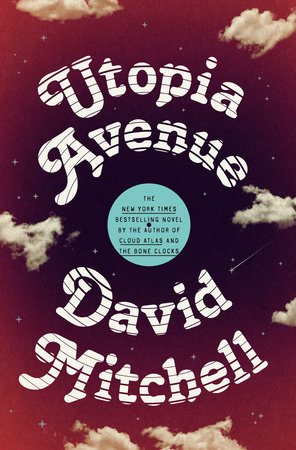
 Utopia Avenue by David Mitchell
Eight novels into his career, David Mitchell's established himself. You can count on his fiction to take you into a multicultural space, a cultural clash, and (nearly always) a spiritual--or at least supernatural--encounter. Engagingly told by either first or third-person narrators, his plots unfurl to keep any reader turning the pages. Which can add up, given the heft of most of his tales speculating on the grey areas between this realm and other ones.

If you've come to Utopia Avenue fresh, I'd suggest a detour. You need to start with The Bone Clocks (2014), and maybe the spin-off novella from the following year, Slade House. (Both reviewed on PopMatters). These will prepare you to step back into Mitchell's oeuvre. His first book introduced his modus operandi. Ghostwritten (1999) lives up to its title. It shuffles through various lives in different places across many centuries. The characters merge subtly with one another. Tellingly, the substance of the novel adds up to nine lives. The manner of how their essences may be transmitted in turn floats into a vast Cloud Atlas. 

Probably Mitchell's best known effort to date, Cloud Atlas creates an ambitious narrative which follows similar themes as his debut. But in this 2004 effort, Mitchell amps up the energy and the invention over a wider range of prose styles and six-times-two extended set-pieces which draw one into: the mind of a nineteenth-century notary at sea, a poor musician's journal early in the next century, a whistle-blower's thriller, a dystopian robotic Asia, and a wittily sour publisher on the lam. These nestle into one another like Russian dolls, burrowing into the central tale in post-apocalyptic Hawai'i before emerging to repeat the cycle of the previous five sections in reverse, by resolving each interrupted story.

However, even then a reader will not be ready to appreciate fully the backdrop of Utopia Avenue unless he or she finishes first the sprawling (even by Mitchell's standards) 2010 historical saga set at the turn of the eighteenth-century in Nagasaki, The Thousand Autumns of Jacob de Zoet. These prerequisites will prove enjoyable, and none will feel like assigned homework to catch up on. Nevertheless, this short stack of tall tales will take a while, so those opening Utopia Avenue need to know they'll be expected to have kept pace with prolific Mitchell over two decades. This leaves out, all the same, his remaining two novels.

The frenetic number9dream (2001) conjures up a chaotic sense of modern Tokyo; Mitchell lived in Japan for many years. Its own nine chapters thread together an imitation of Haruki Murakami rather than Mitchell's genuine voice, although the practice he gets in eclectic structures and experimental settings prepares him for Cloud Atlas. Finally, there's one charming outlier, his semi-autobiographical reminiscences of a thirteen-year-old on a housing estate in the middle of Worcestershire. It's told straightforwardly, and movingly.

Black Swan Green (2006) evokes powerfully Thatcher's England of the Falklands War, the New Romantics, synth-pop, stuttering, and all things British and/or annoying circa 1982. The audiobook performance by Kirby Heyborne will reward; many of Mitchell's works transfer well to the spoken word, although I'd make sure one has already a firm grip on the printed version of Cloud Atlas, given its dialects, intricate references, and inventive terms.

Back to the future for Mitchell fits. His storylines unravel chronology. In fact, the eerie Horologists who try to bottle up human life-forces so as to distill the Oil of Souls thrive on defying linearity as they strive to apply their energies to a vampire-fueled immortality. If this sentence makes sense, then one can follow Utopia Avenue. But one of its main characters, Jasper de Zoet, discovers his lineage traces back to 1800 Nagasaki, and that unfinished business then accounts for the mess that destroys the settled life of another protagonist at the start of The Bone Clocks, which ticks off from 1984 through its cast of misfits into 2043.

So, slot in Utopia Avenue between The Thousand Autumns of Jacob de Zoet and The Bone Clocks. In the spirit of Ghostwritten, characters face strange enemies. Connections appear subtly between these and more. For in Utopia Avenue as in all his works, Mitchell scatters "Easter Egg" appearances or allusions to his previous--and one presumes--future fiction. Characters and their works survive and echo as their stories already told reverberate softly.

It's difficult to convey the pleasures within Utopia Avenue to the uninitiated who enter David Mitchell's universe. Suffice to say that unless spoilers get revealed, only the gist of the work can be related. A few PopMatters faithful will know of the English folk-rock pioneers Fairport Convention. Well, take Sandy Denny (who appears as do many musicians of the psychedelic era in cameos or small supporting roles), one of its talented vocalists. She's channeled into Elf Holloway, a keyboardist from the folk scene, and one of three singer-songwriters. Second, Dean Moss hails from Gravesend, on the Thames estuary where the owners of the local pub will reappear as The Bone Clocks begin ticking. This bassist hails from the working-class in London itself. The class-consciousness plays a role in establishing the tensions and the diversity that enriches the new ensemble. They're joined by jazz-trained drummer Griff from darkest Yorkshire, and Jacob himself, a sort of Richard Thompson scarecrow figure on amazing guitar. Similarities ensue with real bands such as Fairport.

Car crashes, tragic passings (Mitchell excels at death scenes, premature or final), bleary touring and international hassles, sexist pop-show hosts, and smarmy manipulators all scheme against the three men and one woman (this group battles leering come-ons and baffled reaction in times not as advanced yet as some from sixty-odd years on may assume).

Mitchell's done his homework. The mmersion into not only London but a trucker's stop where ruffled and velvet-clad foppish musicians recharge after being on the concert trail, the wonder and danger of San Francisco's allure as seen through the eyes of members of the Grateful Dead and Jefferson Airplane, the dense terror and drive of Manhattan appear vividly as Utopia Avenue, the scrappy titular band, struggle up the charts and on blurred tours.

Laurel Canyon, Amsterdam, the Chelsea Hotel, and the less-heralded backwaters of Britain receive affectionate, insightful, and well-detailed depictions. Mitchell gets his rhythms right. Even a prison cell in Rome benefits from this writer's careful eye for all of the senses. Being born the start of 1969, he nonetheless benefits from his short distance from one who "really remembered the Sixties." He's old enough to have grown up with its musical legacy and cultural heritage. He's young enough to have been educated about the Aquarian Age's follies, its political naivete, and its bouts of impotence against endemic hate that trumps peace.

Woven into this revival of an age of expectation, Mitchell stitches a subtle critique of the impacts of the pot-heavy, lysergic-immersed, and heady music's ambitions on pop culture, moral choices, and even tripping itself. One watches the creation of verses; the novel is cleverly arranged to illustrate how each song on each album began its life--and Mitchell comes up with convincing lyrics too. The force of music as it emerges mysteriously or insistently in the mind of a capable (or baffled or stoned) composer gains clout as Mitchell expresses how notes stick on frets. The author examines deftly the ideals which force and beckon the four musicians and their circle to confront choices for good and evil. Amidst the slogans and chants, the violence (emotional and physical) exacted and inflicted around the band's predicament to stay true to their ethos makes them all mature into better people.

And that's the encouraging lesson of Utopia Avenue. The way to a better world, Mitchell quietly emphasizes, demands that responsibility not be shirked, and that cant or rhetoric fails to solve human loneliness or hereditary alienation. His composed, existential view may not please all, but his own Buddhist-inspired contemplation amidst the carnage and ecstasy of this romanticized era reminds us today of the caution needed when messages get blared.

"Music + Mind-Bending" at PopMatters 6/9/20 with hyperlinks to the cultural mentions. And a very trippy artwork that graces the review. Better than the galley (?) cover shown....

Wednesday, June 24, 2020

John Garth's "The Worlds of J.R.R. Tolkien": Book Review

 Image of The Worlds of J. R. R. Tolkien: The Places That Inspired Middle-earth
Atlases of Middle-Earth, guides and art, tributes and monographs, films and “cosplay” proliferate. What John Garth adds to the ever-proliferating pile of Tolkien-related media is a careful eye and steady step. He explores the intersections between this world and that of Tolkien’s “legendarium.” He traces inspirations from what the author saw, and how they may likely have evolved into what can be gleaned from his tales, letters, drafts, and sketches.

While not all made it into the published product, the effort Garth demonstrates attests to Tolkien’s visionary projection, his uncanny talent at what this scholar compares to a paint-box, in which the author dipped, daubed, and mixed layers of color, depth, hue, form, and drama into his vast legacy of narratives.

To begin, Garth logically starts with the hobbits’ Shire. Tracking parallels to childhood scenes in the village of Sarehole near Birmingham, Garth shows how Tolkien grew up amidst an almost-vanished rural setting. He then broadens the scope, viewing the “people, languages and cosmology” of Tolkien’s panorama, already emerging in his youthful imagination. It soon encompasses England itself, transformed into Lúthien, a name with lasting resonance, for it graces Tolkien’s tombstone. Topography expands abroad, with chapters devoted to features such as shores and seas, inland waters, mountains, forests, battlefields, and industrial wastelands. All are “places built or shaped by people,” Garth notes, and by Tolkien’s incessant cultivation of fussy details as a “natural niggler” whose seeding as a medievalist and linguist bore abundant fruit.

Garth reminds readers that what Tolkien began over a century ago described races and places as seen by medieval poets and chroniclers, not necessarily as they actually were. This astute caution defends the author’s works against detractors who, looking back and projecting contemporary critical theory upon Middle-Earth, distort its perspective.

What opens up to the viewer dazzles. Drowned lands, moving islands, and sea-caves first appear as Garth follows Tolkien’s explorations of the real and the fictional, and their blur and blend. Mountains loom, for Tolkien’s 1911 walking tour of the Swiss valley of Lauterbrunnen offered a “superfluity of inspiration,” in Garth’s estimation.

Peaks of fire, ice, and mist echo, as do Tolkien’s analysis incorporating volcanoes, geology, subterranean architecture, and craggy formations. Again, the 1911 travels had taken him two days down the Rhine towards the Alps. Germanic lore of dragon lairs and Wagner’s Ring-cycle leave imprints in his works. Rivers, pools, marshes and floods connect one section of this book to the next on “tree-woven lands.” Clumps, clusters, and circles of woods Garth compares to Tolkien’s wonderfully drawn maps, varied vistas, and even medieval cathedrals which have enriched his subject’s imagination.

Philology, archeology, cartography entered too, for the castles surviving, burial mounds, barrows, chalk-figures, and the ruins excavated across England turned into the citadels, fortresses, halls, and towers which endure or topple as ancient attestations to bloodshed. They populated Tolkien’s landscapes. As Garth’s previous book documented Tolkien’s experiences in, and reactions to, the “Great War,” this scholar’s scrutiny of artifacts of stone and iron, conflagration into ash, diaries, letters, and jottings comprise a significant portion of this superbly illustrated new volume.

While other writers schooled in the Edwardian age focused on the phantasmagorical, Tolkien’s balance with the grim realities of combat tempered his treatment. Panoramic desolation sears his pages, as does telling detail, that for instance of dead faces after a slaughter, submerged in miasmas as glimpsed from above by weary, parched marchers.
Tolkien’s sensitivity toward the eradication of the environment that nurtured his soul permeates his creations. This mirrored the hidden damage within those who survived the global carnage. As Tolkien recovered in 1916 from “louse-borne trench fever,” in and out of hospitals, he strengthened the scaffolding of his narrative constructions.

Returning to England, Garth corrects Tolkien’s pioneering biographer Humphrey Carpenter’s assertion that Birmingham equated to the dark and despotic Mordor. Garth examines that city’s toy industry, and its buildings preserving the Gothic Revival and William Morris’ Arts and Crafts Movement of Victorian times. Yet Garth somberly acknowledges the “swallowing of Sarehole,” as Tolkien’s beloved hamlet succumbs to a suburban “sea of new red-brick,” in his phrase.

John Garth concludes by evoking Tolkien’s ideals of “community, peace, freedom, craft and intimacy with nature.” These virtues enriched both his fictional and factual domains where he passed his long life, and its results endure to “reflect what he most loved and detested in his own world.”

Whether new to Middle-Earth or a veteran pilgrim, anyone will learn much in this book.
(New York Journal of Books, June 18, 2020.)

Saturday, January 20, 2018

The March of Time

Mortality

Today, my wife's marching for a second year downtown with hundreds of thousands of Angelenos, mostly women, with fewer children, dogs, and men. I reflect on the past year and more, but often since the last election, I prefer to retreat into my books, whether Kindle or print, to read reflectively.

Rather than research for my "professional development" or reviews of new titles, this aims at not an external but an interior goal. The Benedictines called it lectio divina. Catholic schools when I attended may have called it spiritual reading. Whatever the post-Catholic varietal, I need this "safe space." But it's not that. It's one where I confront hopes and fears, anxieties as well as contemplation.

My wife and friends would doubtless interject this, when I am not spewing what they regard as a jumble of reactionary-neofascist elitist populism leaning towards left-libertarianism more than conventional (!) anarchism, that I am in this natural state unless roused by work, meals, or chores.

I am choosing as the hunches move me. Julian Barnes' harrowing Nothing to Be Frightened Of was peddled a baker's dozen years ago as the first "post-Dawkins" take on mortality and our fears of death. Not sure about that, but despite or on account of his avuncular (albeit when he wrote this he was about four years older than I am now) digressions and erudite detours, his rambling ruminations and his Francophone excursions, I found his audio rendition so engrossing, listening to it in the dark before sleep, that I purchased a copy of the book. I liked the Canadian and British covers, with various Tarot/ chapbook depictions of Le Mort more fitting than the American version, which had his stereotypically featured English countenance, as Barnes (as myself if in a somewhat more Irish if also elongated physiognomy, I have been told by colleagues) looks exactly like a reader would expect.

Then I turned to my e-book public library's "if you liked this, then" options and browsed. The past year, since I discovered at last that the system had finally synched with Kindle, I've been borrowing audio and print (?) titles diligently, and I save 200 more as treats on my ever-changing moods wishlist. It's fun to preview samples, and like the bookstores where I have spent so long a part of my past life I am overwhelmed with tomes around where I type, and terribile dictu in the disarray of my garage, it's an efficient if frustrating (for there as in brick-and-mortal realm, so much is not where you want it electronically or physically--what you search for in vain only whets your appetite) pursuit.

I dutifully filled notes with many highlights of the next suggested title, the restive, grouchy (if not as acerbic as sensitive-plant critics had averred) David Bentley Hart's The Experience of God: Being, Consciousness, Bliss. That formidable study (my review linked quotes extensively from Hart's dense analysis, rewarding if rambling) in an endnote directed me to the somewhat (until math and biology kicked in halfway) easier God's Undertaker investigating if religious inquiries trump materialist dogma as to if an intelligence (steady there--as agency or impetus rather than design per se?) might be discerned. Lennox as an informed scientist handles data confidently, adroitly. and commendably with modesty tempered from both and all sides, and I did enjoy his witty analogies summing up the various ways science itself calculates the immense odds against our being here at all. And it's not merely the Anthropic Principle all over again. He marshals detailed arguments and documents them.

Both Lennox and Hart share a commendable connection with Barnes and the author I will mention next. They all expect a sophisticated audience (Hart perhaps too much as his volume, the only one from a university press, expects philosophers whereas a lot of "laypeople" are curious sorts who want to know precisely where his quest aims) and they reward by upending some of our pet hobbyhorses.

Somehow I wound up no idea how (maybe one of the previous three authors quoted him) with G.K. Chesterton's 1908 Orthodoxy. Not the best title as he admitted, but he answered his foes who challenged him, after he took on the chattering classes' champions in Heretics, to respond in turn with his own metaphysical riposte. So this blend of blurred autobiography (shades of Newman's Apologia pro Vita Sua, I wonder?) and theological assertion of the necessity of paradox as the manner in which people grasp feebly the shards of the divine presence and plan in what seem contradictory fashion served as the prolific (too much, that) pundit's foray into theological discourse for the rest of us. Many admire GKC's aplomb. Fewer admit he can exhaust one's patience with his relentless reversals.

Maisie Ward's early biography of her friend, who was published by the firm of Sheed & Ward she co-founded, has been relegated as a "hagiography" in Garry Wills' first book on GKC which for all its acumen does smack as he'd admit now of the eager grad student more than the sagacious scholar he became. Apropos of saint-hailing, the blogger "Innocent Smith" offers a needed reminder that if the fringes alone claim GKC and his circle for their own cause only, this bodes not well for all.

Ward too takes pains now and then to call GKC to task, for after his conversion to the Church finally occurred in 1921, his compulsive, frenetic graphomania on top of a regular lecture circuit far and wide rendered a lot of his various genres into padded, rumbustious postures which seemed, at least to Wills, to have been set when GKC was barely in his twenties. Ward offers a nuanced portrait.

But she concurs that the quality suffered and the workload did him in, hastening his relatively premature demise. Still, late in her enjoyable consideration (if as she warns you may not want to learn all about his brother Cecil's entanglement in the Marconi case, which rivals Bleak House in its interminable litigation), she cites (anyone writing on GKC finds this necessity more than the usual subject may violate the standard 2:1 ratio I enforce for student assignments of originality to secondary material) him as usual, generously. In his talk in 1931 but perhaps printed in 1927, "Culture and the Common Peril," I found a pleasing echo of Hart's conclusion advising skillful contemplation, and Aldous Huxley's 1962 lecture to the Tavistock Institute, which I will quote after.

"The coming peril is the intellectual, educational, psychological and artistic overproduction, which, equally with economic overproduction, threatens the wellbeing of contemporary civilisation. People are inundated, blinded, deafened, and mentally paralysed by a flood of vulgar and tasteless externals, leaving them no time for leisure, thought, or creation from within themselves." GKC castigates the flood of information-but-not-knowledge, while Hart and current critics warn of our data overload empty of wisdom sifted from this inundation which a century on churns that flood into a tsunami.

About three decades after GKC's death, after more war, more automation, more standardization, Huxley reflected on his Brave New World Fordist scenario. The ultimate transformation, he opines, applies a subtler form of control than neural injections or tinkering with our bags of skin and water. Situated on the cusp of the counterculture, this speaker has been, a search of sites shows, linked by those where the far right meets the far left, and accused of conspiratorial aims. I will leave that surmise aside as I do rumors of reptilian overlords and ZOG machinations, but from the transcript: 

"There will be, in the next generation or so, a pharmacological method of making people love their servitude, and producing dictatorship without tears, so to speak, producing a kind of painless concentration camp for entire societies, so that people will in fact have their liberties taken away from them, but will rather enjoy it, because they will be distracted from any desire to rebel by propaganda or brainwashing, or brainwashing enhanced by pharmacological methods. And this seems to be the final revolution.” It's intriguing, if aesthetically maddening considering the manner in which dodgy websites present Huxley's less, uh, assigned musings, to find then Alan Watts' further reflections. (That is, I think it's him. This infuriatingly font-crazed resource credits an Alan Watt speech, 2006.) A drawback for the inquirer persists in that so many less mainstream sources simmer on suspicious blogs and addled archives which, to say the least, fail to meet tenured types' muster.

Stick around among the formerly mocked pop cultural fans, all the same, and at least safely employed academics may come to elevate what they once cast aside, as this next author proves. I thought of another prediction when I read GKC just after quoting that Huxley passage on FB. Philip K. Dick's exponentially closer to Huxley than Chesterton (although the latter has been credited by Adam Gopnik--drawing on previous judgments I suspect--as the "pivot" between Lewis Carroll/ Edward Lear and Kafka/ Borges. Anyone familiar with the Argentine Anglophone knows his admiration for Chesterton. I'd been thrown off, three decades ago, by The Man Who Was Thursday. I want to return to it without spoilers, having vaguely remembered the ending as extremely odd even by post-Victorian experimentation in the company of H.G, Wells, one of GKC's dear foils-as-friends. I speculate if PKD might have been directed, in his own late-life Gnostic virtual reality simulation, deep in his soul by tales subsuming spiritual as well as spectral confabulations, in a steampunk age.

PKD mused not long before his own untimely demise, in of all places a dreary Santa Ana condo: "Because today we live in a society in which spurious realities are manufactured by the media, by governments, by big corporations, by religious groups, political groups... So I ask, in my writing, What is real? Because unceasingly we are bombarded with pseudo-realities manufactured by very sophisticated people using very sophisticated electronic mechanisms. I do not distrust their motives; I distrust their power. They have a lot of it. And it is an astonishing power: that of creating whole universes, universes of the mind. I ought to know. I do the same thing.” Re: his Flow My Tears, The Policeman Said (1974 SF novel.) He became agoraphobic but made sure to stay within walking distance of the post office and Trader Joe's, where he purchased frozen dinners and roast beef sandwiches. GKC, renowned for breadth and width, would've chuckled loud over his fellow fabulist.

PKD and I share a Californian (although he like another nearish neighbor Huxley I regard as blow-ins) curiosity about what's out there and within us. Huxley intrigues me far less as a popularizer of perennialism than as a skewed satirist; despite what many who see me think, inside lurks a touch of humor, albeit inappropriate invariably in these perpetually "outraged" and "scandalous" times these poetasters preached about all too accurately. GKC plays a shell game with rhetoric, entertaining as he instructs, but he can weary with his relentlessly paradoxical phrasing. Yet he pleases me for his "little England" outlook congenial with Tolkien and a scholar of these two men, Joseph Pearce and "distributism." Pearce and I are exact contemporaries, coming of age as exurbs paved over our childhood haunts. I anticipate naysayers of idealists and dreamers who will bring up Eric Gill (similar to Jefferson, we lecture others on their sins and not their successes) by advising a reread of John 8:7.

The Ball and the Cross, I figured, might be easier to start with, but I gave up the audio halfway in. Although Gildart Jackson tries his best to dramatize the madcap pursuits, I felt as if Heckle and Jeckle, or more precisely Tom and Jerry were bashing away at each other. You can see the warm-up for Orthodoxy: Brits landing on an island that perplexes them, lunatic asylums, lunatics, and an apocalyptic conclusion that again does not jibe with the main plot, but feels tacked on before and after, without surprise or suspense. I long for theological thrillers, a sadly neglected sub-genre I have tried to suss out from Goodreads and web inquiries but finding nearly nothing of note I have not noted. But GKC promotes a dour Scot, worse yet a humor-challenged Highland Catholic recusant, as his hero, while naturally the other Scot, an atheist bookseller, gets a few sputters of wit for his lot. I scanned the rest myself, but found it slapdash, meandering even for a brief novel, and a fusty curio.

I tried Sherlock Holmes a couple of years ago, figuring I'd delight in the Victorian London which captivates me. If I could go back in history, I'd enter the Great Exhibition of 1851 at the Crystal Palace. To my letdown, although I liked re-reading A Study in Scarlet and The Sign of Four, the stories did not grab me. Mysteries haven't done much for me. But talking to a close friend, I related how GKC forays led me to his favorite fictional character, James Bond, by a circuitous route through Maisie's friend Caryll Houselander, evidently a troubled type who saw visions and dreamed dreams as a Catholic convert turned mystic. She'd been left in the lurch by none other than "Sidney Reilly" (born a Rosenblum in the Tsarist pale) the "Ace of Spies" who inspired Ian Fleming's inventive 007.

My friend praised The Man Who Was Thursday as a story he'd returned to over and over with joy. Although no believer himself in what another friend of mine likes to relegate to "priestcraft," he likewise recommended the Father Brown mysteries of GKC. I've previewed online Michael Hurley's Penguin introduction and his explanation of their weird assumptions and wily craft suggests they may blend better for me than Sherlock in evoking GKC's unsettlement behind such searches for "truth." Michael Newton approves a recent BBC series, contrasting the priest with the deerstalker detective.

I have no profound wrap-up but I set down my jottings as a reminder to myself that the wanderings of whatever mind, spirit, soul and/or brain generates within me, set into type, mark wherever I'm at today. I don't call my orientation by any label or denomination or philosophy, and I leave that to academics who strive to categorize our irreducibly, incorrigible yearnings. As for me, I look ahead. Similar to Barnes, I deeply fear what may come. Like Hart, I inform myself on what others scoff at as metaphysics; as with Lennox, I try to keep up if lagging far behind with physics, if as it is for poets.

How I drift from book to book, quoteworthy utterance to dusty volume (even if digitized; public domain combined with a Kindle frees me of shelf-space guilt), remains explainable maybe to a scientist, but might a sage add a nod? As always, I ruminate. I wonder what and/or who's guiding me.

(photo credit)

Saturday, November 25, 2017

Philip Larkin "The Complete Poems": Book Review

The Complete Poems | Philip Larkin | Macmillan
Reading an advance copy of Martin Amis' The Rub of Time (collected essays and journalism), his insights into his father's friendship with and his son's childhood memories of Philip Larkin kindled my checking out Archie Burnett's 2013 edition and commentary. Whereas Amis judiciously chose his pick among the hundred-plus poems published in Larkin's lifetime, Burnett shovels them all in.

Certainly for scholars it's welcome to have it all with detailed commentary and textual apparatus. Burnett combs the letters, novels, and reflections Larkin himself and some of his critics and biographers have aligned to the poetry. Aptly, Burnett cites his Boston U. colleague Christopher Ricks: to distinguish "between what went into the making of the poem and what went into the meaning of the poem." (xxvii) Ricks wrote this over two decades before about T.S. Eliot's similarly posthumous and more minor work collected as Inventions of the March Hare but it applies, with some overlap as Burnett asserts, to Larkin. I've always been intrigued by such minutiae when it comes to my favorite creators in any genre, but I've also been overwhelmed, as when the six-disc box set offers not only the remastered version of the great LP, but demos, live tracks, and innumerable outtakes and studio noodlings. This sort of assembly of all parts is Complete Poems, Larkin style.

Amis was correct to call out as it were his subject's early attempts as not quite on target compared to the best, mostly from The Whitsun Weddings (1964) and High Windows (1974). But he also reminds us that, rare for a poet of postwar renown, all four of Larkin's slim volumes still enjoy print, attesting to their demand and their quality. So, why the box set package here? Academically inclined as I am, I admit that the meticulous editing, very necessary given faults of past compilers of Larkin, is probably too much of more of a good thing than the general reader, who liked seeing the f-word in the first line of "This Be the Verse," or chuckled once at finding the Fab Four sparking "Annus Mirabilis" about 1963, expects or needs. I'd judge Amis is enough. He leans towards the later, certainly a wise choice.

Still, surveying the whole of Burnett's diligence, moments early on and off the printed record now and then merit mention. The North Ship (1945) features a series of mostly untitled poems headed in Roman numerals. I like this, for like listing "track 7" it keeps the focus on content revealed rather than following a reductive or encompassing title. "It is not love you find:/ You have no limbs/ Crying for stillness/ You have no mind/ Trembling with seraphim,/ You have no death to come." (XIII. p. 11, last stanza). The elegance of the fifth line settling into the gentle remonstration, or assurance, of grim mortality conveys Larkin's signature theme early on. All of XXVI condenses what many false starts and abandoned marathons in the uncollected, unpublished sections demonstrate as Larkin fumbling and experimenting; whereas most of the published contents of the four collections show his control.

"This is the first thing/ I have understood:/ Time is the echo of an axe/ In the wood." (p. 19)

Here Larkin gets it right: he presents the metaphor, frames it in imperious (would we call it "humblebrag" if Twittered?) or humbled persona, and leaves it there. Enough, no need for more.

By the time of The Less Deceived (1955), more inclusions begin to call out for attention. "Next, Please" channels the maritime theme of his first volume neatly into another (of so many) reflections on mortality, as the ship of doom comes each of our separate paths but shared destination of nothing. The end of "Church Going" eloquently lets a longer Larkin tell us that although, as many of us, his belief in the old ways withers, he acknowledges and respects the dead and their place of gravitas.

"This is the future furthest childhood saw" alliteratively captures the limits of our past perception, within "Triple Time." (p. 40, line 7) What has slipped away, what suggests itself ahead, and what passes as the moment we keep grasping as future turns to memory: this again Larkin expresses here.

The whole of "Water" as the essence of whatever faith Larkin might be called on in such a distant realm perhaps to conjure should be a corrective to the secular harshness which dominates his poems. Sure, it's imaginary, but like "Church Going" (a multilayered title), it offers humanist audiences of the later 20th c. onward a composed consideration of the solace which devotion has given many before.

No, Larkin's no dupe. The surreal "Essential Beauty" turns billboards of all things into a dazzling and disturbing contrast of what we see peddled around us, heedless of the real landscape and its sufferers. The "Whitsun" title entry depicts an English rush of wedding parties onto and away from trains, which Stanley Spencer might have depicted on canvas in elongated whirl. "An Arundel Tomb" with dignity notices the clasped hands of the venerable couple dissolved under its statutory tribute. This concludes his third volume with impressive grace, while never doting on the poet's own perspective.

His final collection works best when keeping to similar topics of balance and sangfroid amid death. "High Windows" swoops up in its last stanza from the f-word, the diaphragm, combine harvesters and "like free bloody birds" into contemplation where no words suffice, only thoughts before a vision of nowhere as everywhere. Set to music in one's mind may be the only correlative for this depth of focus. Given this collection was written around the time of his fifties, the expectation of his own termination was premature (he stopped his production officially more or less as he judged correctly that his talent was on the decline; would so many musicians and singers do the same these days).

But he prepared for it. "The Old Fools" wonders what goes on in the heads of the addled aged. "The peak that stays in view wherever we go/ For them is rising ground." (p. 82, ll. 43-4) The next one, "Going Going," and one after the next in High Windows, "The Building," depress as they document the decline of whatever beauty is left to the countryside as squalor and suburbia consume delicacy, and the sinister aspect of Hull's Kingston Hospital where some visitors may spark the tagline for American ad adepts of a Roach Motel where the inmates once they check in will never check out.

"I listen to money singing," the speaker in "Money" sighs, comparing it as probably nobody ever had before to looking down on a provincial town from french windows, saddened by slums and churches.
Yet, "Show Saturday" in detail equal to a Bruegel painting shows folks at their summer folly and fun. May it endure, the poet hopes, despite the fate of every one of its attendees, as a seasonal renewal.

Others in the published uncollected chapter, besides the deservedly much-anthologized standout "Aubade," number few. Larkin in letters seemed a fair adjudicator about the value of his odds and ends. He knows the arch and strained "Breadfruit" languishes within the subpar, but it's somewhat clever. (Too much of the castoffs resemble, as Larkin well knew first, Auden and Eliot inter alia.)

More hospitalized anguish fills "Heads in the Women's Ward," but after "Old Fools," merely switching genders and hairstyles seems superficial, and Larkin smartly let this one fall out of line. The tenderness of "The Mower" might have made my cut, as its composure when men destroy the natural and the fragile unknowingly resonates with the everyday threatened landscapes of "Going Going." Human encroachment upon the wild and the inarticulate reveals the agony when we play god. In the last batch, the scraps and drafts and failures, "To A Friend" keeps poise, "The Conscientious Objector" scorn, and for the veterans of "The Returned," care. None of these, including these three, meet the standards Larkin set, but they have moments of insight, if a sub-Auden slant.

A couple more would have broadened the scope of the oeuvre we know. "Compline" may not be needed given the reflections on religion already applauded, but it concludes with a nod to ritual and the trust this instills in the faithful which Larkin lets happen, free of either critique or platitude. It's a style that today's barbed wits tearing apart the "moth-eaten brocade" of religious certainty ("Aubade") might pause before, as an example of how their betters got there first, and how they found their foil.

Jazz captivated Larkin and created a whole other role he played, in essays and reviews. Little finds its way into his works and even in the fragments and rejections, there's less than I expected about music. "Two Guitar Pieces" is a bit of a lark, as the poet imagines life down South a romanticized time ago and an ocean away from Hull, and the library employing him. But it's lighter in tone and for that, fine.

I'm glad I perused this edition. It's overflowing when most readers will be content with a sampling. These definitive gatherings of the gifted artists around us keep us reverent, and also respectful of how much may lay on the studio cutting room floor, or the poet's wastebasket, before our digital erasures.
(Amazon US 11/25/17)

P.S.  Here's fifteen "Greatest Hits" from the poet. Like any such compilation, I'd make some change, but it's a starter. Same with this "Top Ten." 

Wednesday, June 14, 2017

Ian McEwan's "Nutshell": Book Review


Compulsively Readable Novels

I've only read two of this prolific talent's novels, the lesser-known Solar and The Cement Garden. McEwan tells stories in a dour but somehow spirited fashion, garnering a wide readership while appealing to the critics and academics, over many decades. Indeed, I found Cement remaindered when I was still in high school, shortly after its publication. I never forgot its chilly air, but it may have steered me away from following the disparate paths taken by him in other foreboding tales.

With a keen interest in Hamlet going back to high school too, I was eager to enjoy Nutshell. It flows well, and can be finished in a long sitting, as it's two-hundred pages that turn easily for the rapt reader. Suffice to say that as in the original source, you cheer on the revenge sought by the protagonist. But, attesting to the skill in creating Gertrude in 1603 or Trudy in 2016, I also wanted her flawed, brittle character to succeed. Her machinations with boorish Claude against his brother John Cairncross (not Hamish so-and-so, I suppose!) unfold with the same suspense Shakespeare sparked.

"The rustling sound is a plastic bag containing groceries or tools of death or both." So reports the fetus narrating the plots of his mother against his father and with his uncle's collusion. He gets a buzz of Trudy's wining and suffers the slings and arrows of her unsteady gait up and down the stairs, too.

McEwan's ingenuity in giving the first-person voice to one inside the womb limits its reports to what his senses pick up, enhancing the eerie nature of this account from the not-yet-born. "Now I live inside a story and fret about its outcome. Where's boredom or bliss in that?" The teller misses Dad.

His replacement fails to satisfy. As Claude accepts some chore Trudy metes out, we are told: "The man who obliterates my mother between the sheets obeys like a dog. Sex, I begin to understand, it its own mountain kingdom, secret and intact. In the valley below we know only rumours." These analogies are spare, but they speckle the story with McEwan's delicate prose, sharpening the plot, too.

Asides are bearable. Digressions, after all, enliven Shakespeare, McEwan discredits religion for the past millennium of "groundless certainty" and threatening under fanaticism today to sweep Europe. The dubious primacy afforded one's fluid feelings as the ultimate determiner of identity and selfhood looms in Trudy as indicative of the failure of the Enlightenment, as reason diminishes in us moderns.

And, climate change and global warming threaten our very existence. McEwan hovers via his hidden narrator here between hope and fear, like many of us who read this. In the end of this thoughtful thriller, as it turns out to be in its final section, we are left with a sudden burst into this chaos of life. (Amazon US 11/19/16)

Tuesday, February 28, 2017

David Mitchell's The Bone Clocks: Audiobook Review

The Bone Clocks Audiobook | David Mitchell | Audible.com
Overall
Performance
Story
""I've seen the future, and it's hungry""
Would you consider the audio edition of The Bone Clocks to be better than the print version?
Yes, having read the novel first. The characters come alive and the prose sharpens. The plot is clearer to understand, too.

Who was your favorite character and why?
I liked Hugo Lamb. Not to spoil anything, but he bore a difficult role in the storyline. Harder to cheer him on, but his choices are understandable and add depth to the impact overall.

Which scene was your favorite?
Hard to pick, but the last chapter with the Irish encounters appealed. The accents were a nice change from the predominantly English ones and the setting deepens as it's set where the author has chosen to make his home, away from his own island.

Was there a moment in the book that particularly moved you?
The scenes between Hugo and Holly are very human. Despite their differences in class and outlook, their attraction softens the harsher edges of the story, and we need to see these characters in a vulnerable predicament. This also sets up some key themes later on.

Any additional comments?
This book is imperfect, but hearing it, after you read it, is recommended. David Mitchell is a great storyteller and the performances of all six readers keep you engaged. Not a book to be heard in the background. I listened to this late each night, and this enabled full attention...
(Audible 11/21/16)

Wednesday, January 25, 2017

Jorge Luis Borges' "Professor Borges": Book Review


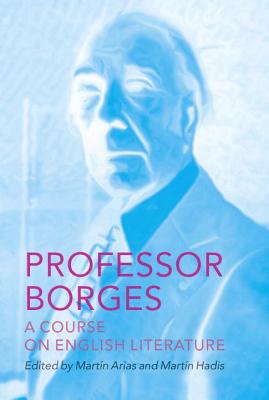
Professor Borges Cover
These 25 lectures from 1966, editors Martin Arias and Martin Hadis confess in their introduction, defied easy transcription. For they were taken from tapes (now erased) by students in Jorge Luis Borges' fortieth term of teaching English literature at the University of Buenos Aires. The garbled nature of the names and verses set down, especially in the Old English dominating the first half of the course, must have challenged both the Spanish-speaking audiences and the scholars searching sources. Borges, nearly blind, knew these texts intimately. Amazing to think that he lectured mostly from memory, and that quality, so memorialized in his fiction as well as his criticism, informs this.

The talks themselves vary in length, perhaps due to whomever wrote them down. The classes appear oddly tilted. For after half a dozen sessions with very in-depth coverage of the Anglo-Saxon era, we jump from the eleventh to the eighteenth century.  You get a look at Samuel Johnson, then it's off for Blake, Coleridge, Carlyle, Dickens, Browning, Rossetti, lots of William Morris, and R.L. Stevenson.

Therefore, the Argentine audience must have come away with an intimate if skewed examination of key authors. The idiosyncratic nature of the course, as in the latter lessons when students recite portions of Morris' poetry, must have made the presentations come alive. One wishes the tapes were extant, but this anthology compiles what Borges was like in the classroom, an aspect we lack otherwise much record of. Despite some typos, this is a useful compilation. The footnotes are extensive and helpful. And even experienced students of the literature may pick up some factoids.

For me, I forgot that Beowulf comes from the typical Norse phrasing for "bee+wolf," or bear. A simple reminder, but one many professors never mention. Learning how Dr. Johnson hoisted and threw a folio volume at a bookseller, with Borges' wry aside that such a tome was indeed difficult to toss, makes the lexicographer's orneriness come alive. And realizing that such disparate texts as Morris' "The Earthly Paradise" and Virginia Woolf's "Orlando" have in common the silence of respectively Chaucer and Shakespeare due to their eminence reminds us of Borges' vast knowledge. (Amazon US 12/3/16)

Tuesday, September 13, 2016

Alan Moore's "Jerusalem": Book Review

Renowned for his graphic narratives, Alan Moore creates this massive work of prose fiction, rivaling War and Peace in length and Ulysses in ambition. While not his first novel, it continues themes begun two decades ago in Voice of the Fire. In twelve deft chapters, Fire dramatized the evolution, in dazzling linguistic and intricate historical terms, of Moore's native Northampton. Jerusalem inflates this setting even as it narrows it down to a few blocks of the once-bustling Boroughs, which exist in a "simultaneous eternity" as developers build and then tear down this English city's core. Its working class dwellers find not an afterlife so much as a recurring existence, within a "trans-temporal chess game."

Defying the span of a brief review or facile summation, Alan Moore's evocation of his hometown sustains the meticulous composition of his graphic excursions. Lacking the brevity of a speech bubble or the compact limits of a comic-book format, Jerusalem challenges any reader's attention. Heady passages unfurl, as many of those taken up into the elevated realm of Mansoul, towering over the Boroughs (yet less apparent to those below still living) enter under the influence of Bedlam Jennies or Puck's Hats, fungal concoctions inviting comparisons to "eating fairies," amid a paranormal panorama of undines, Salamanders, and an Ultraduct. Those in this vortex may travel, in one case surpassing H.G. Wells' The Time Machine, to witness beyond "the death of day." Moore's inventive powers accelerate here, but they might bewilder, especially in the middle sections of this triple-decker tale which is a Victorian trope renewed. Rather than faltering, pressing on unveils to one’s mind many wonders.

Facing this other-world, two intermarried families comprise the central characters which Mansoul invites or repels. The Warrens arrive first. Siblings artist Alma and laborer Mick introduce us, via the largely omniscient narrator's voice, to their scrappy surroundings, after demolition of its imperial-era landmarks. Jerusalem then ambles back a century and a half, when Ern worked on London's St. Paul's. Mick, Alma and Ern receive eerie revelations from angels and Builders. Moore gradually reveals the reason for these ancient architects, and he populates the story-line with more Warrens and Vernells, who also have their own close encounters with those who hover about Mansoul. Named after John Bunyan's {Pilgrim's Progress}, "it was the very seat of war." Here, clashes summon demons.

Mansoul, made of "congealed dreams and memories," stands for Moore's version of space-time itself. "Think of your life as being like a book, a solid thing where the last line's already written while you're starting the first page. Your consciousness progresses through the narrative from its beginning to its end, and you become caught up in the illusion of events unfolding and time going by as these things are experienced by the characters within the drama." This scene's shifty teller boasts a lineage back to the apocryphal Book of Tobit. He tells Mick, swept up on a memorable "Sam O'Day ride" through the dark and the light as "an astral toddler," how "life and death" work, with admirable if surprising clarity. 

Sam continues: "In reality, however, all the words that shape the tale are fixed upon the page, the pages bound in their unvarying order." In the mind of their reader, progress occurs, but this remains an illusion. Instead, the book of life can be read over and over. So, every day "and every deed's eternal." Sam urges on his transported charge a motto Moore shares: "Live them in such a way that you can bear to live with them eternally."  Jerusalem, for Moore, represents more than his fantastic plot. It stands for a credo, one that in our world refusing conventional belief may survive past piety or doubt.

For, as an eighth-century monk learns, when he tries to center Northampton at the exact crossroads of England, hauling a stone from the real Jerusalem all the way to St. Gregory's Church, mysticism can tempt earthly calculations and thwart clerical confidences. The uncanny interactions the Warrens and the Vernells endure closer to the present (having taken ten years for Moore to write, most of this action stops in 2006) echo. A freed slave from America, the son of immigrants from post-war Sierra Leone, Ern's demented son, Buffalo Bill, Oliver Cromwell, the author of "Amazing Grace" and the members of the band Bauhaus fill the parade of figures who pass through or set up home as mortals in Northampton. What connects them, surmises Moore, is a gothic, altered, visionary sense. 

Their exchanges upend conventions. Moore favors his own detached telling more than the chronologically faithful linguistic ventriloquism of dialects and vocabularies that kindled Voice of the Fire, but some chapters in this one-volume trilogy adapt their own styles. Notably, a play starring Bunyan, the mad poet of nature John Clare, James Joyce's daughter and psychiatric patient Lucia, her friend Samuel Beckett, St. Thomas Becket, a "half-caste woman" elsewhere appearing as Marla Stiles and a married couple stirring up the Warren-Vernell mix demonstrates Moore's knack. He creates a Beckettian drama even as he satirizes its content, improving on its form as he links it to local history. 

And, as with the analogy that other Sam shows, characters repeat and return throughout this unvarying book's order. It's not all gloom. Humor surfaces, whether poking fun at Alma's scarecrow appearance, the simply wrong name of Newlife granted a hideous corporate block, or an everyday night down the pub. Hapless Ben Parritt "looked round appraisingly at the establishment's half-dozen other clients, motionless upon their stools like ugly novelty-set chessmen, sidelined and morose."

Moore varies approaches, when he lets one character late on burst into rhyme, or earlier when Lucia's monologue descends into a verbal morass of Finnegans Wake, fifty daunting pages mirroring the opening of Fire, when Moore reduced the consciousness of a Neolithic boy to 4000 stunted words. Here, Moore opens up rather than contracts his expressions; that contrast will weary some while exciting many. A reader may wish to pause, and let this epic find its rhythms within oneself. 

Moore never seems to flag in this telling. One part begins with Bob Goldman's gumshoe parody before settling into a more Moore-ish pace. But this may be an inevitable capitulation to the weight of the imaginative universe built here that threatens to crush any single inhabitant's utterances or ego. 

In this gigantic production, Moore avoids cliché, he regales us with a local chronicle demanding immersion into its erudition and he plays fairly with expectations. How this new Jerusalem ends will be discovered by the dogged, but the conclusion, circling back to the invitation offered Mick by Alma, satisfies and stuns. Having announced retirement from the graphic arena, in this printed spectacle, Moore dazzles. (Amazon US 9-13-16)

Wednesday, January 27, 2016

"Encountering Buddhism in Twentieth-Century British and American Literature": Book Review


While cross-cultural studies of the transmission and reception of Buddhism within historical and sociological contexts multiply, those examining literary aspects remain less common. These eleven essays examine American and British authors during the past century who have taken up Buddhist themes; some of them have taken refuge in Buddhism. Aimed at an academic audience, these entries generally remain accessible to a broad readership. This collection, despite its high price as sold by an academic press, may appeal to many inquirers intrigued by its wide coverage.

Introducing this book’s range, co-editor Lawrence Normand surveys the reception and adaptation of Buddhism in the West. He cites Donald S. Lopez and David McMahan. He supports their responses to the ways in which Buddhism has been reshaped for twentieth-century concerns. Lopez and McMahon have analyzed how meditation and modernism influence recent cultural trends. Normand notes more of an emphasis on the needs of the body. The contemporary insistence of concentrating on the breath focuses on the mental flow of images. This shift engages more than one of the authors investigated by Normand’s international colleagues.

Erin Louttit in “Reincarnation and Selfhood in Olive Schreiner’s The Buddhist Priest’s Wife and Undine” reminds readers that this South African writer, despite her late-Victorian period of production, looks forward in time. Both the story of the priest’s wife and Schreiner’s novella Undine humanize and normalize Buddhism. Death is blurred. The self survives the body in her post-Christian perspective. Schreiner considers and acknowledges possibilities of reincarnation.
 
Normand’s “Shangri-La and Buddhism in James Hilton’s Lost Horizon and W. H. Auden and Christopher Isherwood’s The Ascent of F6” contrasts two treatments of this earthly paradise. Thanks to its film adaptation, Hilton’s 1933 novel endures as certainly more popular than Auden and Isherwood’s ambitious if flawed drama. Incorporating historical crises and struggles of personal alienation, both channel the appeal of the late-Victorian romances which J. Jeffrey Franklin in The Lotus and the Lion (2008) investigated in imperial and colonial British literature. Hilton’s quest entices the reader as if possible; Auden and Isherwood’s satire demolishes the dream as futile. However, the limits of the duo’s Buddhist sources (including Alexandra David-Neél’s With Mystics and Magicians in Tibet) blunt the dramatic impact of their barbed points.

Via readings of D.T. Suzuki, Erin Lafford and Emma Mason take up another poet’s mid-century approach to Buddhist content. In “‘ears of my ears’: e. e. cummings’ Buddhist prosody,” the pair (sticking to that author’s conventionally unconventional spelling), looks at Cummings by way of Martin Heidegger. This philosopher’s challenge to the ego atomizes the sense of self. Similarly, Cummings’ poems, grounded in the breath’s rhythms, aspire not to human voice but to birdsong, in Lafford and Mason’s report on this poet’s craft. It rewards listening, meditation, and silence.

The center of this anthology finds many names repeating, as Cummings and Suzuki begin to sway other writers and thinkers. “Zen Buddhism as Radical Conviviality in the Works of Henry Miller, Kenneth Rexroth, and Thomas Merton” features three leading advocates during the period during and especially after WWII who begin to react against conformity. Manuel Yang applies Ivan Illich’s “radical conviviality” as akin to the “creative spontaneity and non-attachment” connecting these three countercultural creators. (p. 72) Promoting “spontaneous convergence,” the trio shares a commitment to a “non-action, non-institutional” form of “spiritual assonance,” their non-conformity appealing to dissidents. Yet, many then conformed.

They conformed as the Beats. The appeal of Buddhism for 1950s seekers rebounded off of two other poets based in the Bay Area during this restive postwar period. “Radical Occidentalism: The Zen Anarchism of Gary Snyder and Philip Whalen” offers James Patrick Brown’s analysis. He shows how the Beats adapted Suzuki’s teachings into a nascent counter-cultural milieu. Brown avers: “Suzuki translated Zen into an American idiom that hit some of the keynotes of American anarchism: a rejection of cultural conditioning, institutionalism, and traditionalism; an affirmation of individualism and radical self-reliance in the Thoreauvian vein; and a language of revolutionary aspiration.” (pp. 94-95) For more about these anarchist roots within American Transcendentalism, a translation of the Slovenian professor Ziga Vodovnik’s The Living Spirit of Revolt: The Infrapolitics of Anarchism (Berkeley CA: PM Press, 2013) is recommended.

Unsurprisingly, “Buddhism, Madness and Movement: Triangulating Jack Kerouac’s Belief System” follows. Any analysis of American Buddhist literature should include Kerouac. What has been less examined, as it lacks pop culture appeal, is his retreat back to boyhood Catholicism after his 1950s immersion into Buddhism. Bent Sørensen explains the breakdown of his “hybrid system of faith,” triggered by a 1960 visit to those whom Kerouac called the “Mexican Fellaheen” or poor peasants. (p. 106) He pivoted from a romanticized fatalism to “a complete lack of compassion” for those who refused to better their condition. Kerouac, fueled by drink, flirted with madness as his guilt persisted and his sense of sin returned. His characters by the 1960s often entered silence, before death. Kerouac accounted for their dire straits by resorting to Christian rationales “as a punishment for sin.” (p. 118) Like their author, his protagonists try to move on, but samsara catches up with them and thwarts their doomed quests to escape justice.

Another gloomy fiction from the early 1960s depicts this “cyclical nature of suffering.” (p. 136) “Biology, the Buddha and the Beasts: The Influence of Ernst Haeckel and Arthur Schopenhauer on Samuel Beckett’s How It Is” displays Andy Wimbush’s recovery of Haeckel’s A Visit to Ceylon (1882). Beckett mentions this author in his grim 1964 novel (translated from Comment C’est (1961). Both versions plunge into an unsparing reduction of existence through an agonizing series of reincarnations. These enable torture of lower life-forms by the Sinhalese, witnessed by Haeckel. While the natives do not kill beasts and creatures, the Sinhalese justify treating them badly. For, they reason, if they had not merited life in such debased versions, they would not be such. This application of Buddhist concepts to real-world dukkha sobers the reader.

A return to Isherwood, now living in a more congenial incarnation in Southern California, finds him thriving. In “‘That Other Ocean’: Buddhism, Vedanta, and The Perennial Philosophy in Christopher Isherwood’s A Single Man,” Bidhan Roy shows how not only the author’s well-known immersion into Vedanta but his exposure to Buddhism and fellow British expatriate Aldous Huxley enters the 1964 novel, based on Isherwood’s own sojourn. Filtered through popular reinterpretations of Buddhism in vogue by then, Isherwood’s novel reveals his sympathy with Buddhism, contrasted with the arch satire he and Auden had deployed for The Ascent of F6.

For writers closer to our time, “Maxine Hong Kingston’s The Woman Warrior as Mahayana Meditation” finds Sarah Gardam examining Pure Land sutras and Mahāyāna emptiness doctrines. Gardam uses these to explicate Kingston’s Chinese “talk-story” in her 1986 memoir.

Elena Spandri’s “The Aesthetics of Compassion in Iris Murdoch’s The Sea, the Sea” affirms another doctrine, that of the Middle Way, as a compliment to Murdoch’s philosophical career. This champions humanism rather than a Kantian or utilitarian ethics in her 1986 novel. A compassionate ethics wins out, in Spandri’s articulation of Murdoch’s plot and character choices.

The final entry tackles one more formidable topic, arguably more arcane than any philosophy. “Strange Entanglements: Buddhism and Quantum Theory in Contemporary Nonfiction” unravels the tangle of two popular if recondite genres. Anglo-American popularizations of physics and debates or attempts to reconcile debate between science and religion both, in Sean Miller’s energetic chapter, seek to posit parallels between physics formulae and Buddhist or Taoist descriptions of phenomena. Fritjof Capra, B. Alan Wallace, Matthieu Ricard, and Trinh Xuan Thuan typify decontextualized efforts. Miller doubts their truth-claims for dharma as science.

He finds futile their attempts to reconcile Sanskrit texts full of “imaginative parataxes.” (p. 205) Contemporary exegetes wind up at dead-ends. They wriggle in fudge factors and they refuse to admit their results, which tally only as logical incoherence. Miller pinpoints irony in the Vietnamese-born, American-educated astrophysicist Thuan’s deferral to the “ecclesiastical authority of a French-born Buddhist monk who resides in Nepal.” (p. 214) On the other hand, according to the French-language version of his eponymous website, Ricard earned a Ph.D. in cellular genetics in 1972, after which he entered monasticism.  Miller could have delved deeper into Ricard’s scientific training, as how much Ricard has kept up with his past field and that of astrophysics alongside his Tibetan adaptation and practice, granted, remains a relevant topic to debate. All the same, Miller relishes the chance to tackle a topic which diverges drastically in tone and approach from his predecessors, and this intriguing chapter deserves attention for that.

Miller concludes by summing up the current position of Buddhism in the West. “Stripped of its literary and cultural contingencies, in its mildest form, Buddhism becomes a form of self-help therapy contained by a consumerist market-logic, a happy face put on a liberal humanism purified of reductive materialism. And at its most stringent, Buddhism becomes a form of submission to a hierophantic theocracy, however benign.” (p. 213) This collection needed this voice calling out what some of these writers treated tended to sidestep or gloss over: the manner in which messages of Buddhism warp through our capitalist mindset into globalized commodity.
 
Normand in his introduction noted how pre-1945, the textual approach of T.S. Eliot and Hermann Hesse’s Buddhist “engagements” dominated Western reactions. (p. 15) But, neither Normand nor subsequent contributors elaborate sufficiently as to how these “engagements” entered texts during the last century. The earlier impact of Edwin Arnold’s bestselling life of the Buddha as The Light of Asia (1879), J. Jeffrey Franklin has begun to show, reverberated into the next century. This issue, likewise, does not earn any mention beyond Normand’s few references.

All the same, this book’s emphasis on the Beats, more than its scattered coverage of writers after the 1960s, should encourage more research by scholars. Additionally, Sean Miller’s divergent if necessary exploration of a dimension of Buddhism in non-fictional literature may encourage scholars to pursue the portrayals of Buddhism in other scientific and philosophical contexts, a subject needing as much if not more attention than, say, Kerouac’s appropriations of the dharma. For now, this anthology serves readers as a portal, opening up into a display of texts which have integrated Buddhist characters, settings, debates, and insights, gathered during the past century.

Friday, January 8, 2016

"The Machine Stops" ed. Erik Wysocan: Book Review


This anthology reprints the well-known 1909 novella by E.M. Forster along with ten contemporary contributions from writers pursuing what Donna Haraway coins as "cyber politics". This concerns the struggle for language against a perfect articulation of its communication. Noise and pollution, as Haraway explains in the preface, represent a joy in the "illegitimate fusions of animal and machine".

Forster's "The Machine Stops" follows Vashti and her son, Kuno, in a future anticipating instant messaging and the Internet. Living underground, humans rely on master machine to meet their needs. Kuno confesses to his mother that he has glimpsed a world above the surface where people live free. But, threatened by the penalty of homelessness, Kuno must accept the omnipotence of the Machine, now worshiped as a deity. Its Mending Apparatus, however, begins to break down, and global chaos ensues. The final sentence of the 12,300 word tale illustrates Forster's command of his prose: "For a moment they saw the nations of the dead, and, before they joined them, scraps of the untainted sky."
 
Unfortunately. the modern entries placed after the novella cannot compare to Forster's eloquence. This Halmos edition lacks any introduction or rationale, other than reprinting a few pages from Haraway's 1991 article "A Cyber Manifesto". The contents from today's authors prove uneven.

One promising section is the story "Letters to the Machine" (2014) by Julieta Arenda, Fia Backstrom and R. Lyon. This experiments with typefaces and self-references to document how humans try to evade, with decreasing success, an omniscient surveillance system. One thinks of the increasing monitoring of electronic and personal communication by employers, governments, spy devices, social media and corporations to apply to this fiction, and it is not far from Panopticon fact at all.

Pedro Neves Marquez applies another emerging technology, 3-D printing, to recyclable gun production. "The Liberator" (2014) invents "assassination markets" for those using these weapons, and extrapolates from open-source codes a realm where primitivism, anarcho-libertarianism and the deep Net fight back against multinationals and the security state. Virtual arenas get sabotaged along with real ones. Ecosystems emerge and the Cargills and Monsantos find themselves outwitted.

"#NoHorizon: We Have Never Been How We Became: A Manifesto" (2012-2014) takes up another rebellion, post-Occupy. Jeff Nagy's rambling speculations roam back into the revolutionary Levellers of England's mid-seventeenth century. He links this dissenting movement to Haraway's methodology. Nagy tries to connect John Milton, Gilles Deleuze, Bruno Latour, Norbert Wiener and Katherine Hayles along a timeline of how humans confront a mechanical power, and how cybernetics through its challengers may resist this apocalyptic or milennarian takeover. But a postscript, after what Nagy perceives as Occupy's failure, cautions. "Occupy made visible the bars of a certain grid of control even if it did not shake them. That grid has now closed around us again, even more tightly." He reasons: "It never opened but it closed again. That is its logic precisely. There's nothing to see here but everything is visible." Nagy's pronouncements may strike some as gnomic, others as tautological.

These three contributions represent the highlights. Seven other entries failed to match their insights. The placement of an editor's name only at the back of the book appears a half-hearted attempt to convince the reader that these transmissions exist as if clandestine or samidzat missives, needing no mediator's intrusion. But their purpose would have better succeeded if the audience were guided to find connections or ruptures between Forster's fiction and the facts and fiction following it here. (Spectrum Culture 1-12-16)

Tuesday, December 22, 2015

David Mitchell's "Slade House": Book Review

The title gives it away. A narrow alley near the Fox and Hounds pub opens into Slade House. Here, the last Saturday of October, every nine years, a visitor is beckoned in. What a young violinist, a police inspector, a pudgy college student, and her journalist sister will find comprises a companion piece to the mysterious forces swirling around the humans gathered up into David Mitchell's The Bone Clocks.


Published a year ago, that ambitious novel set in the recent past and near future tracked supernatural entries into everyday British life. Desperate to sustain immortality, a cabal lured a few chosen mortals into what this sequel of sorts explains as "their life-support machine, but it's powered by souls". Akin to a bearers of a rare blood type, those selected enter a "Theatre of the Mind" where their "birth-bodies" encounter in Slade House their dreams come true.

Avoiding spoilers makes an extended review difficult. However, as I have read all of Mitchell's novels, I assure you that familiar elements return. In easygoing style, Mitchell catches the rhythms and diction of his English narrators engagingly. Drawn from 1979 to 2015, tellers speckle pop song titles, then-current events, and trends into their respective chapters. As with all of his fiction, Mitchell sprinkles references to his past work. Here, nearly all of them point to The Bone Clocks, logically.

That novel, as my PopMatters review "I've Seen the Future and It's Hungry"noted, constructed a complicated realm of spectral intervention. Familiarity, therefore, with the Shaded Way, Dusk and the Blank Sea, the Engifted, the Operandi, and Horologists will be necessary to fully follow action here. Additionally, Mitchell expands his concepts of the Lacuna and orisons in Slade House.

The orison, as defined, gives readers a notion of the mechanism Mitchell inserts into the tales. It is a "live, 3D, stage set, projected by the Lacuna in time". This makes more sense in context, but for readers of some of Mitchell's earlier novels, however spatially and chronologically sprawling they may be, the liminal goings-on in The Bone Clocks paled slightly compared to the intricate, apocalyptic adventures of Ghostwritten, Number9Dream, and Cloud Atlas. Rather than taking on a new genre, refining the matter-of-fact coming-of-age semi-autobiographical chronicle of Black Swan Green, or the historical epic of The Thousand Autumns of Jacob de Zoet, Mitchell for the first time in his oeuvre gives us a story that connects directly, with allowance for a few tangents and loose ends, to its previous text.

Rumor has it that Mitchell began this novel as a series of tweets. By far the briefest of his novels, this takes only five chapters, building upon each other in his typical format, to build a narrative. The first-person narrators, in reliable fashion, speak to us in confidential terms, common to Mitchell’s strategy. They prove engaging, and their intimacy encourages readers to trust in them.

Their congenial voices, furthermore, gain their power over us as readers puzzle out the construction of their common situation. Some readers, like myself, may be slower to catch on, but this only enhances the enjoyment, and the emotional impact, of their paranormal predicaments. All the same, Mitchell here falls into his own small trap. He captures well the voices of his characters, but the stage upon which they are placed can overshadow their actions. 

That is, as with the predecessor to Slade House, the creaky construction of a novel that enters the well-trodden territory of the Gothic, the spirit-plagued, and the occult mystery can loom so high that the human fates become subsumed into a secondary world that requires its own explanations. As with much speculative fiction, the added effort Mitchell must take on as he tries to explain his blueprints beyond also blurs the sharpness of those he draws from among us, everyday people. He downplays why his narrators are chosen to enter the haunted House, and this disappoints. As the novel builds to its climax, the same slight letdown common now to audiences of many entertainments returns. We realize that this is part of a longer series to come.

Slade House races along, but on Bone Clocks' familiar ground. Mitchell grants more space to ghosts. This fits into that niche best. The author likes this genre, and his tone—as always in his previous fiction-- can win us over. There remains a steady delight in letting Mitchell’s imagination carry one along over hundreds of pages without us even noticing the time. I read Slade House with the same pleasure. Still, I ended it with the same frustration.

For it all stops too suddenly, with to me an obvious nod to its own sequel. While I enjoy Mitchell's novels, I keep having the nagging sense that, with his talent, he could do more with it to dazzle us than he has already. I feel this more strongly, after finishing Slade House.
(Amazon US 10-27-15)
[Expanded for my PopMatters 10-28-15 review.]