Showing posts with label speculative fiction. Show all posts

Friday, July 3, 2020

John M. Bowers' "Tolkien's Lost Chaucer" Book Review

 Cover for 

Tolkiens Lost Chaucer

While at least some who discover J.R.R. Tolkien’s works as young people go on to study medieval literature, very few have first approached Tolkien after having established their careers as experts in the British Middle Ages. Professor John M. Bowers, a seasoned scholar on the Gawain poet, William Langland and Geoffrey Chaucer, brings to his investigation of Tolkien’s “lost Chaucer” a variety of engaging strategies enabling those familiar with either writer to enjoy the other one.

Bowers confesses that he barely knew of hobbit fantasies when Bowers glimpsed Tolkien during his Rhodes Scholar stint at Oxford, shortly before the master’s death in 1973. Familiar, however, with Tolkien’s academic contributions, Bowers only caught on to the popular appeal of the author of The Lord of the Rings after his sister gave him the film trilogy as a boxed set at the start of this century. The previous century found Tolkien arguably more appreciated by millions, contrasted with those who had been assigned the opening of The Canterbury Tales in high school. Bowers made up mid-career for his delayed start. Having explored Middle Earth attentively and with deep appreciation, he provides a welcome, fresh foray into both medieval and modern lore.

With so much academic work devoted to Chaucer, and an increasing amount to Tolkien (both deep within and on the fringes of the academy), innovations elude many publishing on these writers. Bowers’ acumen with Middle English and Chaucer’s oeuvre enlivens his parallel adventure into the papers left behind by Tolkien from his work on the Oxford University Press Clarendon Chaucer edition. As a harried lecturer with a growing family to support, Tolkien struggled to balance his invention of Middle Earth and its burgeoning intricacies with his professional duties. He longed to expand his beloved imaginary horizons beyond the podium.

Finding that Tolkien may have often begged off duties to devote precious time to his fabulous fiction, Bowers turns to his former dissertation advisor, V.A. Kolve. He was one of the last in the undergraduate program to work for Tolkien as a research assistant, back in 1958. Kolve recalls his mentor’s confiding: “He confessed to me once that some were disappointed by how little he had done in the academic way, but that he had chosen instead to explore his own vision of things.” The ties binding students to masters at Oxford meant only a chosen few could attend Tolkien’s tutorials and lectures, but these scholars spread the reputation of Tolkien through their own specialized monographs and articles, quoting Tolkien often on Beowulf or Old English.

This represents the attention paid to Tolkien the scholar, compared with the fabulist-on-the-side. Upending the common method, by which Tolkien enthusiasts tend to look to his medieval inspirations to track sources and analogies, Bowers comes from immersion in Chaucer back to his erstwhile scribe. In his annotated proofs and diligent notes for the Clarendon project, Bowers uncovers affinities galore. Out of this at first unprepossessing material in the Oxford archives, the “grey box” of sheets scribbled in Tolkien’s fastidious if eccentric handwriting remind Bowers of Gandalf poring over “the slashed, stabbed, and partly burned Book of Mazurbal.”

Bowers avers that Tolkien’s selling point, which under his sponsor George Gordon elevated Tolkien from his position at Leeds to a professorship at Oxford, was the fact that, if hired, the academic could labor on their stalled edition of Chaucer. However, 30 years’ of intermittent labor never was published. Tolkien abandoned it in 1951. Three years later, his trilogy appeared.

All the same, his skilled efforts at textual studies and etymological derivations inspired key episodes in The Hobbit and The Lord of the Rings. Bowers pulls out such small details as Tolkien’s service as a signaling officer in the Great War or his fear of being outed as a Catholic, too. Bowers shows how Tolkien’s life and legends interweave, and how his status at Oxford fared compared to his counterpart C.S. Lewis. This takes a bit of shine off the glory bestowed by admirers of the latter chronicler, but it necessarily proves that Tolkien faced severe obstacles, looming or subtle, that complicated his Chaucer contributions and diminished his learned output. These biographical surmises, backed by letters and lectures unpublished from the same archives, enrich what previous admirers have devoted to Tolkien’s impact. Bowers possesses balance; he avoids hagiography. Instead, he compares Tolkien’s career at times to that of Chaucer himself.

This clever set of affinities creates the most engaging part of Tolkien’s Lost Chaucer. How the Oxford don reacted to yew trees, mills and millers or “felled elms” in his childhood echoes in his Middle Earth world. Bowers, in one of many instances, demonstrates how his close reading of Tolkien’s archived manuscripts and notes strengthened Tolkien’s compulsion to pore most of his energy into a realm emerging that rivalled and perhaps surpassed the ambitious, unfinished plans of Chaucer for his great book of many pilgrims relating many stories. A coda takes Tolkien’s own unfinished project forward, through the editing of his son Christopher. While neither Chaucer nor Tolkien could complete their greatest works, they leave plenty behind for steady pioneers such as John Bowers to unearth, revealing that riches still await men who dig deep for gold.
Spectrum Culture 3/5/20

P.S. Delighted to verify in print, in this title I review, that my diss. advisor name-checked in this review (who far earlier advised similarly the author of this study) was one of JRRT's last "probationary B.Litt students" at Oxford in 1958. He'd arrive for tutoring at 11 AM and the professor poured gin out for them both from rather soiled glasses. So I'm two steps removed from the inspiration for my own medieval studies, as a boy 6000 miles away in dusty, smoggy SoCal, who read The Hobbit when I was nine.

Wednesday, July 1, 2020

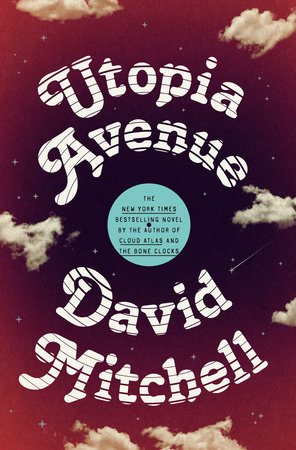
David Mitchell's "Utopia Avenue": Book Review

 Utopia Avenue by David Mitchell
Eight novels into his career, David Mitchell's established himself. You can count on his fiction to take you into a multicultural space, a cultural clash, and (nearly always) a spiritual--or at least supernatural--encounter. Engagingly told by either first or third-person narrators, his plots unfurl to keep any reader turning the pages. Which can add up, given the heft of most of his tales speculating on the grey areas between this realm and other ones.

If you've come to Utopia Avenue fresh, I'd suggest a detour. You need to start with The Bone Clocks (2014), and maybe the spin-off novella from the following year, Slade House. (Both reviewed on PopMatters). These will prepare you to step back into Mitchell's oeuvre. His first book introduced his modus operandi. Ghostwritten (1999) lives up to its title. It shuffles through various lives in different places across many centuries. The characters merge subtly with one another. Tellingly, the substance of the novel adds up to nine lives. The manner of how their essences may be transmitted in turn floats into a vast Cloud Atlas. 

Probably Mitchell's best known effort to date, Cloud Atlas creates an ambitious narrative which follows similar themes as his debut. But in this 2004 effort, Mitchell amps up the energy and the invention over a wider range of prose styles and six-times-two extended set-pieces which draw one into: the mind of a nineteenth-century notary at sea, a poor musician's journal early in the next century, a whistle-blower's thriller, a dystopian robotic Asia, and a wittily sour publisher on the lam. These nestle into one another like Russian dolls, burrowing into the central tale in post-apocalyptic Hawai'i before emerging to repeat the cycle of the previous five sections in reverse, by resolving each interrupted story.

However, even then a reader will not be ready to appreciate fully the backdrop of Utopia Avenue unless he or she finishes first the sprawling (even by Mitchell's standards) 2010 historical saga set at the turn of the eighteenth-century in Nagasaki, The Thousand Autumns of Jacob de Zoet. These prerequisites will prove enjoyable, and none will feel like assigned homework to catch up on. Nevertheless, this short stack of tall tales will take a while, so those opening Utopia Avenue need to know they'll be expected to have kept pace with prolific Mitchell over two decades. This leaves out, all the same, his remaining two novels.

The frenetic number9dream (2001) conjures up a chaotic sense of modern Tokyo; Mitchell lived in Japan for many years. Its own nine chapters thread together an imitation of Haruki Murakami rather than Mitchell's genuine voice, although the practice he gets in eclectic structures and experimental settings prepares him for Cloud Atlas. Finally, there's one charming outlier, his semi-autobiographical reminiscences of a thirteen-year-old on a housing estate in the middle of Worcestershire. It's told straightforwardly, and movingly.

Black Swan Green (2006) evokes powerfully Thatcher's England of the Falklands War, the New Romantics, synth-pop, stuttering, and all things British and/or annoying circa 1982. The audiobook performance by Kirby Heyborne will reward; many of Mitchell's works transfer well to the spoken word, although I'd make sure one has already a firm grip on the printed version of Cloud Atlas, given its dialects, intricate references, and inventive terms.

Back to the future for Mitchell fits. His storylines unravel chronology. In fact, the eerie Horologists who try to bottle up human life-forces so as to distill the Oil of Souls thrive on defying linearity as they strive to apply their energies to a vampire-fueled immortality. If this sentence makes sense, then one can follow Utopia Avenue. But one of its main characters, Jasper de Zoet, discovers his lineage traces back to 1800 Nagasaki, and that unfinished business then accounts for the mess that destroys the settled life of another protagonist at the start of The Bone Clocks, which ticks off from 1984 through its cast of misfits into 2043.

So, slot in Utopia Avenue between The Thousand Autumns of Jacob de Zoet and The Bone Clocks. In the spirit of Ghostwritten, characters face strange enemies. Connections appear subtly between these and more. For in Utopia Avenue as in all his works, Mitchell scatters "Easter Egg" appearances or allusions to his previous--and one presumes--future fiction. Characters and their works survive and echo as their stories already told reverberate softly.

It's difficult to convey the pleasures within Utopia Avenue to the uninitiated who enter David Mitchell's universe. Suffice to say that unless spoilers get revealed, only the gist of the work can be related. A few PopMatters faithful will know of the English folk-rock pioneers Fairport Convention. Well, take Sandy Denny (who appears as do many musicians of the psychedelic era in cameos or small supporting roles), one of its talented vocalists. She's channeled into Elf Holloway, a keyboardist from the folk scene, and one of three singer-songwriters. Second, Dean Moss hails from Gravesend, on the Thames estuary where the owners of the local pub will reappear as The Bone Clocks begin ticking. This bassist hails from the working-class in London itself. The class-consciousness plays a role in establishing the tensions and the diversity that enriches the new ensemble. They're joined by jazz-trained drummer Griff from darkest Yorkshire, and Jacob himself, a sort of Richard Thompson scarecrow figure on amazing guitar. Similarities ensue with real bands such as Fairport.

Car crashes, tragic passings (Mitchell excels at death scenes, premature or final), bleary touring and international hassles, sexist pop-show hosts, and smarmy manipulators all scheme against the three men and one woman (this group battles leering come-ons and baffled reaction in times not as advanced yet as some from sixty-odd years on may assume).

Mitchell's done his homework. The mmersion into not only London but a trucker's stop where ruffled and velvet-clad foppish musicians recharge after being on the concert trail, the wonder and danger of San Francisco's allure as seen through the eyes of members of the Grateful Dead and Jefferson Airplane, the dense terror and drive of Manhattan appear vividly as Utopia Avenue, the scrappy titular band, struggle up the charts and on blurred tours.

Laurel Canyon, Amsterdam, the Chelsea Hotel, and the less-heralded backwaters of Britain receive affectionate, insightful, and well-detailed depictions. Mitchell gets his rhythms right. Even a prison cell in Rome benefits from this writer's careful eye for all of the senses. Being born the start of 1969, he nonetheless benefits from his short distance from one who "really remembered the Sixties." He's old enough to have grown up with its musical legacy and cultural heritage. He's young enough to have been educated about the Aquarian Age's follies, its political naivete, and its bouts of impotence against endemic hate that trumps peace.

Woven into this revival of an age of expectation, Mitchell stitches a subtle critique of the impacts of the pot-heavy, lysergic-immersed, and heady music's ambitions on pop culture, moral choices, and even tripping itself. One watches the creation of verses; the novel is cleverly arranged to illustrate how each song on each album began its life--and Mitchell comes up with convincing lyrics too. The force of music as it emerges mysteriously or insistently in the mind of a capable (or baffled or stoned) composer gains clout as Mitchell expresses how notes stick on frets. The author examines deftly the ideals which force and beckon the four musicians and their circle to confront choices for good and evil. Amidst the slogans and chants, the violence (emotional and physical) exacted and inflicted around the band's predicament to stay true to their ethos makes them all mature into better people.

And that's the encouraging lesson of Utopia Avenue. The way to a better world, Mitchell quietly emphasizes, demands that responsibility not be shirked, and that cant or rhetoric fails to solve human loneliness or hereditary alienation. His composed, existential view may not please all, but his own Buddhist-inspired contemplation amidst the carnage and ecstasy of this romanticized era reminds us today of the caution needed when messages get blared.

"Music + Mind-Bending" at PopMatters 6/9/20 with hyperlinks to the cultural mentions. And a very trippy artwork that graces the review. Better than the galley (?) cover shown....

Wednesday, June 24, 2020

John Garth's "The Worlds of J.R.R. Tolkien": Book Review

 Image of The Worlds of J. R. R. Tolkien: The Places That Inspired Middle-earth
Atlases of Middle-Earth, guides and art, tributes and monographs, films and “cosplay” proliferate. What John Garth adds to the ever-proliferating pile of Tolkien-related media is a careful eye and steady step. He explores the intersections between this world and that of Tolkien’s “legendarium.” He traces inspirations from what the author saw, and how they may likely have evolved into what can be gleaned from his tales, letters, drafts, and sketches.

While not all made it into the published product, the effort Garth demonstrates attests to Tolkien’s visionary projection, his uncanny talent at what this scholar compares to a paint-box, in which the author dipped, daubed, and mixed layers of color, depth, hue, form, and drama into his vast legacy of narratives.

To begin, Garth logically starts with the hobbits’ Shire. Tracking parallels to childhood scenes in the village of Sarehole near Birmingham, Garth shows how Tolkien grew up amidst an almost-vanished rural setting. He then broadens the scope, viewing the “people, languages and cosmology” of Tolkien’s panorama, already emerging in his youthful imagination. It soon encompasses England itself, transformed into Lúthien, a name with lasting resonance, for it graces Tolkien’s tombstone. Topography expands abroad, with chapters devoted to features such as shores and seas, inland waters, mountains, forests, battlefields, and industrial wastelands. All are “places built or shaped by people,” Garth notes, and by Tolkien’s incessant cultivation of fussy details as a “natural niggler” whose seeding as a medievalist and linguist bore abundant fruit.

Garth reminds readers that what Tolkien began over a century ago described races and places as seen by medieval poets and chroniclers, not necessarily as they actually were. This astute caution defends the author’s works against detractors who, looking back and projecting contemporary critical theory upon Middle-Earth, distort its perspective.

What opens up to the viewer dazzles. Drowned lands, moving islands, and sea-caves first appear as Garth follows Tolkien’s explorations of the real and the fictional, and their blur and blend. Mountains loom, for Tolkien’s 1911 walking tour of the Swiss valley of Lauterbrunnen offered a “superfluity of inspiration,” in Garth’s estimation.

Peaks of fire, ice, and mist echo, as do Tolkien’s analysis incorporating volcanoes, geology, subterranean architecture, and craggy formations. Again, the 1911 travels had taken him two days down the Rhine towards the Alps. Germanic lore of dragon lairs and Wagner’s Ring-cycle leave imprints in his works. Rivers, pools, marshes and floods connect one section of this book to the next on “tree-woven lands.” Clumps, clusters, and circles of woods Garth compares to Tolkien’s wonderfully drawn maps, varied vistas, and even medieval cathedrals which have enriched his subject’s imagination.

Philology, archeology, cartography entered too, for the castles surviving, burial mounds, barrows, chalk-figures, and the ruins excavated across England turned into the citadels, fortresses, halls, and towers which endure or topple as ancient attestations to bloodshed. They populated Tolkien’s landscapes. As Garth’s previous book documented Tolkien’s experiences in, and reactions to, the “Great War,” this scholar’s scrutiny of artifacts of stone and iron, conflagration into ash, diaries, letters, and jottings comprise a significant portion of this superbly illustrated new volume.

While other writers schooled in the Edwardian age focused on the phantasmagorical, Tolkien’s balance with the grim realities of combat tempered his treatment. Panoramic desolation sears his pages, as does telling detail, that for instance of dead faces after a slaughter, submerged in miasmas as glimpsed from above by weary, parched marchers.
Tolkien’s sensitivity toward the eradication of the environment that nurtured his soul permeates his creations. This mirrored the hidden damage within those who survived the global carnage. As Tolkien recovered in 1916 from “louse-borne trench fever,” in and out of hospitals, he strengthened the scaffolding of his narrative constructions.

Returning to England, Garth corrects Tolkien’s pioneering biographer Humphrey Carpenter’s assertion that Birmingham equated to the dark and despotic Mordor. Garth examines that city’s toy industry, and its buildings preserving the Gothic Revival and William Morris’ Arts and Crafts Movement of Victorian times. Yet Garth somberly acknowledges the “swallowing of Sarehole,” as Tolkien’s beloved hamlet succumbs to a suburban “sea of new red-brick,” in his phrase.

John Garth concludes by evoking Tolkien’s ideals of “community, peace, freedom, craft and intimacy with nature.” These virtues enriched both his fictional and factual domains where he passed his long life, and its results endure to “reflect what he most loved and detested in his own world.”

Whether new to Middle-Earth or a veteran pilgrim, anyone will learn much in this book.
(New York Journal of Books, June 18, 2020.)

Tuesday, May 12, 2020

Death + Didascalicon


Last post began with a promised juxtaposition that stayed delayed. Too much grading intervened, too many importuning appeals. Here's the connection. In Rik Van Nieuwenhove's An Introduction to Medieval Theology (2012), the Didascalicon of Hugh of St Victor (ca. 1096-1141; pictured above) gets its moment. Don't be scared off by the title, as it's a guide to what, as you can see in my self-description on this very blog, is the medieval progression of study. The trivium's triple way from grammar to rhetoric to logic, whose remnant may be Freshman Comp (now "First-Year" to avoid gender), and then the more abstract realms of the four paths as the quadrivium into arithmetic, astronomy, geometry, and music. In turn, wisdom under the guise of theologia rules as Queen over the sciences. Literally, the fields of knowledge, from the Latin scire, to know, not our modern convention.
These seven liberal arts show the student freed from manual labor the direction to follow.

"The start of learning, thus, lies in reading, but its consummation lies in meditation; which, if any man will learn to love it very intimately and will desire to be engaged very frequently upon it, renders his life pleasant indeed, and provides the greatest consolation to him in his trials. This especially it is which takes the soul away from the noise of earthly business and makes it have even in this life a kind of foretaste of the sweetness of the eternal quiet."

That last phrase lingers like poetry. With less noise lately, more of us get squirrely, but some of us stay content. Turning off the machine and tuning in to nature, and the mind, and soul.

I'm trying to write shorter pieces for the blog, as looking back I can see I wrote ones that the ruder folk online dismiss as tl;dr (too long, didn't read). Philistines leaving graffiti, IMHO.

All the same, I am not attempting always to weave together various threads. More like the commonplace book I originally thought this blog'd be, I'll be inserting some reviews from the past couple of years stored up, as well as some even before that, Italian focused often as they were preparation for my visit there in what seems, given our already altered, or at least interrupted, collective memory, a while ago, rather than the few years on the calendar count.

What I'm musing about for much of my life: how we construct our notions of death and what either does or does not await us afterwards. Teaching a Contemporary Fine Arts, I offer a dozen very flexible theme choices so students can select an approach to slot in their own works to analyze. At first, when I added to the boring original six the course designer plunked down, another much more engaging, naturally six, and revising the six previous ones, I hesitated a second before creating one centered around death and mortality. It's been the most chosen by far each term. Sometimes half of those enrolled opt for it eagerly.

And in an already annoying to me media blitz where infection rates rise next to CNN sharing only one topic for two-plus months and counting, and where "uncertain times" came two weeks into this shutdown in two separate brands of cars advertised on air, and then a month in, the "we're with you poor brutes who have to go out and be nurses and DoorDash drivers" self-congratulatory missives, and now products pitched at the housebound or unsheltered in place, eager as the latest off-road jeep spiel starts, "from Park to Drive"--well, it's more apt than averring as I might let's have neighborhood book reads of Defoe's Journal of the Plague Year (can't get it from the library e-books as it's way booked) and the Decameron. I leave aside Camus' The Plague as it's allegory, but I do add to the shelf my own pick at the end.

Of course, I've been musing on this mortal coil and its contortions. I have my own loss that I keep private. Not sure if not being able to attend what would have been three (so far) funerals indirectly hastened to be sure by the virus and the ripple effect on hospitals, nursing homes, and the speed at which a kid drives a McLaren sports car and kills a certain pedestrian on an empty downtown L.A. street is a blessing or curse. But I am leaving off prognostications. Only noting my bemusement when a "Plan-demic" video was posted on a discussion forum, and seeing at the bottom of its conspiratorial manifesto a tag line to go to Alex J's Info-W's to purchase a 95-whatever mask. Profiting off panic, survivalist suckers.

For now, I'm reflecting, not predicting. And trying to parse if "through July" as issued by the California governor just now means shut-in until the end of June or of July itself. So, my reading will, deo volente, live on. As in this via Harper's weekly archive of arch finds from its 160 or so years of publication. As a subscriber, I unlock the magic door behind a paywall.

This pdf reveals the late John Berger's Sept. 2008 list "On the Economy of the Dead." I've been mulling it over as the past week I'd watched too the Amazon series Upload, all about the attempts of corporations in 2033 to create theme-park-resorts for those whose consciousness has been beamed onto a hard drive. Then the simalacra of the un-dead, as avatars, roam above in their digitally run paradise. With the supervision of their customer service reps in human form at keyboards who oversee their accounts--and as long as their earthbound relatives or loved ones foot the bill for their continued upkeep and fancy AI digs.

Which in turn reminds me strongly, in this lockdown phase of our own time, this 2006 novel. See my (admittedly mixed, may be spoilers) review of The Brief History of the Dead.
Have fun matching up which number you choose to align with long-gone Hugh of St. Victor.
  1. The dead surround the living. The living are the core of the dead. In this core are the dimensions of time and space. What surrounds the core is timelessness.
  2. Between the core and its surroundings there are exchanges, which are not usually clear. All religions have been concerned with making them clearer. The credibility of religion depends upon the clarity of certain unusual exchanges. The mystifications of religion are the result of trying to produce such exchanges systematically.
  3. The rarity of clear exchange is due to the rarity of what can cross intact the frontier between timelessness and time.
  4. To see the dead as the individuals they once were tends to obscure their nature. Try to consider the living as we might assume the dead to do: collectively. The collective would accrue not only across space but also throughout time. It would include all those who had ever lived. And so we would also be thinking of the dead. The living reduce the dead to those who have lived, yet the dead already include the living in their own great collective.
  5. The dead inhabit a timeless moment of construction continually rebegun. The construction is the state of the universe at any instant.
  6. According to their memory of life, the dead know the moment of construction as, also, a moment of collapse. Having lived, the dead can never be inert.
  7. If the dead live in a timeless moment, how can they have a memory? They remember no more than being thrown into time, as does everything which existed or exists.
  8. The difference between the dead and the unborn is that the dead have this memory. As the number of dead increases, the memory enlarges.
  9. The memory of the dead existing in timelessness may be thought of as a form of imagination concerning the possible. This imagination is close to (resides in) God, but I do not know how.
  10. In the world of the living there is an equivalent but contrary phenomenon. The living sometimes experience timelessness, as revealed in sleep, ecstasy, instants of extreme danger, orgasm, and perhaps in the experience of dying itself. During these instants the living imagination covers the entire field of experience and overruns the contours of the individual life or death. It touches the waiting imagination of the dead.
  11. What is the relation of the dead to what has not yet happened, to the future? All the future is the construction in which their “imagination” is engaged.
  12. How do the living lie with the dead? Until the dehumanization of society by capitalism, all the living awaited the experience of the dead. It was their ultimate future. By themselves the living were incomplete. Thus living and dead were interdependent. Always. Only a uniquely modern form of egotism has broken this interdependence. With disastrous results for the living, who now think of the dead as eliminated.

Saturday, November 11, 2017

David Williams' "When the English Fall": Book Review

When the English Fall by David Williams · OverDrive (Rakuten OverDrive): eBooks, audiobooks and ...
More than one friend lately has warned me to be prepared for challenges ahead--the kind which happen when our world, that of the "English," falls apart after a solar storm fries all systems and wires, machines and networks. Harrowing, but a scenario, scientists warn, that may bring down civilization, at least as we know it. In its wake, or out of its immediate impact to some extent, the Amish in this novel prepare for themselves, and against the gunshots, looters, and refugees to come.

This does not give away the plot. The blurbs and dust jacket copy say as much. What's left for the reader is David Williams' sparely told account in the voice of a family man. We see the before as well as the during of the catastrophe, and his journal records the events in simple prose, devoid of any effect fancier than some Scriptural allusions. The one striking me most: vultures around a corpse.

The narrative device of one character who predicts the end times ahead felt too literary, and the plot did not need this, but I suppose the author by this conceit wants to show the dependence on the wider world that even the Amish need, when it comes to medicine for their illnesses, and sales for their labor. It also connects the narrator's family to one on the outside, and widens the circle of concern.

I read this over a longer than expected (five-plus hours) wait at a car dealer for repairs, so I took my time with this brief book. I also paid attention around me to what the narrator recalls from his visits to the world of the "English." "I remember how people would walk around not even seeing each other, eyes down in their rectangles of light. No one was where they were." (27) A fresh take on a familiar subject. This novel does place you in the Pennsylvania district, neither romanticized or sensationalized. Again, it's honest report of a twist on the apocalyptic trope of speculative fiction.

For one representative person outside the farmlands and old ways, the narrator reckons the biblical analogy holds true. "The sorrows are planted, and they grow strong in the earth of his life, they rise up, and there is harvest." A Presbyterian elder, the author seems to be able to think in the style of a believer, and to channel his tamped down, unassuming chronicle in the mindset of one "non-modern."

For modernity, as it collapses, reveals unsurprisingly that we city folks cannot survive this meltdown. Guns prove a regression to another sort of tradition, as militias brandish them to make the narrator wonder the worth of a life like his protected by such. The lesson does not need hyperbole. Dimly remembering the unnamed cartoon "The Sorcerer's Apprentice," the teller tells us: "you never knew when the magic you rely on will overtake and drown you." The magical realm we all live in enables these words in print, and my review beamed by its medium. So we reflect. (Amazon US 11/11/17)

Monday, September 25, 2017

Ursula Le Guin's "The Telling": Book Review

The Telling by Ursula K. Le Guin — Reviews, Discussion ...
This was inspired by the suppression by the communists of the Taoists in China. Le Guin in her introduction to the 2017 Library of America edition of her collected Hainish works admits that her knowledge of this cultural obliteration came relatively recently. She fits this into her system, with an emissary from Terra, of Asian Indian origins, living in Vancouver. Terra is in tumult too; fanatics try to impose a one-god regime upon the disparate peoples in the tellingly named Sutty's multicultural land. She is sent as an anthropologist to Akan to investigate that world's parallel descent into control.

The control is exerted by a relentless hatred of the old. The peons are remade into "producer-consumers," and the state itself, influenced by the same fanatics earlier, seems to have learned their dark lessons well. Le Guin sharply depicts the soulless situation of the inhabitants who toil mirthlessly. Redolent of not only China under Mao or North Korea under its dictators, Akan is bleak. 

Sutty finds her mission to observe on behalf of the Ekumen, and to report back, compromised by a minder called by her The Monitor. Their fates will intersect as Sutty travels north from the megapolis into rural areas where she learns that not all of the old learning and forbidden ways have vanished. 

At this stage in her long career, Ursula Le Guin incorporated feminist themes and fluid sexuality into her characters. Sutty's lesbianism puts her further apart from those seeking complete domination over the private as well as public life. Technology has advanced, too, and the parallels to our age are there.

This story moves slowly. Especially at first, Le Guin channeled through her protagonist parcels out facts we need to know sparingly. But there is a fascination with the way that Akan plays off our Earth. Totalitarian dystopia in the name of progress, unity and conformity isn't only "science fiction." 

It also wraps up very suddenly. Sutty's summoning is brought about in a paragraph halfway, with seemingly no foreshadowing. This may reflect life's surprises, but it threw me off. The conclusion follows rapidly after some earnest negotiation. It's not a tidy ending, either. But it may be more real. (Amazon US 9/24/17) 

Tuesday, September 5, 2017

Ursula Le Guin "Hainish Novels + Stories": Book Review

These Hainish fictions aren't a cycle. Rather "a convenience" than "a conception." So Ursula Le Guin introduces this deluxe edition from Library of America in typically forthright, pithy, and sly terms.

Daughter of a groundbreaking anthropologist who taught at Berkeley and Columbia, Ursula Le Guin pioneered the meticulous investigation of her imagined societies within the popular genre of speculative storytelling. She began writing as a child during the Depression. Beginning in 1966, her contributions began in the Ace Doubles, SF pulp. Editors and fans recognized her skill. Although her sophisticated interplanetary system took a while to form, and even if its inconsistencies bother nitpicking critics, Le Guin avers this genesis gave her freedom to shift between stories and novels. She learned the difference between "willful suspension of disbelief" and merely "faking" it when invention stirred. (Her Hainish books need not be read in order, she has assured readers before.)

Part of Le Guin's innovation came through the "ansible," a device enabling instant communication across the universe. This became a standard tool throughout the science fiction cosmos. Her other innovation in the 1960s, she notes, has received less attention from a wider audience. The Left Hand of Darkness won both the Hugo and Nebula prizes, but it faced backlash, from pedants and from feminists. Le Guin's decision to use a fixed "he" for her people lacking a fixed gender--it alternates in the month--leads to her reiteration fifty years on. Despite many recent changes in social perception of gender differences, "we still have no accepted ungendered pronoun in narrative." Demurring from the term "prequel" for her story "The Day Before the Revolution" preceding her anarchist utopia novel The Dispossessed, "word-hound" Le Guin returns to her central verbal concern. "What matters most about a word is that it says what we need a word for. (That's why it matters that we lack a singular pronoun signifying non-male/female, inclusive, or undetermined gender. We need that pronoun."

This anthology's first volume gathers the first five Hainish novels. In a brief review, only a glimpse at the many realms Le Guin presents can suffice. Roncannon's World turns out for the Hainish ethnographer Roncannon an orb which will bear his name. (Hain's a planet resembling our own as the original homeland of humanity; the handsome endpapers in volume two make its earth-tones of continents heighten this suggestion, but it is not equivalent to Le Guin's Terra: an example of Le Guin's off-kilter approach to world-building.) Some telepathy occurs, but this wound up so overwhelming a condition for her menagerie of bio-forms that their creator edged away from it as a must as she expanded her fictional forays. Roncannon blends SF with fantasy. Its episodes entertain.

But eagle-eyed readers of venerable tropes may not be entirely convinced. There's a lot of humanoids evolving here on a smallish globe, so how they remain dispersed and sustaining may stem from Le Guin's anthropological curiosity more than a command of her developing talent in constructing plot.

Two more shortish novels follow. Planet of Exile as the title tells finds human colonists stranded on a hostile Werel. The arrival of attenuated seasons will become a factor in her present and future Hainish terrains: when winter comes, it stays for 15 years, and the "hilfs" arrive during this cold snap. These nomads call the humans "farborns." They both face savage hordes and snow-ghouls. One wonders if George R.R. Martin's vast audience knows of this 1966 predecessor, pitched again at the Ace crowd.

The following year, City of Illusions presents one raised by forest dwellers, but not born one of them. His quest across a ravaged earthscape and a dystopia full of occluded psychics also includes talking animals. Who can and cannot take life provides the complex theme, further taking on brainwashing.

The Left Hand of Darkness (1969) and The Dispossessed (1974) attain canonical status. Many will be most familiar with these dense novels. They deepen the SF genre. They will demand attention; they will reward reflection. This volume adds an "original" version of the experimental core of what became Left's alternating genders on Gethen. "Winter's King" sparked Le Guin's curiosity. What if "the king was pregnant" popped up in a tale? Both tales investigate how warfare equates with "predominantly a male behavior," If some people reverted to being female with an overwhelming sex drive for a few days a month, while others were male, how might this play out for an Ice Age planet a.k.a. Winter? Furthermore, Le Guin addresses how language, power plays, and relationships evolve.

The last work in the first volume, The Dispossessed may not have lasted as long in curricula and on reading lists as its gender-driven counterpart. It emerges from Le Guin's weariness with the Vietnam War, and her Cold War affinity for Peter Kropotkin and Paul Goodman's non-violence. Pairing this via her youthful exposure to Lao Tzu, Le Guin incorporates the Tao into a study of no-coerced-order.

For it has to recognize anarchy's discontents. Determined to leave his anarcho-syndicalist home on Anarres, physicist Shevek travels to a patriarchal society on Urras. Class war, religious dissension, and the grip of the in-group naturally mesh with Le Guin's intellectual interests. While less read now than Left, this novel of ideas also remains less popular than certain pulps penned by Ayn Rand. But Rand cannot match Le Guin's U.S.-of-A.-like A-Io for its ambiguous appeal as the Yang to the Yin of Urras. Capitalism gets its comeuppance, but so does socialism. Despite dense discussion, it's far more vivid than any Rand. For one "cannot buy the revolution. You cannot make the revolution. You can only be the revolution." How one's possessive power gets mired in habit dramatizes--admittedly too tediously for readers craving more drama--its theories and its morality, as a thought-experiment.

As her fiction sweeps up allegory, her story arcs sometimes twine; but not neatly or necessarily. Her motivations push reflection arguably more than action. She leaves one pondering, despite what can be ponderous to those weary of nuance. Her erudite character studies and linguistic riffs predominate.

Le Guin's Hainish elaborations continue into the mostly shorter pieces of the second volume. The novella The Word for World Is Forest has always struck me as a protest against the defoliation of Vietnam. It may align more with the Earth Day sentiments of the early Seventies, but either way, the revolt of those on Athshe against the invading Terrans bent on taking its resources to sustain their own depleted earth has remained topical. Le Guin acknowledges this sad truth in her appended 1976 introduction for Word. She relates how her own "fantasy" at that time that a Philippine tribe called the Senoi stood for a "dream culture" akin to her imagined one for her indigenous resisters. While these claims were largely debunked among anthropologists, Le Guin reasons that for her threatened world, the use of its scientific data may diminish accordingly as its "speculative element" compensates.

Hainish stories overlap in characters and ideas now and then among the seven compiled here. Her faster-than-light communication device the ansible excited her fellow scribes. By 1990, Le Guin took up a possibility akin to Madeleine L'Engle's "wrinkle in time." Le Guin was "allured by the notion of transilience, the transfer of a physical body from one point in space-time to another without interval."

Christening it "churtening," she allows that those who pull it off in her fiction are never sure how they did it, or if they can do it again. "In this it much resembles life." Her 1994 collection A Fisherman of the Inland Sea weaves influences from a Japanese folktale with Hain-adjacent love stories. She attempted in this decade "to learn how to write as a woman." Her latest brainstorm, the "sedorutu," sets on the world named O an institutionalization of hetero- and homosexual relationships "in an intricate four-part arrangement laden with infinite emotional possibilities--a seductive prospect to a storyteller." Her "gender-bending" produces stories enriched by her own decision to speak out not only on behalf of women, but all who are loners and introverts. In an era bent on overpopulation, "unlimited growth," and "mindless exploitation," Ursula Le Guin retreats. She considers the misfit.

Her final entries twist more categories. Dark-skinned people enslave light-skinned ones. The emerging "story suite" becomes Four Ways to Forgiveness. Meanwhile, Le Guin learns of the destruction of "religious Taoism" during the regime of "aggressive secular fundamentalism" in China.

The Telling (2000) closes this volume. Le Guin sees around her in her own homeland the rise of similar "divisive, exclusive," and dogmatic instigators of hatred perverting "the energy of every major creed." This concluding novel depicts "the secular persecution of an ancient, pacific, non-theistic religion on another world." Those responsible, tellingly, originate among "a violent monotheistic sect on Earth." No matter what ignites the dynamic fusion of thought and action in her Hainish fictions, Ursula Le Guin generates provocative and intelligent considerations of complex forces. A tribute to her craft, these elegant volumes combine into a welcome set for loners, introverts, and the rest of us.
(Combined volumes: Amazon US 9/5/17. Vol. 1  and  Vol. 2 ) PopMatters as Ursula Le Guin's Science Fiction Stories about Class, War, Religious Dissension and More  9/14/17)

Thursday, June 8, 2017

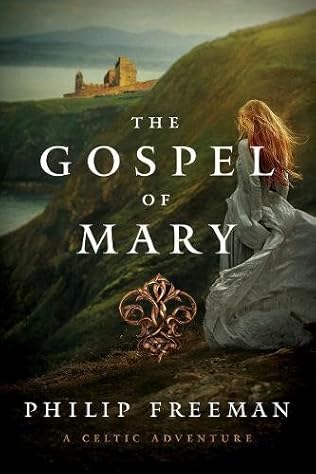
Phillip Freeman's "The Gospel of Mary": Book Review


book cover of 

The Gospel of Mary
Since I was a teen reading James Michener's "The Source," I've had a weakness for "So-and-so has discovered a missing Gospel" yarns. I liked the prolific Professor Freeman's recent Oxford UP retelling of Celtic mythology, so I gave this a try. Via an e-galley, I did not know until I finished that this is the third in his Sister Deirdre series. That explains some backstory I kept wondering why not more was divulged herein. I had no trouble following along, but it's better I assume to have caught up with the previous books, for the main character evidently has a complicated past and much to tell.

Not be confused with another, recent Irish-oriented story, Colm Tóibín's drama "The Testament of Mary," Freeman's "The Gospel of Mary" features the rapid pace, genial tone, and expository dialogue that fills us in on an Ireland when Christians still number few. Deirdre's grandmother was a druid and she claims the same identity, although when her mother died, her grandmother fulfilled her promise to raise Deirdre in the new faith. With allusions to a failed marriage, other past liaisons, and a child who died young hovering about, it's clear that Freeman's protagonist has had more adventures than most nuns might have, at least in later times. She lives with her friend and sidekick Dari in a monastery founded by Brigid, which to Rome's discomfort hosts celibate men and women together.

Rome's unease deepens as it sends a clever emissary to find out what the truth might be to a manuscript smuggled into the island with haste, secrecy, and danger. It is, naturally, the tale of Jesus told by his mother, and its passages intersperse, as they are translated by Dari from the Aramaic, with the fate of the two women as they get caught up in keeping their treasured text safe from the Church. The Church, after all, fears that its integrity will crumble if Mary's words are proven true, and even if they are not able to be verified, that the heresies and tumult generated by them will bring down Rome

It all moves satisfactorily. I read it in a sitting. Freeman has done his biblical homework, and he blends it with a quest that dashes about Ireland. There's plot complications, but the story line as a whole does not surprise. It's a pleasant narrative, and it likely will educate as well as entertain you.
(Amazon 9/5/17)

Tuesday, June 6, 2017

Jean Raspail's "The Camp of the Saints": Book Review

The Camp of the Saints - Wikipedia
Recent flotillas of refugees from Africa and Syria caused a few bookworms and pundits to name-check this 1973 novel. Liberals practically put "scare quotes" around a mention of what they term a racist screed. Conservatives may praise it as a "classic." I knew of it way back via the maverick Garrett Hardin's perspective; he appealed if in different aspects to both ends of the political spectrum.

It popped into my mind the other day so I sat down and read it. It took two sittings. Raspail, as here translated by Norman Solomon, has a feverish, testy style that Michel Houellebecq, in his formative years in France, I suspect may well have come across. However, as Houellebecq's mordant fiction gains the same condemnations in bien-pensant right-thinking and left-leaning circles as Raspail's book, readers familiar with H. may find an encounter with R. bracing, infuriating, or baffling.

Raspail is credited on the blurb for The Camp of the Saints as a prize-winning author in his native land. Yet this novel flails from the get-go. The end of the story, or near it, jumbles up chronology. The sneering tone of the misanthropic narrator, the overabundant detail, the cardboard characters, the fact you don't care about anyone in the entire storyline: Raspail has scores to settle, but whether you'll be cheering him on or chasing him away depends not only on your own ideological bent, but your tolerance (a theme put through the wringer herein) for prattling. Raspail has it in for his countercultural era of the slightly aging hippies and the faux radicals of the early 1970s. He also despises the press, and some of the admittedly best barbs come as his narrator skewers the posturing.

I thought of the New York Times, for instance, when I found a similar send-up of earnestly PC journalists, who lambaste capitalism and despise corporations and capitalism in the same pages whose sponsors are those fat cats, and whose underwriting, so to say, supports the fulsome claptrap.

The key criticism, as Hardin reminded American readers decades ago, is that the "lifeboat" (here not symbol but story itself, multiplied all over the ocean as refugees set sail for Europe and the rest of whatever is the Western world circa 1973) cannot hold everyone. Either the rich have to share, and become poor themselves as such largess will not balance but tip over everyone into poverty, or they have to defend their realms with force, and "contempt" as Raspail later put it, lest they lose it all.

Odd tangents speckle this work. Clement Dio, a preening poser of the Third World solidarity his own bloodline allows him to capitalize on in more ways than one, is the best of a bad lot. But Raspail's mouthpiece hates worker-priests (back when there were enough clergy to go around), and the Dominicans (not for once the Jesuits) come in for comeuppance. Funny that one Benedict XVI reigns. Along with the Church, the unions, the press, and the military all get their turn at this "roast."

Yes, Raspail makes some points early on about the hypocrisy of the West, the implosion of its value system in a secularizing (well, not quite as it's still France in the post-Vatican II guitar mass phase) and skeptical society, and the contradictions inherent in the post-colonial world supported by the five (now more like six and a half) billion whose labor and losses prop up the seven hundred million whites. "The Last Chance Armada" makes a few at first hesitate but the pressure to welcome the human tide from over the sea leads many addled or idealistic Westerners, guilt ridden and excited to expiate their sins of neglect and greed, to proclaim "We Are All From the Ganges Now" as the first wave from India crests and others then join the exodus to the Northern Hemisphere, at least the wealthy part.

The narrative, such as it is, lurches through scenes of the army, a strange tangent with Benedictine monks, the chattering classes, a token couple from the working class, and those in factories and offices who find, as all anticipate the Easter Sunday mass landing of the sordid ships and their cargo, the early advantages taken by those in France itself who have earlier emigrated, and who maneuver their own prospects, eased by the care or fear taken by their "host nation," as it capitulates to them too

Interesting idea. Promising set-up. Fumbled execution. Fizzled climax. Ho-hum resolution as the narrator and Raspail seem too wearied or jaded to bother carrying on after so many pages of rants.
However, the relevance of this scenario cannot be gainsaid. Look at headlines. (Amazon US 6/5/17)

Wednesday, May 31, 2017

Lionel Shriver's "The Mandibles": Book Review


After nearly 130 reviews posted [on Amazon US, where this appeared 9/28/16], mine will not rehash much of the story. I like Lionel Shriver's little-known novel on the North of Ireland and while her take on obesity in Big Brother was less successful, I admire her willingness to immerse herself, whether the theme is snooker, bicycling, tennis, or a child who is a bit of a problem. So, as a fan of dystopias, I wondered how she'd handle the near-future economic meltdown of the Renunciation.

Turns out she puts enormous paragraphs in the mouths of not only the put-upon Georgetown professor of economics, but a teen prodigy. They wind up having to explain theory and practice of the "dismal science" to the family, which grows as hard times fall and never ebb in 2029. Shriver tackles the misanthropy and growing chaos well, if from the perspective of a hard-to-like matriarch of a privileged clan in Manhattan. True, pity is needed for those who as the prof notes have more than one pair of shoes, and to her credit, Shriver moves the family tale along rather briskly.

But as the professor lets on early, his pontifications are hard to let go of, and other characters speak like educated folks on paper, with almost no distinction. Only a burst of "black English" by one client of the protagonist of the first 3/4 of the novel seems to come from another class or reality. Still, seeing a New York streetscape where the homeless do include nuclear physicists in fact and not fantasy, and where the street people have their pick of Posturepedic mattresses discarded as the system breaks down and selfishness gives way to brutishness seems to confirm Hobbes.

She gets digs in. No more worries about lactose tolerance, or gender dysmorphia. Or, obesity, in the harsh reality that replaces coddling or comfort.

Oddly, in the last quarter of the book, from the view of a particularly annoying if prescient person, the presumed religious backlash to the surveillance of the resurgent US government is absent. Shriver succeeds as many writers have in showing us the New American Order, but she shrinks from the rural reaction, and her observation of the world outside NYC does not convince. As she divides her time between Brooklyn and London as a longtime ex-pat, perhaps she is too used to reading about her fellow 'Muricans rather than roaming beyond the chattering creative classes she likes to skewer. True, mango-wood side tables won't rouse much of a reaction vs. a 5 lb. bag of rice in 2029 where "dial 2 for English" is the new norm. Her predictions may come true--I fear that of the "cuboids" of dead trees once known as books may be hastened, despite her dire estimation of Amazon itself in this brave new world. Anyone having read Huxley's tale may find The Mandibles an echo, if another uneven message.

Friday, May 19, 2017

Dave Eggers' "The Circle": Audiobook Review

the circle eggers
When I found this at my library online, I wondered why the queue for copies put me at #163. I had wanted to read this since I saw the first chapter excerpted in the NYT Magazine back near its 2013 publication. I dimly recalled that many scoffed at its Silicon Valley speculation, but it intrigued me.

I chose it as I'd liked Dion Graham's entertaining audio reading of a Neil DeGrasse Tyson book. He brings to "The Circle" a range of California-speak techies, as well as some international types. He's adept at conveying Mae Holland's voice and indirect first-person interior monologues, as the events are told from her perspective. As the fresh new hire, we see through her eyes and ears the ambitious projects of a firm that has in the near-future become the one-stop shop for goods, transactions, and socializing. The rapid transition from a do-good company to a benign surveillance operation appears convincing, given the acceleration towards relentless glad-handing, monetization, and capitalizing on one's own "brand." The pace becomes nearly inhuman, as those in The Circle seeks its "completion."

Dave Eggers takes his time over these 13.5 hours as heard here, and his careful explanation of how this corporation combines the earnest wish to possess all knowledge for of course the betterment of all, the corporate drive for perfection, the demand for ubiquity, and eventually the perceived will of the informed populace works well to keep you wondering what's next for Mae and her fevered peers.

As she says late on, "you're surrounded--by friends!" Privacy turns suspect, for what do honest folks mean to keep from the scrutiny of billions of "watchers" online? Rank has its privileges, Sharing is caring, why should what people do be left private? The common good is perceived to depend upon data-mining of all that humans have done or witnessed. Transparency. Is there any opt-out left?

For 12.5 hours, this set-up won me over. The problem is that the last hour of the audio, the last portion of the narrative, has the protagonist in my opinion making a decision that while not totally out of character seems churlish and childish. This may show her flaw. But the events that wrap up this, reminiscent of parts of "Brave New World"'s dramatized divide as debated between the Savage and the technocracy, seem to hurry along plot points, It also compresses some characters into foreshortened depictions not in line with earlier depth. I ended this wondering if there's a sequel. I'd like to find out a lot more. For now, not having any idea of the fact there's a 2017 series starting up, I may prefer to hide that visual depiction away, and choose my own depictions. Eggers writes this with clear details, as if he's preparing for a screenplay, and it translates the action and settings well.
(Amazon US 5-22-17)

Sunday, March 26, 2017

"V for Vendetta": Audiobook Review

"The inch of integrity"
Would you consider the audio edition of V for Vendetta to be better than the print version?
You need to read the graphic novel first. Then the film, Then this. All 3 merit respect. They all adapt their chosen medium well. While anyone will turn to the Alan Moore-David Lloyd ur-text, I approve of all three versions as worthy. They elaborate the story for each format.

What did you like best about this story?
Steve Moore's novelization allows you to "see" in the mind's eye images that compliment the original source written by (here uncredited by his request) Alan Moore and the cinematic adaptation of the Wachowksy Brothers' script.Themes are deepened at nine hours that the film could not suggest, and I was pleased how intelligently composed was the novelization. It can stand on its own as a deserving representative of the source. It's smart and it's moving. Anarchism at its best. 

Which scene was your favorite?
Evie's enlightenment. No spoilers, but Simon Vance delivers this tale with deft and subtle readings of the dramatized text. He's the perfect "British" voice to convey irony and emotion.

Did you have an extreme reaction to this book? Did it make you laugh or cry?
I found, listening to this the week of the Westminster Bridge attack in London near the very Parliament of this narrative, eerie similarities. And the way a demagogue exploits the fears of a populace, naturally, is not only akin to the way totalitarian and fascist regimes operate. The 20th chapter delves into the rise of the ruling class well in this dystopia, and it remains both prescient and wise. It takes a side, but it is fair to the opponents even as it condemns. It is a sophisticated morality tale, and it is not the facile depiction of an avenger, but a careful study of opposition, and the price it costs more than one key character, dramatically.

Any additional comments?
The storyline takes care to not glorify any deaths or sufferings. Not an easy feat. There is no exploitative violence or sabotage, The Guy Fawkes echoes resonate. And we see how V's message inspires not only the expected dissidents, but others who are surprised to hear it. (Audible US 3/25/17) 

Tuesday, February 28, 2017

David Mitchell's The Bone Clocks: Audiobook Review

The Bone Clocks Audiobook | David Mitchell | Audible.com
Overall
Performance
Story
""I've seen the future, and it's hungry""
Would you consider the audio edition of The Bone Clocks to be better than the print version?
Yes, having read the novel first. The characters come alive and the prose sharpens. The plot is clearer to understand, too.

Who was your favorite character and why?
I liked Hugo Lamb. Not to spoil anything, but he bore a difficult role in the storyline. Harder to cheer him on, but his choices are understandable and add depth to the impact overall.

Which scene was your favorite?
Hard to pick, but the last chapter with the Irish encounters appealed. The accents were a nice change from the predominantly English ones and the setting deepens as it's set where the author has chosen to make his home, away from his own island.

Was there a moment in the book that particularly moved you?
The scenes between Hugo and Holly are very human. Despite their differences in class and outlook, their attraction softens the harsher edges of the story, and we need to see these characters in a vulnerable predicament. This also sets up some key themes later on.

Any additional comments?
This book is imperfect, but hearing it, after you read it, is recommended. David Mitchell is a great storyteller and the performances of all six readers keep you engaged. Not a book to be heard in the background. I listened to this late each night, and this enabled full attention...
(Audible 11/21/16)

Tuesday, February 14, 2017

Neil Gaiman's "Norse Mythology": Book Review

Cover Unveiled For Norse Mythology by Neil Gaiman | GalleyCat
This prolific and popular fabulist retells the legends he first loved. As an English boy, Neil Gaiman took inspiration from stories set in the Northern lands. He credits Roger Lancelyn Green and Kevin Crossley-Holland for their compilations of its lore. What Gaiman contributes to this short shelf, beyond name recognition, is wit and verve. His Norse Mythology compiles brisk chapters revealing a cosmology's creation, and the fulminations and machinations of its gods until its destruction. 

We retain few sources about this venerable treasure-trove. Gaiman's brief introduction surmises: "It is, perhaps, as if the only tales of the gods and demigods of Greece and Rome that had survived were of the deeds of Theseus and Hercules." Similar to the 85% of classical literature lost, a fraction of the Northern corpus survives. From these fragments, Gaiman in everyday language which children and adults will both enjoy invigorates a wise and worthy chronicle of exploits, often tricks, schemes and brawls.

"I was surprised, when I finished the stories and read them as a sequence, to find that they felt like a journey, from the ice and the fire that the universe begins in to the fire and the ice that end the world." Gaiman's admission prefaces an exciting episode of the dawn of his frozen setting. Inside Ymir's skull, readers see the how the Norse sky shines as stars, as sparks "that flew from the fires of Muspell." Clouds pass as the remnants of Ymir's brains, "and who knows what thoughts they are thinking, even now." Gaiman's simple prose allows readers to enter into a mindset of primeval awe. 

Odin's plot to build a wall may remind audiences of another land of fire and ice, in Game of Thrones. Today's fantasists as fans and writers turn to George R.R. Martin as they long have to his predecessor J.R.R. Tolkien, whose scholarship and passion for the sagas enriched his mythology. Trolls and giants, elves and the dead, humans and dwarfs and demons loom large in Norse Mythology too. Action does not falter in Gaiman's performance (also issued as an audiobook). This collection flows, caught up in primal energy. As a towering figure takes on Thor, the narrative suddenly veers to his rival's perspective. "The mountain giant saw the hammer getting rapidly bigger as it came hurtling toward him, and then he saw nothing else, not ever again. A piddling pair outwitted flail in a rowboat "like a couple of bearded lobsters." 
Such imagery and control show Gaiman's affection for his material. Frey from Odin's throne looks out over the four points of the world. "And then he looked to the north and saw the thing that was missing in his life." Echoes of oral tradition linger on the page. Drama and love enter, and then tragedy.

A terrifying climax pummels the reader. Ragnarok, as doomsday, dominates an apocalyptic morass. Within it, Naglfar arrives. "This is the biggest ship there will ever have been: it is built out of the fingernails of the dead. Naglfar floats upon the flooded seas. The crew looks out and sees only dead things, floating and rotting on the surface of the sea." Poe or Conrad, Melville or whatever account of Noah or a "perfect storm" rivals or heirs to these primordial tales may invent cannot improve on this scene. Given storm surges and "sunny-day flooding" pepper our news lexicon now as common phrases, this conclusion to Norse Mythology remains relevant. Neil Gaiman charms and frightens his wide readership with this welcome, memorable compendium. (Spectrum Culture 2-12-17; A different version to Amazon US 2-7-17)

Tuesday, January 31, 2017

Bram Stoker's "Dracula": Audiobook Review

Dracula [Audible Edition] Audiobook | Bram Stoker | Audible.com

Overall
Performance
Story
"More English reporting than Transylvanian action"
If you could sum up Dracula [Audible Edition] in three words, what would they be?
Menacing. Meandering. Maddening.

How would you have changed the story to make it more enjoyable?
Shift all action onto Dracula's home turf. So much of this narrative is off-stage from the Count, in the second location of England. Characters debate how to fight the force, but from a distance. They talk and talk about Dracula, but take a long time to form a big showdown.

What about the narrators’s performance did you like?
The "all-star cast" fulfills its mission. The voice for Van Helsing is effective, and the report of the Russian sea captain and that of Mina's trance-like message both add depth and doom.

If you were to make a film of this book, what would the tag line be?
It's faster than the novel.

Any additional comments?
Revisiting this after thirty years, the layered narratives are inventive ways to tell a tall tale. But their cumulative power dissipates as the antagonist is tucked away as it were for a great part of the plot. This diminishes rather than increases his terror. Stoker's inventive staging of the novel in many reports and letters remains admirable, but the force of it all is lessened. (Audible US 12/6/16)

Thursday, January 19, 2017

Philip Pullman's "The Amber Spyglass": Audiobook Review


Overall
Performance
Story
"Tell them true stories"
What did you love best about The Amber Spyglass?
I loved the evocation of the underworld of the dead souls. Philip Pullman may draw inevitably from Homer, Virgil, Dante and Milton, but he uses these venerable sources well. He reshapes his last volume of His Dark Materials to expand his vision of the cosmology that promises a second chance at Eden, if one tempered by realities not even fantasy can avoid.

What did you like best about this story?
The boatman's warnings as he ferries certain characters across to the land of the dead remains haunting and moving. It channels classical motifs inventively and engagingly.

What does Philip Pullman and full cast bring to the story that you wouldn’t experience if you just read the book?
Again, the range of voices makes the slower parts (and there are many, alas) move along. If I'd have just read this novel, I might not have pressed on through the particularly perfunctory parts often involving a character returned from the second installment, Mary Malone. Also, the disjointed nature of much of this plot challenges patience, even if moments glimmer.

If you were to make a film of this book, what would the tag line be?
Adversary or Authority: who do you love?

Any additional comments?
Like even the beloved Tolkien, fellow don Pullman falters when he tries to wrap up his trilogy. The climax happens well before the end, and a particular character's fate is almost an aside, barely seen, when other writers would've made this a blockbuster showdown. Pullman elaborated so much earlier that too much of this feels didactic and not adventurous. Still, despite the structural clunk, his characters can tug at your heartstrings and even the walk-on parts evince the author's profound humanism and the Keatsian "negative capability" at work. (Audible US 1/16/17)