Showing posts with label paganism. Show all posts

Thursday, June 8, 2017

Phillip Freeman's "The Gospel of Mary": Book Review


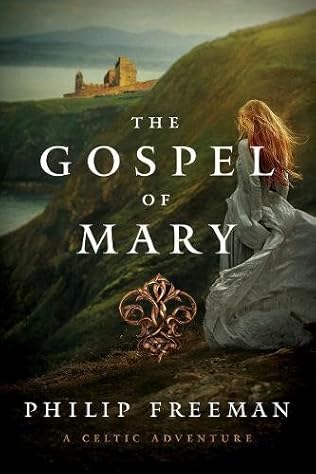
book cover of 

The Gospel of Mary
Since I was a teen reading James Michener's "The Source," I've had a weakness for "So-and-so has discovered a missing Gospel" yarns. I liked the prolific Professor Freeman's recent Oxford UP retelling of Celtic mythology, so I gave this a try. Via an e-galley, I did not know until I finished that this is the third in his Sister Deirdre series. That explains some backstory I kept wondering why not more was divulged herein. I had no trouble following along, but it's better I assume to have caught up with the previous books, for the main character evidently has a complicated past and much to tell.

Not be confused with another, recent Irish-oriented story, Colm Tóibín's drama "The Testament of Mary," Freeman's "The Gospel of Mary" features the rapid pace, genial tone, and expository dialogue that fills us in on an Ireland when Christians still number few. Deirdre's grandmother was a druid and she claims the same identity, although when her mother died, her grandmother fulfilled her promise to raise Deirdre in the new faith. With allusions to a failed marriage, other past liaisons, and a child who died young hovering about, it's clear that Freeman's protagonist has had more adventures than most nuns might have, at least in later times. She lives with her friend and sidekick Dari in a monastery founded by Brigid, which to Rome's discomfort hosts celibate men and women together.

Rome's unease deepens as it sends a clever emissary to find out what the truth might be to a manuscript smuggled into the island with haste, secrecy, and danger. It is, naturally, the tale of Jesus told by his mother, and its passages intersperse, as they are translated by Dari from the Aramaic, with the fate of the two women as they get caught up in keeping their treasured text safe from the Church. The Church, after all, fears that its integrity will crumble if Mary's words are proven true, and even if they are not able to be verified, that the heresies and tumult generated by them will bring down Rome

It all moves satisfactorily. I read it in a sitting. Freeman has done his biblical homework, and he blends it with a quest that dashes about Ireland. There's plot complications, but the story line as a whole does not surprise. It's a pleasant narrative, and it likely will educate as well as entertain you.
(Amazon 9/5/17)

Monday, May 29, 2017

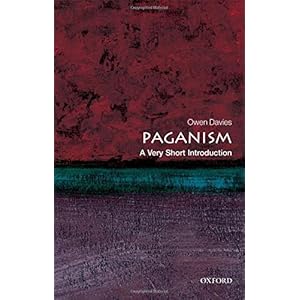
Owen Davies' "Paganism: A Very Short Introduction": Book Review

Paganism: A Very Short Introduction

This focuses necessarily on Christianity, as that force has for very long defined what it is not as pagan. For the other side, we lack a lot of trustworthy information. For the enemies of the "pre-Christian indigenous religions," if that slippery phrase itself not wholly supported by Owen Davies is any guide, rallied to denigrate their opponents. Pagans under Rome did not always live in the "sticks," but in cities, furthermore, often.

The opposition faded, but held out among the Balts, Slavs, and Scandinavians. Yet these places also betray influences by Christians. The archaeological record finds temples were probably more political sites than places of worship. And the common appeal popularized by Augustine of Canterbury to build on pagan places the Christian sacred spaces was a clever conversion move, to ease and entice those reluctant to baptism.

While such holdouts in many realms lingered, the claims of continuity from some unbroken underground lineage as advanced by Margaret Murray and Gerald Gardner early last century give way to harsh reality. I wish Davies had included those who from Italy or Iceland assert such sustaining practices, but in such a short primer, this shifts rapidly from European to New World and African and Eastern intrusions, as who was pagan grew alongside Christian missionaries' attempts to overcome such beliefs, demonized by Augustine of Hippo and leading to much persecution and death.

I also wondered about Islamic attitudes towards polytheists. Glimpses can be gleaned, but again, this concentrates on Christian promulgations and prohibitions against magic, sorcery, idol worship, sacrifice animal or human, and many gods. Even the term polytheism gains suspicion, for Philo of Alexandria invented it to differentiate those who went after false deities instead of the One True God of the Torah. So, deep within monotheism rests a fundamental distrust and an active determination to root out those who defy the core message of unity and faith, by belief in many powers.

Davies has a lot to compress, so the pace is rapid. The suggested reading list is briefer than many volumes in this series, But the bibliography, even if it is not tied to the chapters that tightly, is in-depth. A necessary corrective to romanticizing or fearing this common belief system, one that in an ecologically threatened reality seeks to restore some semblance of connection to earth, and the spirits and forces that may swirl around us. (Amazon US 12/3/16)

Friday, April 7, 2017

Eric Kurlander's "Hitler's Monsters": Book Review

Hitler's Monsters: A Supernatural History of the Third Reich
This Florida-based historian bases his investigation of the supposed supernatural in Nazi Germany on archival research, vast documentation, and a determination to produce a calm, focused, and sober study of an inevitably sensational topic. He seeks a "post-revisionist" balance to recent claims diminishing or explaining by other means the reasons so many under the Nazi regime sought guidance through "border sciences" of paranormal, Thule-obsessed, and other dodgy speculation.

In this galley, no index was provided. Looking at his admittedly impressive list of sources, one is aware of Eric Kurlander's steady ability to explain such arcane and often disturbing lore and its applications. Spot-checking, for instance, I was surprised not to find any mention of Julius Evola, as his role playing off or even against the German interpretations of esoteric theory is well-known. But within the borders of his narrower topic, this professor provides a surprisingly readable guide. Coming to this as a newcomer, wary of special pleading, instead Hitler's Monsters offers balance.

That is, Prof. Kurlander achieves a combination of the distance from the events that enables reflection, and a firsthand ability to handle primary sources which many who attempt to make claims about this subject cannot support, given their lack not only of the language, but the historical acumen. The "supernatural" takes in much, and astrology, paganism. Ario-centered myth-making, witchcraft are expanded to include "miracle weapons," "supernatural partisans," and unfortunately "racial science" as supporting experimentation, resettlement, and of course mass genocide.

Nearly every paragraph contains superscriptions to the documentation. There a few endnotes elaborate on the text proper. The care taken by Kurlander is evident. With so many continuing to challenge historical veracity on this emotive episode, this caution and meticulous defense from the work of previous colleagues is welcome. It's a valuable contribution to the study of pseudo-science, far-fledged theories, insistent fabrication, and ultimate devastation. Not the kind of power results the Reich wanted to achieve, but the kind it kept churning out in apocalyptic rhetoric and frenzied schemes, even as the enemy closed in around its own borders. Werewolves, vampires, and pre-modern cosmology all played dark roles.

Out of this "supernatural imaginary," as Kurlander calls this plethora of sinister powers, an appeal beyond anti-semites, fascists, and "racist imperialists" enveloped a broader support base. This is crucial to understand, for without clear economic solutions or political policies, Kurlander concludes, the Nazi party came to and maintained its rule by blurring the problems of social and economic reality with this concocted dust of mass media manipulation. Rather than forces unseen, the dictatorship drew upon illiberal conceptions which survived the end of the Reich. As we see...
(Amazon US 4/2/17)

Friday, January 13, 2017

Mark Williams' "Ireland's Immortals": Book Review


How the Christian Irish regarded their island's pagan divinities, in medieval and modern times, comprises the two halves of Ireland's Immortals: A History of the Gods of Irish Myth. Mark Williams, an Oxford medievalist, unravels the tangled threads in texts that challenge even the skilled interpreter. Old Irish remains formidable for scholars, and the fact that the evidence exists only in copies centuries after its first renditions onto parchment, deep within already Catholic times, complicates any explicator's task. Dr. Williams remains steady throughout this study. His accessible style remains academic but blessedly free of jargon or cant. His glossaries summarize key concepts and his footnotes address arcane debates.

His history of the gods of Irish myth examines key writings left by the monks and scribes, from the period after conversion. Williams estimates that within a half-century after the Patrician period, Ireland would have been effectively under Christian control. Although pre-Christian practices may have endured, they diminished rapidly, despite the imaginations of later bards eager to insist on secret continuity with centuries nearly up to our own. Williams separates the archaic from the innovative elements inserted into these stories and chronicles preserved within monasteries. Although these tales and accounts were tamed, a "ferocious weirdness" persists in surreal or juxtaposed scenes, distinguishing imagery from the dour scenarios in Anglo-Saxon sagas such as {Beowulf}, for instance.

These Irish pre-Christian versions resemble (as in the Book of Invasions, a chronological origin myth of successive waves of those landing on the nation's shores) the configurations of Romanesque architecture.  Williams compares the sagas to these simple, repeating structures which are decorated with teeming surface details. The medieval corpus, furthermore, rises as a massive edifice, if resting on slender foundations. Pseudo-scholarship at its most ingenious labored to match biblical lore with Celtic supposition. This tension, concentrating around the meaning of the "god-people" the Túath Dé sustains itself within the literature Williams examines. As a blend of inherited narratives with concocted alterations shaped into a Christian mindset, these tales' impact faded by the end of the Middle Ages. The Irish seemed to lose interest. Only in the nineteenth century did curiosity revive about gods.

Part two delves into more recent re-workings of the myths of the Irish gods and goddesses. Romanticism, antiquarianism and the occult all generated speculation. W.B. Yeats and George Russell epitomized the poetic turn of the Celtic Revival at the end of the Victorian period, in the wake of a British passion for the classics and the pagan to counter the tamed, the scriptural and the stolid. Gods, as redefined by the Irish revivalists, emerge as "spiritual entities." Among the Anglo-Irish gentry emerge intellectuals eager to fabricate a past for their country, rooted in wisdom of the earth and appeals to the forces lingering, despite the reign of Christendom, supposedly on fringes of the Celtic homeland.

The ninth chapter introduces William Sharp (1855-1905). Taking on the feminine alter ego of Fiona Macleod, Williams engagingly shares this fantasist of Gaelic Scotland. In Fiona, we encounter a fabled "self-sequestered Highland visionary." Williams labels her as "an imaginary personage, albeit an alarmingly insistent one." Characteristic of this author's tone, he keeps his investigations lively even as he grounds them in careful judgment. He counters the bent suppositions and fey imagination lavished upon sources that, in modern times, create a "feedback loop." Williams analyzes distortions within American anthropologist Walter Evans-Wentz's The Fairy Faith in Celtic Countries. He adapted his Oxford dissertation oddly; this 1911 compendium persists as a New Age "crank piece."

For Mark Williams' predecessor at his university proved both an "exorbitant Celtophile" and a misled eccentric. Evans-Wentz conjured up the peasantry as informants for a pan-Celtic fairy belief system. He incorporated an unnamed mystic's testimony. Yet this was none other than George Russell. Williams reasons that Evans-Wentz betrayed a "spiritual crush on Russell." Testifying as to the endurance of this account lies beyond the scope of Williams' work, but he admits he had to cut a third of his own draft. The results remain impressive, even if the source of that apt John Cowper Powys colophon beginning Chapter Nine lacks attribution to that fabulist, as obsessive as many in this volume, of strange magic.

Nowadays, Williams tracks a second arc, again with diminishing attention to the old gods, among Irish writers. The Túath Dé and their replacements, the Túatha Dé Danann, as the Irish supernatural race, endure within the "wide uptake" by creative classes outside the isle. The fine arts alongside Celtic Paganism and Celtic Reconstructionism enshrine goddesses, notably the fire spirit of Brigit.

Unfortunately, opposition to the ancient forces still exists. Vandalism of historic sites and a modern sculpture to the Celtic sea-god testifies to the powers of these representations as feared by evangelicals. Unlike other cultures where monotheism replaced paganism, Williams concludes that in Ireland, a "restless refusal to resolve" the ambiguities of the survival of the venerable if often barely recalled deities within a Christian context distinguishes that island's literary legacy within the extant sources.


Fittingly, Williams ends his six-hundred page survey with a tribute to the late John Moriarty, a philosopher and shaman from County Kerry. Moriarty's "ecological and psychic sensitivity" to summon up again the mythic terrain's specters signifies the restoration of "imaginative vitality." In a nation divided by income inequality and sectarian squabbles, Moriarty's vision and Williams' precision combine. This learned volume contributes valuable insights that may guide all those who look to the Irish tales and Celtic heritage as a relevant force of energy.
(Interview with Mark Williams here. Amazon US 1/11/17 and Amazon British 1/12/17)

Wednesday, January 11, 2017

"MYFAROG": Book Review


How far the creator of this My(thic) Fa(ntasy) Ro(le-Playing) G(ame) can be critiqued as for his creation, like many controversial artists of all sorts, I leave to the inquirer. Some have slagged off this tabletop RPG on hearsay or rumor; it's unclear how many naysayers have actually played it and found it wanting. To be sure, it's challenging. These 160 closely printed pages fill with charts and directions, even if version 2.6 is streamlined. The author encourages novices to follow suit, and as with younger players, to leave off the stamina and power modules. I am in the minority, for I have nobody to play this with. But, given my research into Ásatrú and native European spiritual and cultural pursuits, MYFAROG sparked my curiosity.

For now, I'll look at the context within which this RPG unfolds. Perhaps solo practitioners may cobble out a way to invent scenarios? I also wonder how those incarcerated, or lacking a GM and others available to join in, might deploy the characters, settings, beliefs, and actions entertainingly. I welcome any suggestions as to how players have modified or customized this for such applications, even if this logically may contradict a RPG.

You can play as various types of humans, or as a wood elf, Fairling, or god-fathered or divinely born. Traditional magic followed by natives appears there on Thule to be giving way to religion as Ásatrú. Groups on the islands correspond roughly to nine nations of ancient Europe. This text refers to a map included in the book, but this is superseded by an eponymous online site where the maps of these locations can be downloaded via pdf's.

Scanning the contents, you'll see on the first page nods to Homer, Tacitus, the Stoics, the author of Parsival, Lovecraft, and Tolkien among others. That anticipates the brickbats tossed at this game for its labeling of some races along with species beyond the Thulean natives and nobles. Surely some of these venerable storytellers also stand accused under contemporary standards promoted by many as suspect of bias and imbalance? The frank fun of such narratives generates good and bad forces, those seeking to subvert and infiltrate, and those trying to resist and fight back. In other conflicts, these may take the name of vampires, zombies, or aliens. And as the writer reminds us (156): Thule can be reassembled to be what the participants want it to be. It's not historical. Perhaps those hostile to MYFAROG did not reach this penultimate page of the text proper.

It is, however, intriguingly based on a stretch of northern Norway that may have been free of glaciers even during the last Ice Age, thanks to the Gulf Stream. Thule corresponds to this territory, and suggests that its proto-European peoples may have survived from times far before. Their struggles can parallel realms as far back as the Stone Age for some, transitioning into the Bronze, or for others, the Iron Age. "Be prepared to enter a world very different from our own" (4) is advice to take to heart. It's fantasy, and exists on its own terms, which one is welcome to tinker with.

Gender, social class, birth place, life stance, tribe, age, origins, and talents all inform one's character role. Dice serve to toss in the element of chance or luck, as in every existence. Gear must be donned and skills amassed as much of the material relates in such a barbaric location to battle, quest, attack, and defense. While the laws may not be those of our own era in regards to sexual behavior, the code is based on pre-Christian and pre-Roman standards of honor above all. Fidelity is praised; non-conformity often receives the force of consequences for resistance.

Outside the Thulean circles to be guarded, bands of rivals lurk. This creates conflict, for no land in this cosmology rests unperceived by intruders. As with any contest, the enemies are subtle and their methods sinister. Betrayals can happen, but the price for exile or outlawry is harsh indeed. Animals, animated objects, nymphs, human NPC's, trolls, and the fearsome ettins (a particularly inventive set of foes) eye Thule with their motives.

Names, a calendar of festivals and feasts, deities, and samples of character sheets fill out this volume. The level of detail may seem excessive, but as with any visionary landscape populated by the enchanted witness turned seeker, this will not seem neither superfluous nor extraneous data. (Amazon US 1/7/17)

Monday, January 9, 2017

Michael Moynihan + Didrik Soderlind's "Lords of Chaos": Book Review


This book has sparked much attention, considering its volatile subject. Reading it at a distance of 15-20 years from the events, the subtitle "the bloody rise of the Satanic metal underground" betrays the gist and the gore of the account. That is, it examines the media role in "satanic panic" while it responds to it. Michael Moynihan, joined by Didrik Soderlind, extracts the roots of the black metal scene, especially in Norway. The first three chapters range widely, with surprising scholarship sprinkled into the narrative, with engaging metaphors and clever asides. Entertaining and educational, this start bodes well to expose this scene for everyday readers, who likely lack knowledge firsthand.

The authors then delve into the "bloody" events. They preface their manner of investigating this milieu in an "unflinching fashion" with a reminder some may overlook. Twice on pp. x/xi they remind us. "It is not our job to pass judgment on our subjects; we expect our readers to have the intelligence to do that for themselves." And, noting our our world needs "dangerous ideas more than ever," even if it "may not need the often ill-formed and destructive ideas expressed by some of the protagonists" in this study, nevertheless "we felt all along that this is an issue for the individual reader to decide." Intriguingly, my public library system shelves this in the Young Adult musical section.

While the central characters are well-known within the small black metal community, the authors enrich their presentation with scholars and observers less expected. For instance, Jacob Jervill, a Christian minister, laments the decline of attention paid to evil within the State Church of Norway, and he analyzes the vacuum left by the diminished force of that tradition in a system where affluence, conformity, and comfort spark not contentment but unrest among some growing up feeling outsiders.

Likewise, in Ch. 10, critiques by the members of Ulver, by Simen Midgaard, and by Pal Mathiesen deepen one's understanding of the forces tempting youth towards acts of destruction and sounds of despair. Varg Vikernes, as a lightning rod for such energies, typically avers: "I never say anything to 'provoke,' but I 'provoke' intentionally to say something." (qtd. 162) His pronouncements fill many pages of this work, and the authors editorialize vis-a-vis his "ex post facto revisionism" his habit to frame previous remarks in light of his present concerns. These do evolve or shift, as the Nordic concentration among this set turns from a youthful dalliance or dance with the "adversary" to a more folkish and saga lore-inspired Odinist or Ásatrú focused revival of the suppressed old beliefs. (213)

Michael Rothstein speaks of the willingness of certain believers to then turn to Thule and UFOs as extended forays into Northern occultism. These searchers then find authorities, however discredited, to support their worldview. (188) So, Lords of Chaos (the title taken rather anti-climatically from a clique of Ft. Myers, Florida, teens led by one of their number who called himself God) serves too as a reminder of how alternative and fringe movements gravitate towards earlier conspiracies and cabals.

For this, Hendrik Mobus' interview offers the most in-depth example. Calling himself a scapegoat like a "modern Loki," (292) he and Varg (p. 162) justify a shared ambition to recast black metal in a "militant heathen" (303) mode of attack. In retrospect, the authors place the satanic adjective of their subtitle in a time period late in the 20c, waning more than waxing by the time of the 2003 2nd ed.

But as Vikernes rationalizes, the dramatic claim of why medieval stave churches were burned across his homeland echoes, even as the mindset of the perpetrators may move with the times, new and old. "Show Odin to the people and Odin will be lit in their souls." (96) Many may scoff at this confident proclamation, but a few do seek out heathen ways as more invigorating than Christianity's claims.

P.S. This book while footnoted could have been improved by an index. The chapters skip about and transitions diminish as the pages add up. It aims for an international coverage but this weakens the later sections. As it progresses, it's as if journalism has been inserted or recycled. Women barely appear; this may not be the fault of the authors, but it symbolizes a lacuna worth questioning. The clip art and illustrations may lighten density but it lessens the impact as not all are necessary. It could have listed a discography, to supplement URLs for indie labels and told more about the music itself from leading bands as well as their deeds, crimes, and punishments. A needed if now-dated resource.
(Amazon US 1/4/17)

Monday, December 12, 2016

Hardwired for religion?


saintpeter-paul2
I want to share two competing arguments about the influence that religious aspirations impose upon our neural networks. These do not prove the existence of religion or divinity. But they assert in overlapping analogies the human craving to find explanations in patterns, dreams, visions, yearnings.

In Quartz, Olivia Goldhill admits the shortcomings of a recent report on tests conducted on 19 people, but she finds the neuro-theological research encouraging. "The Neuroscience Argument that Religion Shaped the Very Structure of our Brains" cites Jonah Grafman: Our brains had to develop the capacity to establish social communities and behaviors, which are the basis of religious societies. But religious practice in turn developed the brain, says Grafman. 'As these societies became more co-operative, our brains evolved in response to that. Our brain led to behavior and then the behavior fed back to our brain to help sculpt it,' he adds." Intriguingly, as religious activity takes up so many portions of activity in society, so in the brain. It's diffused, so no particular part generates this locus.

Anthropology is needed to expand this field, and Goldhill warns that it's too facile to generate brain scans as some solution to a very intricate underpinning of our ancient mindset. The manufacturing of empathy, however, appears to overlap with where we think about God, Grafman and colleagues aver.

Last night, reading far afield as a newcomer I explore the topic of the folkish vs. universalist inclusion in heathen and pagan European-centered fellowships, this metaphor intrigued me, speaking of wiring. I leave aside the medium and focus on the message. (From a controversial source. I choose not to have any pingback spark or interference occlude my discussion here.) This practitioner asserts, in my paraphrase, that the "European" native, pre-Christian path is the correct software. If "partly compatible" software is installed, it's akin to Buddhism. If it's "malicious," as with a "virus," it's liable to crash the internal drive, akin to Christian or Islamic teachings. Reboots may delay failure. But unless the system runs with the proper program, the computer will keep failing. "Desert" religions possess within this inherent flaw, as they originated within other cultures. Inevitably, there's one fix.

I've been mulling this over lately, as previous blog entries have shown. My sittings with others revolve around another model, that the dharma liberates all, as a therapeutic program rather than any revelation as if a supernatural imposition into human affairs. Part of me, personally if paradoxically, wonders why the desire among countercultural pagans and heathens requires a faith-based direction. One large stumbling-block is that these very terms are defined by the Christian opposition, those outside the permitted expression of belief and ritual labeled in late antiquity "hicks" in the "sticks."

As the egghead, I ask why, if we have evolved past slavery, cannibalism, the divine right of kings, and trepanation, some insist that the solution to our woes is a rejection of the secular humanist tradition that has tried to overcome our nastier and brutish tendencies. Unlike Saul, I reckon few of us turn Paul on some Damascene road, falling off a horse thanks to a call from on high. Or Luther's fear.

Is the more persistent if more low-key call for a return to the heart's pulse and the earth's embrace sufficient to heal our post-modern, consumer-driven, and market-based mentalities? Can we find solace in any old ways? Isn't the aspiration of no gods, no rulers a truer, anarchist expression of the potential within us to conquer the demons within? Or, is this trust in human perfection itself an ideologically suspect campaign? My wife isn't wired for religious quests as I am, for instance. She suspects what I sustain, if irrationally. I'll continue this investigation next post, adding perspective.

Thursday, November 17, 2016

Demographics + DNA


Éamon de Valera, President of the Irish Republic, made an honorary chief of the Ojibwe-Chippewa people, 1919
The Jarnsaxa Scale  was devised by a heathen practitioner who goes by Jarnsaxa Thorskona, a while back. She explains at the link that she devised this to differentiate between 1-6 a rough continuum or division between those who affiliated with Ásatrú. As I've been exploring the claims and contexts of this and other native European as well as Celtic Reconstructionist movements, I am posting the link to bring back the scale, which its creator admits she tried to erase during a time of separation from her spiritual path, and since more than one search engine's results, I found, attested to the dead content a seeker might encounter now.

"Rags" at this blog under "Divisions, Intensified" notes that the scale is not perfect, of course. For "many people (including the scale's creator) find that they fit somewhere in between numbers on the scale, showing further how complex the issue really is. However, in general the scale is a fairly balanced way of gauging where a person fits in the endless discussion of ancestry." You can scan too a summation of the folkish-universalist/adoptivist debate there, for FAQ reference.

Suffice to say I've set this down as notes of my own reflective study lately. This folkish controversy--if inevitably you want to label it as such in a year where "whiteness" sparks campaign clickbait--makes me wonder how applicable its adherents see it in Celtic cultures. For as the Paganachd CR site's authors explain, the construct of Celt is that of linguistics and not bloodlines. This to my admittedly general understanding differs from the importance on pedigree that tribal membership, whether among Native Americans or Ásatrúar, looms as fundamentally crucial to who gets to stay and who has to go, when ceremonies and rituals begin.

I think back to my visit to Taos Pueblo. Parts of the settlement were blocked off with signs and sawhorses for sacred purposes. I doubt any of us visiting felt excluded or discriminated against as a result. Their Blue Lake origins demand protection, after a century-plus battle to preserve a sanctuary. Sarah Merfeld explains: "Due to the persistence of the Pueblo and all who assisted in their campaign, the native people are now able to enjoy their sanctuary in privacy. The area is currently accessible only to the Taos Pueblo and outsiders are not allowed entrance. This secrecy and stick ban of any non-Pueblo members is certainly a reaction to the abusive treatment the Pueblo have received."

Therefore, I understand the analogy. Folkish rituals celebrate and commemorate ties to the ancestral roots of one's kin. They can also put up a protective barrier, a palisade, against the intruder or gawker. It's not popular now to extend this right of tribal inclusion to those of European descent, but as Stephen McNallen asks in a 2014 interview, why is one group alone not allowed to assert this claim? We live in a multicultural society, but as tensions reveal this election year, this inquiry skirts taboo.

And, logically although I have yet to find anyone arguing this at length at least on the net, that may be why the CR band opens up admission to all fellow-travelers called to that path, opposed to McNallen's AFA  indicating in its declaration their cautious approach, higher on that Jarnsaxa Scale. The proto-Celts formed a looser conglomeration; the Nordics a tighter troop committed to the core? Certainly the local stress on "where are your family from" connects, say, Iceland and Ireland. I regard these indigenous ideas as fascinating. In a nation where "demographics" stirs us into a tossed salad, it's wise to resist the "we're all mutts" resignation cutting us off from our inherited wisdom tradition. Yet I can contemplate this counter-reaction, to invite others to share our legacy, if they're sincere in it.

The argument folkish folks make is that in us, we gravitate towards our accustomed ways of affinity. The monotheistic elimination of such ties being very recent, compared to millennia among one's own. A few feel the urge to connect, as re-ligio or re-binding denotes, with this attenuated or severed flow. It may be inexplicable, and to me as intellectually uncertain as AFA's "metagenetics" claim that I doubt any biologist would accept any more than he or she would the Jungian archetype, but that tug back to recover what has been demolished persists in me, too. I recall cheering on the Druids, not St. Patrick, as I read the chronicles of my native land, and its surrounding islands, struggling for identity.

We all face forces of assimilation. Capitulated, my pre-Catholic family, and many more, 1600 years ago. What happens when the language is lost is more recent, just a century past, for my mother's father's household on the East Mayo border. Scars can be inside one's soul; trauma passed down to us to nurse. Recognizing the losses of a common tongue, a shared outlook, a cherished mindset need not expose us to charges of romanticizing a harsh existence under feudal lords and rapacious clergy. Deeply rooted, as when we hear the pipes or taste a whiskey, there persists a moment of recognition.

Yes, that does complicate it, too. If Ásatrúar argue for common bonds of the Northern peoples, this is more ancient than the Celtic-Roman-Norman-Viking-Saxon-Pict mishmash that divided up the North Atlantic Archipelago during the ages of invasion and destruction of the old heathen ways. Celts, too, I suggest, might have been more open to a less restrictive idea of unity, given the mythic nine waves of invaders, Fir Bolg and Tuatha De Danaan, Formorians and Milesians and All That. Who gets accepted as Irish simply means who lives there after a while. And a roll call of rebels and Fenians lists surnames de Valera, Pearse, Kent, Gonne, Plunkett, Tone, and Colbert, no O/Mc clans these.

Judaism is not a missionary faith, but converts after screening and preparation can prove their bona fides. Zoroastrianism, on the other hand, forbids conversion and risks dying out among the Parsees in India, let alone its persecuted homeland of Iran. DNA as I have mused before suggests intriguing results. My 93% score indicates a definite "Celtic"(sic) haplotype marking me as Irish as Paddy's pig.

But it's that 6% Central Asian, perhaps going back to 25,000 years ago and more, and maybe with bits of Neanderthal and Denisovan strains, that also makes me wonder. And that 1% East Asian tint. In shamans and in divination, in spirit-searches and transmigrations of all kinds, my family tree stretches back to ice and fur, incantations and inspirations I strain to glimpse, part of my own quest.

(Photo: Éamon de Valera, President of the Irish Republic, made an honorary chief of the Ojibwe-Chippewa people, 1919. Find out how and why at: "The Irish Revolution and Native America")

Tuesday, October 6, 2015

Paul Kingsnorth's "The Wake": Book Review

Schoolchildren, in a more Anglocentric era, used to know "1066 and all that." While fewer today may remember that year and the momentous Norman Conquest, Paul Kingsnorth retells once-familiar tales of that invasion and two years of its devastating aftermath, through the speech of Buccmaster.

In a postscript, the author explains why he chose a "shadow tongue." Kingsnorth defines his invention of an Old English counterpart that he employs, without capitalization and with a modified orthography faithful to etymology, as "a pseudo-language intended to convey the feeling of the old language by combining some of its vocabulary and syntax with the English we speak today." The results slow any reader down. Even with my knowledge of Anglo-Saxon, I found this prose forced me to halt my pace. You cannot skim this. Therefore, the writer's bold decision to force us into an alien mindset succeeds. If you enter a few chapters deep into this novel, you hear and think and feel akin to the farmers and churls who found their language, their loyalty, and their land wrenched away.

This disorientation features cleverly, through a theme pushed aside from chronicles or textbooks.  Buccmaster follows the ways of the old gods, before Christ. As a comet flies overhead in 1066, a harbinger of doom for King Harold and the Saxons, Buccmaster rejects what "is a raedel for dumb folc" for "the bocs and the preosts the bells the laws of the crist it is not lic they sae." He believes, but in the denigrated Wayland the Smith, the World-Tree of Norse lore, and the "eald" forces of nature.

He rejects "this god from a land of dust where there is no night" as a foreign import, imposed by Rome and then by the forces who bless the "bastard" William of Normandy in his assault upon England. Buccmaster, a proud landowner if, as he reminds us and his listeners constantly, of but "three oxgangs," holds in contempt those who oppose his defiance of the Church and of the new Crown. We hear events as he and his villagers do, first as rumors from afar. He knows his fate will be subsumed to that of his fellow English, but he fears weakness. For 1066 is a "year will be lic no other in the lifs of all men in this land." For Buccmaster of Holland, in Lincolnshire's fens, senses doom.

Kingsnorth's saga follows the reaction to double threats to Harold's reign. As Buccmaster's two sons are called to join the English "fyrd" of conscripts to fight a Norse rival for the throne, the narrator sees his wife "frettan lic a moth who cannot reach the bright mona through wattle." Dreams, voices, visions begin to trouble Buccmaster. Soon, a tale-teller arrives in the hamlet to announce: "geeyome has cum in scips from the frenc and all is gan." All is gone. William's scorched earth policy follows.

With the imposition of Norman rule grim tidings dominate. Buccmaster and a few followers flee to the woods for safety. They long to "becum grene lic the leafs and the grass who lifs lic the fox and the wolf who is wilde lic the hafoc and the crow with teeth what tears from the enemi small bite and small bite until all the meat is gan." (There is a glossary for some of the more elusive terms appended.) This passage shows Kingsnorth's skill at transcribing speech and thought in an innovative manner. Reading this version of English, its roots emerge and remain vivid throughout The Wake.

Being a founder of the ecological Dark Mountain Project, Paul Kingsnorth displays keen sensitivity to the natural realm that the "grene men" seek to inhabit. Norman plunder, rape, murder, and the brutality that any war incites, by cavalry or by guerrillas, make this a sobering account of resistance to colonial and papal power. Contemporary resonance to this campaign resonates, even as the author wisely keeps this within the disconcertingly pastoral settings of Lincoln and the forests around fens.

Their furtive actions will stretch on too long, as the two years of Buccmaster's maneuvers and stops wear down his small band and the reader. But this is the cost of verisimilitude, for any campaign is given over to languor, doubt, and boredom rather than rousing derring-do. As Norman fortresses rise over the garrisoned towns, "thralls mac the castel to mac them selves thralls." Kingsnorth reminds us in his afterword how 70% of Britain today remains in the hands of 1%, and he wonders how this unequal distribution of land and wealth has compromised the fortunes of his homeland ever since.

Two real-life episodes, of the rebel Hereward the Wake and the kidnapped Bishop Turold, frame this novel. But the emphasis rests with the defiant men and bloodied women in the margins. Those who watched these events linger, still anonymous after a millennium. Their tongue was torn out and grafted to French manners, Their Saxon gods capitulated. But in The Wake, their words fought on.
(New York Journal of Books, 10-8-15)

Saturday, January 24, 2015

Keith Roberts' "Pavane": Book Review

Having listened to this in the Neil Gaiman Presents audiobook read by Steven Crossley, I liked the narrator's ability to convey the Dorset voices--Gaiman notes that the speaker himself hails from this corner of England. The regional focus of this around Purbeck heightens the intimacy of the stories, as they unfold in an alternative realm ca. 1968 to 1985, where the Reformation was defeated, and the Catholic Church holds sway in heavy-handed rule over a largely unchanged population still riding horses, but having rail, and limited electrical experiments, hidden from the masses.

The first story "Lady Margaret" depicts the rail, with details of the machinery, a steam-punk predecessor perhaps, this having been written in 1966. Keith Roberts integrates a tale of unrequited love, and then hooks this into later installments in the "stately dance" of the "pavane" as it unfolds leisurely over a few generations of the Strange family. I liked "The Signaller" the most, as this cohered, more or less, about the career of a boy who becomes a semaphore transmitter, the way that coded messages are sent all over the papal lands. A novel take on how without radio or telegraph, information might have been relayed from afar. That story includes a dreamlike sequence, and we start to learn about the sign of the crab. This is hinted at in "The White Boat," a girl's fascination with that vessel, and a enigmatic tale at least as heard in the audio. I found it mysterious, having only the spoken words to go on. If I had read it in print, it might have been clearer, but I favor the ambiguity.

Impending dangers clarify with "Brother John." This shows an inquisition, under "The Office of Spiritual Welfare," suppressing witches, pagans, and all who resist Rome. It starts off well, with appropriately sinister tones as the tortures crush many innocents. But this part ends as the cruelty drives that monk to revolt against this cruelty. This chapter takes a long time to evolve into what becomes a rebellion against Catholicism by the local nobility and peasants. It's a rousing martial set-up, but the narrative starts to ramble, and this tendency increases with "Lords and Ladies" and "Corfe Gate" where more machinations entangle the Purbeck Stranges and the anti-papists. I found myself drifting from these scenarios. Yet Lady Eleanor's peevishness and bravery complicate her and Crossley expresses this well. Also, battle scenes are well described and Roberts seems to relish them. The in-between revelations, on the other hand, began to move slower, making it gruff and moody.

Some critique the inclusion of pagan elements, and the replacement of Baldur and the old gods by Christ is frequently discussed by characters, if away from the ears of the clerics. But these underlying cultural foundations for me enriched the agrarian and sustained context. They add to "The Signallers" a haunting magical passage. So did one aspect I have not found many readers notice: Aqua Sulis is used for Bath, and old names like Londinium and Durnovaria. This conservatism slows progress too, even as I wondered how if Gaelic and Welsh survived on the island, (along with Latin, Norman French, Middle and Modern English) what "Celtic" was and where that persisted post-1500 or so. Roberts as in any alternative history needs not explain every bit to the nth degree, on the other hand.

The "Coda" as many observe is tacked on too rapidly, and it either needed more elaboration, or another way the information could have been conveyed, as a lot is packed into a few sentences about what happens in the aftermath of the revolts. It is lyrical and passionate, if briefly. Overall, this remains a memorable book. If I may come up with my own take, a "steam-monk" novel of invention. (1-10-15 to Amazon US)

Tuesday, June 3, 2014

Ronald Hutton's "Pagan Britain": Book Review

This expert on past and present paganism revisits this topic, revising his 1991 survey of practices in the ancient British Isles to narrow it to Great Britain. He peers back thousands of years at rituals, monuments, and remains to surmise how people sought to connect with the sacred and the natural. Those two force-fields mingled in intricate ways, many of which may elude their stony, bony, material traces. Ronald Hutton, Professor of History at Bristol University, conveys an immense amount of scholarship in a cautious but lively manner. As with his previous books, he combines graceful prose with an awareness of the dangers of reducing this perplexing topic to romantic, lurid, or airy phrases.

Not that this factual compendium turns stodgy. While any serious presentation of such material means dry stretches will intervene, Hutton keeps a brisk pace. Endnotes pack a lot of references for scholars to pursue, but Hutton keeps his narrative academic yet accessible. The evidence being very limited for both prehistoric and early historic Britain, constraints emerge as scholars compete to advance their interpretations. Hutton shows readers frequently how current attitudes towards religion, immigration, feminism, and imperialism warp various theories applied to the archeological record, and how such an endeavor draws in diverse fields, so that scholars wind up discussing and debating across their typical divides.

Sometimes, bewilderment or enchantment seeps through Hutton's diligent recitals of digs and finds. Paleolithic images at Creswell Crags include in his captions "d) Shapes taken by some to be dancing women, and by others to be long-necked birds. e) So-called 'vulva' figures -- female genitalia or animal tracks, or something else altogether." These remind me of Borges' sly lists of Chinese marvels.

At Langdale Pikes, a remote Neolithic "factory" for stone in Cumbria's Lake District, Hutton allows us to glimpse the material and the spiritual as they blend. "The climb to the site is still long and hard, and anyone who makes it enters a world where wisps of clouds still drift along the surface of the land, and silence is usually absolute save for the voices of the wind and of thunder, and where pieces of rock, broken by frost or storm, come loose from their places and roll crashing down from the slopes of scree. It is a place where the majesty of stone is most evident, united with that of the heavens themselves." Such excursions are rare in this book, but necessary, for we view through a professor's eye the measured vision, in steady narration, the awe that accompanies so much analysis.

Stones shape into megaliths, dolmens, patterns. These by the New Stone Age after around 3000 BCE challenge conjectures that they paid homage to a Great Goddess, or that they stood for farmers who conquered hunters, or that they marked boundaries of sacred spaces and/or armed fortresses. Hutton weighs various arguments, but leans towards ambiguity. Often, the closer the evidence gets to the present-day technologies applied to interpret the traces, the less secure the previous theories become.

Even if much has vanished, the stones remain in henges and circles. So do hints of timber-circles and in tombs in turn, the slow pace of many millennia can be sensed. Systems may have been embedded very long in the British archipelago. The average Orkney Islands burial shrine held but eleven bodies over thirty to fifty generations, indicating those interred there must have been particularly favored. Avebury's stone henge was assembled over a thousand years; a Saxon-era village now surrounds it.

This antiquity attests to the wonder with which earlier Britons regarded these monuments. Its most famous site reveals prehistoric burials nearby by visitors from the Continent, marking its long fame. Stonehenge has been mythologized for at least the past nine centuries in writing, and it functions "as a mirror in which modern people can reflect and justify their own prejudices, ideals and expectations". For instance, the two most recent interpretations of Stonehenge neatly contradict each other. One proposes it as a place of magical stones and healing. The other regards it as a stony necropolis, balanced by a nearby gathering place which by its timber affirmed the powers of life.

For the next period, those doughty classifications of short, dark Neolithic inhabitants invaded by what archeologists termed on account of their imported pottery the Beaker People, and then tall, fair Celts who swept in from the Continent, meet their dismantling. Instead, genetic evidence traces trade across the North Atlantic and beyond, when smaller waves of immigrants--then as now--arrived to exchange goods, mate, and settle down with the islanders. Barrows with burials of bodies and bling faded as a warrior elite grew, and as their artifacts and cremated urns gained prestige in cemeteries.

These shifts cause some to attribute them to new beliefs, brought perhaps along with the new imports. Britain chilled, from its South of France ambiance, into Scandinavian levels of cold before resuming what is closer to today's weather. What emerged as its new set of "ritual practitioners" sparks dissent. Hutton in previous books has analyzed paganism then and now, and this Druid cult past and present.

He sums up these studies and balances them fairly against the counter-cultural champions of "avant-garde spirituality". Ley lines, astro-archeology, and earth mysteries emerge in the past few decades as the fringe battles the mainstream, and as science and magic square off in the press. Hutton explains that professors rarely rush to defend their archeological turf, as they face derision if correct and dismissal if their findings fail (as they will) to please those who ally with "poetic truth" instead. However, as his endnotes evoke, he graciously thanks many among these ranks for their contributions to widening the scope of scholarship, to take in sounds, colors, lines of sight, and mythic resonances.

Throughout Pagan Britain, Hutton places his own work within these "power politics of knowledge in the modern age" nimbly. He manages to reach out to mavericks whom most scholars ignore, while he advances mainstream scholarship. As an historian, he may be well placed, being slightly outside the archeological camp but trained in the analytical methods his own field shares, while being a fellow traveler who reports from the ranks of British iconoclasts, the unifying theme of his career's pursuit.

By late prehistory, whatever the former neat divisions of Bronze and Iron Ages now give way to, the ripples of the power that will be Rome enter Britain, perhaps as early as 400 BCE. While Julius Caesar will not land in Britannia to report on Druids until 55 BCE, goods and culture earlier shift far to the north of the Empire, as it comes closer. Outmoded conceptions of Celts as a triple threat of art, languages, and "race" as Hutton explains now adjust to a proto-European Union model, where whatever the continental peoples were before Rome, they seem to have possessed some common cultural elements to loosely unite many diverse nations. These presences, when excavated from land or water, may by a sensational media gain notoriety if the bodies of early Britons preserved in bogs as "Druid priests" or human sacrifices. Hutton knows too well the dangers of promoting sagas as fact. As with chalk figures still seen on hillsides, or Iron Age coinage, the evidence enduring creates its own problems of meaning, and figuring out what is sacred and what is secular eludes those who now try to decipher the "intractable nature" of evidence. But, one case cheered me as typical of this search.

Near my ancestral farmhouse, since the mid-1980s reverting to ruin in Ireland, stands what Hutton terms a "burnt mound" (fulacht fiadh in Irish eludes easy translation from "bloody-flesh spit for wild animals/deer"). These are found by the thousands across the archipelago, serving as the primitive equivalent of a hot tub. Professors long figured these were for heating stones to plop in to cook meat. Recently, some conjectured them as logically a place for not only feasting but, in damp weather, warming up in a sweat lodge tent; two scholars in Galway experimented with brewing barley ale via a modern mock-up. Hutton genially figures all three speculations, from evidence, meet his criteria. I dutifully add that a prosaic use has been posited, if less invigorating, just as necessary: doing laundry.

With the Romans, recognizable baths arrived, along with the historical record's advent. Yet debates over interpreting the depth of British adaptation of Roman ways continue over the evidence found of idols, inscriptions, and images from a presence that at its height numbered 55,000 troops and up to four times the amount of civilian support for that imperial occupation. Given headless corpses have been often interred, as Hutton shows, four plausible explanations can be conjectured for their presence. An image of a comely nude woman, escorted by two clad if somewhat stouter females, may be a Venus between two nymphs, or a Christian postulant readied for baptism by a pair of matrons. These examples testify to the difficulty of distinguishing native from Roman impacts on beliefs, a process accelerated in later centuries when Romanization had settled in enough to cause some to revert to a retro-paganism as Christianity began to rise, and later as legions withdrew from Britain.

This overlap between persisting Roman and nascent Christian practices, in a time of tumult during the fifth century, creates another difficult period for archeologists and historians to puzzle over. The records of what some would even then claim as the coming of dark ages reflect their Christian panic. All the same, two hundred years ensue in which the historical record, the economy, and the culture appear to have suffered dramatic cessation, as far as the British pagan legacy can be followed. For, while in the east a Germanic-Scandinavian paganism brought by invaders replaced it, this seems to have wiped out previous pagan practices. In the west of the island, descendants of the Roman colony adapted Christianity in its similarly Roman version, which appears to lack continuity with the Roman occupation, nevertheless. Discontinuity reigns: while the genetic and landscape evidence shows little sign of dramatic British change, the linguistic break from Latin and Celtic and the ethnic divisions persisting between Saxon and native run deep for many centuries after islanders convert to Christ.

While Arthurian fiction imagines shamans, wizards, and magic, Hutton remains firmly suspicious of any Anglo-Saxon presence for such "cunning men" persisting as pagan rather than as eventually Christian, and he repeats his research affirming the lack of any truly pagan practitioner of magic after the medieval acceptance of Christianity in Britain until the twentieth century, allowing for a few from inconclusive reports who may have been instead deluded or plain insane. Over a few centuries, the scattered redoubts of paganism surrendered to a relentless force. Pagan and Christian rulers fought over which petty or restive realm would be Christian or pagan; for a while, common people wavered back and forth, too. But while indigenous worship was rooted in the local, the Christian manifestation demanded elimination of any rivals, as "more aggressive, determined and monopolistic" a regime.

Yet, Hutton avers that medieval Christians conveyed four patterns that aligned with their pagan predecessors. Polytheism persisted by a cult of saints aligned to trades or holy wells, by a "provision of new figures who offered a parallel service". Ritual observances led to seasonal festivals, worship opened up spaces for female participation, and male priests kept presiding over sacrificial altars. But, there was no "continuing allegiance to the old deities in preference to Christ" even as rites, usages, ideas and festivals as "trace-elements" were absorbed into Christian and/or popular superstitions.

Herne the Hunter and Ceridwen as Mother Goddess appear, as "back-projections" of modern unease about progress or patriarchy, not pagan deities who have managed to elude 1500 years of Christian crackdown. Hutton examines the Green Man, sheela-na-gigs, labyrinths, hillside chalk giants, as he weighs this evidence for and against his position. Fair-minded but confident, Hutton strengthens his previous arguments which doubt what others have claimed when looking at these as manifestations of the pagan. These artifacts "echo" ancient images and practices, rather than confirm direct survivals.

In conclusion, four-hundred pages of this solidly presented, thoughtful narrative (given the sheer mass of material to sift through and present for both a scholarly and a mainstream audience, no small feat; my only regrets are too few maps and few typos) repeat a characteristic humility for this affable yet eminent scholar of paganism. This is a big book on a vast subject, presented intelligently. It reminds us of how quickly academic "proof" can shift, and the twenty-odd years since his 1991 study reveal how technology and our own mentalities filter into dim corners of the past. Hutton, shedding light into passage tombs, beheaded skeletons, and runic scratches, stays sober but spirited as he takes us through thousands of years of enigmatic, jumbled remains. While "The Quest for...." and "In Search of..." appeal to those who speculate as if ancient mysteries can be resolved at last, Dr. Hutton knows better. He reminds us of "how much we cannot know" as "an opportunity and a strength" rather than as an embarrassment or a hardship" when examining the "common resource" of evidence.
(5-5-14 Amazon US and to PopMatters

Friday, November 1, 2013

Donna Weston and Andy Bennett's "Pop Pagans": Book Review

Paganism and popular music share a love of physicality. Rooting this scholarly anthology not in beliefs constructed by modern society referring to nature, but arising rather from earth's own manifestations by cultural contexts, co-editor Donna Weston introduces thirteen contributions to the study of Pagans and music now. (The capitalization is significant: convention prefers a "P" for modern followers and a "p" for pre-Christian adherents.)

This usage in turn informs how today's Pagans regard technology not in opposition to a natural construct, but as an interplay of vibrations within earth-based awareness. After a suitably spirited preface by Graham Harvey promoting a proper polyphony of primitive and progressive practices, co-editor Andy Bennett offers a brief survey of counterculture influences, e.g., Woodstock, Led Zeppelin, Black Sabbath, and Pink Floyd. While as with some entries Bennett's quick essay feels truncated, its thesis matches the scope. For progressive bands of the Aquarian Age, heavier and lighter elements mixed, demonstrating eclectic harmonies that evaded blues-dominated chords, to color darker metal themes or pastoral lyrical hues with a British folk shimmer.

Black Sabbath's own 1983 debacle at Stonehenge, confusing metric measurements for stage props with imperial feet, fueled Spinal Tap's satire. The reverberations of these immense pillars, for hippies, Goths, Guitar Hero, and neo-Druids, beckon many from the ranks of the "postmodern homeless self". Rupert Till credits the reverberations resounding in its stones. This mysterious monument reifies the yearning shared by ancient with contemporary pagans: ancestral communion and ritual celebration.

Donna Weston's chapter glances at five "exemplars" beginning with Paul McCartney's "Mother Nature's Son" and ending with XTC's "Greenman" but with only a page devoted to all five songs, her theory-laden analysis demonstrates the limits of academic publications on popular culture. When authors tend to turn to other scholars first and singers and musicians and performers a faraway second, the energy of this topic dissipates. However, Weston reminds us that paganus derives from the Latin "people of place" to designate those who clung to land, locale, and nature for their faith.

This territorial connection sustains Pagan metal. Native landscapes, with cover photos favoring icy or forested scenes, typify the imaginative realm which emerges as massive guitars mingle with hints of folk instruments and, beneath the mighty roar, lyrical flow. Especially in Scandinavia and the former Soviet bloc, Deena Weinstein discovers, within an engaging mix of sociological statistics and targeted interpretation, that the two lands share resistance (to the European Union and to the USSR respectively) which erupts as protest against cultural, linguistic, and ideological assimilation.

For Jason Pitzl-Waters, this exploration continues into three "waves" of Goth music. By the mid-'90s, British promoters used "Goth" and "Pagan" interchangeably. The older island tradition, of folk, revived with the past century's romantic, ruralist, and religious seekers combining idealism with instrumentation. While guitars by the mid-century were imported from American genres, archivists enlivened rock music with an amplified blend of back-to-nature aspirations and more danceable, or raucous, tendencies. As Rob Young's Electric Eden (2010) elucidates (see my PopMatters review), the blend of rock's marketing power and folk's sensitive aura simmered into many musical genres.

A post-folk musician, Andy Letcher, mingles his own avocation with his scholarly training to deny folk's roots in any pagan British tradition. However, keen to explain why this search for meaning has lingered so long among his colleagues, he guides us to understand how the song "John Barleycorn" or the film The Wicker Man typify from the 1970s pagan origin myths for the British counterculture. He locates the tension of allegiance to a "common man" as a durable aesthetic, contending against "irrational superstition" within folk music and its surrounding culture. For instance, even if scholar Ronald Hutton proves the Morris dance originated in Tudor court, its current association with pre-Christian mummers endures on its own terms. "Folk was never pagan," he argues, "but the twentieth century made it so".

Dance and music accompany each other often. From Australia, Douglas Ezzy applies "somatic awareness" to a "collective ritual" at Pagan gatherings. He shares his own "flow" as the music takes him and many away at such venues. This affirmation enables Pagans to leave the "broom closet" where for fear of discrimination and persecution many still lurk.

Identity solidifies in other far-off locales. Graham St. John tells of the awe of standing in the path of totality at the "sweet spot" of an solar eclipse. Globalization, cheap travel, and eco-tourism mesh with raves and New Age rituals to establish a unique convergence. Unlike other sacred spaces, the 100-mile-wide swath cast by the conjunction of sun and moon ensures each event "will rarely if ever transpire in the same space again". Within this "cosmic mandala", Pagans convene to celebrate.

They also flock to EDM raves, where shamanic ecstasy (and perhaps the chemical variety) converge to offer Pagans a "primordial religious experience" in a secularized, non-Christian setting. Alan Nixon and Adam Possamai contrast if in passing evangelical and Pentecostal predecessors with Pagan assemblies to call down spiritual transformation. "Techno-shamans" try to tap an elusive force.

Communities comprise the concluding section. History, genre, and performance while gaining their own sections earlier, here combine into electronically enhanced or enabled connections. Christopher Chase traces American "sacramental song" from Walt Whitman to Loreena McKennitt and Charlie Murphy among the eco-critical, pluralist ethos.

Celtic Pagan websites break free of genealogy or geography to encourage a membership by desire. Family trees do not matter; for a "cyber-diaspora" as Narelle McCoy surveys, the conflation of "Irish" and "Celtic" while incorrect exemplifies the marketing of such identifiers in a global marketplace. (Apropos as an unwitting indicator, a couple of Irish-derived names are misspelled and some Irish-language accents are absent in this section.)

Moving from the layered gloss of Enya to the "esoterrorism" of Genesis P-Orridge proves a leap. Christopher Partridge delves into the "occultism" perhaps coined by this crafty provocateur. His performance art, his industrial music as jolting installations and disturbing video with Throbbing Gristle and Psychic TV among other manifestations attests to his violent, morbid, and erotic visions. These,"designed to perplex" as the late DJ John Peel phrased them, evoke a true "Heathen Earth" not found in a meadow but a "menacing urban space". Brutal, not bucolic; "free-thinking, hard-headed".

With that jarring transition from rustic reverie to concrete chaos, Pop Pagans: Paganism and Popular Music ends suddenly. Its best entries encourage the reader to imagine the channeling of black metal vocals into words that even if inarticulate, allow the singer to dramatize his or her passion; to wonder at the moment of a total eclipse on a faraway landscape with hundreds of fellow Pagans; to dance with them at an Australian rave; to understand the appeal of the natural hum or roar beneath the city.

Tuesday, November 27, 2012

Joan D'Arc's "Conspiracy Geek": Book Review

Talking to an inmate my wife and I visit regularly, we mused about why so many prisoners gravitate towards conspiracy theories and esoteric reading. My wife mused that perhaps they need an explanation that goes beyond themselves and where they've wound up, to explain that more sinister or powerful forces have manipulated or impelled them and those who lack clout in society. I thought about this as I read "Conspiracy Geek" by Joan D'Arc.

Her interviews and articles roam into panspermia; "truther" 9/11 counterclaims; alien probes and a woman who presents herself as a survivor of such; government plots (Pearl Harbor, spies, Freemasons, mafia); hoaxes about the moon landing, UFOs--tying in Giordano Bruno in a typically wide-ranging stretch--; alternatives to Darwin; anomalous radio signals (fascinating); JFK; and her father's WWII experience on a minesweeper in the Italian landings.

While I remain a skeptic by nature and thus one for many of the arguments elaborated herein, I found her explorations entertaining and thought-provoking. She interviews calmly her colorful array of characters, interjecting her own familiarity with the topics, and possessing what seems to me admirable patience and a steady direction, given the material that might provoke those less skilled to either total incredulity or utter acceptance. Her journalistic skill, in my perusal of her work gathered here, remains her forte. (P.S. Great cover art.)

The publisher's information gives you a sample of the panoramic, and microscopic, scope. My favorite piece was her interview with Barbara G. Walker, a feminist scholar of early religion and myth. As a college instructor in Comparative Religions, I found that the aversion to blood among many faith traditions, as opposed to its elevation by some pagan and Wiccan groups, provides a case study that interests some braver students. Walker and Joan discuss "womb envy"--and how the patriarchy's emphasis on logos, seizing control of the means of reproduction, the inversion of the ancient "primacy of blood," the obsession and worship of "seed" all complicated the transition from female to male dominance in this field, when the "secret of conception" had not yet been fully comprehended by the sky-god priests and the powers who wanted to be.

This plays off the other entries on panspermia, by the way--such cross-references are exactly why I wanted more of a framework to match up these inclusions. The reader may make such connections, but if the editor herself had lent a hand, the structure would be easier to comprehend. Those in the know, I suspect, will need less assistance, but for even those versed in such a diversity of topics, I predict some will be totally new.

One aspect that would have strengthened this anthology is her own story. A first-page blurb on her background only whets one's appetite to want to know more. (I note she is my "friend" in the Facebook realm and I requested a review copy.] If there had been an introduction placing these varied entries in context, and if each had been prefaced with her own editorial perspective, this would have enhanced the value of the collection. Interviews follow up with a biographical paragraph on the interviewee and his or her whereabouts, unknown or known. However, if a preface or afterword had been given for each, and the reason they are placed in the order they are, the book would serve as an easier guide. It's challenging to simply open this and plunge in, given the mind-spinning contents and the giant leaps from one obscurity to the next demanded. Maybe that's the point, the fun of the encounter, akin to what you'd find if you opened up what she's co-edited, Paranoia Magazine?

At my technical-business college, I teach humanities. So, I often encounter happily "geeky" students with similarly disparate interests, who listen to Alex Jones or visit Prison Planet types of sites. This book will be a recommended purchase for our library and them, so I can refer inquiring minds of a doubting and skeptical (or believing?) bent hither. And, some behind bars may find liberating thoughts in these pages, too. (Amazon US 10-24-12)

P.S. Speaking of FB, I append this to add the author's comment posted there 11/7 about this review:
Thank you {...}. You know, several years ago my Chinese fortune cookie told me that I had a very unique point of view and that I should share it with others. I usually forget just how unique it is, which would explain my lack of explanation or context. I apparently overlooked the fact that mainstream readers would have no map, no guide, no flashlight, no template, no dictionary, no crumbs on the ground ... And although this was purely an oversight, I think I'd willingly do it again, except perhaps, as another reviewer suggested, including the dates on which the interviews took place or the articles were written. Other than that, I can't explain my point of view. I was advised to share it, not explain it!

Monday, June 4, 2012

Robert Bellah's "Religion in Human Evolution": Book Review

"Even though, as it is widely believed, morality and religion are evolutionary emergents, evolution cannot tell us which one of them to follow." (48) This "discouraging but indisputable truth," for Bellah, demonstrates the challenge of finding meaning "only in evolution" for today's scholars and thinkers. This review, in-depth as far as small space allows, looks at how Bellah's work compares to recent surveys by other scholars of the Axial Age. A life's work, for a sociologist born in 1927, remains a formidable contribution in six-hundred narrated pages and, as he acknowledges, stopping 2,000 years before our era, it's long enough. It gives prolonged attention to what Max Weber and Emile Durkheim pioneered: the study of religious aspects as they culturally evolved.

Of course, it's bolstered by what science knows now vs. when his predecessors labored to make sense out of religion's roots and branches. His opening starts slowly, as "Religion and Reality" shuffles various capabilities of how we know concepts which in turn will contribute to varieties of religious experience. It's not as compelling as I wished, but chapter two, about evolution's "metanarrative," picked up the pace.

Still, Bellah admits he's as baffled by cosmology as we are, while he tries to cover the enormous span of physical evolution in an alternately meticulous and halting manner that doesn't do as much justice to his primary concerns as they merit. He proposes that we regard ancient accounts as "true myths," and he urges respect for religion on its own terms the same as science, revamping Stephen Jay Gould's "non-overlapping magisteria" as overlapping, each sphere usefully based in not reductionist but emergent explanations, to borrow from biologists, that take on the field at its own level. Science and religion both, Bellah notes, appeal to a sense of awe when their most eloquent advocates attempt to articulate the persistent mystery at the heart of how each field of inquiry unfolds over eons.

These eons, as empathy in its "motor mimicry and emotional contagion" shows over a hundred million years of primate evolution, stretch into pre-linguistic ritual and what Bellah regards as "sacred play" in such activities. While Bellah correctly critiques in passing both Nicholas Wade's "The Faith Instinct" and Robert Wright's "The Evolution of God" (both reviewed by me in 2011), I think Bellah's analysis wanders into territory that the main narrative did not need, and that Wade offers a more cogent popularization of the pre-linguistic stages, despite the monotheistic limits of both Wade and Wright which Bellah attempts to counter with his massive analysis and compendium. I still did not find as clear an explanation of ritual play as I expected, even after a lot of research here. But I did learn how only our species can march in step or dance as one troupe...

He applies, loosely, Merlin Donald's mimetic, mythic, and theoretical stages of human culture (these augment the hybrid system we have that diverges from the episodic consciousness we share with higher mammals) to parallel his own enactive, symbolic, and conceptual religious representational types. This chapter uses three traditional societies today which offer glimpses into mythic cultures once upon a time. The Kalapalo of Brazil, the Australian Aborigine Walbiri, and the Navajo demonstrate how ritual and narrative produce meaning. Bellah seemed more confident in this chapter, as after all he draws on the Navajo, the subject of his earliest research decades ago.

Tribal egalitarianism, he posits, does impose the will of the collective on the will of each, and its intermediate position between the despotism of primates and that of archaic states gains coverage with two Polynesian entities, Tikopia and Hawai'i, where a comparatively better documented record survives of what a kingdom bent on imposing its will on a people subjected to a relentless social system under brutal control under dominant males meant, in terms of taboo, ritual, and--as with many such societies--human sacrifice. There's no romanticizing "pre-contact" Polynesia in these pages.

With the Hawaiians, we benefit from a written history of what was still oral memory via David Malo's testimony; for Mesopotamia, the records of course exist, but much about belief must be extrapolated from tablets and archeological sites. Next, Bellah contrasts the Mesopotamian "heterarchy" with the Polynesian archaic states; as for the Egyptians, we are "creatures of myth" as inescapably as they were, for after all, "we are what we remember." (228)

Archaic states, with "vertical" enforcement where the king acts in league with the gods to order the cosmos and the polity, replace the imposed solidarity of tribes. In turn, the axial age enables the "moral upstart who relies on speech, not force," appears to stay alive long enough to appeal to ethical standards and to call for reflection. Karen Armstrong's "The Great Transformation" (reviewed immediately prior to Bellah's book) reminds us of this shift towards compassion and self-analysis. Bellah favors a more academic tone than Armstrong, and the details she highlights tend to be overshadowed by the scholarly colleagues Bellah introduces and answers in his dense discussion. However, Bellah cites Karl Jaspers: "The Axial Age too ended in failure. History went on." (qtd. 282)

While Armstrong, as Rodney Stark's "Discovering God" (reviewed also in late 2011), prefers a more optimistic, if guarded, spin on the meaning of the Axial Age if we regard it as beneficial. Bellah opts for nuance. A clan of frontier Canaanites worshipped a generic, or a high, god "El" from the pantheon, but El did not seem to matter much "at the level of family piety." (qtd. 288) He and Asherah have children, including Baal and Yahweh; gradually as a jealous "god among gods" Yahweh shoves aside and then denies the other gods until only he is regarded as legitimate.

So, how did these marginal hill-dwelling Israelites grab so much attention? By using the tension between particularism and universality. Hostile prophets provoke Israel and Judah to repent; the kings lose clout as exclusive mediators with the divine powers. Monarchs weaken; a covenant model based on fidelity to "Yahweh alone" rallies Judah's bastion against the Assyrian empire. Yet, the twist comes as the prophets assert Assyria's also subordinate to Yahweh, who punishes Israel via that empire for infidelity. The Deuteronomists promote Moses as half-Lenin, half social-democrat, to borrow Michael Walzer's critique.  Still, Moses refused to be a king; the people make the covenant.

Bellah takes Stephen Geller's argument that the norms of the Torah supplanted priestly sacrifice as the central way the "chosen people" communicated with a just God. Yahweh internationalizes (as Stark and Wright agree), and this relationship, as a covenant, enables Jewish success even in exile. Narrative is employed to force the archaic trio of God, king, and nation into ethical freedom. We inherit a "metanarrative" that justifies moral, social, and political programs, ever since the Bible. The Muslim Umma and the Christian Church emerge from this "entering wedge" of a people defined without a monarchy, who submit to rule by divine law instead of the machinations of a secular state.

Ancient Greece features a warrior cult and in the polis a steady evolution from pre-state. I wish we knew more of Anaximander with his "boundless" apeiron preceding creation, or Xenophanes' skepticism: if horses and cattle could draw, their gods would resemble them. Bellah's presentation lacks Armstrong's knack for the telling anecdote or excerpt from a primary source--he likes citing scholars--but it's similar in scope; with Heraclitus we approach "mythospeculation," the verge of philosophy. Plato reforms the synthetic hybrid system with theory but does not replace it--Bellah cautions that this had to wait until the "emergence of Western modernity" in the 17c. (395)

Back to China, while Plato followed the Seven Sages, Confucius preceded all major Chinese thinkers. Ritual was analyzed, meritocracy grew, and nobility turned into a status that birth alone might not attain, but adherence to an elitist, elaborately implemented, top-down mandate from heaven (mixed in Mencius with populism). But, Bellah mentions (more as an aside) how universal values embed themselves in the Analects. Warfare also depended on merit in a fluctuating time, and Mozi's contributions towards "right views" of rulers and a utilitarian concern towards all are less remembered today, thanks to Confucian rivals. The Dao, in #6, 15, 28, gains welcome if brief explication for its evocations of how weak overcomes strong; oddly #53 may in its primitivism find common ground with Legalism, if a small patch.

Xunzi as a final "Warring States" moral reformer merits mention: "I once spent a whole day in si 'reflection,' but I found it of less value than a moment of xue 'learning.' I once tried standing on tiptoe and gazing into the distance, but I found I could see much farther by climbing to a high place."(qtd. 474) Bellah integrates more primary passages in discussing the Dao and Xunzi, sharpening his study.

As Bellah tells us at the end of this Chinese chapter, the problem with Greece and Israel is that we are so familiar with the latter cultures compared to Asia, that it is tempting in those two "to find what at the moment our culture wants to find." (475) This can be charged to Armstrong, Stark, Wade, and Wright, naturally, and all of us as reader-critics. He notes how all he can do is give an interpretation. At least with China, its distance from our cultural legacy forces Westerners to approach cautiously. The question persists: who rules? Is a "junzi/ gentleman" from a hereditary caste, or a moral elite?

Bellah opens the Indian chapter confessing freshman-level instead of grad-student competence.  He covers the standard Vedic formulations, and he considers India in Upanishadic times as religiously axial, but archaic in ethics, social structure, and rational discourse (as in Japan). The Buddha's breakthrough as a teacher of ethics accessible to all remains that tradition's axial contribution. Bellah quotes Steven Collins on the path demanding action, leading to nirvana, the "city without fear." Ethical universalism, in turn, sparked a similar promotion by theistic Hinduism and King Ashoka.

He comes around to serious play in the conclusion, realizing accurately it demanded more depth. He looks at renouncers as "moral upstarts" in archaic states who paved a stealthy way for social protest in the axial centuries by prophets, reformers, and teachers. Their utopias--Plato's Republic, Aristotle's Lyceum, Buddhist parables or Second Isaiah--combined political criticism and religious reform. Bellah transfers this to animal play, "flow," and "theoria" as a heightened consciousness. This last chapter, for those pressed for time, serves well as a coda and an exegesis of the major narrative's themes, especially the "relaxed fields" of play and culture which were sometimes buried in the text.

Summing up, Bellah explains how he gave the West less attention than China and India. While parts of this feel like other, shorter texts in their necessarily wide-ranging "metanarratives" from primordial soup to Brazil nuts, and while parts could have been edited (as in frequent give-and-take with his colleagues), it remains a valuable reference, for it brings into one big book the gist of such research.

He ends by warning us that we face the sixth extinction moment unfolding now, as we destroy our planet, in our deep history. He finds some hope that today's serious sociologists of religion do not elevate Christianity above all other faiths, and that in such acceptance a mature pluralism might allow us to advance in understanding on each others' own tolerant, peaceful terms. No universal category, by its very nature, after all, can free itself from its own particular emphases. He rushes past this admission, but he closes by acknowledging that theory needs to remain anchored in a cultural context, lest it "can assume a superiority that can lead to crushing mistakes." (606) (Amazon US 4-30-12)

Friday, March 9, 2012

Rodney Stark's "Discovering God": Book Review

This sociologist of religion favors "divine accommodation" as his model: "God's revelations are always limited to the current capacity of humans to comprehend"--sometimes "baby talk" is needed, as Moses found out when encountering God, or when Jesus spoke down to his disciples in parables. (6) He dismisses those (see my review of Robert Wright's 2009 "The Evolution of God") who endorse a reductive materialistic--cultural, biological, or psychological--explanation for religious invention and elaboration. He minimizes naturism, animism, ghost theory, and totemism proposed by early anthropologists as rationalizations. He downplays class antagonisms and replaces them with doctrinal disputes. He favors a "universal revelation" by the divine power, given from humanity's dawn.

This book differs from his colleagues' works, which tend to marshal neo-atheist and skeptical arguments against divine inspiration as a traceable presence in the history of religions. While many scholars may disagree with his dismissal of their studies, he advances just as many scholarly works in defense of his proposition. The text tends to move quickly, and while accessible for a general audience, it deserves attention for his nuances and his qualifiers.

Stark surveys the progression from Stone Age to early states in the Middle East and the Americas to Rome efficiently. He marshals evidence that rituals and sacrifices to High Gods pleased prehistoric peoples, ushering in polytheists geared for a temple-oriented, sometimes despotically commanded, polity. This imposition of belief with power diversified into a market-niche strategy geared to a very diverse Roman imperial clientele.

Godless religions, Stark cautions, don't last long outside intellectual or monastic elites. Buddhism, Taoism, and Jainism soon incorporated older folk gods and elements aimed to please lay followers unable to be comforted by abstractions. While India's definitive faiths downgraded earthly existence and worldly attachments, the ancient Chinese blended folk religion with new beliefs. These appealed to everyday people, as Stark reminds readers, and explain why religions tend to multiply gods and rituals rather than remain stark and committed to perhaps a founder's more detached vision of austerity.

In turn, sects rise when the "high tension" of a bold new faith eases, and a purer or more radical version's needed to spark renewal among the laity, and against a complacent priesthood bent on traditional orthodoxy. The "Yahweh-only" faction in Israel demonstrates the force imposed by a minority, who in exile cast off less fervent colleagues to return to their homeland intent on eliminating polytheism, paganism, and tolerance. While Stark accepts that the Exodus happened at least among a small band of Hebrews, he aligns with mainstream theologians (if not congregants in many pews) who accept how many indigenous peoples allied with the Hebrew hardcore to forge a Jewish identity connecting Yahweh to the rise of Judea and Israel, until a tribal god became a national icon, and then not an international deity but a universal Lord demanding fealty.

Common people need assurances brought by easily placated temple deities, whom families can supplicate and feel blessed by. The ancient city-states and emerging nations knew this, while congregations, in Stark's revisionist view, often threatened a nervous Roman power. Before Christians emerged, followers of Isis, Bacchus, and the Jews already in Rome found themselves persecuted and executed by Romans, who suspected upstart religious groups which signaled subversion. Intensity in belief generates "fear and retaliation from less demanding religious organizations and from governments that favor them." (155)

Stark's best points remind us how families comprise the initial circle of those who trust the new founder of a religion, whether based on revelation or inspiration. It expands by tested social bonds, and then market niches which over time not only retain early adopters but attract converts. "Religious capital" invested by a believer may weaken over time, and a new version of the faith may win him or her to convert, but usually this is more likely when "cultural continuity" smooths the transition between, say, Judaism and Christianity, at least long enough to establish it widely so Gentiles can then join as it expands its franchise.

Similarly, pagans warmed better to a variety of the Good News emphasizing classical concepts or symbols. However, Stark argues that from the start, an historically plausible Jesus was "explicitly acknowledged as divine." He rejects any notions of a New Testament not grounded in reality traceable to eyewitnesses, and he denies any gradual shift from Jewish preacher followed by messianic Jews to Pauline redeemer of Gentiles.

This appeal, all the same, built on Jewish diasporic networks, which already had weaker allegiances to orthodox practices, while incorporating not sudden or mass conversions but social alliances which brought in committed members gradually, thus ensuring a devoted band of Christians. This weakened as soon as it became the state religion, and Stark argues how the seeds of the demise of European Christianity were planted as far back as the later Roman empire, when hereditary benefices encouraged family control. This fits into his model of how state religions stagnate, when cults become organizations. He contrasts this with recent growth of Christianity when state sponsorship's lacking; he wonders if a Muslim Europe and a Christian China might be the case a century from now, as fervent believers spread their faiths apart from state control or historical tradition in these lands. (335)

Islam's rise for Stark comes not from any material longing but a spiritual wish to transform trade networks into religious ones paralleling political paths to power. Muhammad emerges as a prophet ready to take advantage of this regional orientation, as a founder of the Arab State. Stark revises the ameliorative or apologetic versions of the Prophet's life, and includes his episodes of caravan robbing, score-settling by murder, and the massacre of the Jews who resisted his control of Medina. As often in history, religious zeal matters less than fear of non-conformity by religious enforcers, as determined as are tyrants and god-kings.

Unifying Arabia, Islam was able to command wider territory with small but disciplined armies. Conversions ("market penetration" to 50%) took two to three centuries, as they did across the Roman Empire for Christians. Neither faith was particularly tolerant once it gained control. Sects proliferated once more, too. As for Islam's demands, so for Allah: submission is required. He's less approachable than the Jewish or Christian God--incomprehensible and inaccessible.

Stark concludes that the Axial Age introduced the concept of ethical behavior rewarding one in the afterlife, or next life, as salvation for those freed from sin. Sin provides an effective social control, cheaper than policing! As statelets and empires emerged from clans and cities, people began to adapt a (Stark thinks diffusion is possible) notion that they were always if invisibly watched, and their secret as well as visible actions would be judged.

Stark reasons a discovery of God through consistent and gradually more sophisticated revelations at this formative period. He posits an "inspired core" from High Gods (regressing to polytheism) to the ancient Hebrews and Christians-- if God exists. In his too-compressed closing paragraphs, he accepts the Christian search for an intelligent designer (based on Alfred North Whitehead's surprising thesis) as the logical force that impelled theologians and scientists to progress towards a discovery of God. (Amazon US 12-13-11)