After seventeen albums, The Black Watch's singer-songwriter-guitarist steps aside from his Los Angeles gigs and, in what must be at least semi-autobiographical, narrates the indie-rock predicaments of a certain John, who falls for musical prodigy Jenny. It's a brisk, bittersweet novel. Propelled by the wry, overly clever, self-mocking, playfully second-person address John adopts for his picaresque tale of The King of Good Intentions (also an album title by the author's band), his energetic patter revives the early '90s.
Record stores still held trash and treasure: if you too can account for not only the Verlaines but Look Blue Go Purple or the Able Tasmans, you're matched with this novel's milieu. College rock still beckoned literate slackers in gentrifying, faux-boho Hollywood. On trendy Melrose Avenue, "shop girls" posed, "endlessly puffing accessory cigarettes and wearing looks that dared you, just dared you to enter and browse without buying".
Meanwhile, John settles (where on his ungarnished pasta budget he stays mum that it's all but impossible to find a room) in rent-controlled Santa Monica. There--departing Santa Barbara's lotus-land surfer environs, after stints exhaustively detailed in near-David Foster Wallace recall at a sports-mad prep school, but barely mentioned at an English university--John settles down near the beach. Ennui appears to account for why he left his privileged upbringing, as he chooses to hunker down beside the strung-out and bong-bemused natives, even if nobody's truly from L.A., naturally.
As a native, I've heard before John's jaundiced takes on our speech, snobs, smog, sprawl. Not bad, but familiar. What's fresh: his vocabulary. A Ph.D. in English from U.C. Santa Barbara, John Andrew Fredrick combines the rhetorical reach and tragicomic smarts of Alexander Theroux with the published-but-perished plights of James Hynes' erudite if long-matriculated protagonists. In John's first two-dozen pages we find "glabrous", "hispid", "viscid", and "anosmic". He observes with a gentler tone his bedroom, with "crumpled up pages like inscribed paper flowers".
At a party full of star-struck wannabees, pursuing a comely lass, he reflects: "tonight I am lost and have eyes like a spirograph in the hands of a child on methamphetamine and utterly out of my head on good drugs and bad alcohol". Poetic or introspective registers carom off John's R-rated vernacular, the usual Angeleno's articulation, or its lack. Infusing this spirited or spiteful melange of mundane rants and muttering satire, the novel celebrates an egghead's low-life lived at the margins of celebrity.
Fredrick sharpens as he hones his literate and pop-cultural dissections. L.A.'s full of inked and pierced, fringe, self-titled scribblers. Yet, as one signature writer betrays by John's reaction, Charles Bukowski's "precious, hipster-hallowed novels are like literature for people who don't really read".
Unsurprisingly, neither do students. John's day job as a L.A. public-school substitute rang too true. (Old Volvos trundled John and me to concrete classrooms. As I studied for a master's, I supported myself in this same occupation, and as and after I finished my doctorate in English during this same span, I dealt daily with urban "at-risk youth" in this very district. I think I know the real "William Westmoreland H.S." campus where John's violent showdown with an teenaged upstart occurs.) When you find this indie-press title in an indie bookstore, flip to page 110 to seal the deal. Fredrick's pitch-(im)perfect rendering of an instructional note left by the regular teacher John replaces sums up this novel's sass. John offers advice if you're caught in this hapless vocation: "Usually the more violent the film, the more tractable the class."
The "faux 18th century-chocolate house way" favored twice by John, first to relate his run-in with a teacher's lounge "Beldam" rather than alas "nubile Hoydens in hot pink Hot Pants" and later to his courting of a "a quite fetching neo-goth Temptress, Wench, and Strumpet" shifts the mood and livens the prose. This sub takes his spare copy of Boswell's Life of Johnson for downtime. Not that I expected another "Oxen of the Sun" rhetorical imitation as in Joyce's Ulysses, but the antiquated stylistic homage broadened the verbal range chosen by Fredrick, as a lateral side-step from the sneers of record store clerk Scather or lecherous scientist Psycho, as two of John's oft-present and quite rambling interlocutors. Parts of the novel, especially after John and Jenny find delight, slow down as happiness glows. "When she came out and came in to her room, all hot and red, I pulled her to me by the robe's lapels and kissed her on presented cheek, tonguing aside wet strands of resplendent hair." Fredrick conveys intimacy's warmth through the couple convincingly.
However, a long detour down memory lane to "Junior" on the mound at prep school, while it will lead in time-tested fictional coincidence to a sudden reunion later, slows the frenetic pace in the sunnier second half. This episode rises to a splendidly ribald "singular cheer" for John-as-Junior as he pitches, so a raunchy pay-off proves rewarding even if you lack patience for adolescent athletics. Tonal irregularities and digressing recollections may be true to an extremely intelligent John as told by an equally smart Fredrick. But, along with some typos for proper nouns in the copy I was provided, they needed a red pencil.
All the same, these add up as minor flaws. Each section comes titled with a well-chosen lyrical snippet from a rock song. (At least two other albums by The Black Watch nestle into the chapters as words or phrases.) The novel as a whole thrives on accurate observations from L.A.'s post-riot clouded yet college rock-cheered milieu, which Fredrick channels through John's grumpy good nature. The King of Good Intentions depicts scenes that have not yet vanished, although most of its record stores have, on shady blocks off Melrose or Wilshire. A paramour lives in a 1920s-era apartment flat. "Cherry hardwood floors. A dwarf sort of balcony." See-through curtains, a cat, or a cat smell, while the fragrance of incense lingers. "Posters of Patti Smith, Robert Smith, The Smiths."
In such moments, and as the novel flows to its elegant, fittingly ambiguous conclusion, The King of Good Intentions fulfills its aims. John and Jenny's band, the Weird Sisters, cut an album. John's ambitions stay modest, but sincere. From such a plastic artifact, beauty might emerge: "Someone like me might be consoled by music and lyrics that evoked concerns that people had every day. They might be reminded for two sides of an LP that someone else thought like they did--or differently."
The last scene's dialogue will be drowned out by music, a too-loud horn blast added to a band bashing out "Strawberry Fields Forever". Appropriately, both narrating John "as an ideal listener" and Fredrick as a singer and a lyricist know when to let the song take over. The performer steps back from center stage, while words give way to sound. (As above to PopMatters 5-8-13; slightly edited and reshuffled for Amazon 4-30-13.)
Showing posts with label Santa Barbara. Show all posts
Monday, July 1, 2013
Thursday, January 1, 2009
Gluaiseacht ó dheas
Fhilleamar ár theaglach ar bhaile againn ar an lá Chinn Bhliana. D'fhágamar go déanach sa lá. Chaitheamar a ní an teach go maith. Níor iarramar ag imeacht ar ais ag an coillearnach ina sheamsamh ar imeall An Crios Naofa. Chonaic mé áiteannaí éagsulaí ar feadh mo thuras ar an bóthar mór 101 níos fada. Chuaighamar amach ar an cóngair an cois ar dtús. Chasamar ag dul isteach go lár na tíre ina dhiadh Cuan Bhogach. Bhreatnaim liathróid préachán ansin ag eitilt os cionn ár carr. Bhí cuimhne liom íomhá le Escher.
Phéintáil focal faire le páirti Phoblactachtaí Ghorm ar an trucail in aice leis Príosún ina hÁit Uaigneach: "Bhí Phoblachtach é Mairtín Luther King." Bhí díth Lhéna ag fáil seomra folctha, ach níor d'oscail sé ina Naomh Ardo. Bhí sráidbhaile gan chonai freisin ann.
Bhí maith liom an comhartha "Per Bacco" saothróir fíniúna ag imeall gcathrach Naomh Lháigsech an Easpag. Bhí iontach liom faoi fíon ann. Féachfaidh mé air. Thóg tacaí úr gan fíniúina le saothrú fíniúna eile in aice leis Poll Láibe. D'eirigh siad le cosuil crosa ina reilig saighdíuir.
D'itheamar ár lón ag "La Simpatia," nó "An Cheann Cíneálta," ina Guadalupe, nó Gleann Mic Tíre. Is bhaile oibrithe feirmeachaí Meicsicigh ann. Nuair bhí Leo is óg, d'athraíomar maoinairt aige ina trunc gcarr ann! Anois, bhain sult asainn bia blasta ansin aríst.
Fuair Léna seomra folchtha eile ann. Chuair cuairt sí ar cúl. Lena linn seo, d'inis cailín freastail agam Léna chomh an-deas den saol. Lhabairt sí orm go raibh mo bhean go halainn go fiú amháin maisitheach. Aontaim mé féin léi!
Thiomáin Léna go dtí an gCathair na hÁingeal. D'eisteamar le "Lestrogynians" agus "Scylla & Charybdis" le "Ulysses" ar dlúthdioscanna. D'fhás ceo go tapaidh ar an claddagh na Aigéin Ciúin go Faoileán. Bhí ceo dlúth go dtí Fiontar ar an bóthar mór.
Rug mé orm aghaidheannái difríulaí tríd na fuinneogaí ar an tren. Tháinig sé ag dulta an ionad gan San Nioclás, ach go raibh ainm aigesan leis an lána fós ann. Scaip na nealta ar noimead amháin ag timpeall farraige idir Fiontar agus Naomh Bairbre. Bhris gealach chomh caochadh súile leis Véineas geal síos sí.
Tugadh radharc dríochtach amháin deireanach istoíche sin ann. Dhóigh tine ealaíne amháin suas sinn. Níor bhain siad le deanaí. Lhás solas saorga ochtú mile ansuid ansin go dtí an bhaile againn anseo.
Travelling South.
Our family returned to our home on the eve of New Year's. We left late in the day. We had to clean the house well. We did not wish to go away from the woodlands rising above Santa Cruz.
I saw various places during my journey on the very long Highway 101. We went along the vicinity of the coast at the start. We turned to go inland after Moss Harbor. I looked at a ball of crows there flying above the car. It reminded me of an image by Escher.
A party slogan was painted by the Black Republicans on a truck near Soledad Prison: "Martin Luther King was a Republican." Layne had a need to find a bathroom, but there was none opened in San Ardo. It was a village without anyone living there, also.
I liked the sign "Per Bacco" of a wine-grower on the edge of the city of San Luis Obispo. I wondered about the wine there. I will look for it. Fresh stakes without vines from another vintner were set up near Atascadero (=Mud Hole!). They rose up like crosses in a soldiers' cemetery.
We ate our lunch at "La Simpatia," or "The Kindly [Female Nouned] One," in Guadalupe, or "Wolf's Valley." It's a Mexican farmworkers' town there. When Leo was very young, we changed his diaper in the car trunk there! Now, we enjoyed a tasty meal there again.
Layne found another bathroom there. She paid a visit back there. During this, the waitress told me that my wife was "as pretty as can be." She told me that my wife even without make-up was beautiful. I myself agreed with her!
Layne drove to Los Angeles. We listened to "Lestrogynians" and "Scylla & Charybdis" from "Ulysses" on compact discs. Fog grew suddenly on the shore of the Pacific Ocean at Gaviota (=Gull). There was thick mist until Ventura (=Venture) on the highway.
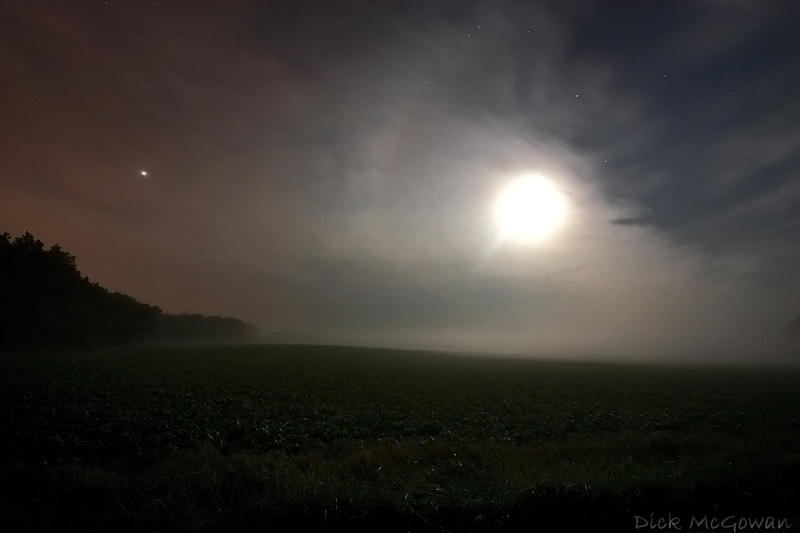
I caught me different faces through the windows on the train. It came going past the location without St. Nick, but his own name (i.e. "Santa Claus") still was on the lane there. The clouds separated only a moment around the shoreline between Ventura and Santa Barbara. The moon broke like a winking eye with Venus bright below her.
One last magical sight was brought at that night there. A single firework burned up over us. None took off afterwards. Artificial light then lit eighty miles from over there until our home here.
Griangraf/Photo: "Stacked Plates" blog, Dick McGowan.
Sunday, August 12, 2007

Academy of Linguistic Awareness
This Santa Barbara billboard, googled when lord knows what I was looking for given my recent forays (I hope spyware's McAffeed) into the realms of the cybersenses, sums up much about teaching, talking, listening, and enduring a polyglot mongrel of a balkanized dusty city less genteel than that resort town a hundred miles up the coast with enviable weather only my genial dentist can afford (at his weekend manse, a few doors down from which on The Mesa facing Shoreline Park last summer this time our family for a blissful week could pretend to live in the realm of a million-and-a-half dollar tiny 50s houses built on oil lands and considered once a downmarket neighorhood compared to, say Hope Ranch nearby not to mention Montecito the other side of town past what used to be the barrio).
The only Irish connection I can conjure after the past three bleary days immersed in dicey research involving Joyce and let's say for family viewing "transgressive" spaces of erotic contention is that Gerty McDowell even sounded a bit more high class than her hapless parodied counterpart a century later, sunbathing on another strand, tilting back to watch another fireworks display like the one we missed as we headed back to LA the Fourth of July, Gertie's likably peabrained, good-hearted, clueless, surely long-legged but perhaps less gimpy lass thinking of "it"--- no less than Toni Bentley (see here two days earlier posted, or the review on Hennig's "Rear View two days later-- indulging my "research" of late, blame it on Joyce) or you and me.
Subscribe to:
Posts (Atom)