Showing posts with label Roscommon. Show all posts

Friday, May 8, 2020

“The Intelligent Catholic’s Guide to John Waters.”

 john waters

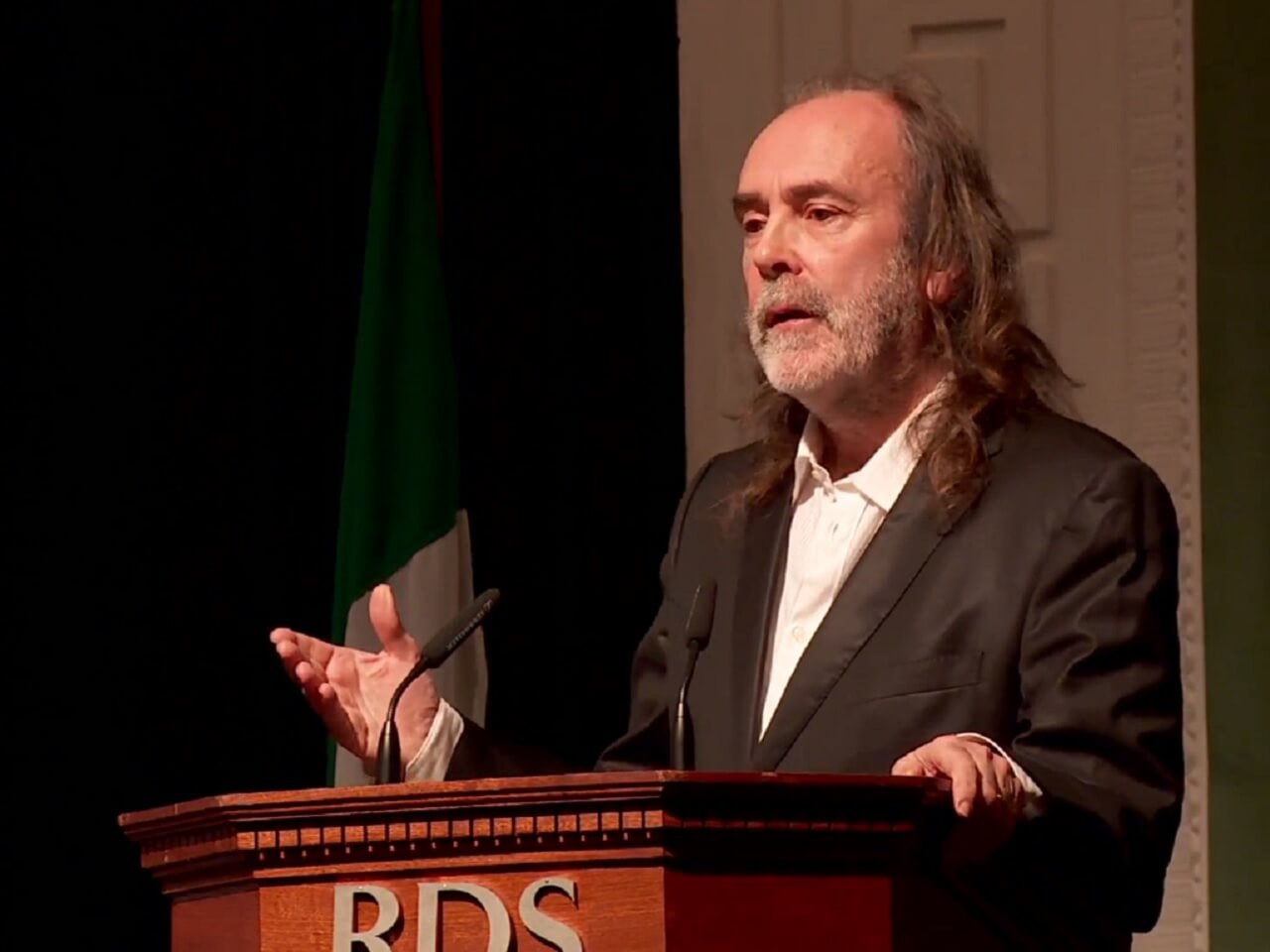
“The Intelligent Catholic’s Guide to John Waters.” OnePeterFive 5/7/20

When a maverick journalist opposes popular opinion, at least as promoted by prominent media, what happens next? For rock critic turned cultural commentator John Waters, it's condemnation followed by self-imposed exile from Dublin's left-liberal, bien-pensant paper-of-record, The Irish Times.

This unrepentant dissident, not to be confused by Americans with Baltimore's cult icon and iconoclastic filmmaker, defends his patch of emerald turf against our new world order. Not (only) that of the Bushes, but of those who banish any trace of transcendence. As a longtime correspondent, Waters speaks for a “Peter Pan generation” who entered a dream-scape never glimpsed by their progenitors. Born in 1955, he and his peers from the 1960s through the 80s found themselves, boosted by a Celtic Tiger economic engine, “as foreigners working from home and emigrants in our own land.” They ushered in an “unassailable” secular agenda, rejecting Catholic, communal, rural-dominant mores once and for all.

John Waters continues his assault on post-Christian Ireland in Give Us Back the Bad Roads, his ninth book (2019). His first, a surprise bestseller Jiving at the Crossroads (1990) roughly coincided with his father's death. The period since both events unfolds in fits and starts, as the son addresses that humble mail-coach driver in a small town in Co. Roscommon, who taught him the value of manual labor and the trust in tradition. (As a relevant aside, to show how small Ireland’s networks of who-knows-who remain, my family at their farmhouse—now abandoned as all my relatives emigrated—would have gotten their post delivered by Waters and son, near the first village north of their own market-town.)

John’s career began covering music gigs for Hot Press, an upstart newspaper whose emergence proved well-timed with the punk explosion, hedonistic excess, and the demands of those raised in the wake of Vatican II to become not “the Pope’s children” addressed by John Paul II in his hyped 1979 tour, but a generation freed from clerical submission, censored expression, and class-bound economic stagnation. The results of this leap into liberation led not to freedom but to incarceration within a cunning and callow bureaucracy bent on enforcing standards of a politically-correct generation, his mates, and heirs.

This blow-back fuels Waters' longstanding determination in print and by his own interventions with similarly suffering fellow Irish families to defend the “blood link” of relationships, against referenda on “divorce-by-demand,” government intervention in the cause of “children's rights,” same-sex marriage, and legal abortion. Quixotic as this principled opposition remains in Ireland's Anglo-Americanized monoculture demolishing its customary “moral paradigm” that a younger, brash, “up from the country” Waters had volunteered to undermine, his mature self favors “common sense.” Although caricatured as a Catholic bigot by his former colleagues--“hired guns”-- and their “progressive” political-clerical cronies, Waters grounds his critique against the imposition of consumerism and corporate “rewards.”

These have obliterated his father's craft and his native town's legacy of community, sly solidarity, and respect for humble dignity. Waters witnesses the transition from his job as a railway clerk to those he and his eager counterparts sought as if Euro-topia at last, but winding up a “screen slave” or a “cubicle hostage.” The trajectory Waters has mapped in his seven intervening books gradually finds its aim. He tires of the distracted, profit-mad, sex-and-drug addled consumerism aided and abetted by his cohort.

Waters' focus, despite the repetitions (common as his many collections blending reporting, research, memoir, and cultural critique often resurrect his past and present predicaments as a prophet without honor in his homeland) sharpens. Returning to his paternal townland in a “strange collision of farmland and wilderness” overlooking Ben Bulben on the Atlantic shore (and Yeats' grave), John Waters watches turf “smoulder like Gabriel Byrne.” Bent on avoiding school on Monday, he had tried to “concentrate like Uri Geller until I conjured up a pain in my stomach.” Tellingly, Waters warns of what will transpire if the embattled “capacity to be human” gets trodden down by an Irish mob sworn to steamroller over the valuable contributions of a tradition rooted in centuries of hard-won verities rather than clogged with the media's “effluent and lies.” Waters imagines a lawn laid atop a yard of concrete: “it may briefly give the impression of health, but eventually, for obvious reason, it withers away.” Without a “consciousness of the absolute,” people will fail to nourish a mentality devoid of religion and dismissive of this venerable “public expression of the total dimension of human nature.”

Waters’ reversion to a measure of Catholic practice emerged gradually. He attended traditional Latin Mass services held at St. Kevin’s in Dublin, which were approved back in 2007. He concludes Lapsed Agnostic (2008), by documenting his growing attraction to the conservative, post-conciliar successor to Italy’s Catholic Action, Fr. Luigi Guissani’s Community and Liberation movement. Since early 2017, he contributes regularly to First Things. Last autumn, he was featured in E. Michael Jones’ Culture Wars. However, a careful parsing of John Waters’ writing presents his quest as one driven arguably far more by his own standards for uncompromising truth as any dogma. As he asks: what happens when a third generation in Ireland, and by extension, the formerly catechized realms across the world, matures with no exposure to the Faith? What follows for Ireland when the “don’ts” of Catholicism fade away?

These questions merit wise responses. Many who serve as leaders in the alternative Catholic media enter from other denominations, and, of course, perhaps none. Yet, intelligent and articulate insights from those left adrift in the last fifty-odd years, brought up in families still faithful, but who themselves fell away suddenly of slowly, often gain less vocal attention or press promotion. John Waters’ halting pilgrimage away from progressive piety might, thus, be guided well by an exchange from a once “center-left” Italian colleague in the Fourth Estate, Aldo Maria Valli (b. 1958), and composer-liturgist Aurelio Porfiri (b. 1968). Their narrative, translated last year as Uprooted: Dialogues in a Liquid Church, remains rather rare, as is that it's written by cradle Catholics too young to remember the Latin Mass as it was with any firm memories, but old enough to have undergone revised regimens post-1965.

It’s to be hoped that more thoughtful examinations of the effects of the counterculture on those now-aging Catholics who have grown apart from the Church in the experimentation and innovation may guide those who, having been raised in the pontificate of John Paul and his successors, seek solace. Not only aesthetic comfort, but, as Valli, Porfiri, and Waters concur, a way to survive amidst discontent and doubt. This demographic has been overshadowed, but it too deserves inclusion among the saving remnant. They had no recourse to clandestine TLM’s or conscientious objectors in the 1970s or 1980s.

Once recovered, after inner struggles against doubt and external battles against detractors, a reverence for the sacred, reduced among millions of cradle Catholics, lingers on. Here, Waters stands again, firm.

Headlines this past month in the Irish press reveal John Waters’ protests against a new shape-shifting foe. He and pro-life campaigner Gemma O’Doherty (another target of attack by the chattering classes) rally against COVID-19-related restrictions on public movement, in some circumstances only within a radius of two kilometers of home. Waters and O’Doherty sustain a long tradition of dissent against whatever draconian dictates they judge to come down from powers that be. Given both figures’ increasing outreach to audiences deemed beyond the pale of acceptable neo-liberal or state-socialist opinion, what transpires from their appeals to the marginalized and discontented in the Catholic circles mapped as “here lie monsters” as no-go territories will be worth watching as we continue into what the car commercials were the first to name “uncertain times,” as we ponder marks of beasts lurking ahead. 

P.S. at the site: OnePeterFive. {I was nearly at the maximum word count, so I did not get into the details of his past books, figuring that the space needed should be for introducing John Waters to a wider audience. But one of his earlier collections of essays (1997) was titled "An Intelligent Person's Guide to Modern Ireland," in turn riffing off of George Bernard Shaw's "An Intelligent Person's Guide to Socialism." In case anyone's wondering why I chose that odd and a bit verbose title.}

Friday, June 2, 2017

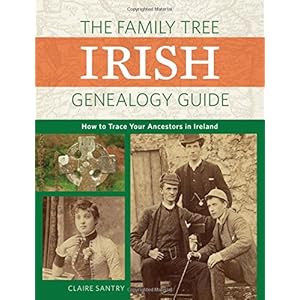
Claire Santry's "The Family Tree Irish Genealogical Guide": Book Review

The Family Tree Irish Genealogy Guide: How to Trace Your Ancestors in Ireland
This is the best resource in print on Irish genealogical research that I have found. I had to learn some of this advice the hard way, before the internet eased the process. Claire Santry had the advantage of accessing much online as well as onsite, and she shows how the first stage can be done before one visits Ireland. Key to success is matching the surname back to its townland--the small area that as she informs, was what a cow could graze on. This focuses an investigation on its narrowest set of data.

She intersperses her suggestions with a general history of Irish events and situations that affected the records extant. While for many of Catholic origins, the trail will end around the middle of the 19th century, she shows how landlords, neighbors, witnesses at marriages and baptisms, and other friends of the family, so to say, can orient a seeker who may have a common surname, common first names, and many families of that line in the same region, or different ones. Particularly helpful are patterns of naming children based on their relatives and ancestors: the reason why so few names are often used, and why they keep repeating down the generations in records or lore, complicating the quest.

The records transcribed or microfilmed are gradually archived online, some free, some not. Santry gives detailed directions on how to organize one's notes, and how best to proceed online so as to get as much of a sense of the local area as possible, before ideally a visit. Civil registrations, church records, census, land and property, newspaper, police gazette, military, and probate documents all are mentioned and often illustrated. Deciphering Latin abbreviations in parish registers is challenging; the appendix provides help. From my experience and I assume hers, the state of the online uploads as to legibility does not improve at all on the physical microfilm in many cases, so be forewarned.

From Santry's book, I learned a few new tricks. Findmypast is a site I'd never seen, linked to the 1749 Diocese of Elphin census, valuable for Co. Roscommon information in my own case. Griffiths Valuations are a lot easier to read than when I needed them on microfilm, and the National Archives of Ireland now has some land valuation notebooks I spent hours paging through in person uploaded.

Connaught and Munster databases for landed estates are now online, as are some Irish and British newspapers (some in my search behind paywalls). Finally, headstones by the thousands in photos and transcriptions are now also on the web. Such tidbits collect rich knowledge in one handy guidebook.

Therefore, lists of genealogy centers, local history organizations, libraries and government offices are also appended, as firsthand encounters may have to be done when net-working only takes one so far. Both American and Irish databases are covered, as well as some British ones, which will please the many millions descended from mid-19c emigrants. The book's narrative concludes with a couple of case studies, showing from researchers how they successfully navigated their way through the data.

I'd add that for certain surnames, blogs or discussion groups or websites are often recommended, as you may find that others have preceded or paralleled your path. I found this out years after my own search of primary records seen in Irish record keeping offices, but at least that then verified my own findings--and that the "tree" on Ancestry-com had an error due to that mixing of common first names and surnames that may likely bedevil even the most diligent tracker, due to traditional naming patterns. I'd add a final caution that even at the parish or townland level, you may find repetition among different families, often related of course, sharing surnames that concentrate very locally. (Amazon US 5-18-17)

Wednesday, December 9, 2009

Sebastian Barry's "The Secret Scripture": Book Review

Continuing the fictional elaborations of his own family's facts, Barry tells of Irish repression movingly in this densely written but often poetic novel. Following "The Whereabouts of Eneas McNulty," Roseanne Clear McNulty enters the saga around the same time, the Irish Civil War following partial independence in the early 1920s. After a tragic event in Sligo town during the internecine war brings unwarranted scorn upon her Presbyterian father, Roseanne must grow up isolated from defenders, increasingly compromised by the scrutiny of censorious Fr. Gaunt.

What transpires crosses over with the story of Eneas, and while the details will be left for you to learn, this narrative tells a rather familiar story of loss and yearning effectively, renewing by the beauty of its ruminative style a landscape harsh and barren, within the lives of men and women and especially those, like Roseanne, confined as was her mother to an asylum for her own attempts to break free of the constraints of early 20c Catholic-ruled Ireland.

Still, no story set here can be all bleak. She writes of her native city:
"A hot Irish day is such a miracle we become mad foreigners in a twinkle. The rain drives everything indoors and history with it. There is a lovely lack of anything on a hot day, and because our world in its inner truth is so wet, the surprised greens of the fields and hills seem to burn with a sort of bewilderment, a wonderment. The land looks lovely to itself, and the girls and boys along the strand are painted into the tawny yellows and the blues and the greens of the sea, also burning, burning. Or so it seemed to me. The whole town seemed to be there, everything suffering the same brushstrokes of the heat, everything joining and melding." (142)


Later, however, the madness with which daughter as mother is diagnosed with and confined by hints at deeper suffering. Her story intersperses with Dr. Grene who researches the case of this hundred-year-old inmate at Roscommon's asylum. Roseanne tells him: "I do remember terrible dark things, and loss, and noise, but it is like one of those terrible dark pictures that hang in churches, God knows why, because you cannot see a thing in them." The doctor tells her "that is a beautiful description of traumatic memory." (101)

The doctor, "the biggest agnostic in Ireland," struggles with his own loss, and seeks in Roseanne to solve her mystery, and perhaps his. "But we are never old to ourselves. That is because at the close of day the ship we sail in is the soul, not the body." (177) He too seeks understanding of death and loss, as does Roseanne. Betrayals can be eased by desires to do right by others. "We like to characterise humanity as savage, lustful, and basic, but that is to make strangers of everyone. We are not wolves, but lambs astonished in the margins of the fields by sunlight and summer." (178)

I admit the betrayal that Dr. Grene confesses at this point appeared to me very minor and quite forgivable, but in the context of his great loss recollected, it may loom much larger in his guilty mind. Barry seeks to examine precisely this conflict between what we are accused of, by ourselves or others, and what can and should and must be forgiven and restored. In a time of cruelty for causes and utter suppression of desire, Roseanne represents a frail cry of flawed but innocent humanity.

One caveat: the depth with which Roseanne writes down her story in such rich prose does tend to blend too much with the doctor's own diary's moods, and Barry for both seems to fall into an overly rich, and rather too-studied, prose style that can slow the pace of the narrative dramatically. Some readers may like to linger in its shallows, but others may want the plot to quicken.

There aren't facile solutions for men and women caught in compromise in a century of clerical domination and political oppression. The wonder of Irish scenery conflicts with its terrors, and its inhabitants are caught within both splendid days and terrible nights. After decades, how much of what transpired can only be recreated partially by Dr. Grene. "The one thing that is fatal in the reading of impromptu history is a wrongful desire for accuracy. There is no such thing." (279)

(P.S. I have reviewed "The Whereabouts of Eneas McNulty" and "A Long Long Way," a harrowing novel of WWI through an Irish soldier's eyes, on my blog, and on Amazon US where this review was posted 12-9-09)

Thursday, April 30, 2009

Easter Snow, Burren Gentians

Conflating three tributes today, Michael Longley's "A Single Gentian" poem with Christy Moore's "Easter Snow" lyrics for departed piper Séamus Ennis. I triangulated from my own father's funeral this morning via Ben Howard's post on Longley's verse. Voice, tune, mass, death, longing all merge.

Professor Howard's "The Practice of Zen" entries demonstrate the author's patient tutelage in that discipline. (I've added "TPOZ" as a blog link at the right-hand side of mine.) A spare white blog balances my verbose cluttered one. Longley shares such compression. Four lines capture a universe in Co. Clare's lunar landscape of the Burren.
While I was looking for Easter snow on the hills
You showed me, like a concentration of violets
Or a fragment from some future unimagined sky
A single spring gentian shivering at our feet.


I recalled, while reading Longley, D.H. Lawrence's poem "Bavarian Gentians." Written near his death in 1932, it anticipates a Plutonian "marriage of the living dark," a twilit-blue, intensely purple realm of shadows to where Persephone returns after her allotted six months in the sun. I quote Tina Ferris from the website linked to the poem; "we are all virgins to Death." Persephone knows she will be resurrected come spring; those with whom I mourn my dad today believe this too.
Not every man has gentians in his house
in soft September, at slow, sad Michaelmas.

Bavarian gentians, big and dark, only dark
darkening the daytime, torch-like, with the smoking blueness of Pluto's gloom,
ribbed and torch-like, with their blaze of darkness spread blue
down flattening into points, flattened under the sweep of white day
torch-flower of the blue-smoking darkness, Pluto's dark-blue daze,
black lamps from the halls of Dis, burning dark blue,
giving off darkness, blue darkness, as Demeter's pale lamps give off light,
lead me then, lead the way.

Reach me a gentian, give me a torch!
let me guide myself with the blue, forked torch of this flower
down the darker and darker stairs, where blue is darkened on blueness
even where Persephone goes, just now, from the frosted September
to the sightless realm where darkness is awake upon the dark
and Persephone herself is but a voice
or a darkness invisible enfolded in the deeper dark
of the arms Plutonic, and pierced with the passion of dense gloom,
among the splendor of torches of darkness, shedding darkness on
the lost bride and her groom.

Howard explains how Longley's titular gentian with its burst of purple flowers at its heart also brings death. "At its center is a pure white throat. According to Irish folklore, to pick a spring gentian is to precipitate an early death. To bring one indoors will cause your house to be struck by lightning."

For me, the Easter symbolism-- which Longley picked up when he wrote the poem on Easter Sunday 1998 to mark the Good Friday Agreement, and which Howard extends-- also stretches beyond that Republican cause, and those recent deaths which have tipped the North back, if for a fatal instant over a flailing duration, into murder. The lily-- pinned or stuck-- became the ultimate representation of sacrificial martyrdom of poets and patriots, intellectuals and workers, in Dublin's streets nearly a hundred years ago. Farther back, rooted within "Easter Snow," I am not sure if Longley or Howard know of another use of this Paschal phrase, although with their combined erudition I am sure they must!

My family comes from the borders of East Mayo and North-West Roscommon. Not far from where my mother's father's people long farmed, approaching the latter county's frontier with Leitrim and Sligo, in the ancient territory of the McDonnells' Moylurg near Lough Key, a townland rests at the edge of the Plains of Boyle, an hour's walk from the market town of the same name. The crossroads on the rail between Boyle and Carrick-on-Shannon is called by the evocative title "Estersnow," or "Easter Snow."

I wondered, when I first read of this beautiful adjective and noun, what led to such a graceful honor for such a humble locale. It's a corruption, if a pretty one, from the Irish "Díseart Nuadhain," or the "desert" as in hideaway or retreat, it being Ireland after all, of Nuadh (as in "of the Silver Arm," I fantasized). The tune in turn was rendered back into Gaeilge as "An Sneachta Casca" or "Sneachia Casga" into a straight if skewed "Snow of Easter" by George Petrie. (The same folklorist who bested his rival in an 1835 competition that inspired an earlier Irish debate over Buddhism as or as not a Celtic construct, but that's another story that I am working on retelling this spring to present next fall, a project that led me earlier this month to Prof. Howard in his later look at Eastern-influenced elements in Irish poetry, as we spiral, wheels within wheels.)

A musical notation resource assures me that Nuadh here's but St. Nuadha, not the king of the Tuatha de Danaan whose limb was severed at the first battle of Mag Tuired, not that far either from Moylurg if you're a mighty warrior; Cruachain Ai is very close to Estersnow, I note. St. Patrick tramped by that townland, skirting the domain of St. Fidelma the Ruddy and her sister Attracta. These two virgin princesses were baptized and died on the spot shrived if not swived-- on the doughty holy man's way to geld such deflowering pagans of the North as St. Nuadh's namesake, anyhow.

No spell or "geis" I can summon that connects silver-handed Nuadh to master piper Séamus Ennis, let alone how to work in familial Roscommon, but here's that tribute by Moore to his old friend-- one of the greatest Irish musicians ever-- after his death in 1973.
Oh the Easter snow
It has faded away
It was so rare and beautiful
And it melted back into the clay

Those days will be remembered
Beyond out in the Naul
Listening to the master's notes
As gently they did fall
Oh the music
When Seamus he did play
But the thaw came on the mantle white
And turned it back into the clay

He gazed at the embers in reflection
Called up lost verses again
Smiled in roguish recollection
While his fingers gripped the glass to stem the pain
When knocked upon his door would open
With a welcome he'd bid the time of day
Though you came when the last flakes had melted
While it lay upon the ground you stayed away

Photo: "Burren Perfumery: Spring Gentian."

Wednesday, October 1, 2008


Patrick Tracey's "Stalking Irish Madness": Book Review.

Since my family comes from around the same area in the Irish west, I was curious to follow Bostonian native Tracey "searching for the roots of my family's schizophrenia." It's what he defines poetically as "an apocalyptic form of madness because it robs its victim of our most precious human gift: the ability to separate the real world from the unreal and to trust one's own thoughts as true." (10)

Two of his sisters, his uncle, his grandmother, and her grandmother in turn had been struck by this affliction in their young adulthood. Mixing his personal saga with encounters with those who share the illness and those who argue-- variously-- how to cope with its assaults, Tracey witnesses New Age-aligned healers, medical professionals (who turn out to know much less than one might expect), and those who guard their own family's similar secrets. He follows the history of the disease in Ireland, and integrates smoothly much of the nation's history and trauma on an island-wide level with the impact felt on the domestic and institutional fronts over centuries. Tracey wonders if the legend that the Irish have been so cursed more than other peoples can be validated by genetic research, so he embarks on a quest to Ireland to investigate.

He begins his account with a look at his two sisters and what he knows of his family's previous incidents; he blends his own memoir with a commendable combination of tact and candor. He's excellent at gleaning what separates Irish Americans, in turn, from those born there, and his chapter about a night in a Co. Roscommon pub masterfully sums up the cultural and attitudinal gaps between those from America who assume that a surname and a few half-remembered first names from an withered family tree will somehow open up vistas of happy long-lost cousins eager to shower affection and land upon the Returning Yank. Such sharp observations throughout the book demonstrate Tracey's experience as a journalist able to probe and hold back according to the flow of the conversation with those he interviews.

As mental illness makes such an unlikely icebreaker to raise in talking to those to whom Tracey suspects, on the scant evidence extant, he may be related, the search for his family's direct roots proves less than certain. Along the way, he does a more valuable service for his readers wanting to know if there's some genetic bubble in the Irish gene pool. Earlier scholars and popular gossip appear, Tracey concludes after a tour of the experts, who themselves to date still find little to confirm their own conflicting hypotheses, that every people has the disease at the same rate. However, he does note that while "correlation is not causation," you can find four common links within populations of schizophrenics worldwide: "emigration, famine, substance abuse, and older fathers." (199) Nancy Scheper-Hughes controversially earlier investigated the supposed ties between the malady and and peasants in her 1979 "Saints, Scholars, and Schizophrenics: Mental Illness in Rural Ireland." Very strangely, this study's not mentioned by Tracey.

This gap confused me. I also wondered why, in discussions of the shamanistic parallels or those of left-brain language vs. right brain evolution, why Julian Jaynes' bicameral mind theory-- however lambasted by the establishment it may have been-- was not raised in context. Tracey does give endnotes for his sources, but these too prove somewhat scattershot. For example, he cites "Ulysses" and "Finnegans Wake" with page numbers without editions, contrary to scholarly convention, so no reader could easily find these quotes, albeit well-chosen ones.

He errs in small details such as giving the pronunciation for Cruachan Uí but he does not give the second word of the place name to match the parenthetical reference; while his rendering of Irish-language words generally fares better, he conveys the well-known phonetic sounds for the Gaelic words for whiskey without the actual Irish original. He also misspells "An Gorta Mór" and leaves accents out here and there. I'm not sure that historians would label all of the admittedly heinous Black & Tans recruited by the British Army after WWI to hunt Irish rebels as "Scottish thugs"-- Tracey may be conflating their wearing of the tam-o'shanter by Constabulary auxilaries with an assumed unified origin in Britain. You won't find any County "Wickford" on a map, either.

Still, these minor quibbles do not detract from the success of a narrative that draws vividly Tracey's own "lace curtain" family dynamic. While at the end the tone does soften from the previously formidable punch of personal drama and demographic devastation, it's an understandable retreat into a measure of carefully distilled hope after a couple hundred pages of often dispiriting reports, as even the world's brightest minds appear as befuddled as medieval monks when dealing with this perplexing set of shifting symptoms.

One of his sisters bears "positive" traits that spin her manically. The other, "negative," crumples under catatonia. Here's a dramatic example from sister Chelle, who hears voices telling her she's a bride of Christ.
"The eleven-o'clock Mass is under way, most pews filled, as Chelle strides, fully naked but with perfect aplomb, up the center aisle. Nearly to the altar, she spins around to face the shocked congregation. 'You bastards,' she snarls, 'that's my husband you're worshipping.'" (43)


He's skilled at telling enough to illuminate while stepping back into the shadows when tact demands. I recognize a lot, especially the passive-aggressive silences that represent for a certain generation of Irish Americans parental communication. I'd have liked to hear much more about his mother the lawyer, his father the religious-goods wheeler-dealer, and the author's own period down and out in Boston, DC, and London, but that may have to wait for a fuller sequel, perhaps. He's a nimble storyteller, refusing to bow to any clichés of mad drunks or plastic Paddies. I look forward to hearing more from him.

Thursday, December 20, 2007


Michael Huggins "Social Conflict in Pre-Famine Roscommon": Book Review

This book, a revision of a thesis, presents an academic’s examination of “whiteboyism” in this county, known for its labor agitation and land reform movements in the 19c. Huggins goes back to the half-century preceding the Famine to trace connections between the protests and the influence of the French revolutionaries and British radicals. He applies E.P. Thompson’s concept of a “moral economy” of the Irish crowd—itself a term that refers to Georges Rude in turn—to argue that the Irish were in fact, given the primary evidence—perhaps as attached to non-nationalist ideals as native ones. He uses the revisionist analysis that questions nationalist discourse as the leading mode of thought within Irish history of the past couple of centuries.

His study, while adhering to the conventions of current scholarship both in style and assumptions, seeks to present his view that a “secret” Ireland persisted behind the shadow of what the Gaelic-Ireland patriot Daniel Corkery proposed in the early days of the Irish Free State as a “hidden Ireland” beset by exile and emigration and republicanism and tradition vs. the Crown. Huggins diminishes, therefore, the impact of popular histories of Roscommon protest such as the Famine-era murder of Major Denis Mahon at Ballykilcline, in Robert Scally’s tellingly titled “The End of Hidden Ireland” and Peter Duffy’s new account of the same. A map would have been helpful, as few readers may have as intimate a knowledge of the townlands and parishes; also, the tone of this strives for such detachment that it risks drifting away from inherent interest created in this admittedly difficult topic: how to get into the minds of farmers and landlords two centuries ago, given crime statistics, testimony, and correspondence that tends to give the view of the accuser more than the accused.

Huggins may not earn the wider readership for his more measured investigation, which applies historiographic rigor more than vivid anecdote, but Huggins prepares the way for such popularizations, and his account fulfills a need for such studies that incorporate the new findings of such scholars as Peter Burke, Sean Connolly, and James Donnelly.

(Posted today to Amazon US.) Image: 1880s "The Rivals," as (she's nicely filled out post-Famine) Hibernia's courted by a suave Land Bill Reformist who woos her over a thuggish Land Leaguer. Recall that my own great-grandfather Jack-- whom I doubt looked that troglodytish-- counted himself among the latter contingent, from this very Roscommon. He met his end mysteriously in the Thames, in 1897, after accompanying a delegation of Land Leaguers to perfidious Albion's capital city. Cartoon courtesy of http://www.anarkismo.net/attachments/may2007/killkindness.jpg