Showing posts with label popular culture. Show all posts

Friday, August 7, 2020

Miracle cure

After hearing three people today claim "when we get the vaccine, it's on our way back to normal," I wonder: We see how few get flu shots, and how those only diminish the impact, as this is not a cure as for polio. Many will not get a COVID vaccine or refuse it (like anti-vaxxers)....

Which means a lot of people at risk, who even if they do not die, may suffer for months on end, and have damaged lungs or immune systems....

Meanwhile, the gov't wants to have schools and businesses practically 'immune' from litigation by students or workers, who surely will bear the brunt of "get back to normal" as pressure builds to get kids in schools and parents to jobs. Being worn out with this whole "virus situation," for I don't use the word "pandemic," don't ask me why, I teach online, wonder what will happen if and when I am mandated to be "back onsite," and wonder how much my students are dealing with. 

Reason is I have done rough calculations in my head. Since March, I recall offhand around seven students have claimed they have had the virus. And I have taught a total of about 300 students to date. Which makes 4.285% of a random selection, many Southern Californian, most likely in their twenties, but not all. With a large balance of folks of many ages from many places all over the U.S.

The ones who have reported being ill skews young. I have not heard of any of my fellow teachers or staff coming down with the virus, by comparison, from a higher-risk cohort. Many have written by now billions of words about this, let alone tweets. So I don't have any pearls of wisdom or sage counsel. But I reckon we'll be dealing with this a lot longer than a flu season. 

Not to mention, I muse after inserting the above illustration, the looming likelihood that PETA may be protesting the use of genetic tests on mice for the vaccine?

Friday, July 24, 2020

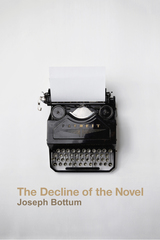
Joseph Bottum's "The Decline of the Novel": Book Review

https://www.bibliovault.org/thumbs/978-1-58731-198-7-thumb.jpg
First off, this author’s cousin Roddy was keyboardist for Faith No More and currently plays with the enduring indie-pop outfit Imperial Teen. Second, Joseph “Jody” Bottum hails from one of South Dakota’s leading political families, a long-lived line of legislators that goes back to 1840s Vermont. Neither factoid leaps out as germane to The Decline of the Novel’s literary critique examining classic long-form fiction’s cultural influence and modernist impacts. However, upon reflection, Professor Bottum’s background and milieu may subtly infuse this collection of essays.

As a leading voice of a neo-conservative silent minority teaching in the humanities, Bottum is determined to align the downhill slide of mainstream American Protestantism over the past six decades to the triumph of a fragmented pop culture and a loss of a common core of values. Which relates to Roddy’s first band’s name, and his relatives representing old-line Republicans.

Intriguingly, Joseph Bottum, who first lectured in medieval philosophy, then became a Catholic public intellectual embroiled in contrarian stances resulting in his ostracizing from culture wars. Also a poet, he now runs a think-tank at one of his native state’s flagship universities, to craft professional ethics for those in information technology. This eclectic experience may not directly enter The Decline. But it subtly enriches and supports his main thesis that we’ve lost our faith.

He explains this book’s title as it “reflects and confirms a genuine cultural crisis. This is not just the old crisis of the self, but a new crisis born of the culture’s increasing failure of intellectual nerve and terminal doubt about its own progress. We have to believe in a culture to employ that culture’s art: to be much entertained by it, and to be much instructed” by its novelistic creations.

While many still read books, genre-fictions, celebrity and political biographies or hobby and self-improvement bestsellers don’t meet Bottum’s standards for works that reach “the most profound expressions of psychological, sociological, and existential truths.” Even the remnant who prefer these classic exemplars “no longer have the ear of the general culture.”
Reading for escapism or “nostalgic indulgence” fails to recapture the fickle attention of those entranced by immersion in electronically-driven gaming, online fare, and, one would add, “prestige T.V.” binge-watching.

Parts of this study also feel on replay. The gist of what’s here compiled from previous published criticism and journalism concentrates on the Protestant foundation for the invention and elaboration of the individual as he or she struggles towards success in a middle-class society, energized by the rational promise of the Enlightenment, and separated from the Catholic collective to pursue one’s own moral and practical salvation within an increasingly urban setting.

This leads Bottum into fresh territory. He examines, for instance, Samuel Richardson’s 1748 epistolary epic of female resistance to male domination. Clarissa Harlowe “demands no real changes of heart in anyone else, and she seeks to modify the world only insofar as she needs the world to leave her alone.” Contrasting an admittedly tedious 1862 riposte to Daniel Defoe’s shipwrecked rugged proto-colonial colonist, the Reverend W.H. Amberdon’s The Catholic Crusoe “grasps the Puritan center of Robinson Crusoe and inverts it into a claim of Catholic superiority.” Although Bottum often expands his analysis of recognized titles, the academic bent of this book tends towards the arcane, justly or not overlooked by other scholars. The tone tends towards the dutiful recapitulation of plot points, quoted passages and passing glances at now-forgotten tales, but as the take on Clarissa reveals, he can turn a phrase when he wants.

Rooted in a sense of self, the British and Continental novel depended on its support among the Protestant society and the common-sense capitalism of its protagonists, progenitors and purchasers. Joseph Bottum, after two opening chapters which with some overlap set the scene for the success of the novel over less than the past three hundred years, focuses respectively on Walter Scott’s Waverley (with a look at Nikolai Gogol to enliven this scrutiny), Charles Dickens’ David Copperfield, Thomas Mann’s Doctor Faustus and the Tom Wolfe’s A Man in Full. He charts the arc of the novel from its workaday connivers in Defoe, through Romantic and Victorian heydays, and into modernism towards what sputtered out of Wolfe’s “failure of nerve.”

When this collective confidence in the self-made striver, and the economic engine and moral apparatus represented by this dogged ambition. finally imploded around the middle of the 20th century across the Western world, so did Bottum’s chosen type of serious narrative. Today’s shelves feature characters divorced from their medieval ancestors, who presented themselves as “pawns in, or merely spectators to, a great supernatural battle.” Now, as his final chapter roams about the middlebrow chart-toppers of Neil Gaiman, Herman Wouk, J.K. Rowling and Charles Frazier, the professor admits that since the early ‘90s, there have been no big writers producing must-reads. The excitement of re-enchantment, he laments, has faded away.

As Bottum alludes to in an afterword, the contents of this slim volume have been reassembled from past pieces. Upon close examination, chapters do connect with one another, but this takes steady attention for the reader to discern. Without end-notes or evidence of how to track down the quotes from his original sources, whether primary or secondary, the utility of The Decline itself diminishes as a resource to lead readers to learn more from creators or critics.

Therefore, this study’s value carries a proviso. If a reader does not need to imitate the scholar, and remains content to peruse the pages of The Decline of the Novel, it’s guaranteed to point to a few finds that not even the most determined or desperate academic might have unearthed. But the rummaging in these secondhand shelves of modernity and its predecessors keeps one wondering. Bottum’s examination of fiction reaches no happy ending; instead, he leaves the reader asking along with him: what’s the purpose of art now? What is left for us to do with ourselves? (Spectrum Culture, 5/25/20)

Wednesday, July 1, 2020

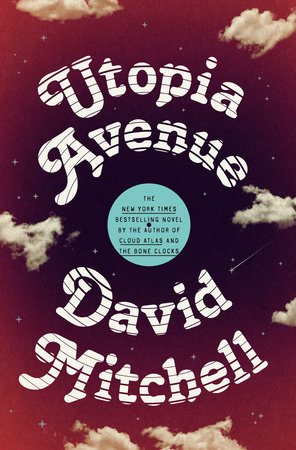
David Mitchell's "Utopia Avenue": Book Review

 Utopia Avenue by David Mitchell
Eight novels into his career, David Mitchell's established himself. You can count on his fiction to take you into a multicultural space, a cultural clash, and (nearly always) a spiritual--or at least supernatural--encounter. Engagingly told by either first or third-person narrators, his plots unfurl to keep any reader turning the pages. Which can add up, given the heft of most of his tales speculating on the grey areas between this realm and other ones.

If you've come to Utopia Avenue fresh, I'd suggest a detour. You need to start with The Bone Clocks (2014), and maybe the spin-off novella from the following year, Slade House. (Both reviewed on PopMatters). These will prepare you to step back into Mitchell's oeuvre. His first book introduced his modus operandi. Ghostwritten (1999) lives up to its title. It shuffles through various lives in different places across many centuries. The characters merge subtly with one another. Tellingly, the substance of the novel adds up to nine lives. The manner of how their essences may be transmitted in turn floats into a vast Cloud Atlas. 

Probably Mitchell's best known effort to date, Cloud Atlas creates an ambitious narrative which follows similar themes as his debut. But in this 2004 effort, Mitchell amps up the energy and the invention over a wider range of prose styles and six-times-two extended set-pieces which draw one into: the mind of a nineteenth-century notary at sea, a poor musician's journal early in the next century, a whistle-blower's thriller, a dystopian robotic Asia, and a wittily sour publisher on the lam. These nestle into one another like Russian dolls, burrowing into the central tale in post-apocalyptic Hawai'i before emerging to repeat the cycle of the previous five sections in reverse, by resolving each interrupted story.

However, even then a reader will not be ready to appreciate fully the backdrop of Utopia Avenue unless he or she finishes first the sprawling (even by Mitchell's standards) 2010 historical saga set at the turn of the eighteenth-century in Nagasaki, The Thousand Autumns of Jacob de Zoet. These prerequisites will prove enjoyable, and none will feel like assigned homework to catch up on. Nevertheless, this short stack of tall tales will take a while, so those opening Utopia Avenue need to know they'll be expected to have kept pace with prolific Mitchell over two decades. This leaves out, all the same, his remaining two novels.

The frenetic number9dream (2001) conjures up a chaotic sense of modern Tokyo; Mitchell lived in Japan for many years. Its own nine chapters thread together an imitation of Haruki Murakami rather than Mitchell's genuine voice, although the practice he gets in eclectic structures and experimental settings prepares him for Cloud Atlas. Finally, there's one charming outlier, his semi-autobiographical reminiscences of a thirteen-year-old on a housing estate in the middle of Worcestershire. It's told straightforwardly, and movingly.

Black Swan Green (2006) evokes powerfully Thatcher's England of the Falklands War, the New Romantics, synth-pop, stuttering, and all things British and/or annoying circa 1982. The audiobook performance by Kirby Heyborne will reward; many of Mitchell's works transfer well to the spoken word, although I'd make sure one has already a firm grip on the printed version of Cloud Atlas, given its dialects, intricate references, and inventive terms.

Back to the future for Mitchell fits. His storylines unravel chronology. In fact, the eerie Horologists who try to bottle up human life-forces so as to distill the Oil of Souls thrive on defying linearity as they strive to apply their energies to a vampire-fueled immortality. If this sentence makes sense, then one can follow Utopia Avenue. But one of its main characters, Jasper de Zoet, discovers his lineage traces back to 1800 Nagasaki, and that unfinished business then accounts for the mess that destroys the settled life of another protagonist at the start of The Bone Clocks, which ticks off from 1984 through its cast of misfits into 2043.

So, slot in Utopia Avenue between The Thousand Autumns of Jacob de Zoet and The Bone Clocks. In the spirit of Ghostwritten, characters face strange enemies. Connections appear subtly between these and more. For in Utopia Avenue as in all his works, Mitchell scatters "Easter Egg" appearances or allusions to his previous--and one presumes--future fiction. Characters and their works survive and echo as their stories already told reverberate softly.

It's difficult to convey the pleasures within Utopia Avenue to the uninitiated who enter David Mitchell's universe. Suffice to say that unless spoilers get revealed, only the gist of the work can be related. A few PopMatters faithful will know of the English folk-rock pioneers Fairport Convention. Well, take Sandy Denny (who appears as do many musicians of the psychedelic era in cameos or small supporting roles), one of its talented vocalists. She's channeled into Elf Holloway, a keyboardist from the folk scene, and one of three singer-songwriters. Second, Dean Moss hails from Gravesend, on the Thames estuary where the owners of the local pub will reappear as The Bone Clocks begin ticking. This bassist hails from the working-class in London itself. The class-consciousness plays a role in establishing the tensions and the diversity that enriches the new ensemble. They're joined by jazz-trained drummer Griff from darkest Yorkshire, and Jacob himself, a sort of Richard Thompson scarecrow figure on amazing guitar. Similarities ensue with real bands such as Fairport.

Car crashes, tragic passings (Mitchell excels at death scenes, premature or final), bleary touring and international hassles, sexist pop-show hosts, and smarmy manipulators all scheme against the three men and one woman (this group battles leering come-ons and baffled reaction in times not as advanced yet as some from sixty-odd years on may assume).

Mitchell's done his homework. The mmersion into not only London but a trucker's stop where ruffled and velvet-clad foppish musicians recharge after being on the concert trail, the wonder and danger of San Francisco's allure as seen through the eyes of members of the Grateful Dead and Jefferson Airplane, the dense terror and drive of Manhattan appear vividly as Utopia Avenue, the scrappy titular band, struggle up the charts and on blurred tours.

Laurel Canyon, Amsterdam, the Chelsea Hotel, and the less-heralded backwaters of Britain receive affectionate, insightful, and well-detailed depictions. Mitchell gets his rhythms right. Even a prison cell in Rome benefits from this writer's careful eye for all of the senses. Being born the start of 1969, he nonetheless benefits from his short distance from one who "really remembered the Sixties." He's old enough to have grown up with its musical legacy and cultural heritage. He's young enough to have been educated about the Aquarian Age's follies, its political naivete, and its bouts of impotence against endemic hate that trumps peace.

Woven into this revival of an age of expectation, Mitchell stitches a subtle critique of the impacts of the pot-heavy, lysergic-immersed, and heady music's ambitions on pop culture, moral choices, and even tripping itself. One watches the creation of verses; the novel is cleverly arranged to illustrate how each song on each album began its life--and Mitchell comes up with convincing lyrics too. The force of music as it emerges mysteriously or insistently in the mind of a capable (or baffled or stoned) composer gains clout as Mitchell expresses how notes stick on frets. The author examines deftly the ideals which force and beckon the four musicians and their circle to confront choices for good and evil. Amidst the slogans and chants, the violence (emotional and physical) exacted and inflicted around the band's predicament to stay true to their ethos makes them all mature into better people.

And that's the encouraging lesson of Utopia Avenue. The way to a better world, Mitchell quietly emphasizes, demands that responsibility not be shirked, and that cant or rhetoric fails to solve human loneliness or hereditary alienation. His composed, existential view may not please all, but his own Buddhist-inspired contemplation amidst the carnage and ecstasy of this romanticized era reminds us today of the caution needed when messages get blared.

"Music + Mind-Bending" at PopMatters 6/9/20 with hyperlinks to the cultural mentions. And a very trippy artwork that graces the review. Better than the galley (?) cover shown....


Saturday, June 13, 2020

State of the Union


I excerpt part of a letter I sent my friend in Ireland. It expresses my state of mind. I edited and revised a bit, but for the record, as I have not groused for a few weeks now, here 'tis. 

Economically, both my sons were laid off mid-March, but both have enrolled for online MBAs at where I teach, as they get discounts. We figure the loans are worth it. My wife's one small business is barely functioning and both her part-time helpers had to be laid off. But as 34% of my fellow Americans are making more on the bonuses added to unemployment checks than they would have on their jobs, that says something, doesn't it? This is the issue that this whole up-ending has again revealed. But neither party gives a damn about the little guys and gals except come election, and the Dems want to tip the populace so everywhere looks like California, a one-party nepotistic fiefdom from now 'til eternity, while the GOP shrinks and bleeds out. What I want is more alternatives. I root for underdogs and misfits. But unlike "your" systems, which at least enable smaller groups some say, we're trapped.

I'm ticked off that the Dems shot down Bernie again. Not that I backed his entire platform or scheme. How he could fund "free college" and lots of goodies remains utopian. (Yet that was before the magic stimulus trillions got printed suddenly, as if Jack of Beanstalk fame's beans.) But he could have riled up the establishment. He would have gotten us motivated about decisions that effect us, not the Beltway Them. Joe Biden bumbling in as the Banker's Best Pal isn't a scenario I wanted either. I tend to brush past Trump, frankly. Agree or not, he delivered on few promises. Not that Obama did either, for the most part, but at least this Congress had the majority it wanted to theoretically enact its stratagems. What is odd is that while I don't obsess over #45, Biden always evokes dislike in me, as with Hillary or her ilk.

When the blue-state's cadre challenges me, I have no facile solutions. It looks as if the Elephant's Army will take this campaign against sporadic enemy firepower. However, the "necessary evil" compromise after four decades of my votes wears thin as a rationale for supporting a corrupt mechanism by which we're increasingly suppressed and manipulated.

Sure, same as it ever was. Except now it's GPS, CCTV, data-mining, and keyboard strokes. Soon augmented by temperature scans, who we've been near, and where we can come and go. The shrugs that these measures assure our happiness bring to mind the "salami tactics" of how the Eastern Bloc communists took power after WWII. They came into coalition with the socialist or left-leaning parties. Then they nudged their way forward, edging out their rivals, and slicing ever thinner the "rights" or "room" that they were allowed under the Reds. By a thousand precise strokes of the knife, millions found themselves painfully diminished. 

Back to the present, I have a lot of students and seemingly no less work than before, but at least the soul-draining commutes are shelved for the nonce. But there's tremendous agitation to get back to business here, even though virus contagion has not abated but plateaued. Basically, Americans have given up caring. The commercials were fascinating to see evolve the past three months, as I mentally charted how long it took for messages and slogans to evolve, inevitably over soothing piano music and soft female voiceovers. As if everybody is in a quarantine where their house is boarded up with them inside for forty days as in the good old days while bodies pile up at the doorstep. I'm embarrassed to gripe.

It reminded me of Most Oppressed People Ever for the Irish, when in fact I am among the guilty who can stay home and work while millions out there have to schlep about packages and deliveries to "us," and to deal with hospitals and protestors--that whole scene in my opinion was due to a contingent looking for a "show-case" to generate "civil unrest" that fit a certain set of dramatis personae that could be cast, and due to the cabin fever that people had been sick of as June loomed and folks demanded to be let out of their confines. It's not simple. I am addressing this in Ethics courses next term, as I am interested in why "certain cases" get promoted by activists while others that don't fit a narrative do not find the same traction whether as spread in various media or among protesters. My innate skepticism contends here with my recognition of wrongs needing righting. It's again that I sense our collective strings getting firmly pulled by a determined force above and just out of our sight or comprehension, that has been waiting for the virus situation to roll out their versions of what will be sold for our own protection, and mandated for our activity, while implementing in accelerated form a surveillance regimen that restricts our liberties for a "greater good."

But I heard that if measures weren't taken, there'd be 60 million dead globally and 2-3 million in the US, half a million in Britain. While many of us probably know nobody with the virus, among my students, one woman caught it from a co-worker who did not notify their boss early on, and then she passed it to her baby, who spent ten days in the hospital. Another reported her grandmother succumbed, and one from Cairo that her grandmother has the virus. And then there's indirect deaths, from those otherwise needing care that may have had their treatment limited or their access thwarted. Among these: a family member of mine in my small circle, who died in assisted-living in San Francisco. A second, a family friend whose son and mine have bonded ever since pre-school, was killed by a speeding kid in a McLaren sports car as he walked in downtown L.A. The emptied streets meant more pedestrian fatalities. Finally, for now, my wife's college friend died of brain cancer in New Mexico. While that likely had nothing direct to do with the virus, the fact that three funerals that would have been attended by us never happened adds to another type of loss deeply felt.

What I cannot understand is the vocal minority opposed to lockdowns since claims "they lied to us" given the casualty rates are low, as if the lockdown had nothing to do with the diminished death toll. Still wrapping my head around that claim! Damned if we did nothing, condemned if we did. Now we have silent enemy #2 to fight against with trillions of dollars, to complement our post-9/11 "homeland" force. Like a war on terror, how do you ever declare victory over an elusive foe? Does such a conflict stop? Or does it mutate forever?

Meanwhile, such threats mean those in power once again consolidate their grip on us all.

A way to monitor everyone for their own safety, and tracking movements for security. Which may sound familiar, somehow. After all, it's doing great in the People's Republic of China.