Showing posts with label Thomas Merton. Show all posts

Saturday, May 9, 2020

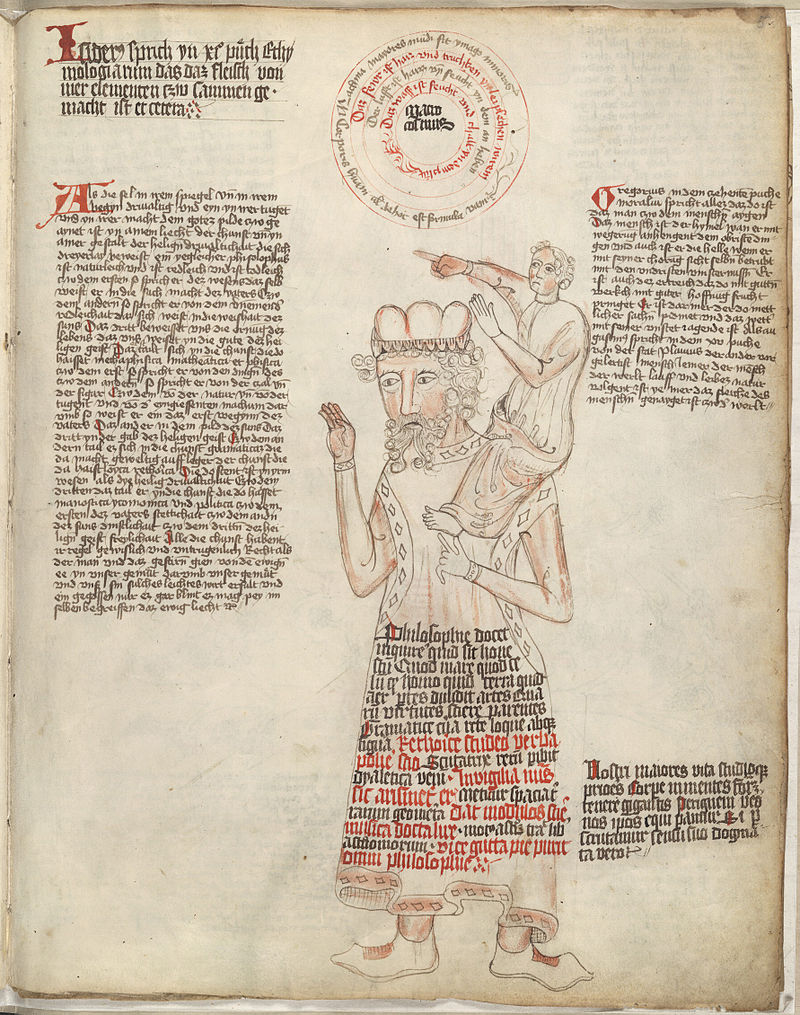
Dwarf, Shoulder, Giant


Finding in juxtaposition very divergent commentary can reveal surprising connections. These serendipitous discoveries, one of my M.A. profs warned us, did not please him when inserted into essays. He taught us Shakespeare, the Jacobeans, some recondite philosophy in truth-claims I hated, and Milton. He hated it when he'd read an academic foray that suddenly, say, for example as this was a seminar back in 1984, brought in a passage said critic had just been perusing on her pillow the night before from, say, the bestselling Stephen King yarn Pet Semetary to illustrate a passage of, I dunno, Areopagitica. The fact I had to look up what reached the NY Times top of the charts that Orwellian year shows how out of touch I was with what the Anglophone world enjoyed beyond my academia.

Nonetheless, with a shock the other day, I tallied up my own chronicle of a life spent among admittedly far less sylvan and delightfully liberal arts campus classrooms as that one in Claremont, and I figured out I'm in my thirty-sixth (I thought it was thirty-three, the age of perfection for medievals as that is when Jesus died) year of teaching. Having begun it, as a 7-12 grade sub while attending said grad school, my first year out of college, before entering UCLA that fall for my Ph.D.

I've been taken with an odd compulsion to finally read a book that helped nudge Thomas Merton towards his faith and vocation. A sign of the times when one'd pass Scribner's window display in Manhattan and see none other than Etienne Gilson's The Spirit of Mediaeval Philosophy staring back. Merton bought it. His life took the direction we know, for better as well as for his own dangers to his quest along the uneven path as a monk towards learning and folly, holy wisdom and human passion.

Anyhow, I had a battered secondhand copy (rescued from the UCLA Newman Cente's discard bin, tellingly, of my own collegiate era) of that 1938 translation of his Gifford Lectures given, admitted in Gilson's casual aside in the book's afterward, to an audience of non-philosophers (replete with Latin untranslated and all the erudition expected of undergrads like Merton, I suppose, of Cambridge and Columbia eminence, as well as whomever Gilson delivered his twenty talks to back in 1932 or so at Edinburgh university. To think that such a title would 1) be sold like a Stephen King novel by a bookseller 2) be bought instantly on impulse by an admittedly brilliant college student 3) furthermore comprehended by him, boggles my mind, perched as if a dwarf on the shoulders of giants, as Bernard of Chartres (living at least until 1124) is said to have invented that analogy, in the words of John of Salisbury. Of course, Gilson uses that enduring image in his own lessons, and that's a neat turnabout.

For, after having finished the lapidary construction, where no sentence sidled in as superfluous, of Gilson's study, I wanted more context on intellectual history back then. Rik Van Nieuwenhove's An Introduction to Medieval Theology filled that gap. I'd had assigned David Knowles' The Impact of Medieval Thought and Friedrich Heer's The Medieval World for respectively my Medieval Philosophy and my history of ideas in the Middle Ages undergrad electives (maybe I had a bit of Merton's aspiration in me, despite the decline of Western civ), but as for a specifically theological survey, surprisingly there's none to balance the philosophical ones of Fr Copleston, Anthony Kenny, Gilson himself, his student Armand Maurer, or the podcast-turned-popularizations of Peter Adamson.

More about what I found by that professor, who intriguingly to me teaches at tech-heavy University of Limerick, where I'd once given explored the archives by the Shannon one day, next blog posting.

Thursday, December 24, 2015

Michael Mott's "The Seven Mountains of Thomas Merton": Book Review

After a visit to the Abbey of Gethsemani, I wanted to find out more about where Merton had spent half of his life, and how the famous depiction of his first half, in 1948's The Seven Storey Mountain, differed from or confirmed what Michael Mott learned in his diligent research for this 1984 biography. Mott's documentation makes this the authorized biography, for he had access to primary sources and archives which previous scholars and biographers did not, and as he had the cooperation of the Order to enhance the interviews and correspondence he incorporates into a comprehensive representation. Luckily for all involved, this is no hagiography. It fairly analyzes what Merton wrote and what we know, apart his many writings in print or not, as judged in the context of his friends and his lifetime.

Highlights for me began with Mott's eloquent parallel of Merton's troubled year at Caius College, Cambridge, reading Dante with Professor [Edward] Bullough. But Mott does not give the professor's first name, presumably relying only on Merton's unpublished notes, and such small details, despite the meticulous attention the author devotes to his subject, sometimes disappoint slightly. For instance, while this is meant as a biography rather than a critical work, one finds many of the three-dozen-plus titles and countless essays or reviews Merton published in his lifetime mentioned as if in passing. A few gain from Mott's insightful excerpts or summaries, but more context on the rest of them, even if minor by comparison, would have enhanced the value of this book. Admittedly it's already long, but it's not dull or rambling. Snippets on Buddhism, for instance, late in the narrative could have also benefited from elaboration, as Mott compresses complex and disparate intellectual and spiritual contexts which Merton expanded. The shift of Merton towards the East is not an easy one to reduce to a few pages. The focus on main events is understandable, but again, the endnotes could have extended discussion.

He was full of contradictions. Gregarious, he chose a cloister. Restless, he wanted to be a hermit. Affable, he withdrew from a wide circle of friends. Proud, he resented his monastic discipline. Mott handles the tensions calmly, illustrating how Merton's early infatuation with his Trappist community gave way, as he matured, to conflicts with his fellow monks. However, when by the mid-1960s his dream of a hermitage on the property came true, Merton kept appealing for chances to travel, and opportunities to chat with visitors. He swung back and forth, longing for solitude but wandering back to the world, with dangerous results as have been revealed concerning his affair with a student nurse in Louisville when he was around fifty years old. I kept noting how Merton, vowed to poverty, somehow accumulated his beloved LPs by Dylan and Joan Baez and Mozart, so many books he needed a big set of shelves, and beer and brandy (the latter might have been sneaked in by visitors).

Certainly, he felt after a quarter-century of service as novice master, and as a productive if sometimes too prolific author, he generated attention and income indirectly or directly (how did royalties work out? Another area I puzzled over, as I figured the Order garnered the sales but somehow Merton had money to spend inside and outside the monastery during his later years at least there as a hermit...). So, he figured he had earned his keep. But I understood how his fellow monks may have rankled at his barbed wit and quick tongue, and also how Merton tried to make right some of the wrongs he inflicted on his confreres and his friends, given the pressures of living so long in such close quarters.

Mott delves into such difficulties well. "It was a voice breaking the silence to praise silence." (251) As acclaim for Merton made him a celebrity after his autobiography appeared, he sought the attention but also retreated from it, if it was not from those closest to him, perhaps. Some of the liveliest passages here are about the monastic hubbub that ensued when unwanted callers tried to crash in, or apply as postulants, drawn by Merton's fame. For a while, the abbey had to house monks under a circus tent, so great were the numbers. But that passed, and Vatican II itself, with the renewal Merton helped progress, led to the diminution of much that made religious life in the Cistercians so austere.

Social changes drew Merton into the conversation in the rest of the world beyond the walls, as the late-1950s agitation filtered into his reading and correspondence. Marco Pallis and Merton wondered in letters if the atrocities attributed to WWI sparked WWII propaganda, and Mott shows how Merton evolved from a Cold War proponent to a more balanced observer and challenger to capitalist cant. Opposing the Vietnam War, in 1965 he wrote "The Answer of Minerva." If the question is "Why must this pointless war go on?", then the goddess' response is: "You must fight on, for if now you make peace with the enemy, you will offend the dead." (qtd. 416) A perennial, if unfortunate, exchange. 

The reforms that changed Catholicism, I always figured, would have been supported without delay by Merton. But Mott shows more ambiguity in Merton as the 1960s revealed immaturity among clergy freed from restraint, and as a rush to improve liturgy and architecture and ritual threw out some of what made the Church so cherished by many. A letter in 1968 finds him at odds with both extremes. "Paralyzing incomprehension--what does one do when he realizes he is part of an organization whose members systematically try to 'make a fool of God'? I suppose I begin by recognizing that I have done it as much as the best of them." A characteristic note, for Merton in his private journals strives to meet the nuanced note, less combative or preening than some of his public proclamations betrayed.

He took a long time to get over the priggish or self-righteous attitude. After all, he was an intellectual probably more than the playboy his youthful memoir made him out (despite censorship from within or outside himself) to be. He talked his way around and in the monastery, where a promise of stability and discretion overruled his natural ebullience, if not his concomitant despair and self-loathing, the balance between good conduct and righteous morality never lasted long. He lived in tumultuous times, and he continued in one of those years, 1968: "But then a 'God is dead' Church is no better, or are the 'God is dead' Christians are an improvement over the others. Just the same established flippancy and triviality. And even more successful." He ends with "They make a good living out of God's death." (527)  A fitting sample of Merton's ability to turn a phrase, to cut through pretense. 

I liked the hints of how Merton related to his friend, the artist Victor Hammer (whose drawing of Merton graces the back of the dust jacket) as an "unbelieving believer." I would have liked more about this, as to how friends of Merton managed to align their own beliefs or lack of such with his. (Some material here, as in his affair, was redacted or limited, as at the time Mott prepared this, it was less than the quarter-century moratorium that Merton requested for release of his private documents. Since Mott's book, some of the journals and letters have been published, for better or worse, maybe.)

An "existentialist contemplative," Mott avers on the next page, beckoned as ideal. Not only for the hermit-despite-himself, as he prepared to depart for the West Coast and then a tour of the Southeast Asian landscape and monasteries who increasingly loomed as his final set of mountains to argue with, in Mott's construct (playing off of Merton's title and that Dantean depiction of Mt. Purgatory). Merton wanted not only to write about life, but to live it. He wanted to demonstrate his contemplative commitment and to withdraw (at least some of the time, him being Merton), from all the attention. 

In his Asian journal, his last set of writings, he muses over what he has learned after living with himself, itching to travel but insisting he was called to a vocation apart from even his fellow monks. "Our real journey in life is interior: it is a matter of growth, deepening, and an ever greater surrender to the creative action of love and grace in our hearts. Never was it more necessary for us to respond to this action. . ." (qtd. 543)  He was open to this spiritual evolution, and he struggled to progress. 

Mott can lighten the mood. As to the journal Monks Pond in its last year of the monk's life, "Merton made the mistake as editor of including the work both of poets who were friends and of friends who claimed to be poets." (503)  While his last recorded words in public have been taped in Bangkok, that day nearly twenty-seven years exactly from the time he entered the monastic life at twenty-seven, many cite the eerie premonition of the first clause. The second one also shows Merton, in his everyday side, that made him so much a figure of devotion or imitation or even excoriation by many.

"So I will disappear from view and we can all have a Coke or something." Then, a "Thank you very much" concludes his final address, preceding his electrocution by a faulty fan's wiring in his hotel bathroom. (564) That "you may know the Christ of the burnt men" in premonitory fashion also serves as the last phrase of his autobiography, another circle rippling across many decades and mountains. (Amazon US 12-17-14)

Sunday, April 5, 2015

Elijah's Chair


 On April First, after Alex Gibney's HBO documentary on my hometown's most famous "tax-exempt religion" founded by a pulp novelist aired, noted atheist Neil DeGrasse Tyson dismissed scare claims. “But why aren’t they a religion?” he asked. “If you attend a Seder, there’s an empty chair sitting right there and the door is unlocked because Elijah might walk in. OK. These are educated people who do this. Now, some will say it’s ritual, some will say it could literally happen… It looks like the older those thoughts have been around, the likelier it is to be declared a religion. If you’ve been around 1,000 years you’re a religion, and if you’ve been around 100 years, you’re a cult.” I have some hesitation with Tyson's glib argument, as critiqued since by Steve Neumann. However, as I listened last summer to an audiobook, Janet Reitman's similarly thorough expose that confirms much of what Lawrence Wright's study has uncovered, I wondered about Mormons, and Jesus, Mohammed, and Moses in the same way. Or this documentary on one of my hometown's more recent, odd, spiritual set of seekers, The Source Family. If a cult survives a decade it's on way  to being a sect, and after a century, a religion. As the founders fade and memories get mythologized, in the past, invention replaces oral history with either more of the same or, as in Buddhism, belated compilation and codifications. (Yes, we keep two traditions defying logic: kosher and Elijah's Chair.)

The trouble with the Exodus, like those tablets Joseph Smith claimed to have translated before they vanished, or the historicity of Jesus, the veracity of Mohammed, or what the Buddha really said, all fall into the abyss, lacking first-hand testimony. As I wrote last year, the Exodus may not have happened, at least as we celebrate it with 600,000 fleeing Pharoah's hardened heart and actions. There might have been a small slave revolt, and few hanger-ons, the borderers called "ivrit" could have well hung out with the fugitive rabble.

Two nights ago, we held our seder. My wife narrated her version, complete with a prank she and my older son engineered well on me. But, tired of the triumphal "they tried to kill us, we survived, let's eat" storyline, we decided to host our older son, his college friends, and two older, secular Jews with a different take. We've evolved over a quarter-century of this, and so we shared this activity, I post it as it may inspire others out there, who approach with not a fixed identity but an evolving imagination how we tell this story commanded to repeat each year for thousands of them, relevantly:

"The Seder is the annual Jewish celebration commemorating the Exodus from Egypt, which freed the Jewish people from slavery. The story is that God subjected the Egyptian people to plagues which grew more brutal, culminating in the death of the first born son. The tears of thousand mothers finally softened the Pharaoh’s heart. 

We look forward each year to taking a breath, dining together and reveling in the freedom we enjoy.  Jews are commanded to tell the tale, not once, but twice. We have done so dutifully for a quarter of a century. We clean the house and get rid of bread and noodles and cookies in order to simulate the Jews hurried Exodus from Egypt. We do this though because we've always done it. We are proud that at this time Jews all over the world are reflecting on their freedom but the story we're commanded to tell might as well be Cinderella or Hansel and Gretel. The fairy tale trivializes our wonder at our own blessings and brushes the struggle of those less fortunate than we are under the rug. We long for something more real and meaningful and we come to you." (So my wife wrote, and proposed for us to fill out in Comic Sans below. I did so as an example, trying to keep my guest list limited, hint-hint.)

My Seder

My name is:

I would have my Seder at: under the redwoods where my friends Bob + Chris live

The living or not living people I would invite are: 7 Living: Bob, Chris, my wife and sons and girlfriends as applicable; 7 Not-living: Hypatia of Alexandria, "La Malinche," Emma Goldman, Hans + Sophie Scholl, Michael Dillon, Thomas Merton. 

We would eat: a vegetarian meal but a delicious one, cooked by my wife (with help!)

We would celebrate our freedom by: playing music we could all agree on in the background, while discussing ways to advance justice, equality, tolerance, and other genteel values while taking into account our own earnestness and blinkered minds

We would acknowledge those who are not free by: gathering our funds and actions to support the righteous cause of our choice, but neither for profit nor for a politician.

Instead of matzoh for affikomen we would hide: a dog's chew toy as one will be nearby.

Whoever finds the affikomen will get: to donate the amount to a favorite charity

Monday, December 22, 2014

Disenchantment as Truth

 
I've been mulling over the relevance of Dante for secular readers lately, drafting a forthcoming article for PopMatters, and this reflection deepens into the impact of what Max Weber called Entzauberung, "disenchantment of the world." Once religion loses its hold on one's psyche, and one's society, what holds it together? John Messerly at Salon (a very erratic site given over to "I married a Republican," "My endless [female] orgasm," and "outrage over white male privilege" types of clickbait, but one which does excerpt religious content, if in earnest, endless book excerpts from humanists and skeptics) argues in Religion's Smart People Problem: The Shaky Intellectual Foundations of Absolute Faith: "With the wonders of science every day attesting to its truth, why do many prefer superstition and pseudo science? The simplest answer is that people believe what they want to, what they find comforting, not what the evidence supports: In general, people don’t want to know; they want to believe." Furthermore, he tries to figure out why highly educated people, then, continue to believe.

Messerly sums up two theories for religion's persistence. Cohesion of society, or causation as explained. It stimulates in-group solidarity, and it accounts for just-so stories, which comfort us. For the smarter among us, rationalization means they may seek to support by tenuous claims what they had originally "believed for non-smart reasons." They may also not back up, deep down, what they say they believe. Hope and solace, after all, may rely on faith. Also, and this seems true to me, they may publicly affirm what they privately may doubt, as if religion is better used to comfort the masses. Messerly makes an aside to Dostoevsky's Grand Inquisitor, to show the palliative nature of religion. He defines a third function for the educated: religion at an advanced level may not match that of the common folks. Process theology, Teilhard de Chardin (my example) or panentheism aren't common.

In a twist on the subtraction theory explanation, where religion retreats as science progresses, Messerly propounds: "Among the intelligentsia it is common and widespread to find individuals who lost childhood religious beliefs as their education in philosophy and the sciences advanced. By contrast, it is almost unheard of to find disbelievers in youth who came to belief as their education progressed. This asymmetry is significant; advancing education is detrimental to religious belief. This suggest[s] another part of the explanation for religious belief—scientific illiteracy." I like this retort: "we should remember that the burden of proof is not on the disbeliever to demonstrate there are no gods, but on believers to demonstrate that there are." If one claims "invisible elephants," then one does not make one's proof convincing by challenging a doubter who cannot disprove the pachyderms.

Passion, goodwill, and conviction, as I labor to teach, do not equal verification for a thesis or truth-claim. I challenged a speaker in my speech course when his assertions that the world was created less than ten thousand years ago, in my opinion, failed to make his intense presentation persuasive. His evidence was faulty, and the few discrepancies he uncovered in carbon dating could not undermine the massive evidence. For, "if you defend such beliefs by claiming that you have a right to your opinion, however unsupported by evidence it might be, you are referring to a political or legal right, not an epistemic one. You may have a legal right to say whatever you want, but you have epistemic justification only if there are good reasons and evidence to support your claim. If someone makes a claim without concern for reasons and evidence, we should conclude that they simply don’t care about what’s true. We shouldn’t conclude that their beliefs are true because they are fervently held."

That also leads to fideism, putting faith up as the sole arbiter of proof, and this, Messerly mentions, makes faith itself arbitrary. Or, the modern spin that might say that student had every right to his views as much as I do mine, and who's to stay which is true? This erodes our shared foundation of truth, when insufficient evidence is peddled as if proving unsubstantiated claims which can harm.

Faith without reason, he concludes, fails to satisfy the more discerning among us. Religion may help us in the way that whisky helps a drunk, but we don’t want to go through life drunk. If religious beliefs are just vulgar superstitions, then we are basing our lives on delusions. And who would want to do that?" He concludes: "Because human beings need their childhood to end; they need to face life with all its bleakness and beauty, its lust and  its love, its war and its peace. They need to make the world better. No one else will." But my students have often answered this bluntness, as community, ritual, and meaning accompany theological practice. Thomas Merton, according to his biographer Michael Mott, shortly before his sudden death reflected on "existential contemplation" as a condition he approached, and he helped "unbelieving believers." These elements of a belief system persist too. Culturally, religion may strive even now to provide an aesthetic immersion or emotional uplift which the humanist insistence on "is that all there is?" may not, for those educated or not, in darker times.

I reply that most of those whom I teach continue as unswayed as ever by their childhood belief system, but some do reveal they are disturbed by what they learn as other religious systems, and then none as I also try to include tangentially, are introduced as we go through two months together, exposed to varying answers to the great questions of existence and endurance. And, there is always at least one student who has believed and now does not, to spice up the discussions. This makes me speculate that what I have started in motion, as a kind of Primum Mobile, if not Uncaused Cause, may result in further collisions between one's past and one's future, as the present shifts and brings us face-to-face with belief, and what we are to place our faith in. The cost of education tallies as doubt.

Monday, December 8, 2014

South Central Rain

We drove on through darkness, very dark, along an interstate into Kentucky. Two symbols of the New South, side by side, illuminated by headlights as Layne tried to keep straight on a road full of the usual construction, amidst impatient (people don't drive nicely down here) trucks and cars all around us. An abandoned barn and farm. A sign for Allison's Adult Superstore, open from 6 a.m. to midnight. I wondered, drowsily if briefly, who stopped there so early, and who had to work there, and what they sold.

Figuring Louisville brought us that much more west than would have Cincinnati, we opted for it. We got a dim sense of Louisville when we went a few blocks to find a short strip of neon. Walking down streets full of construction sites, we passed two city plaques noting the slave markets which had met around Market Street. Most of the sturdy buildings, true to urban fashions we'd seen, remained dilapidated, but gentrification encroached.

A few hipper restaurants, near the convention center, beckoned, and Layne chose Doc Crowe's. Jammed with lots of kids from the university, that sports powerhouse with pro-sized stadiums. I supposed a big game had happened, as we saw Stanford shirts here and there. A giant, restored distillery, it had dozens of bourbon types and loads of oysters. We contented ourselves with fried food. I had a Founder's stout, same brand as I enjoyed in Grand Rapids. Nothing overwhelming, but a popular place. The table next to us had a slew of conventioneers, well-fed and well-earning types, all white men chuckling except for one suited Japanese fellow who appeared to be sampling Southern fare for the first time. I thought of the Babbitt radio dramatization we'd been enjoying, as if updated.

We could not find a cheap room downtown, settling for a not-bargain Econo Lodge. It was central. At least it had (despite the warning in the lobby) free parking. But it was dismal. Even the breakfast was skimpier than in other such motels. All I could scrounge up was oatmeal in a packet and Raisin Bran. Around us, the workers waited for their 9 a.m. shift, and construction was happening as we tried to check out, the elevator full of laundry carts and the corridors full of hammering and hewing. We got out of there nearly as fast as we had Ann's Motel in Wall SD; these two were the low points so far.

Backtracking a bit, as the presence of Bardstown Road in Louisville led me to believe the next destination was just outside that small town and adjacent, we drove instead a lovely hour or so back into the Bluegrass State's heartland. I wanted to see, as we were not far anyhow, the Abbey of Gethsemani. When I was in junior high, the two books I read that left a lifetime impression on me were Tolkien's trilogy and Thomas Merton's The Seven Storey Mountain. I credit my medievalist path in college and grad school to these influences. Merton made famous the monastery he entered at 27 and lived, more or less, at until his death nearly 27 years ago to the day, if far from the Kentucky knobs, the wooded hills on the two-thousand acres the order of Trappists have farmed since 1848.

Leaving another interstate, we entered lovely terrain. Fall still glowed. A sign for Boston ahead meant only a settlement overlooking fields and railroad tracks. The sun shone. Little country roads kept diverting us, and a large set of factories in the middle of grass proved to be Jim Beam's distillery #5. I have no idea how blue bluegrass is, but the meadows and tidy farms and small houses we kept viewing kept us attentive. The route took us into New Haven, whose sign welcomed us to the "gateway" to the Abbey. A large Catholic church attested in that village to the presence around there.

We got sidetracked on Google in a field, near the Merton Retreat Center, but a few hundred yards in the other direction, a sign pointing us at a crossroads fork to "Trappist" on Monks Road said it all. The road curves into the verdant knolls, and Layne understandably asked if the prominent if still indefinite figure on the statue crowning a hill was of Merton. I think it's St. Joseph. Michael Mott's The Seven Mountains of Thomas Merton, which I am re-reading now, states early on for Merton the worst sin was idolatry. I admire his sticking it out at a place where, once the honeymoon wore off for a very recent convert, tested him. He broke silence to praise it, as Mott avers. Many of his seventy books are sold in the gift shop. The ancillary Merton line of souvenirs and tributes echo his predicament. An extrovert and wit who chose a cloister, he wanted to be left alone, he rankled at the community he praised, he courted a worldwide audience despite the Order's aim of anonymity. I found out recently from our dear friend Bob, son of a Free Methodist minister who spoke at our wedding, that the reverend had met Merton way back when he lived in Kentucky. I confess I am delighted to be two degrees of separation (as I am from Pope John Paul #2 and President #44) away.

Merton strove to live apart on the property, yet he, knowing his unreadiness, first asked to be made Novice Master. He chafed against the discipline imposed on him by an abbot, but he realized his vow of stability had to keep him there. He found his calling, but a complicated one and not a sinecure. After his autobiography with no promotion soared to the bestseller list in 1949, he brought necessary income to the struggling monastery, as well as so many applicants they had to live in a circus tent. Postwar trauma had already been attracting postulants and novices looking for renewal. Merton's book made him the most famous monk of modern times, even as he longed early on to be a hermit.

He got his wish, finally, but we had probably no permission to venture so far into the enclosure, and we had to content ourselves with examining the informative display outside the gift shop. A video showed us more, and I heard many East Coast and what regional and blue-collar accents as some monks in voiceover (one looked very Jewish and may have been once) explained their venerable routine. One reasoned bluntly, contrary to the naysayers like my dad who scoffed at a bunch of unproductive men getting room and board for nothing but praying all day, that such a demanding life (up in the middle of the night, hard work, scant food, and a regimen devoted to "ora et labora" first), that the monastic vocation required one to serve others, or else, what was this life good for, anyhow?

On a humdrum errand for the monastery, Merton found himself transformed. "In Louisville, at the corner of Fourth and Walnut, in the center of the shopping district, I was suddenly overwhelmed with the realization that I loved all those people, that they were mine and I theirs, that we could not be alien to one another even though we were total strangers." A plaque marks this 1958 epiphany, which moved Merton towards pursuing social justice. (Walnut St has been renamed for Muhammad Ali!)

Merton hated the "Cheese Factory" and its grubbing for greenbacks, but of course, if not for the royalties from his books, popular from the 1950s ever since, would the Abbey have survived? Its boom came and went. As the placards tell, vocations have dropped now. The 40 or so monks number about the same as when Merton entered a few days after Pearl Harbor at the end of 1941. Most heads are grey and or bald, and as with other foundations I've read about, the future of Catholic monasticism appears to wane. Although as a letter posted from a retreat-goer with a Jewish surname suggests, many find the chance to share Benedictine hospitality appealing. Intriguingly, rather early in the postwar era, Merton popularized Zen presciently. Catholic institutions have been sold to other faiths more and more. Many monks rationalize that this decline speaks to a pattern only God knows.

Peter Owen Jones' BBC series Around the World in 80 Faiths featured a visit to the monastery of Subiaco in Italy, where St. Benedict prayed in a cave. A few tottering residents remain in that storied setting, amid medieval frescoes. New Age retreats buy out Jesuit seminaries. Burning Man creates its own annual ritual. Outside these walls, yoga may beckon more than Sunday obligations. Meanwhile, cheese is sold and fruitcake assembled, both by hand, and you can order both (we liked the garlic and chives cheese and the bourbon fudge) online at Gethsemani Farms. Layne also bought a Nicaraguan vase; the shop sells products made by Cistercian communities and far-flung fair-trade cooperatives.

I wonder, if Merton had use of the Net, what his vocation would be like? Could he have kept his solitude, so longed for? Layne contrasted the despair of prisoners in Canon City and Jackson compared with the contentment of the monks in cells nearly as spartan. We entered the guests' glassed-off portion to look down on the stark white chapel. We spent a few minutes standing there. Time stopped. I thought about Merton and all who had prayed below. It was absolutely silent.

I wish we had more time to walk around, even if the day was very blustery. But we had to make it back around south and head east as planned. We found ourselves, at Google's prompt, on a pretty road. Suddenly we passed a sign of Lincoln's first school, then another for his boyhood home at Knob Creek (closed for construction). The center of the modest town of Hodgenville has its own memorial at a roundabout, in a fittingly humble setting. You can watch more about Lincoln's birthplace here.

We edged back to the interstate, leaving Kentucky soon behind but wanting to go back to see more. We stopped at a K-Mart in Franklin, the same as any, but as it did not have sunglasses for Layne, we went to a mall across the street, as anywhere. Yet the people at Sunglass Hut helped, directing her to the kiosk selling a pair at a fifth of the price they did. On a sunny day, after avoiding most of Nashville, we headed west across some of the Volunteer State. We passed the site for Shiloh but already, the day lengthened. So, we stayed at an Air B'n'B find, a restored collection of Southern rural buildings and a two-story cotton gin, the rebirth of the roadside settlement where Alamo and Bells and two big highways merge. Dr. John Freeman has spent his retirement in this labor of love. We stayed in a moonshiner's cabin, diligently moved and rebuilt. We lit a fire and smelled the smoke.

I walked the 30-odd acres and learned about the different structures. You can too at this site for Green Frog. The sunset over the pines was brilliantly hued, and I tried to take pictures on my phone which inevitably fail to do it justice. That night, I tried to shut out the rumbling traffic and imagine life once. Next morning, we walked about the place more, and visited the gin as it was being worked on by an older man who told us of how he and his smaller sister tried to pick hundreds of pounds of cotton (one big bag filled can tote 200 lbs.) in an hour. That gin was amazingly designed, ingeniously so. What I figured vaguely was a contraption the size of a crate was an intricate, immense construction.

The tribute to a vanished way of life, with hardships perhaps outnumbered or balanced by such memories, stands as a reminder of what we today never know. Talking to the man who made his retirement a time spent caring for the cotton gin, he connected me with hardship, but also with a rooted sense of belonging on a farm, committed to a task. My Angeleno commute, my keyboard tasks, my mindset tired of "outrage" this and to-do task that, such trivia: one advantage of a monastery or rural surroundings is that they force you (or can or did) to listen. The highways never stopped whirring, but I tried there to hear the sense of life and how to live it (I had to fit in R.E.M. somehow), if not in a way I could ever do. As the Badlands showed, you have to go a very long time to hear the wind on the prairie, or look out over a clear vista to thirty miles away. As Layne did some work back in the cabin, I lingered to take photos, some on my stomach in the long grass, as I strove to find perspectives before the clouds let loose, and taking in the feel of the place. A woman leaving the front lot urged me to come back when the cafe was open, as the sandwiches were worth the visit.

The weather threatened rain, and by the time we headed south again, it hit. Layne and I reckoned we could dip into the Magnolia State, and she found a worthwhile byway taking us past to me oddly placed subdivisions, each on "wooded lots" if often cleared of such, an acre per lonely house, unlovely and awkward, which speckled the space we passed as red dirt took over and pines and scrubland receded. We were on the Cotton Trail in Tennessee, and all around, it dusted white as if snow had fallen. We took a weird off-ramp that failed to get us on the interstate but did take us on a mile that dazzled with beauty. Half cotton fields, half leaves golden or scarlet falling in the drizzle. 

Entering Holly Springs, you pass from the interstate (and another is coming, I-269, a north-south one bringing more subdivisions, Wal-Mart Superstores, maybe fracking) and endless construction maddening at the state border and thereabouts, worsened by rain and closed-off exits and ramps into a calmer South. Rust College, one of the first black institutions founded in Reconstruction, stands. Across, the brick and stone ruins of a state industrial academy loom. In the center, as if Santa Fe's adobe had been converted into humbler lumber structures two centuries later, a square of stores and a wooden awning and boardwalk remind one of what it might have been like, when the war came to the middle of the town, part of the strategies that drew in Shiloh and Corinth, into hatred and bloodshed.

A few blocks away, at a converted girls' school, the crammed three stories of 40,000 artifacts collected from the families who have lived there long make the Marshall County Historical Museum a must-see. Our guide, as we were surrounded by uniforms from wars then and since, and swords and buttons, bullets and badges, spoils and plaques, noted how the South had the unfair disadvantage of rifles taking a lot longer to load, half a minute, compared to the rapidly firing rounds of Union men, who hunched down in trenches while the rebels charged, much more exposed. I thought of how this must have been horrifying; at Corinth, the battle raged at the depot's rail tracks at point-blank range.

A more peaceful setting surrounded Holly Springs, even if one sensed decay. We scrutinized a taxidermy panorama, a must-see for its less accomplished examples.The museum documented the Coca-Cola bottler, the maker of novelty candy, the factories once supporting the town, but I had no sense that they continued today--despite the region's demands for sugary sweets. Segregation was apparent in the photos of long gone senior classes of the local high schools. Not until 1970 were two black students at the white school; the other one, named after Rust, was all black. The square seemed about half and half, from the people we saw scurrying about. Stars and Stripes still flew on small sticks, as Veterans' Day had been celebrated at the memorial stone with the names of the dead from wars since the Civil one. We left the town as rain fell, and soon got sucked into the rush hour snarl of the southeast section of Memphis, which looked forlorn. At night, not much to report, and we forced ourselves on until we could go no further, at another if better Econo Lodge in Brinkley, Arkansas. Signs indicated both a Lewis + Clark site not far south, and a Trail of Tears one for the natives forced out of their southern homelands by settlement in the wake of millions of Lewises and Clarkses, plantations and slaves, cotton pickers and red-dirt farmers, candy makers and now all pop guzzlers.

Layne's eagerness to try the Southern icon Waffle House, whose yellow logo I liked, faded soon after ordering from the limited (especially for non-meat eaters) menu. Our waitress was nice, however, named after one of the three cardinal virtues, and we tipped her well. The other patrons were loutish: one wore a red Chadron NE polka band t-shirt (despite the freezing temperature, as a polar storm plagued the region), and he and his young pals jeered at a family coming in. Our polka boy cued up on the jukebox some teen-pop songstress and CCR's "Down on the Corner." These preceded "There's a Special Lady at the Waffle House," which earned by its annoying presence whatever tip we left the staff who had to hear this ode to their employer. Corporate, sepia-toned enlarged photos of WH's postwar pair of owners and subsequently dutifully smiling contemporary staff surrounded the diner. A whiteboard encouraged patrons to add their own snapshots taken there to a display; few had. My portion was tiny, as if a kid's meal. The waitress had to invent a grilled cheese option, the hashbrowns lacked the onions I paid 40 cents for, and I was still hungry when I finished a few scant minutes later.

The clientele next room to us was also loutish, hanging out next to our car in the cold, and we left soon after we awoke. News was still lingering about the election, but Ebola had receded; Kim's derriere was unmentioned. We faced chilly weather as we crossed Arkansas, but the day brightened. We admired the Ozarks and their red, brown, and golden colors mingled in hues I lack adjectives for. Even from the comparative sameness of the interstate, the vistas rewarded. I can only imagine what back roads and panoramic outlooks reveal. We headed up to the northwest corner to visit the Wal-Mart funded museum of American art in the corporation's hometown of Bentonville. The entire region, from Fayetteville on, had all the sameness of, say, Irvine or any post-1970s suburban sprawl. Lingering fields lay fallow, for they were planted with real estate signs, one for a development called "The Farms." Whatever small-town ambiance as in Holly Springs the towns once had was gone, but at least the dogwoods and creek over which the museum is built do cling to a dignity of their own.

Crystal Bridges had fine colonial and 19-c. paintings, too. Karl Bodmer's Mandan bleak death scene, an eerie circle of human skulls overlooking a solemn vista, captivated me (if neither Layne nor anybody else at least on the Net, as I cannot find an image of it). I missed my meddlesome cat Gary, as I contemplated Thomas Eakin's "Portrait of Professor Benjamin Rand," the scientist stroking his black cat as it kept his place in an open book on his desk. The next century had an impressive if not astonishing selection. I liked a painter, co-founder of Synchromism, whom I had first seen in Chicago. I'd never heard of him but he lived in Santa Monica a century ago, Stanton Macdonald-Wright. His paintings hint at Buddhism and he mingles Cubism with a bold overlay of bright shapes.

Downstairs, a "State of the Art" installation featured a hundred supposedly cutting-edge artists. My attention failed to be halted by 98 of them, but Dan Witz' mural "Vision of Disorder: Frieze Triptych" in hyper-realistic detail of a moshpit caught my attention, and many other viewers. Layne was also not wowed, regarding the Crystal Bridge holdings as lacking substance. I concurred as I sat nearest the mural, but stuck in front of a display of half a dozen floor fans stacked up the wall, each blowing so to keep levitated a giant sombrero. Louis CK has an episode (can't find it all on YouTube as I tried when teaching an art course last summer) where he is stuck in a post-modern art gallery. I can relate.

All the same, an end room featuring Jawshing Arthur Liou's "Kora" moved me. He undertook a pilgrimage to the holy site of Mount Kailash in Tibet after his young daughter's death. Thirteen minutes, it gave me time for action as contemplation and Layne a seat to catch up on e-mails on her phone. The invitation to integrate duty and reflection, in ways inevitably dissimilar in substance if not entirely in form to monks who mingle "ora et labora," prayer and work, at Gethsemani, includes us. As our journey went on, thanks to Kindle, I began Robin Kirkpatrick's recent translation, musing (as Merton had), if and how one might find meaning in the Commedia, in another century full of doubt.

We headed to a Country Inn in the identical faceless suburb of Rogers. Compared to Brinkley and Louisville, it was palatial. Checking in we were frustrated by a computer being down, but the room was comfortable, and even if we had to settle for takeout pizza and beer (a local, Core Octoberfest Lager; licensing laws prevented the kind of takeout pairings we are used to), we were so tired and it was so cold outside we were content. The next morning, all eyes in the breakfast room turned to the weather segment. It was 28 in Fayetteville, but the polar storm luckily had drifted off. I had yogurt, fruit, granola, and oatmeal, for once not having to eat the Raisin Bran from its twirling dispenser.

A pause at the Shiloh Museum of Ozark History taught us a lot about the region. "Aux Ark" comes from a French tendency to chop off the first syllable of a tribe's name, so "of the Arkansas" warped into the name we all know. The museum was not piled high or haphazard, yet this detracted from its impact for us after Holly Springs. But clean and orderly, it appealed doubtless to those less enchanted by clutter. A group of schoolchildren visited in a room as a woman in pioneer dress let them try out a toy gun to shoot bears. We were the only other visitors, as usual. The sufferings of ordinary people, black and white, both poor, were made deftly evident in a short video and display about the Civil War. Armies and bushwackers (I think of ISIS headlines) forced many to join them or be killed, and many families in this remote area found their farms burned and their possessions looted. The war swept across this contested territory along the Missouri border, and no celebration of the terror it unleashed was found on display. We watched a 1940 video about a fryer chicken contest, attracting tens of thousands to what was once a land of berry farms, egg ranches, and poultry production, albeit I bet pre-Tyson, whose big rigs we often found in front of us, and who accounted indirectly for the  museum's captions, and many of the local signs and businesses in Rogers, as translated into Spanish.

The video chortled that "the only journey of the chickens was to the frying pan," more or less. We watched as eggs hatched, chicks were sexed and sorted, and as fried chicken dinners resulted. A WPA mural of Springdale celebrated this agricultural heyday, but as with the region where we live in Southern California, only vintage postcards and histories preserve the vanished farmland or orchard.

Outside, a few cabins and structures were moved onto the lot. One was an outhouse, moon for women, star for men. Another was a cabin, each wall with its own door, but we could not enter, as it was all boarded up. A third was the original house from a century ago and more. The guide who showed us around pointed to the library, full of hardbacks from the 1940s, and observed "that was when people read books." A radio and comfy chairs stood for pre-WiFi, pre-TV, and pre-Wal-Mart. That company is ubiquitous, as you'd expect. Institutes for Workplace Management pop up next to chain motels, and whatever lure this corner of the Razorback State held, it must lurk in football now.

Siloam Springs was the last town before Oklahoma. It reminded me of Hot Springs SD, if more girt by the usual logos. According to the State Tourism website, "Food choices range from chain restaurants to sandwich shops to coffee shops to home cooked meals." A municipal page, with only one image of the city center's faded turn-of-century resort heritage, warns: "Tornados, straight-line winds, train derailments, natural disasters and civil unrest are all possible in Siloam Springs."

Photo: chapel + cemetery of the Abbey of Our Lady of Gethsemani's gallery via its website. 

Monday, June 24, 2013

"Thomas Merton + James Laughlin: Selected Letters": Review

"One begins to wonder about this realm, then. What is being prepared for it?": so reflects Merton amidst the death of many prominent figures, on 12/7/63. The gradual shift of this Trappist monk towards re-engagement with the world's suffering, by one who in his mid-twenties sought to flee the secular temptations and to devote himself to seclusion needs no introduction; it's well-known and a fascinating study in itself. Twenty-two years had passed between his entrance into the monastery and the time he wrote these sentences to his agent and friend, the well-off, well-educated James Laughlin. He shared and furthered Merton's connections with the New York literary realm and worldwide intellectual currents that a cloister could not block off. Laughlin founded New Directions, publisher of avant-garde novelists and the modernist poets whom Merton reflected in his own verse. Merton grew increasingly confident by the mid-1950s, taking on the Cold War's military-industrial complex.

So did his essays. As this collection edited well by David D. Cooper frames, in about one-fourth of the extant correspondence between 1945 and Merton's odd, premature death in 1968, we see the independent streak in Merton endure. The initial immersion into asceticism and denial understandably shook Merton up: he fears in early letters that being on the same roster as Henry Miller (whom he resembled and later struck up a friendship with) and Jean Genet might shake up Catholics. He wondered if his own inclusion in an anthology aside Genet or such might indirectly lead some young man into homosexuality; Merton scrupulously asked Laughlin if his own works for New Directions that funded the publication of less successful authors could make him (a term I employ but he does not) what used to be called a near occasion of sin.

However, by 1956, a change comes. As the Beats and rock stimulated the culture, so Merton might have been jolted. He begins to read Buddhism and ask about Zen. He no longer signs his monastic name in the very same letter where first he raises this interest, intriguingly. Laughlin must have labored well to assist Merton in obtaining books; consider this is but one of a series of volumes where Laughlin writes at length and in depth to such as W.C. Williams, Rexroth, Schwartz, Pound, and Miller at the same time. There's an affection on the page, even as the contents tend as the years go on to fill with worries over censorship by Merton's Order, the tensions of the superpowers, the war in Vietnam, and the pull of a nurse with whom Merton fell in love in 1966 (discreetly and sensitively handled by the editor and both correspondents; an afterword includes Laughlin's letter to her, tracked down over a year after Merton's death), and Laughlin's nimble recollections of his friend.

I agree with Laughlin that once one reads Merton, however imperfect some of his verse could be, one keeps on. His voice, approachable, ironic, sensitive, intellectual, compassionate, admonitory: it expresses insight and acuity. He's intellectual without posing as an academic, a committed priest who learned to let go of the narrowness of his call in its remote setting, so as to embrace the wider community. He gently early on encourages Laughlin towards faith, reminding him how a ritual rewards the body, which needs its own satisfaction along with the tug of the mind or pull of the soul.

Ultimately, the message Merton by the mid-50s articulates places him in the progressive movement's vanguard. His list of what he reads, who he writes to, what he knows, shows his curiosity and his drive to not cut any ties with society even as he seeks a hermitage to retreat to within the monastery's expanse. This energy, as he burrows down there in Kentucky even as he travels now and then before his final journey to Asia, compels him, and the need to resort to a mimeographed form of transmitting what the Order feared when they stopped him from publishing in print political anti-war, anti-nuclear content demonstrates his decision to address the "pestilence" of a dark time as a priest who had to act.

One passage stands out. On 11/26/63, Merton tells of the reaction in the monastery to JFK's murder. While he sympathizes with his family, he feels "more sorry for the national dance of death." That is, he reminds Laughlin of what I have never before seen publicized. The speech to have been delivered by Kennedy in Dallas was read in the monastic refectory. It's a "symptom of our whole condition," and revealing. "Strange thing: he lists all the increase in our weapons, missiles, bombs, polaris submarines etc. etc., and after doing so says that this would put a stop to any sinister plans of aggressors and.  .  . assassins. With all those missiles and submarines, all it took to do him in was a rifle and two bullets--one extra for the Governor of Texas." (234) Merton suggests this "angle" has "unconsciously unnerved people" and it unsettled me when I read his take on this mythic event. As far removed as he was from the non-stop media coverage that blanketed the nation then, he pinpoints the larger problem, and he refuses to idolize one who after all was responsible for some of the violence. One again sees the boldness of Merton's vision, and why he remained outspoken in his wisdom in a confusing age: he helped some of us react to it differently than did more popular media.

The contents show Laughlin's support and Merton's quest as it unfolds over more than twenty years. True, it's necessarily bogged down sometimes with details about what to print next, what needs editing, who wrote what, but this shows the passion with which Merton and Laughlin sustained their mutual support to connect him with a readership that at New Directions might not otherwise be open (then or now) to reading a Catholic convert's works. I also noticed how publications did not accept all of his articles or poems after his fame; you do get the sense Merton produced an enormous amount, and he seems to have an eye on practically publishing it all, even if not all of it during his lifetime.

Merton grows up to accept his burdens that he thought once might be relieved of him as a monk. He takes on more, willingly, and while he chafes at some of his adopted home's strictures, he loves the place and you read this collection understanding how he depended upon Laughlin to negotiate his intellectual journey as his mediator and yearly visitor, who enabled Merton to find us as his audience. Navigating between solitude and engagement, isolation and intimacy, Merton's again worth reading.
(Amazon US 5-18-13)

Monday, April 1, 2013

Pharaoh's hard heart

Commenting on my review last year of the "New American Haggadah," Matthew A. Levine asked c/o Amazon:
I just wonder about the version of the ten plagues that you mention, is the comparison to FDR, Truman, and Lincoln really applicable? Even though I personally don't believe that violent means are ever justified, at least, according to the official version of history, in these cases it was necessary to achieve a good end. According to the Passover story, the Pharaoh was ready to let the Jews go free, and then God "hardened his heart," so in this case liberation could have been achieved without any violence whatsoever. What was the point of that, and how can it possibly be morally justified?
This refers to my statement in the original review: "the Ten Plagues again by [Jeffrey] Goldberg find memorable comparisons. The power of a God who hardened the heart of the evil Pharaoh grows mysterious. Lincoln, FDR, and Truman all are shown as presidents who took the lives of many innocents in their determination to bring about a greater good. If emancipation ends or fascism succumbs, do the ends justify the means?"

I responded: "Matthew, that's precisely the type of question this Haggadah might inspire for a seder, or your own reflection. I recently re-read Nicholson Baker's 'Harper's' essay about the reaction to his own claims in 'Human Smoke' about the folly of violence even in WWII, and his remarks remind me of yours about the hardening of a heart, and how war might have done that to the Allied foes. Perhaps the collective authors strain for relevance and parts of this smack of appealing to a certain demographic, but if its contents can spark a question such as yours (and mine), it's worthwhile."

At the risk of ostracism as a wicked son (if without a Jewish father), this recent exchange stimulated my Pesach planning. My wife wondered if a seder could avoid a mention of "God," and given the spectrum of those attending this year spans secular to atheist, and skeptics with a healthy proportion of lawyers, I figured the timing was perfect for contemplating taking this on tour, if around my table.

(Update: it went well enough, given my own probable or inevitable lapse into professorial mode. After a viewing of the South Park episode, I didn't get into the WWII-Shoah context much which may have been just as well. The youngest son answered many questions from my older son's guest who did not know about the tale much. We skipped the Four Questions, but made up by our Maggid, the narrative we retold--I checked three guests' claim that Moses found out he was Hebrew from a garment shown him by sister Miriam. Not in Exodus; a charming but non-scriptural addition?)

My investigation--as a not-wicked but too-diligent son of my own has waylaid my (admittedly Reform, so perhaps while it may lean towards refuseniks even they may not agree with Baker's pacifism) Torah, detouring me from study of its gleanings--has led me to study Baker's Human Smoke: the Beginnings of World War II, the End of Civilization.  Levine acknowledged by his own glance at its Amazon raters (where my review at that link appears 3/25/13) a massive negative swell of criticism directed at it. I was dimly aware of it when it came out in 2007 but very attentive to "Why I Am a Pacifist" in Harper's for May 2011.

In the book, Baker cites Hitler on January 30, 1941, vowing to fulfill his "prewar threat: If international Jewry pushed Germany into a world war, the Jews would be finished in Europe." (283) Baker does not hold the Allies as free of culpability. The RAF, soon under "Bomber Harris," would continue its remorseless retaliation as retribution (these three terms appear over and over in his sources by late summer of 1941). The defiant British refused to negotiate and the more Hitler bombed their homeland, the more Churchill calculated FDR would send aid and be drawn into global war.

"The bombing offensive fed Hitler's wrath, in direct connection with his concept of the 'Jew's war' against him, and helped unite his nation behind him and justify further Nazi atrocities against the remaining Jews." (qtd. 391) Historian Schlomo Aaronson's assertion supports Baker's cause and effect. Churchill's bellicosity and desire for FDR's lend-lease of weaponry to Britain implies that the Allies were partially responsible by warlust of accelerating the mayhem and backlash of the Shoah.

Civilians displaced by carpet bombing were told the Jews were at fault, and German residences were appropriated by the Nazis who then sent their former occupants off to ghettos. This blame game, as American armaments intensified British raids on innocent Germans, may have hastened the Final Solution. U.S. entry spurred ever more destruction of the Jews, as they lost their hostage status as bargaining chips with the Allies. Death camps emerged, the first readied as it were the day after Pearl Harbor. Analyzing this escalation inspired Baker's Harper's May 2011 essay "Why I Am a Pacifist," which continued the story after the end of 1941, and predictably sparked a firestorm of controversy.

So far, reflecting on Pharaoh's tale, with little commentary--as a fundamentalist might advise-- Exodus makes me wonder about who's to blame. I can't avoid the mention of God, but he may share in the blame game, if not by venerable scholars; Biblical marginalia favor an Augustinian approach. That is, the Pharaoh could have chosen mercy, but he let himself act tough, as this fit a severe ruler in the Middle Eastern model and it showed all the more the comeback of the Hebrews against overwhelming odds and a Memphis home team's martial and mental advantage at Luxor Stadium.

In a 2011 Slate essay, "Sympathy for the Pharaoh," Michael David Lukas considers various rationales advanced by theologians and critics. He notes: "Towards the beginning of the story, Pharaoh hardens his own heart (or it "is hardened" in the passive voice). Following the sixth plague, however, Pharaoh seems to lose his nerve and God steps in, hardening his heart for him." While the likes of Martin Luther King and Erich Fromm aver that the hardening is due to Pharaoh's own defiance of compassion and his decision to use free will to defy Moses' appeal, Lukas reminds us that such apologists for justice and resistance to evil stay mute as to why God steps in to harden the heart that appeared to waver after the infliction upon the recalcitrant Egyptians of boils. (I confess this always impressed or repulsed me as particularly nasty, given my adolescent reaction to skin blemishes.)

My family's search for inspirational fare led to "Jewpacabra," aired March 14, 2012, episode 4, season 16. We join the action as Cartman's dream of being transported back to ancient times leads to why frogs are raining down, God's hand in this curious trajectory, and how that seems unfair to frogs. 

Kyle: It doesn't matter. Because God is going to harden the Pharaoh's heart!
Cartman: What does that mean?
Kyle: It means Jehovah is going to use his powers to keep the Pharaoh from letting us go.
Cartman: Well that doesn't seem very fair, Kyle. I mean, if God is going to make Pharaoh say no, then why would he punish him for saying no?

South Park's script is on to something, as satire snaps. A few minutes it devotes to the depiction of the plagues and Passover: here it hones in on this conundrum. Cartman continues to dream as P's son:

Cartman: Daaad, when's it gonna stop raining frogs?
Pharaoh: It'll be okay, my son. The weather will clear.
Cartman: But my friend Kyle, he says that the reason we've had all these plagues and stuff because you won't let all the Jews leave.
Pharaoh: [sighs] It's a complicated political issue, my son. An economic social issue that needs time. We can't let them leave, but is it really all that different from when the north didn't let the confederate states leave the USA?
Cartman: Wow, that makes sense. Don't think anyone can deny that. [a bloody frog lands over the edge]
Pharaoh: Poor frogs. I feel so badly for them.
Cartman: But dad, my friend Kyle says that if we don't do whatever the Hebrews want us to do, God is gonna kill little Egyptian boys.
Pharaoh: Hah, I don't think God would do such a thing, little one. No matter what happens, we can't let ourselves believe in the Hebrew version of God. We believe in a just Lord who would never murder innocent children.
Cartman: I love you, dad.
Pharaoh: And I love you son. And our love grows.

Speaking of dad, I've mused at DeMille-epic length about my own college-age antiwar stance four years ago at Pax Christi-Passover; the elevation of a pope named Francis may align with this spring's paschal ritual. In that 2009 entry, I raised many of recollections as a child hearing my dad remark "nobody ever wins a war; there are only losers" and my own naming after my mom's only brother dead on the shores of 1944 Saipan lingered. Raised with Vietnam footage on network t.v., I recalled to Niall the "Welcome Home POWs" bracelets worn by my hippie-spawned grade-school classmates from the far more liberal side of town. I credit as an teen my own surprised encounters via Thomas Merton's autobiography and J.F. Powers' incarceration to learn that Catholic Workers and pacifists during even the "good war" and the "greatest generation" existed as fellow communicants next to my presumably unaware mom and dad as they worked day and night in factories for the "war effort."

No, they were no saints, no Franciscans jailed as Fr. Louis Vitale has been (see "Pax Christi"). During the days of the Evil Empire and the contras, I showed my dad an article by L.A.'s Cardinal Timothy Manning decrying the "culture of war" and our local "defense industry." My dad and mom had worked at such factories (as did Layne's--both our dads were turned down for induction due to punctured eardrum and stuttering respectively); my machine shop, further-deafened by tool-and-die, dad looked the prelate's op-ed over with a glance and almost sneered: the Cardinal never had to worry about how his bills were to be paid or where his next meal was coming from.

Yes, I have seen the numbers cut into the arms of the elderly; Leo and I heard Dario Gabbai tell of his fate as a sonderkommando fueling the furnaces of Auschwitz. The more I study Irish republicanism over decades, the more attentive I am to what I didn't notice once upon a time: the perpetuation of "whataboutery." What about Hitler, what about the Battle of the Boyne, what about the Irish Civil War after the one that tried to gain independence, but left in the wake of a cleverly phrased and jerry-rigged treaty dividing the Free State a legacy of bitterness for generations. Baker's allies would insist any treaty brokered ought to be preferable to more death. It's hard not to disagree, despite my clan sympathies. I remain cognizant of perhaps cognitive dissonance here, but I state my case nonetheless.

Teaching PTSD vets, kids with plates in their backs and pins in their knees, wives with babies to care for while their husbands are off in Afghanistan, students called up for reserves, active duty, or desert training in the middle of a term; survivors of firefights in Fallouja who went three months without bathing in over a hundred lbs. of cloth and gear in 140-degrees: what some must undergo to qualify for an education on a GI Bill. I despise a nation and a mindset which rewards only those who may have risked their life and their sanity to cull a few thousand dollars for improving their livelihood and their mentality. I'm not naive enough to acknowledge my own desires lurk for revenge or reprisal; my Fenian blood can run deep. Yet, my maturity demands that I seek and support calmer ways to redress wrongs and right injustices. As Einstein challenged in 1930: "If only 2 percent of the men liable for war service were to refuse, there would not be enough jails in the world to take care of them." (23)

Saturday, July 28, 2012

"The Asian Journal of Thomas Merton": Book Review

The seven weeks of late 1968's passages are often dense with citations and musings from his studies, but in their midst, such entries as this from New Delhi leap out: "And yet I have a sense that this mandala business is, for me, at least useless. It has considerable interest, but there is no point seeking anything for my own enlightenment. Why complicate what is simple? I am reading on the balcony outside my room. Five green parrots, then eight more fly by shrieking over my head." (59)

He quotes the scholar on those mandalas, Giuseppe Tucci, a renowned Tibetologist, who sums up the Shaivite schools who divide men into three classes: the herd who need precision in what to do and not to do; the "heroes" wearied by their own laws and own contrariness against the herd; the holy souls who get beyond such struggles. One senses Merton's own tensions with his monastic community vs. his intense desire to stay a hermit, perhaps in Alaska or Asia, far from the Kentucky abbey full of factories, tractors, and a few tourists.

Can society change? His circular letter announcing his Asian visits notes his weariness with signing petitions, and he assures readers he is not going near Vietnam. He watches on the Hawaiian flight over a soldier and he prays for him from a distance. Soon, Merton's own body would come back on an Army plane for burial among his community, in the monastery he loved yet longed to get away from. This search, untimely terminated in its own mysterious way, underlies the journals he kept.

Meanwhile, this can be a dense read. Endnotes and the labors of a faithfully observant editorial team diligently record the authors, thinkers, contexts, and places he refers to, for this volume will be more academic than readers of his earlier works may expect; whether it would have been published if he had lived remains speculative. For those with some grounding in Eastern thought, which Merton sought to open up, it can reward. (See "Merton and Buddhism" also reviewed by me, for scholarly essays on the intersections.) It does appear, as he marveled at the massive stone figures of the Buddha and Ananda at Polonnaruwa in Ceylon that he found a breakthrough into a mystic state, "everything is emptiness and everything is compassion. I don't know when in my life I have ever had such a sense of beauty and spiritual validity running together in one aesthetic illumination." (235)

On the middle way of Madhyamika in Buddhist philosophy, he notes how the teacher plays off his opponent's "principles and arguments accepted by him" to show their contradictions. "However, when his supposed values are returned to him in irony, in static, he will not accept the implications. That is his problem." I wonder if Madhyamika's own rhetorical stance could undermine the teacher himself?

Merton examines his romantic tendencies. "Reassessment of this whole Indian experience in more critical terms. Too much movement. Too much 'looking for' something: an answer, a vision, 'something other.' And this breeds illusion. The illusion that there is something else." (148) Returning to the idea over and over that he could find a retreat here, permanently, he reflects on the landscape of the Mim Tea Estate: "A permanent post card for meditation, daydreams. The landscapes are ironic and silent comments on the apparent permanence, the 'eternal snows' of solid Kanchenjunga" which fascinate, even as over them, the Chinese armies occupy Tibet. (150)

One of the best passages is brief, when at Darjeeling he battles a cold. "Anatomy of nice thought rot. No use isolating consciousness and then feeding it, exacerbating it. The ruse of nourishing the self with ideas of self-dissolution. The 'perfectly safe' consciousness, put on a diet of select thoughts, poisons itself. The exposed consciousness is in less trouble. It relaxes. Is free in fresh air. Is perhaps a little dirtied--but normal or more normal. Less garbage. Select garbage, luxury garbage is the worst poison." (159-60)

He wonders in Colombo as he waits at the airport: "The 'selfless' world of the machine. A good angle. Are we really headed for a kind of technological corruption of Buddhism? A secular nirvana?" (212)

Merton reflects on the delusion along the journey inward. "The hazard of the spiritual quest is of course that its genuineness cannot be left to our own isolated subjective judgment alone. The fact that I am turned on doesn't prove anything whatever. Nor does the fact that I am turned off.) We do not simply create our lives on our own terms." This last appendix about the renunciation of violence in the Bhagavad-Gita concludes: "In following mere appetite for power we are slaves of appetite. In obedience to that truth we are at last free." (352-3)

The most haunting phrases were two. Out of an "International Herald-Tribune" he copies headlines. One: "Smiling boy dies of poison." Two, from the last sentence of his talk on Marxism and monasticism (where he astutely notes how the only possible place to realize "from each according to his abilities, to each according to his needs" is in a monastery, not a Communist regime): "So I will disappear." A few hours later, he suddenly died from electrocution in his Bangkok hotel bathroom. (Amazon US 6-16-12)