Showing posts with label journalism. Show all posts

Friday, May 8, 2020

Distancing + Dao


I've been off the blog for a while. As I mentioned to a few faithful friends, I've kept a lower profile. My employment is not guaranteed and my tendency to speak frankly has met with my diminished expression of opinions on subjects deemed too controversial or retrograde for comfort. And, I teach about the dangers of groupthink and the necessity for caution and reason in putting out one's ideas. My students get my mini-rants about the challenges of honest communication in what's lately been deemed a "cancel culture." A visit to contrarian contributors at Quillette documents its impacts.

However, there's a lot I've wanted to chime in on. So, I am earning back online. My article in OnePeterFive yesterday represents my interest in a long-standing phenomenon, which I've been fascinated with for decades. How countercultural or marginal figures in the media and in activism may drift in their views as they mature. Not a facile "right" leaning or a "libertarian" niche, but one instead that takes from what's been called for lack of better phrasing the place in political typography charted as "left-libertarian." Not as communal as principled anarchism, maybe more an interpretation of the Daodejing (fka Tao te ching) as a collection of suggestions for not tuning out or dropping out, but rather a meditative anthology on the wisdom of opting out of the maniacal version of "social justice" which denigrates nobody but those of a particular category, which happens to be my own.

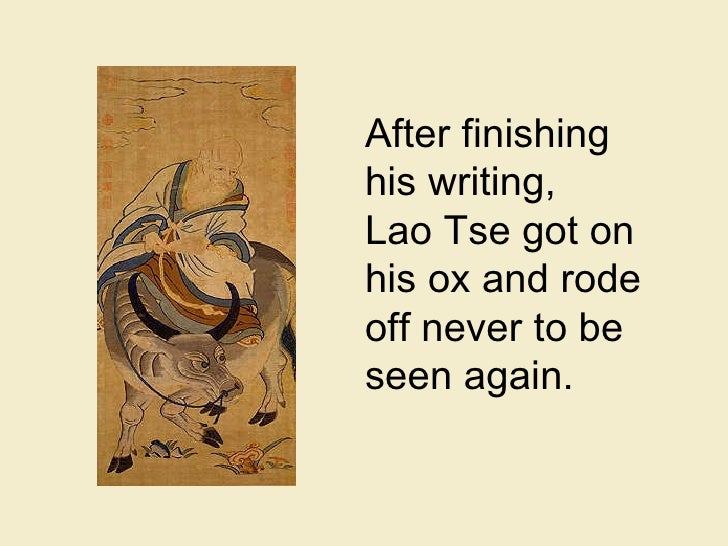
How can concepts attributed legendarily to Lao Tse's dictation as he stepped off of his ox and dictated to the gatekeeper before the sage departed China (his insights in about 5000 characters can be read in English in about 70 minutes) be tied into a situation as we find ourselves in, dodging each other's rhetorical brickbats and even before the phrase "social distancing" became literally overnight the new normal for billions of us, seeking a safe space from those we offend simply by being born this way?

That was some convoluted sentence. But as I think as I type, for better or worse, I found I have a theme to contemplate. How much do we distance ourselves from what threatens us, or unsettles us?

“The Intelligent Catholic’s Guide to John Waters.”

 john waters

“The Intelligent Catholic’s Guide to John Waters.” OnePeterFive 5/7/20

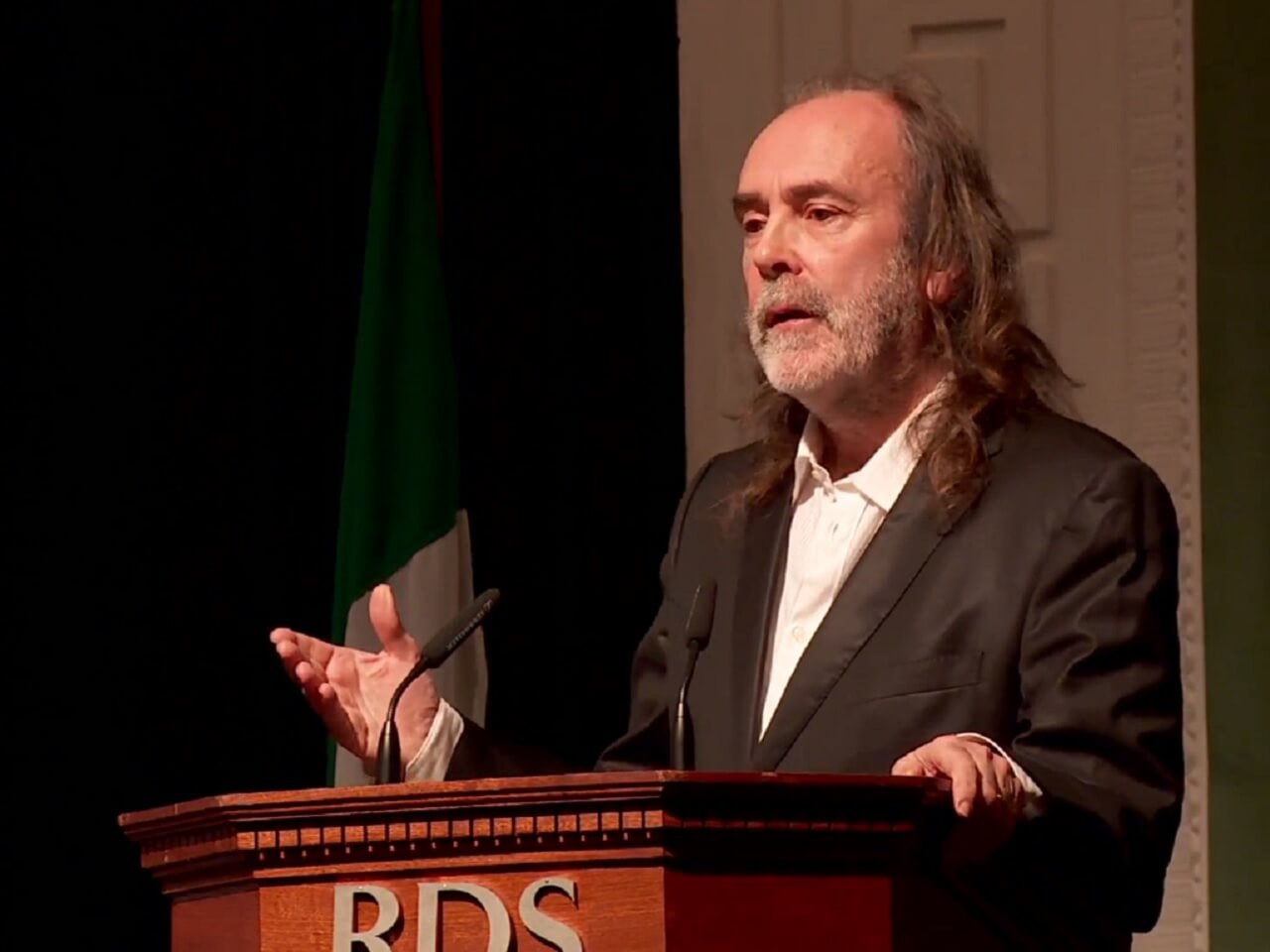
When a maverick journalist opposes popular opinion, at least as promoted by prominent media, what happens next? For rock critic turned cultural commentator John Waters, it's condemnation followed by self-imposed exile from Dublin's left-liberal, bien-pensant paper-of-record, The Irish Times.

This unrepentant dissident, not to be confused by Americans with Baltimore's cult icon and iconoclastic filmmaker, defends his patch of emerald turf against our new world order. Not (only) that of the Bushes, but of those who banish any trace of transcendence. As a longtime correspondent, Waters speaks for a “Peter Pan generation” who entered a dream-scape never glimpsed by their progenitors. Born in 1955, he and his peers from the 1960s through the 80s found themselves, boosted by a Celtic Tiger economic engine, “as foreigners working from home and emigrants in our own land.” They ushered in an “unassailable” secular agenda, rejecting Catholic, communal, rural-dominant mores once and for all.

John Waters continues his assault on post-Christian Ireland in Give Us Back the Bad Roads, his ninth book (2019). His first, a surprise bestseller Jiving at the Crossroads (1990) roughly coincided with his father's death. The period since both events unfolds in fits and starts, as the son addresses that humble mail-coach driver in a small town in Co. Roscommon, who taught him the value of manual labor and the trust in tradition. (As a relevant aside, to show how small Ireland’s networks of who-knows-who remain, my family at their farmhouse—now abandoned as all my relatives emigrated—would have gotten their post delivered by Waters and son, near the first village north of their own market-town.)

John’s career began covering music gigs for Hot Press, an upstart newspaper whose emergence proved well-timed with the punk explosion, hedonistic excess, and the demands of those raised in the wake of Vatican II to become not “the Pope’s children” addressed by John Paul II in his hyped 1979 tour, but a generation freed from clerical submission, censored expression, and class-bound economic stagnation. The results of this leap into liberation led not to freedom but to incarceration within a cunning and callow bureaucracy bent on enforcing standards of a politically-correct generation, his mates, and heirs.

This blow-back fuels Waters' longstanding determination in print and by his own interventions with similarly suffering fellow Irish families to defend the “blood link” of relationships, against referenda on “divorce-by-demand,” government intervention in the cause of “children's rights,” same-sex marriage, and legal abortion. Quixotic as this principled opposition remains in Ireland's Anglo-Americanized monoculture demolishing its customary “moral paradigm” that a younger, brash, “up from the country” Waters had volunteered to undermine, his mature self favors “common sense.” Although caricatured as a Catholic bigot by his former colleagues--“hired guns”-- and their “progressive” political-clerical cronies, Waters grounds his critique against the imposition of consumerism and corporate “rewards.”

These have obliterated his father's craft and his native town's legacy of community, sly solidarity, and respect for humble dignity. Waters witnesses the transition from his job as a railway clerk to those he and his eager counterparts sought as if Euro-topia at last, but winding up a “screen slave” or a “cubicle hostage.” The trajectory Waters has mapped in his seven intervening books gradually finds its aim. He tires of the distracted, profit-mad, sex-and-drug addled consumerism aided and abetted by his cohort.

Waters' focus, despite the repetitions (common as his many collections blending reporting, research, memoir, and cultural critique often resurrect his past and present predicaments as a prophet without honor in his homeland) sharpens. Returning to his paternal townland in a “strange collision of farmland and wilderness” overlooking Ben Bulben on the Atlantic shore (and Yeats' grave), John Waters watches turf “smoulder like Gabriel Byrne.” Bent on avoiding school on Monday, he had tried to “concentrate like Uri Geller until I conjured up a pain in my stomach.” Tellingly, Waters warns of what will transpire if the embattled “capacity to be human” gets trodden down by an Irish mob sworn to steamroller over the valuable contributions of a tradition rooted in centuries of hard-won verities rather than clogged with the media's “effluent and lies.” Waters imagines a lawn laid atop a yard of concrete: “it may briefly give the impression of health, but eventually, for obvious reason, it withers away.” Without a “consciousness of the absolute,” people will fail to nourish a mentality devoid of religion and dismissive of this venerable “public expression of the total dimension of human nature.”

Waters’ reversion to a measure of Catholic practice emerged gradually. He attended traditional Latin Mass services held at St. Kevin’s in Dublin, which were approved back in 2007. He concludes Lapsed Agnostic (2008), by documenting his growing attraction to the conservative, post-conciliar successor to Italy’s Catholic Action, Fr. Luigi Guissani’s Community and Liberation movement. Since early 2017, he contributes regularly to First Things. Last autumn, he was featured in E. Michael Jones’ Culture Wars. However, a careful parsing of John Waters’ writing presents his quest as one driven arguably far more by his own standards for uncompromising truth as any dogma. As he asks: what happens when a third generation in Ireland, and by extension, the formerly catechized realms across the world, matures with no exposure to the Faith? What follows for Ireland when the “don’ts” of Catholicism fade away?

These questions merit wise responses. Many who serve as leaders in the alternative Catholic media enter from other denominations, and, of course, perhaps none. Yet, intelligent and articulate insights from those left adrift in the last fifty-odd years, brought up in families still faithful, but who themselves fell away suddenly of slowly, often gain less vocal attention or press promotion. John Waters’ halting pilgrimage away from progressive piety might, thus, be guided well by an exchange from a once “center-left” Italian colleague in the Fourth Estate, Aldo Maria Valli (b. 1958), and composer-liturgist Aurelio Porfiri (b. 1968). Their narrative, translated last year as Uprooted: Dialogues in a Liquid Church, remains rather rare, as is that it's written by cradle Catholics too young to remember the Latin Mass as it was with any firm memories, but old enough to have undergone revised regimens post-1965.

It’s to be hoped that more thoughtful examinations of the effects of the counterculture on those now-aging Catholics who have grown apart from the Church in the experimentation and innovation may guide those who, having been raised in the pontificate of John Paul and his successors, seek solace. Not only aesthetic comfort, but, as Valli, Porfiri, and Waters concur, a way to survive amidst discontent and doubt. This demographic has been overshadowed, but it too deserves inclusion among the saving remnant. They had no recourse to clandestine TLM’s or conscientious objectors in the 1970s or 1980s.

Once recovered, after inner struggles against doubt and external battles against detractors, a reverence for the sacred, reduced among millions of cradle Catholics, lingers on. Here, Waters stands again, firm.

Headlines this past month in the Irish press reveal John Waters’ protests against a new shape-shifting foe. He and pro-life campaigner Gemma O’Doherty (another target of attack by the chattering classes) rally against COVID-19-related restrictions on public movement, in some circumstances only within a radius of two kilometers of home. Waters and O’Doherty sustain a long tradition of dissent against whatever draconian dictates they judge to come down from powers that be. Given both figures’ increasing outreach to audiences deemed beyond the pale of acceptable neo-liberal or state-socialist opinion, what transpires from their appeals to the marginalized and discontented in the Catholic circles mapped as “here lie monsters” as no-go territories will be worth watching as we continue into what the car commercials were the first to name “uncertain times,” as we ponder marks of beasts lurking ahead. 

P.S. at the site: OnePeterFive. {I was nearly at the maximum word count, so I did not get into the details of his past books, figuring that the space needed should be for introducing John Waters to a wider audience. But one of his earlier collections of essays (1997) was titled "An Intelligent Person's Guide to Modern Ireland," in turn riffing off of George Bernard Shaw's "An Intelligent Person's Guide to Socialism." In case anyone's wondering why I chose that odd and a bit verbose title.}

Saturday, December 30, 2017

Robert Coover's "The Origin of the Brunists": Book Review

The Origin of Brunists (ebook) by Robert Coover ...
I'd always relegated Robert Coover to the ranks of John Barth and Donald Barthelme, as briefly influential arch peddlers of irony, lust, and erudition to the counterculture and its academic cheerleaders. But I remembered, all the way back to high school, finding in a remaindered anthology of writers recommending titles that'd fallen through the shelves by the late 70s. Among them was a take on religious fanaticism in a coal-mining burg somewhere between the East and the Midwest.

Finding this as an e-book from my library, despite the nearly 600 pages, I sampled the start and signed on. Fifty-plus years after it appeared in 1966, parts of it hold up, and some does not. The louche {lad}y-hound Justin Miller turns into the anti-hero who runs the West Condon newspaper and investigates and infiltrates the cult he names the Brunists after their founder. He's not monikered Giordano, but Giovanni Bruno's bent clearly aligns with the heretics and fringe criers out of visions.

After a convincingly depicted, richly detailed immersion into the mines and their miners, and the disaster taking ninety-seven of them away, the novel settles in for a long, long stretch. Layered, we get to know by slow accretion the stratified levels of class, mentality, and promiscuity which occupy the inhabitants of the dismal town. Coover gradually introduces a large cast of characters, who take up sides for and mostly against the Brunists who gather to concoct their odd doctrines and incantations. Coover channels the New Age rants of Eleanor Norton, the fundamentalist counter from the Baxters, and the mathematically obsessed theories of the local lawyer. These overlap as Miller uses the circle of First Followers to pursue yet another dame, the sultry sister of Giovanni, Marcella.

Familiar scenes distort. A high school basketball match seen as if an occult ritual, or a chess match. A Joycean parody of a newspaperman's turn to the bottle if not the broads. Prose that early on breaks into fragments as the disaster below gets rendered into not sentences but panic, as exploded dialogue.

However, halfway on, Coover cannot resist the type of mockery that so many of his peers indulged in. As if abandoned ramblings from Mark Twain's satires on heavenly kitsch and biblical fables, we get a Borscht Belt shtick for the remainder of the plot, on and off stand-up riffs on the Last Judgment. A little goes a long way. It's as if Coover tired of sustaining the tension he'd built up, and he had to deflate his study of belief and its discontents to give more room for louche Lotharios and sullen sluts.

We get it. The hillbillies and the Babbitts, hypocrites and the defeated mobs. We don't need so many. This novel could have lost a considerable chunk and streamlined some of the too-easy targets and heavy breathing couplings out of John Updike, managed just fine. But it's from the Sixties, granted. Four-letter words shocked more in respectable print then, and the effect, as with these worn-out epithets, has dulled over the intervening half-century as what was low-class banter turns normal chat.

This all ends, without quite giving away the ending, in a Day of the Locust type of showdown. Coover, we realize as the novel lopes along and refuses closure, integrates a spin on Judas, Jesus, and the apostles, before and after the Resurrection. Some of this stays clever, but West Condon's human frailty and its woebegone Winesburg, Ohio-meets Main Street cast of misfits and opportunists resists the novel's final pages. No wonder, nearly five decades on, we find a sequel, twice as long as this. (Amazon US 11/17/17; excerpt to Spectrum Culture favorite books read by staff in 2017 as my pick)

Friday, November 3, 2017

Ross Douthat's "Bad Religion: How We Became a Nation of Heretics": Book Review

Bad Religion Audiobook | Ross Douthat | Audible.com
No, the venerable (and atheist) L.A. punk band does not figure in this learned recounting of how accommodationalists of both major Christian versions, evangelicals, conservative Catholics, and Mainline Protestants have multiplied and dwindled over the past few decades in America. But Ross Douthat strives for a punchy presentation of data which threaten to weigh down his pages. As the token Catholic/ conservative New York Times pundit, his columns benefit from his pithy remarks.

How does Douthat manage the shift to a long-form format? I felt very early on that this unfolded as if a dutiful, well-researched, but rather by-the-numbers tallying of the bull and bear markets as applied to Christian America's gains and losses, among the varying denominations and recent "para-church" endeavors. While I admit I was being educated, as a reader, I wondered if the pace would pick up.

Bad Religion begins with Douthat's refinement of his subtitle. He's not celebrating the demise of faith. His title refers to "the slow-motion collapse of traditional Christianity and the rise of a variety of destructive pseudo-Christianities in its place." (3) The past fifty years finds the orthodox Catholic and Protestant bulwarks eroding, having "entered a state of near-terminal decline." The churches connected most to the past fade; the elite abandons its at least measured sympathy for Christian ideas. Hostility or indifference, as surely this former editor of The Atlantic knows, characterizes this culture.

While the U.S. remains an outlier in its high rates of reported belief among the "advanced" nations, a growing segment of its Christian majority, as it weakens overall in numbers, waters down traditional theology. Conservative or liberal, these factions appeal to the political and pop-cultural marketers. Often "spiritual" without being "religious," some seek a wider set of options for faith. Others distort, in Douthat's estimation, what has been the accepted dogmas and doctrines of conventional churches.

Neither conservatives nor "their secular antagonists" (4) recognize this drift. The religious right blames all flaws on explicitly anti-Christian elements. Secular stalwarts denigrate every form of belief as equally foolish or fanatical. Douthat explores those enclaves of our nation where teachings of Christ "have been warped into justifications for solipsism and anti-intellectualism, jingoism and utopianism, selfishness and greed." (4) Here, neither papal encyclicals nor New Atheists are perused.

For a hundred pages, Douthat takes us through a vanished world of post-war confidence in religion, which fifty-or-so years ago began to implode as accommodationists hastened reforms which wound up, for many believers, leaving them to wonder "why show up on Sunday after all" if the ecumenical denominations earnestly insisted that deep down they were all the same, and that divisive details overcome were all that was needed to satisfy and stimulate the faithful. Yet the accommodationists in Mainline Protestant and Vatican II Catholicism almost immediately found their pews emptying, as the disaffected rejected religion, preferred spirituality, or most tellingly, defected to the evangelicals.

Douthat, writing in 2012, reminds those keen to denigrate evangelical and Catholic voters that now there is no "Catholic bloc." That broke up under Bill Clinton. Both Catholics and evangelicals span the range of income and professions as Americans on average. They both edged ahead, by the 1990s, when it comes to income and education. Long derided as the backward bullies of the rural heartland in the Midwest and South, evangelicals now are likely to fill the megachurches of Sun Belt and Mountain West suburbs and exurbs. While Catholics have only Latino immigration to thank that their totals have not dipped more, a tenth of all Americans have left that Church; these departed would be the country's second-largest faith cohort, if definitions were tinkered with. Evangelicals hold at about 20%. Douthat does not harp on his fact: evangelicals accept "limited inerrancy" rather than slavishly literal readings of the bible which fundamentalists cling to. This means that while science in scripture may be accepted as outdated, that the transcendent truth of God's will remains forever without fault.

"He who marries the spirit of the age is soon left a widower." Douthat quotes Anglican Ralph Inge (106) aptly. As one who grew up in the very first batch of post-Vatican II Catholic children indoctrinated in the "Kumbayah" mindset, I can attest even among kids raised on The Monkees as we watched hippies delay adulthood, that the novelty of guitar mass for hand-holding congregants wore off fast for many with whom I was raised; few of them sustained this fervor well into their maturity.

Given his talent for cultural critique, Douthat documents well this transitional period when the counterculture strove to become the ecclesiastical norm. When he turns to the deconstruction of the Gospels by scholars who prefer the rabbi rebel Jesus to the Pauline redeemer Christ, I feared that Douthat would fumble. This tricky terrain challenges any to keep up. But he remains steady. I liked his comparison of the Bart Ehrman and John Dominic Crossan, Elaine Pagels and Jesus Seminar crowd's "historical Jesus" shorn of his halo to those dogged claimants who assert they've found the "real" Shakespeare. Both "turn out to be masters of detection and geniuses at code breaking, capable of seeing through every cover-up and unpacking every con." (171) No wonder we wind up with conspiratorial Dan Brown. The power of magical thinking and the relativism of po-mo profs blur.

Resisters dig in and strike back against the humanists and their Christian fifth column. Whereas mainstream seminaries diminish, a parallel evangelical and conservative Catholic set of colleges, institutions, and scholars emerge. The alliance between those once damned as papists and their former "holy rollers" foes looms larger, as the fight against abortion and for 'values' rallies both.

As the chronology catches up with recent events, the analysis sharpens. In the wake of the bursting of the 2007 housing bubble, Douthat notes in passing a telling truth. Hispanic, black, and white working class adherents of a prosperity gospel were most likely to have been swept up and over by the burst.

His chapter on this "name it to claim it" proposition, as filtered through Joel Osteen's lucrative ministry, makes God "seem less like a savior and more like a college buddy with really good stock tips." (189) Yet, the author cautions, the "crudeness" of the wealth-theology rhetoric "can obscure the subtlety of its appeal,"for it reassures followers that the sin of avarice can be assuaged by overcoming with stock phrases of credulous tit-for-tat "a simple failure of piety." (191) Rather than send down angels to prove His love for you, Douthat paraphrases, "He can just send you a raise." Similarly, Douthat delves into "financial ministries" and remains nuanced on the suitability of capitalism and its good works undertaken with the donations funding charitable endeavors. I wanted to read more on the megachurch entrepreneurial "outreach" and franchising, but this gets passed over perfunctorily.

Still, he's clever on seguing into the related New Thought-derived business empire. For it shares with the prosperity preachers an emphasis on "the social utility" of belief, an eagerness to define spiritual success in worldly terms, a hint of utopianism, and an abiding naïveté about human nature." (205)

Theodicy nestles not only within the wealth-faith, but in "the God within" predilection inherited from similar concepts of exchange with the powers above. Deepak, Oprah, Sam Harris, Eat Pray Love, Avatar, and even earnest apologist Karen Armstrong demonstrate the profitability of such pitches. Both affirm that humans figured out how the universe works, and how the spiritual forces respond. The "quest for God as the ultimate therapy" dominates. Not "I believe" but "one feels," to paraphrase prescient 1966 psychologist Philip Reiff, cited by Douthat. (230) This generates narcissism, infidelity, and a lack of empathy. The results can be tracked over the permissive period evolving in this purview. We wind up with a "spirituality of niceness" (234) Charting this among youth, as he does, is sobering.

Another congenial solution arrives with a universal God which outlasts petty local deities and clans. Drawing on Franz Rosenzweig and George Steiner, employing promised lands to polarized if both favored tribes, shows Douthat's erudition applied intelligently. Lacking the European penchant for blood-and-soil ties, Americans worship the exceptionalist, "city on a hill" civic religion of patriotism. Messianic, apocalyptic, reactionary crusades such as Glenn Beck's conflate populists with patricians. Paranoia, conspiracy theories, jeremiads of doom invigorate both extremes on the political spectrum. Angst, backlash, hubris, and adulation for whomever occupies the Oval Office produce craven American kitsch peddled for both parties and their anointed leaders ready to rescue despairing flocks.

That penultimate section of the book I found agreeable if not surprising, having lived under Reagan-through-Obama regimes. It's what you'd expect Douthat to expand upon from his columns. I do applaud his "heresy of nationalism" and his distrust of "religious faith" married to "political action."

He concludes with four "potential touchstones for a recovery of Christianity." Global, rootless life may seek an antidote to power plays and exhausted ideologies. Douthat suggests separatists offer a second route, withdrawing from the arena so as to regroup and reflect. Or, the massive movements bringing immigrant churches and missionary zeal back to America from the Third World might energize more at home. Diminished expectations, finally, might restore humility along with rigor.

Being political but non-partisan, ecumenical but also confessional, moralistic but also holistic, and last of all, oriented toward sanctity and beauty. I aver this final aspect may inspire a "saving remnant," regardless of creed, to appreciate the "great wellspring of aesthetic achievement" that unfortunately persists more as relics and canons rejected by most in schools and nearly all in culture.

Literature, architecture, film and television certainly display a dearth of Christian creative achievement. Douthat chides, correctly, that "many Christians are either indifferent to beauty or suspicious of its snares, content to worship in tacky churches and amuse themselves with cultural products that are well-meaning but distinctly second-rate." (291) This muffles the impact of a legacy.

While naysayers will dismiss Bad Religion as stale superstition or sinister priestcraft, open-minded audiences concerned with the stability of a post-Christian polity will benefit from this balanced judgement from within the Christian intelligentsia, and they may concur that those two terms are not oxymorons. Douthat backs his side, but he's poised, professional and alert to all in the faith game.

P.S. Pp. 152-3 collect a deft summation of the paradoxical models of Jesus that believers affirm and scholars may debate. This exemplifies journalist Douthat's knack for mediating scholarship for a wider readership. I admit that many who'd benefit from his book will never hear its timely message.

Sure, there are places I'd have preferred more elaboration. For instance, the tacit influence of Teilhard de Chardin on Vatican II, to me at least, is a fascinating aside begging for more. But on key topics as how evangelicals adopted the pro-life campaigns of Catholicism even as its own members dissented, or how the excesses of flower-power liturgy hold up, if in retrospect to those of us who as youngsters barely recall them (like me) or weren't around yet (like the author), are worthwhile. Certainly his judgment that those who chased reform wound up a half century on looking as if graying curators of  dated curios, overseeing a little attended museum (I extend his metaphor) rings true, when one does the math on the evaporation of vocations to those very orders that figured the only thing holding them back from really appealing to more young men and women was more Bob Dylan, far fewer hymns. (Amazon US 11/3/17 a bit altered)

Tuesday, June 6, 2017

Jean Raspail's "The Camp of the Saints": Book Review

The Camp of the Saints - Wikipedia
Recent flotillas of refugees from Africa and Syria caused a few bookworms and pundits to name-check this 1973 novel. Liberals practically put "scare quotes" around a mention of what they term a racist screed. Conservatives may praise it as a "classic." I knew of it way back via the maverick Garrett Hardin's perspective; he appealed if in different aspects to both ends of the political spectrum.

It popped into my mind the other day so I sat down and read it. It took two sittings. Raspail, as here translated by Norman Solomon, has a feverish, testy style that Michel Houellebecq, in his formative years in France, I suspect may well have come across. However, as Houellebecq's mordant fiction gains the same condemnations in bien-pensant right-thinking and left-leaning circles as Raspail's book, readers familiar with H. may find an encounter with R. bracing, infuriating, or baffling.

Raspail is credited on the blurb for The Camp of the Saints as a prize-winning author in his native land. Yet this novel flails from the get-go. The end of the story, or near it, jumbles up chronology. The sneering tone of the misanthropic narrator, the overabundant detail, the cardboard characters, the fact you don't care about anyone in the entire storyline: Raspail has scores to settle, but whether you'll be cheering him on or chasing him away depends not only on your own ideological bent, but your tolerance (a theme put through the wringer herein) for prattling. Raspail has it in for his countercultural era of the slightly aging hippies and the faux radicals of the early 1970s. He also despises the press, and some of the admittedly best barbs come as his narrator skewers the posturing.

I thought of the New York Times, for instance, when I found a similar send-up of earnestly PC journalists, who lambaste capitalism and despise corporations and capitalism in the same pages whose sponsors are those fat cats, and whose underwriting, so to say, supports the fulsome claptrap.

The key criticism, as Hardin reminded American readers decades ago, is that the "lifeboat" (here not symbol but story itself, multiplied all over the ocean as refugees set sail for Europe and the rest of whatever is the Western world circa 1973) cannot hold everyone. Either the rich have to share, and become poor themselves as such largess will not balance but tip over everyone into poverty, or they have to defend their realms with force, and "contempt" as Raspail later put it, lest they lose it all.

Odd tangents speckle this work. Clement Dio, a preening poser of the Third World solidarity his own bloodline allows him to capitalize on in more ways than one, is the best of a bad lot. But Raspail's mouthpiece hates worker-priests (back when there were enough clergy to go around), and the Dominicans (not for once the Jesuits) come in for comeuppance. Funny that one Benedict XVI reigns. Along with the Church, the unions, the press, and the military all get their turn at this "roast."

Yes, Raspail makes some points early on about the hypocrisy of the West, the implosion of its value system in a secularizing (well, not quite as it's still France in the post-Vatican II guitar mass phase) and skeptical society, and the contradictions inherent in the post-colonial world supported by the five (now more like six and a half) billion whose labor and losses prop up the seven hundred million whites. "The Last Chance Armada" makes a few at first hesitate but the pressure to welcome the human tide from over the sea leads many addled or idealistic Westerners, guilt ridden and excited to expiate their sins of neglect and greed, to proclaim "We Are All From the Ganges Now" as the first wave from India crests and others then join the exodus to the Northern Hemisphere, at least the wealthy part.

The narrative, such as it is, lurches through scenes of the army, a strange tangent with Benedictine monks, the chattering classes, a token couple from the working class, and those in factories and offices who find, as all anticipate the Easter Sunday mass landing of the sordid ships and their cargo, the early advantages taken by those in France itself who have earlier emigrated, and who maneuver their own prospects, eased by the care or fear taken by their "host nation," as it capitulates to them too

Interesting idea. Promising set-up. Fumbled execution. Fizzled climax. Ho-hum resolution as the narrator and Raspail seem too wearied or jaded to bother carrying on after so many pages of rants.
However, the relevance of this scenario cannot be gainsaid. Look at headlines. (Amazon US 6/5/17)

Friday, May 19, 2017

Arundhati Roy's "The End of Imagination": Book Review

Open-uri20160929-140-p2i25i-f_medium
What happens when a novel from two decades ago remains an author's best-known work? Then, this writer demurs from producing another bestseller. She rallies on behalf of the poor and persecuted. Agitating for those marginalized in her native India, Arundhati Roy champions her controversial choice to pursue real-life rather than fictional conflicts. The End of Imagination collects journalism and talks between 1998-2004. Twenty-one selections drawn from five books allow a wider audience access to a woman bent on confronting the powerful, and challenging control by the "free" market.

The introduction summarizes present-day Indian politics. The Hindu-nationalist BJP in 2014 returns Narendra Modi to prominence as Prime Minister. 2015 finds him greeting Barack Obama while wearing a million-rupee suit with Modi's name woven into its pinstripes. The gap between that purported leader and hundreds of millions of his subjects symbolizes itself in this sartorial display.

Treating the outcast Dalits and "Other Backward Castes" belatedly elevated to grudging consideration for higher education, Roy contrasts state discrimination with the students' Communist cadres. These discontents join those supported in Roy's opposition campaigns. Adivasi villagers resist "Big Dams." Lands of indigenous peoples of the hilly northeast are "acquired'' for development funded by NGO's and international banks colluding with the wealthy in India and within scheming multinationals. Roy reports: "the forest is being cleared of all witnesses." Fears of a coup by the military, enforced flag worship, false-flag terrorist strikes and "limited war" with rival Pakistan cloud Roy's outlook in 2016.

The essays following progress along roughly thematic lines. The title entry addresses the nuclear showdown in 1998 between India and its neighboring nuclear foe. Another compares a Hindu India with pre-WWII Germany. A third considers the legacy of Martin Luther King and Nelson Mandela, given blacks who sought freedom encounter dire circumstances in the U.S and South Africa. Roy targets the Pentagon, decrying a disproportionate amount of recruits drawn from African Americans.

Critiques of war continue throughout this compilation. India and Pakistan's protracted skirmishes over Kashmir reveal the "dangerous crosscurrents of neoliberal capitalism and communal neo-fascism." Part two opens with Roy's confession of the "sheer greed" rather than compassion that spurred her to cover the fight by native tribes pushed out during Narmada Canal's construction. Maheshwar Dam privatizes the basic human necessity of water, epitomizing the imbalance of resources between classes and among the peoples of India and beyond. Too few others care, it seems.

In a lecture at Amherst, Roy's frustration grows."To be a writer--a supposedly 'famous' writer--in a country where 300 million people are illiterate is a dubious honor." Phrases like this show her at her best, pungent and passionate. But for long stretches, her determined research will bog down readers in details which may fail to fascinate the non-Indian adept, or those not seeking a granular depiction of Indian politics and economics during the era of George Bush, Jr. and the War on Terror. Therefore, this anthology will appeal to a few, similar to the diligent analyses of under-reported East Timor by her counterpart, Noam Chomsky. Both occupy themselves with well-documented, tendentious studies of policy. Roy agrees to follow the gadfly she nicknames "Chompsky" for his biting force, as he bores down into a machine creating conflicts enriching war-profiteers and enabling politicians.

Roy promotes herself as a journalist-activist. The God of Small Things earned her the Booker Prize in 1997. Back then, a cushy career beckoned for a chronicler of memory, political and psychological tension and coming of age in her newly independent nation, the middle of the last century. Yet, after a novel four years in the making, she postponed a follow-up. She vowed to fight the profit motive. "I'd say the only thing worth globalizing is dissent. It's India's best export," she tells that Amherst crowd.

The remaining essays tend to repeat issues. Roy ambles towards stridency in her prose and her snark can grate in print. Perhaps her delivery sharpens in person. In various presentations on post-9-11 reactions soon after the attacks, she provokes the West and those who ally with the superpower, Roy exposes Osama bin Laden as "America's family secret," invented for that superpower's greedy needs,"created by the CIA and wanted by the FBI." As Soviet Communism failed, so will market capitalism, she predicts. "Both are edifices created by human intelligence, undone by human nature."

Arundhati Roy, after all, knows both creations firsthand. Born two years after the first freely-elected Communist government in the world attained 1957 victory in her home state of Kerala, she warns audiences of the allure of any system appealing to our better instincts, yet demanding a people's submission. While The End of Imagination, like earlier releases of her work from Haymarket Press, needed a proper introduction for American readers as to its scope, and a delineation of the five texts from which these pieces were taken, this lack of editorial oversight may be balanced against a useful index. Furthermore, a short companion volume, Things That Can and Cannot Be Said, provides a furtive, oblique, if timely primer. Essays and conversations from Roy and John Cusack document their late-2014 meetings alongside Daniel Ellsberg, with Edward Snowden. That whistleblower displays bravery in uncovering disturbing truths at the risk of reputation and livelihood, from his asylum in Moscow. For these authors, as capital crushes liberty, protest spreads across borders.
(Spectrum Culture

Wednesday, May 17, 2017

Arundhati Roy + John Cusack's "Things that Can and Cannot Be Said": Book Review

Arundhati Roy and John Cusack Discuss What's Rotten in the Political ...
The Indian writer Arundhati Roy's critiques of "what cannot be said" within the war on terror, the "Lifestyle Wars" that seek to perpetuate conflict for the benefit of the few and the coddled, the influence of NGOs and World Bank-types of organizations on taming activism, and the surveillance state are familiar to readers of her many essays. This little book can be read in a sitting, but it sums up many of her positions. The co-authorship with actor John Cusack comes from his proposal to visit Edward Snowden in Moscow. Daniel Ellsberg joins them, at the end of 2014, in Moscow.

Cusack mainly feeds Roy questions; she responds in her accustomed fashion. This as in her journalism can be strident, verbose, and stretch for effect, but her aims reveal her concern for the issues ignored by the mainstream press. She excoriates the current system, lamenting that it lacks a rival structure, and that those fighting it must be resigned to more guerrilla tactics, as Snowden and Ellsberg demonstrate, against the powers.

The brief chapters are mostly conversations. There's also a meeting with Julian Assange. Roy explains that it cannot be accounted for here. That adds to the odd sense of much of this book. You feel these are disembodied voices lamenting the lack of concerted resistance, as if partisans speaking in a trench on a chilly night. The continual fears of nuclear weapons, often glossed over now, comprise Ellsberg's comments, while Roy reminds us of the collusion between Silicon Valley and the Beltway as to data gathering, boding poorly for future liberty from algorithmic control. (Amazon US 11/12/16)

Friday, May 5, 2017

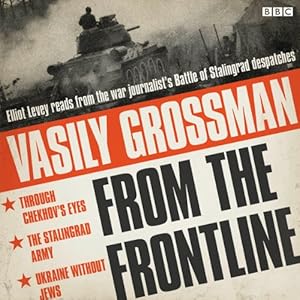
"Vasily Grossman from the Frontline": Audiobook Review

Vasily Grossman from the Front Line Audiobook

While many eyewitnesses endured the siege of Stalingrad and the battle by the Soviets to free it from the Nazi invasion, probably none has the stature of Vasily Grossman. His novels recount his and his comrades' experiences, during and then after this Great Patriotic War. when Grossman like so many fell afoul of the Stalinist regime. The Man of Steel's antisemitism increased, and Grossman was censored by the state and investigated by the KGB. Luckily, he was not sentenced to prison or gulag.

As a war correspondent for Red Star, he volunteered for service and spent over a thousand days at the front. The BBC dramatization of three of his wartime reports is well-delivered. First comes a sniper's first two days. His name's Chekhov, but his prowess comes in targeting Germans, and ensuring that their own beleaguered situation grows as the Russians figure out the layout of their ruined city's heart.

Then comes an evocation of Stalingrad. Imagine it on a moonlit night among the bombed buildings and it may nearly for a second seem romantic. Grossman applies his prose style here for more effect than one would I imagine find in journalism from the battleground. It can be flowery, but it can also be deployed skillfully. In Elliot Levey's radio recital of his account, one feels its emotional tug again.

This increases for the bleak report on the Jewish question, as answered in the Ukraine. He reports only one Jew survives in one place, and he hears rumors of two others. Out of what he claims here three million dead, a testament to victims named by trades and traits accumulates into a dour litany. (Amazon US 4/22/17) 

Sunday, January 1, 2017

Brian Eno on 2016/17

This post lacks a stable URL so I reproduce it in full for your contemplation. Happy New Year 2017. 

2016/2017

The consensus among most of my friends seems to be that 2016 was a terrible year, and the beginning of a long decline into something we don’t even want to imagine.

2016 was indeed a pretty rough year, but I wonder if it’s the end - not the beginning - of a long decline. Or at least the beginning of the end….for I think we’ve been in decline for about 40 years, enduring a slow process of de-civilisation, but not really quite noticing it until now. I’m reminded of that thing about the frog placed in a pan of slowly heating water…

This decline includes the transition from secure employment to precarious employment, the destruction of unions and the shrinkage of workers’ rights, zero hour contracts, the dismantling of local government, a health service falling apart, an underfunded education system ruled by meaningless exam results and league tables, the increasingly acceptable stigmatisation of immigrants, knee-jerk nationalism, and the concentration of prejudice enabled by social media and the internet.

This process of decivilisation grew out of an ideology which sneered at social generosity and championed a sort of righteous selfishness. (Thatcher: “Poverty is a personality defect”. Ayn Rand: “Altruism is evil”). The emphasis on unrestrained individualism has had two effects: the creation of a huge amount of wealth, and the funnelling of it into fewer and fewer hands. Right now the 62 richest people in the world are as wealthy as the bottom half of its population combined. The Thatcher/Reagan fantasy that all this wealth would ‘trickle down’ and enrich everybody else simply hasn’t transpired. In fact the reverse has happened: the real wages of most people have been in decline for at least two decades, while at the same time their prospects - and the prospects for their children - look dimmer and dimmer. No wonder people are angry, and turning away from business-as-usual government for solutions. When governments pay most attention to whoever has most money, the huge wealth inequalities we now see make a mockery of the idea of democracy. As George Monbiot said: “The pen may be mightier than the sword, but the purse is mightier than the pen”.

Last year people started waking up to this. A lot of them, in their anger, grabbed the nearest Trump-like object and hit the Establishment over the head with it. But those were just the most conspicuous, media-tasty awakenings. Meanwhile there’s been a quieter but equally powerful stirring: people are rethinking what democracy means, what society means and what we need to do to make them work again. People are thinking hard, and, most importantly, thinking out loud, together. I think we underwent a mass disillusionment in 2016, and finally realised it’s time to jump out of the saucepan.

This is the start of something big. It will involve engagement: not just tweets and likes and swipes, but thoughtful and creative social and political action too. It will involve realising that some things we’ve taken for granted - some semblance of truth in reporting, for example - can no longer be expected for free. If we want good reporting and good analysis, we’ll have to pay for it. That means MONEY: direct financial support for the publications and websites struggling to tell the non-corporate, non-establishment side of the story. In the same way if we want happy and creative children we need to take charge of education, not leave it to ideologues and bottom-liners. If we want social generosity, then we must pay our taxes and get rid of our tax havens. And if we want thoughtful politicians, we should stop supporting merely charismatic ones.

Inequality eats away at the heart of a society, breeding disdain, resentment, envy, suspicion, bullying, arrogance and callousness. If we want any decent kind of future we have to push away from that, and I think we’re starting to.

There’s so much to do, so many possibilities. 2017 should be a surprising year.

- Brian

Saturday, December 26, 2015

Molly Crabapple's "Drawing Blood": Book Review

Over a year ago, Vanity Fair published a report from the ISIS stronghold of Raqqa. Its Syrian correspondent, for fear of his life, remained anonymous. He sent photos of his city via cellphone. From these, the New York City native who goes by Molly Crabapple sketched intricate drawings, in her typical style of gracefully delineated shapes and wavering people. Out of digital images, Crabapple evoked illustrations hearkening back to a Victorian era when artists filled the news with detailed, lively depictions. Yet, Crabapple also infuses her increasingly activist art with innovation.

In Drawing Blood, she narrates, in "sentences at taut as garrotes," her first three decades. For an artist not yet thirty, a memoir may appear precocious. However, she infuses much of her coming-of-age story with fresh insights into the century, so far, from the perspective of a scrappy woman who confronts disorienting scenarios with mixed detachment and sensitivity. "It's a strange blend of disassociation, to stare into another's eyes only to make those eyes into shapes on paper." From an early age, she sketched to escape and to enlighten herself. Born to a Puerto Rican Marxist professor and a Jewish illustrator for children's books and products, she inherited her father's combativeness and her mother's talent. The child of their early divorce, Crabapple found solace in a few friends.

Of one, a Russian immigrant teenager, she recalls their brief bond. "We clung to each other, as bookish young people often do, while waiting out the years until our real life could begin." Schooled more by her self-taught reading in anarchism and the fin-de-siècle and her listening to Kurt Cobain, punk, and Trent Reznor, she soon fled abroad. She followed the route of many bohemian wanderers.

At the end of another century, she faced many restless travelers like herself, seeking meaning in a globalizing realm. In Marrakesh, "the henna looked like Cheetos dust on white girls, but on brown ones it resembled rose petals." Her own appearance, in what she defines as a tiny figure resembling Wednesday Addams, attracted men. Fending them off on the road drove her inward, to examine her fluid sexual and cultural identities. Restive with art school, she sought to make her craft matter.

Post-9/11, she got caught up in anti-war protests. "A painting didn't have to hang in a gallery, dead as a pinned butterfly. It could exist in spaces where people cared, as a mural, a stage set, a protest placard." This sparked her transformation into a noted chronicler of first the visual and later the verbal impacts of our unjust world. She disciplined herself to render these scenes by a crow's quill pen, flicking it "till the ink sped like motion and blood." Drawing Blood features her work, women as coiffured as those at the court of Versailles, wide eyes half-moons, or as louche men slouched slyly.

Tired of conventional training, she drops out of art school. She enters the sex-worker industry, as a artist's model and a burlesque performer. She endeavors, as her stint with Suicide Girls goads her, "to burn off her childhood," although that dubious enterprise "dispensed pallets of ego-crack. We were Pavlov's bitches." Molly Crabapple adopts her persona. With it, she pursues Internet promotion and procures a precarious living as a minor celebrity in the NYC demi-monde. Her lover, Fred, supports her. She indulges in freedom to roam among the company of many other women, as varied partners.

All the same, the middle section of her saga sags slightly. Her fame exudes a telling tinge of disappointment. Her loft and income are not enough. After the 2008 crash, the commissions she craves fade. She contemplates the fate of those like herself who cheered the excess on in Manhattan: "we sparklers illuminating the face of the destroyer." Chastened but not cured, she keeps feeding that beast, as her profits rebound and her reputation becomes internationally coveted. Witnessing London's anti-austerity activists at the end of 2010, she finally vows to pivot away from her status.

Therefore, "instead of taking refuge in a curlicued past," she puts her rococo pen to use. Frustrated by "painting pigs in Nero's nightclub," Crabapple leaves her insular, smug denizens in clubland behind. The radical upheaval of what she enters as the Occupy Movement intrigues her, but typically, she resists easy enchantment. Her characteristic caution, honed during her travels alone in far places, keeps her grounded. She watches how for some, a night in jail or spent in Zuccotti Park leads to book deals. Having scored her own soon after, she resolves that she will listen to those who truly suffer.

At Guantanamo Bay, she undergoes a revelation as she records the fate of a prisoner. She alternates her creation of nine immense canvases satirizing or commemorating the battle over Capital, Shell Game, with reporting for Vice, The Paris Review, and The Guardian. She squirms over her come-hither portrayal in a New York Times profile, and she cross-examines her own complicity in how she markets herself, determined to survive on her own terms in a cruel, competitive art world.

I found the earlier and later chapters of her account the most rewarding. A comfortable career tames her too much. When Molly Crabapple stares down danger and corruption, whether left to her own savvy in a remote setting, or today as she investigates the long reach of terror and greed, she succeeds best. As she sums up, she is driven "to do violence to her own clichés." She learns "to find joy where once I could only see ash." Drawing Blood illuminates the flames and the fire which warms her now.
(Amazon US 12-1-5 and PopMatters 12-18-15)

Tuesday, December 8, 2015

From Venice

In Venice, we saw a striking image. The near distance in the haze looked entirely drained of depth, and we thought it for a moment a matte painting or overlay. The Rialto, unfortunately, under repair, featured such a fake archway, with a gender-bending Asian fellow posing in a full-frontal (if clothed) stance, under a Diesel slogan "This is a guy sitting on a bridge." For me, that lost a helluva lot in translation. None of the thousand (!) photos I searched demonstrates this flattened perspective, but I tried to mimic it if slightly at the left, via this photographic view.

At Santa Croce in Florence, Stendhal had a similarly unsettling sensation. Overcome by the art, he fell into dizzy disorientation, called since then the Stendhal Syndrome. If you ever want to earn credit for this malady on an insurance form check off the box "hyperkulteremia." When reading his account, earlier this year, however, his psychosomatic reaction in his narration for me so muted that I had to check when in his tale it happened. A modest endnote referred to it offhandedly. Our encounter was probably less bewildering, but still, gazing out in the open on a vast sight you are not sure is real or contrived remains memorable. Venice, for many, appears a mirage, a place conjured up from magic.

Certainly, this city, built on sticks and marshes after refugees fled Attila, has no roots of its own from ancient times. No ruins, no Roman forum, no archaeological treasures. Instead, a true creation of the collision between Byzantine and Romanesque, the blur between Renaissance and Baroque, these islands separated from the normal cause of events cause its residents as well as its tourists to mingle. As Mary McCarthy's 1963 Venice Observed remarks, cohorts must jostle, and there's no place that is undiscovered and left only to the locals. I would pass the shop girl who with a British accent sold me a shirt, and the man who ran the gallery where we'd find our souvenir mask, both later walking along from work, to a meal, or to their home. With no cars, all are pedestrians, for once, reduced as equal.

Well, to a point. She also loosely links the flight of the founders of Venice to that of the Exodus, to another people who seek to start over, to another group involved in trade and mercantile enterprise. But, in the Old Foundry where the word ghetto originated, as we visited there our first full day, the situation of the Jews confined there nightly, as the gates and bridges closed them up on their island, attests to the other legacy of this realm. While the theme-park air draws all, permanent or transient, to jostle its dank passageways and navigate its funnelled paths over the Rialto magnetically, the isolated ghetto represents the hidden Venice. Not one only the locals know, but one the Most Serene Republic for centuries contended with, the raspy underside, the irritant beneath carnival masks or gilt mosaics.

This raspiness hit me on arrival. A loud woman materialized out of the Piazza S. Bartolomeo, the first stop in our video pilgrimage (see the paragraph after the next). She zeroed in on pale blue-eyed me, tugging two suitcases and hoisting a backpack, bent over like Simon of Cyrene helping Christ carry his cross. Somehow I was selected out of the crowd to sign her petition against drugs. A second day, she accosted me, this time mocking my disdain in Italian "insegnate" and then in broken English, "teacher" (how did she know?) and "No terrorist" post-Paris. A third time, she singled me out. By now, I let loose, telling her this was the third time (as in Jesus falls, although by now I bore no burden on my trudge through streets recalling those of old Jerusalem I imagined), and that I was not interested. She apologized slightly, and then Layne chirped "We like drugs." Believe it or not, on our departure that same day (we get around the same places, this being Venice), a man now accosted me, this time with a British accent. I speculated silently if this was not part of a certain "church" founded in Hollywood and part of a tax-avoidance scheme filling its coffers in ways that made Peter's Pence look angelic by comparison. The "faith communities" may change, but a pilgrim's still an easy mark.

Back to the other center of a far older faith, we saw scowling rabbis on a Chabad poster, a windowed guard kiosk, a few shops selling Judaica or kosher snacks, and plaques to those murdered. A series on a stone wall, faded in bronze to verdigris, depicted the torment of the Shoah. One portrayed two figures crucified. We traversed the center square where schoolchildren ran to visit, and we went the whole half-circle into and out of the district barely speaking. It seemed, as we'd seen in Siena and Florence in miniature, a testament to European Jewry today. And after the recent Paris murders, it felt stained. (When I got home, I learned on the radio that the Bataclan was targeted as its Jewish owners had hosted pro-Zionist gatherings. Why this was absent from any press, BBC or CNN coverage we'd been inundated with for a week was somehow telling. I add that snippet here, to an funereal litany. Even as I revise this, headlines of more innocents targeted by fanatics, perpetrated an hour's drive away, near the college my wife and older son attended, fills airwaves, papers, and the Oval Office.)

Our stay had begun with a video we'd watched over and over, downloaded to the Kindle. The hotel warned one had to learn the way to it, and we did. So much that over three days, we could traverse it on our own. But one false turn and you end up at St. Mark's Square. Instead, after a train from Florence and hauling our luggage a ways, we made it at nightfall to the Ca' Bragadin Carabba, where none other than Casanova lived from 1746 to 1755. Strangely, only a plastic sign in the bare lobby on the first floor told of this connection, and there was no other context. Talk about underselling a place.

Curious, on arriving home, I sought to find out more. My Penguin Classics abridgement of Casanova's voluminous memoirs lacks an index or timeline, but a visit to Wikipedia reveals that the young libertine saved the life and came under the patronage of the household of a scion of the noble Bragadin family. Perhaps he used their quarters largely as a base, for in this decade he roamed Paris, Dresden, and Parma among other locales. 1755 marks of his arrest as a Mason and freethinker by the tribunal and his incarceration in the Leads atop the Doge's palace, from whence he escaped to Paris.

The Ca' overlooks the small square of Santa Marina, nearer the Rialto than San Marco. As with the nearby Santa Maria Formosa church and square, these appeared neglected (even if the restaurant on the former was overpriced yet full) much of the day and night, and bereft of allure. A logical novelty of Venice is that it often lacks visible landmarks. You wind around alleys, under tunnelled passages and suddenly it's a tiny piazza or a vast square, a dead end at a canal with no railing, or a memorable vista of gondolas, water taxis, and motorcraft under clouds or gray skies, full of churches and fading facades. While many illustrations, painted or photographed, display Venice as very colorful, we encountered chillier weather, so I was glad for the change in temperature, although the humidity as I expected persisted. We even had to bundle up for the first time since Ireland. Around us, whether sporting man-buns or scarves, mini-skirts and leggings or wool overcoats, chic pedestrians strutted.

We ate at Mani, a little pizzeria that turned out once we got our bearings on the same route we came in on. Full of tourists as anywhere, but the food was fine. Lots of British, lots of noise. By the time we ate, and left, the lines were out the door and we were glad that the stereotype held for early birds.

I tried finding other news, but except for a BBC segment that kept covering Africa, no matter the language, news seemed all about Paris. Instead, I peered at the two maps I had, as they did not match in the streets covered, as they changed every twist and turn across the city's labyrinth, and tried to get a spatial sense. Once I imprint this, as elsewhere on my thousand miles driven in Ireland and the thousands of steps in Italy, I can function better. Not that I don't make a first-timer's mistakes, still.

But these were fewer. After the ghetto, we crossed a bridge and went into the flow. Look around you and see where the others walk. Out of a square, therefore, you get the hang of the main direction, even if it is a three-foot-wide cranny, it will expand into a street lined with shops and restaurants. The fish market offered a lot I'd have loved to try, and the vegetable vendors enticed Layne's eye too.

The stickiness of the climate persisted even in cooler times, so we headed back to our room. Later, we sought out the Basilica of San Marco and marvelled in the dim twilight at every inch covered in gold tile. The present structure is over a thousand years old and claims to have the body of the evangelist, stolen back from Alexandrian infidels. As in Florence and Siena, the darkness inside made the church more rather than less appealing, although to the finicky smartphone snapper, probably not. We sat in the side chapel awhile, taking it in, among worshippers. No craned neck or diligent archivist could do it justice. Plastered and fussed over, it symbolized the enviable position the city occupied, a portal for the plunder from the failing Greek empires and Ottoman successors, combined with the crusading avarice and the financial acumen under the Doges, and their uneasy terms of rule.

Somewhere along our walks, we'd seen on the Calle Guerre a cat mask that reminded us of Gary. That proved too big and too pricy, but the owners ran a studio making such for carnivals and movies. Ron Wood had shopped there, a small cutout of a newspaper on the front door noted. We were able to give a photo of our black-and-white feline to the painter, and she a day later produced a small papier-mache replica, sans green eyes, of our companion. Layne had to protect it, so she bought an owl-patterned bag to do so, and with the room left over, found an orange leather purse to suit her. I completed my magnet collection; Venice was by far the best and the cheapest of vendors for souvenirs. Even if I supposed all else was much ore, as all had to be brought in by dolly carts and porters. We made the same check-out mistake at another CONAD, forgetting to weigh the onions and tangerines, but a stop at the grocery stand across the lane on St. Lio near our hotel made up for that.

That second night, we had intended to find a more Venetian place to eat. But the "oldest" such restaurant near the cat artists did not appeal as much as the Osteria Antica ai Tre Leoni. The fish there was outstanding, and the gnocchi the tastiest we'd had. Layne watched through a gap at a Chinese couple. They never looked up from their phones, they slurped their noodles, they never conversed.

We talked, and she asked me if I'd live in Venice. The waiter at that moment came with our food, but if you want to know, I'd say, yes, if I had a lot of cash for upkeep. I'd also "divide my time" with Siena. Or maybe Lucca and Ravenna but they must wait for a return ticket and a cheap exchange rate. I'd read in Tim Parks about his adopted Verona, and Layne wants to visit the fashion and design mecca of Milan. For me in my romantic daydreams, the seaside of one location and the hilltop of the other balance well. As for Ireland, I keep responding that I have not as yet seen enough to call it, but somewhere in na Gaeltachtaí entices me. I'd take classes there to bring my Gaeilge up to fluency--even if my Californian accent would likely never vanish. So I imagine an ideal retirement.

Layne remarked from the moment we saw the Campo dei Fiori in Rome how the country instantly resonated with her. She warmed to its food and its ambiance, and indeed the weather did her well. She looked radiant, walked until she could no more, and loved window-shopping and dining (well, sometimes, but far more often than in Ireland). For me, I guess it's as atavistic as it is Layne as she surmised to her "swarthy" complexion ("olive" may be more anodyne) and her Levantine attraction. My skin enlivens and my nose sniffs out the turf. My older son, as I entered the house back home the other night, marvelling how it smelled outside of fires and chill like Ireland, sniffed, "you mean, like shit and sheep"? Deadpan. Perfect timing. He inherits my mordant wit and his mother's culinary joy.

Our final full day in Venezia, although we were "churched out" as Layne accurately diagnosed our affliction, we walked to the Scuola de San Rocco with its splendid fifty-plus Tintorettos. Too much for me, but Layne admired their contrasting colors and imposing angles. The wood carvings in the choir stalls intrigued me more, each contorted and realistic. The church across the lane, where we'd later reward the fiddler who'd been playing all day into the night, featured more of the same, as well as the Basilica dei Frati. Since about 1230, Franciscans have preached there, and the mish-mash of tombs, plaques, paintings, and ornament proved engaging if confusing, as again, the efforts of centuries combined into a jumble. Consider the reliquary, with so many tiny labels affixed to so many little bits of bone and skull that they were illegible. Some lacked any identification. Oblivion is their fate, perhaps, as holy relics and pious crafts, unless scholars better skilled than I summon miracles.

For the quotidian demands, pizza and pasta satisfy me. At our second pizzeria, Pommodoro, as avoiding beasties and birds means carbs abroad, we sat next to an Antipodean couple with a very well-behaved and articulate two-year-old, Rowan. They told us they'd been holed up in a Paris hotel for days, and were glad to have gotten out. In retrospect, I am glad Layne and I made it out of Istanbul before the subsequent tensions between Turkey and Russia. But I might see Turkey one day. U.S. security currently advises travellers now to avoid "crowds": how a tourist does this is a mystery.

Our departure, this time with a porter, and the train proved smooth. Again I contended with an Italian newspaper on political parties and Parisian terror, and we stayed in Rome at an Hilton airport hotel. Its plugs had been bashed into the wall by countless chargers, its staff seemed indifferent, and its ambiance was undistinguished. But unlike in Dublin, we could walk to the terminals. I watched a channel from the Middle East. Women in hijabs praising Tide. Pampers. Pert. KFC. "Pearl Harbor" played, as I tuned in on a scene of American sailors drowning under CGI Japanese bombardments. It seemed ill-timed and ominous, given the global jitters. Layne and I found a Cuban station. A young woman with a lovely voice even as an opera-phobe I liked sang as cats (again) or kids in masks (again) as such cavorted without reason. A video followed, an elderly folksinger with "Amigos" as his pals kissed the camera lens to show off their certificates from school or work, not sure which. B/w photos of them as younger comrades on labor details or at parties contrasted with them now. This was followed by a documentary on native plants. I wondered how long such fare will fare in today's Cuba.

Up early, we left on Turkish Airlines. Layne had calculated that one-way fares saved us a lot, so we flew counter-intuitively from Rome to Istanbul, and then back from Istanbul over the polar route to LAX. Our layover plunged us into a maelstrom, complete with a vast bazaar as chaotic as that outside the terminal, I feared. I later read that a Detroit woman on a layover here in 2013 had vanished, found dead in time, or not in time. (She "scuffled" with passport officials there, never a wise idea in this Midnight Express realm.) For my needs in time, there was one unisex toilet open in the whole wing. It had the standard functions and it was clean enough. Around me, half the world trundled past, until the near El-Al-level of a security triple check slowed us to board. I stared out a window by the gate, the strait not far away, trying to find which of the minarets and domes signalled Hagia Sophia.

On the flight, I learned from a documentary that there are at least eight grand mosques in the city. So, I had no idea which I surmised. I needed to stay awake to fight jet lag, so much of the marathon fourteen hours were spent gazing at the screen. A documentary about invisible Rome, another on Istanbul, another on owls. I chose rather than Skyfall to watch Goldfinger. Layne called up Boyhood for the fourth viewing, but I opted for the one Irish film, Jimmy's Hall, Ken Loach's biopic about leftist James Gralton's attempt to import jazz and modern mores into 1935 Leitrim. It tried, but could not rise above its conventional showdown of scandalized parish priest and indignant activist. To its credit, it did feature Jimmy back from Depression NYC to lecture his flock on the dangers of what we could relate to as avaricious bankers and precarious labor, and it attempted to complicate a simple story of good rebel vs. evil clerics with finally a little nuance. But I realize the love scene, that had been rapidly terminated with "the other woman" lamenting in gauzy dusk, cut to the next day without transition. Turkish censors made sure everything we watched was "formatted." I wondered what the well-upholstered, glaring old women under scarves watched on their little screens under hawk eyes.

We came home to find a dead bonsai (Nestor could not handle SoCal drought) and a dying cat. Gary had held out but three days before our arrival, he lost his appetite and retreated away from humans. We spent the equivalent of a flight and took him three times to the vet, but the fourth time was his last. I held him until the end. His green eyes gazed out, and his fur remained soft and sleek. One of the best memories of my Venetian promenade was seeing a cat-and-dog chess set, all hand-painted.

Window displays in Venice's small lanes prove magnificent. Paper, pens, fashion, glass, leather, crafts. I kept lingering over the faces on the little porcelain pets. They almost made me cry. They conjure up innocence and play, childhood and dreams. Impractical as a chess set nobody even would play with against me, expensive as it was, it represented a loving attention to art and beauty--even dignity. So, our mask in Gary's honor proved prescient. It will hang in the room where we loved him.