Showing posts with label Catholicism. Show all posts

Friday, July 31, 2020

Yves Chiron's "Annibale Bugnini: Reformer of the Liturgy": Book Review

{Given my friend designed the cover, and first told me about the mystery man behind the scenes in Rome who's the subject of the book, I reviewed it: Reading Religion, July 25, 2020}

Annibale Bugnini
Archbishop Annibale Bugnini's method to "proceed discretely" (3) to advance his Vatican II reforms attests to his clever persistence and subtle scheming. The "new Mass" introduced fifty years ago owes much of its promotion to this Vincentian cleric. After Bugnini's success, “"conspiracy theories” (7) impugned his loyalty. The truth remains elusive, for his clerical collaborators refuse to release his correspondence. Therefore, drawing on interviews, archives, diaries, and memoirs of his confreres, French historian Yves Chiron in his twenty-sixth book, Annibale Bugnini: Reformer of the Liturgy, investigates the career and achievements of the past century’s leading liturgical innovator.

Dom Alcuin Reid introduces this book’s English-language edition, averring how Bugnini in Chiron's 2016 study "emerges as a remarkable organizer rather than as a theologian or liturgy expert" (11). Refusing hearsay, Chiron provides a sober account of Bugnini’s life’s work, limited to interpreting the documents at hand. This caution makes this biography trustworthy. It also results in a sober, cut-and-dried recital of facts.

From his novitiate in 1920 at the age of eighteen, Bugnini committed himself to the Liturgical Movement spearheaded by French and German Benedictines, Dominicans, and Jesuits. These pioneers had already invented, for at least a generation, experimental “paraliturgies” (25) aimed at increasing lay involvement and decreasing barriers to full entry by the congregation into the celebration of the Mass through a shift in prayers and songs to what they labeled a living language, the vernacular. Bugnini after his ordination composed a brochure touting such a service, where a lay lector would interpret and comment in Italian upon the Latin.

Starting in Rome in 1943, his bilingual Mass engaged the people with dialogue, as they chanted the responses, prayed aloud, and accompanied the priest's actions with their own gestures. Bugnini's self-published booklet of this version as "Our Mass," by its twelfth and final edition in 1962, had sold a million and a half copies.

Fittingly, by that year, Bugnini had embedded himself deep within the preparations for the ecumenical council announced by John XXIII. Bugnini’s eponymous “method” (82) to advance his liturgical reforms worked this way. First, he assigned specialists to meet separately to convene on restricted subjects. These specialists rarely had a chance to meet with their colleagues for a plenary vote on proposals. Second, he inserted vaguely worded passages into conciliar documents, to avoid censure or scrutiny.

After the Council could then be applied, free from papal censure, the reformers capitalized on their ambiguous phrasing and implied suggestions. This strategy worked; by the time Paul VI figured out how his trusted cleric within the Congregation of the Rite had tipped the scales in favor of the progressives, the Pope could not turn back the experiments which became the new normal in the 1969-–1970 vernacular Mass. Chiron acknowledges his subject's "perfect mix of know-how and communication skills" (109) which broadcast bold models. Concelebrated Masses, altars facing the congregants, and lay-led functions took precedence, followed by Communion in the hand and elimination of all Latin.

Chiron asserts that these features had been incrementally introduced through the 1960s, and that thus they are not as novel as detractors claim. This statement diminishes the ambitions of the reformers to sidestep the Council's insistence that Latin be preserved for the Canon as the foundation of the Mass. All the same, his judgment that by the end of the decade, the new Mass synthesized the updates already inserted by various bishops in certain dioceses or countries remains incontrovertible. A communal meal more than a sacrificial ceremony became the global standard, with every approved Mass entirely in the local language.

After shepherding further reforms in the breviary and other liturgies, Bugnini in his words had "been resigned" (137) suddenly in 1975. Pope Paul may, Bugnini alleges, have been influenced by "court intrigues" and rumors that he was a Freemason. This calumny persists. Translator John Pepino appends further documentation considering its effect on Bugnini a few years later as he denied the charge made in a letter to an American review of homiletics. Chiron sides with Bugnini given at least a reasonable doubt remains of his innocence.Yet Chiron admits he finds the evidence "inconclusive" (168). Until Bugnini's colleagues open his correspondence to public research, the case cannot be satisfactorily judged. Chiron gives Bugnini the benefit of his doubt.

Having no knowledge of Spanish, Bugnini refused the papal command to serve as nuncio in Uruguay. A year later, Bugnini found himself in Iran instead. He empathized with the burgeoning revolution against the beleaguered Shah; again, given the lack of documentation, the context of brief remarks Bugnini had written awaits the release of his letters. He continued writing books on the liturgy as well as his autobiography, which remains untranslated from Italian. He returned to Rome before his death in 1982. With that, Chiron's account stops too quickly, granting only a few paragraphs to his lasting impact after his daring implementation of reforms that have altered the Mass and liturgies ever since.

This brief book provides readers with a compendium of the documents and decisions undertaken over decades of liturgical innovation and experimentation. The audience may remain specialized, scholars of Church history and Catholic liturgy. Chiron eschews commentary or analysis of his subject. All the same, for English-language audiences, this gathers what is known at present from available sources.

Chiron leaves open the question of what impelled Bugnini to dismantle so much from so many centuries of Catholic heritage and accumulated stability. The book delivers the information, which may guide scholars into his proof-texts and the writings of those who worked with, or against, Bugnini.

For the time being, resigned to the embargo placed on full access to Bugnini's personal papers, Yves Chiron compiles what can be said to be known about this controversial prelate's mission to replace a venerable rite with a modern liturgy.

Sunday, June 28, 2020

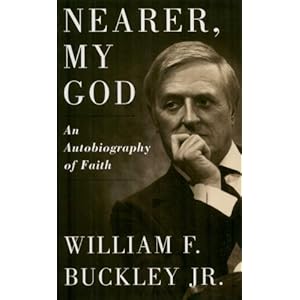
William F. Buckley's "Nearer My God": Book Review

Nearer, My God
I chose this on a whim as it was so far out of my usual orbit. No recollections of the old sod or stickball, and barely any for altar boys and fearsome clergy. Instead, a patrician account and series of reflections and reactions to the course of Catholicism from the venerable era in which Buckley was elegantly raised and the postconciliar malaise which has affected so many in the less certain Church.

His noblesse oblige permeates. There's a couple mentions of devout black butlers, but that's about it for class consciousness. It's rather astounding to follow this chronicle, so removed from the reality most of us share when it comes to education, privilege, or sailing at every opportunity at a summer home. This elevated lifestyle unfolds, and Buckley surely as he's accustomed to the manor/ manner born comports himself as he's been raised. It makes for a very curious spiritual autobiography/ FAQ.

For Buckley turns this midway into a novel experiment. He interviews a few of his friends, mostly converts, and all conservative fellow-travelers, often at the National Review, naturally. They also feature priests who've transferred to Catholic clergy from Protestant denominations. Buckley surveys their takes on many questions he raises about dogma, belief, and practice. Although as a cradle Catholic I must confess none of the statements he compiles would have convinced me to join "Rome," it's instructive to learn the mindset of those coming to "the faith" without being raised in it.
I could follow the theological details, but for many who admire Buckley, this granular examination may bore or bewilder. There's far less of his famed politics, and not much of his wit or rhetoric either.

It does all make for an oddly paced book. It's more a series of explorations and reflections, although the central theme of examining what persists post-Vatican II as the liberals often left the clergy and left the administration to overworked and understaffed priests and laypeople is important. For it demonstrates the rebound, if by default given the numerical advantage of the diminished remnant in control, of the traditionally minded episcopate and papacy, of what's a dwindling number of cradle-born congregants in America and Europe. This does all tilt in Buckley's view, as expected, to slant away from a global awareness of how the Church will fare as its center slides towards the "South."

As a result, this work will appeal to the small coterie of like-minded sympathizers with both Buckley's worldview and likely his class and background. The name-dropping may come without hesitation to this author, but it does remind the hoi polloi of our place among the pews and practically as peons. Few of the rest of us may be able to enter this intimately connected and convinced realm even via print, but it's a document to this reaction to what was meant as a reform to appeal to millions presumably reluctant to accept a pre-modern Church, even though the results in sweeping that aside enchanted far fewer than anticipated, at least among Buckley's entitled cabal. (Amazon US 12/12/17)

Friday, May 8, 2020

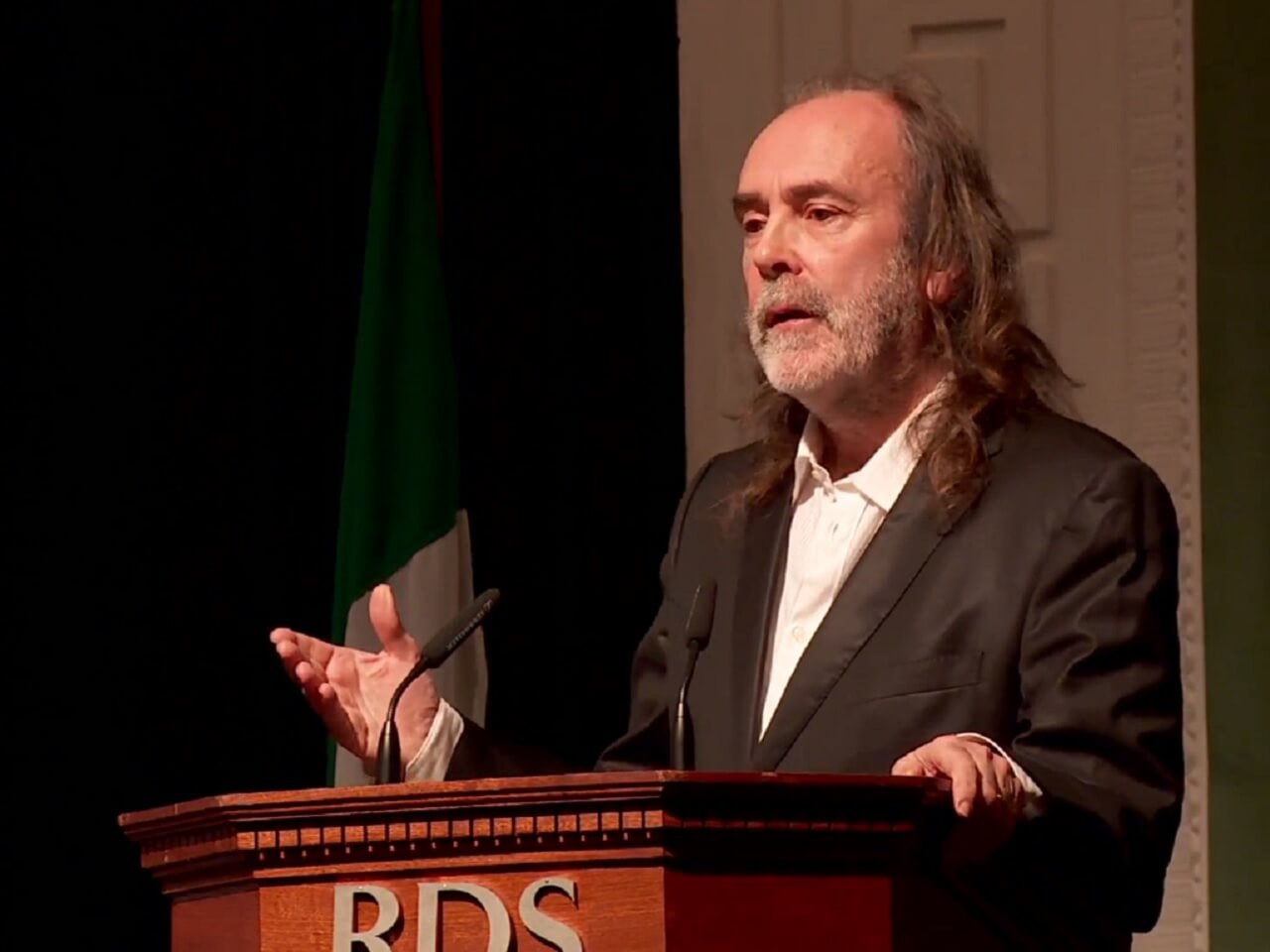
“The Intelligent Catholic’s Guide to John Waters.”

 john waters

“The Intelligent Catholic’s Guide to John Waters.” OnePeterFive 5/7/20

When a maverick journalist opposes popular opinion, at least as promoted by prominent media, what happens next? For rock critic turned cultural commentator John Waters, it's condemnation followed by self-imposed exile from Dublin's left-liberal, bien-pensant paper-of-record, The Irish Times.

This unrepentant dissident, not to be confused by Americans with Baltimore's cult icon and iconoclastic filmmaker, defends his patch of emerald turf against our new world order. Not (only) that of the Bushes, but of those who banish any trace of transcendence. As a longtime correspondent, Waters speaks for a “Peter Pan generation” who entered a dream-scape never glimpsed by their progenitors. Born in 1955, he and his peers from the 1960s through the 80s found themselves, boosted by a Celtic Tiger economic engine, “as foreigners working from home and emigrants in our own land.” They ushered in an “unassailable” secular agenda, rejecting Catholic, communal, rural-dominant mores once and for all.

John Waters continues his assault on post-Christian Ireland in Give Us Back the Bad Roads, his ninth book (2019). His first, a surprise bestseller Jiving at the Crossroads (1990) roughly coincided with his father's death. The period since both events unfolds in fits and starts, as the son addresses that humble mail-coach driver in a small town in Co. Roscommon, who taught him the value of manual labor and the trust in tradition. (As a relevant aside, to show how small Ireland’s networks of who-knows-who remain, my family at their farmhouse—now abandoned as all my relatives emigrated—would have gotten their post delivered by Waters and son, near the first village north of their own market-town.)

John’s career began covering music gigs for Hot Press, an upstart newspaper whose emergence proved well-timed with the punk explosion, hedonistic excess, and the demands of those raised in the wake of Vatican II to become not “the Pope’s children” addressed by John Paul II in his hyped 1979 tour, but a generation freed from clerical submission, censored expression, and class-bound economic stagnation. The results of this leap into liberation led not to freedom but to incarceration within a cunning and callow bureaucracy bent on enforcing standards of a politically-correct generation, his mates, and heirs.

This blow-back fuels Waters' longstanding determination in print and by his own interventions with similarly suffering fellow Irish families to defend the “blood link” of relationships, against referenda on “divorce-by-demand,” government intervention in the cause of “children's rights,” same-sex marriage, and legal abortion. Quixotic as this principled opposition remains in Ireland's Anglo-Americanized monoculture demolishing its customary “moral paradigm” that a younger, brash, “up from the country” Waters had volunteered to undermine, his mature self favors “common sense.” Although caricatured as a Catholic bigot by his former colleagues--“hired guns”-- and their “progressive” political-clerical cronies, Waters grounds his critique against the imposition of consumerism and corporate “rewards.”

These have obliterated his father's craft and his native town's legacy of community, sly solidarity, and respect for humble dignity. Waters witnesses the transition from his job as a railway clerk to those he and his eager counterparts sought as if Euro-topia at last, but winding up a “screen slave” or a “cubicle hostage.” The trajectory Waters has mapped in his seven intervening books gradually finds its aim. He tires of the distracted, profit-mad, sex-and-drug addled consumerism aided and abetted by his cohort.

Waters' focus, despite the repetitions (common as his many collections blending reporting, research, memoir, and cultural critique often resurrect his past and present predicaments as a prophet without honor in his homeland) sharpens. Returning to his paternal townland in a “strange collision of farmland and wilderness” overlooking Ben Bulben on the Atlantic shore (and Yeats' grave), John Waters watches turf “smoulder like Gabriel Byrne.” Bent on avoiding school on Monday, he had tried to “concentrate like Uri Geller until I conjured up a pain in my stomach.” Tellingly, Waters warns of what will transpire if the embattled “capacity to be human” gets trodden down by an Irish mob sworn to steamroller over the valuable contributions of a tradition rooted in centuries of hard-won verities rather than clogged with the media's “effluent and lies.” Waters imagines a lawn laid atop a yard of concrete: “it may briefly give the impression of health, but eventually, for obvious reason, it withers away.” Without a “consciousness of the absolute,” people will fail to nourish a mentality devoid of religion and dismissive of this venerable “public expression of the total dimension of human nature.”

Waters’ reversion to a measure of Catholic practice emerged gradually. He attended traditional Latin Mass services held at St. Kevin’s in Dublin, which were approved back in 2007. He concludes Lapsed Agnostic (2008), by documenting his growing attraction to the conservative, post-conciliar successor to Italy’s Catholic Action, Fr. Luigi Guissani’s Community and Liberation movement. Since early 2017, he contributes regularly to First Things. Last autumn, he was featured in E. Michael Jones’ Culture Wars. However, a careful parsing of John Waters’ writing presents his quest as one driven arguably far more by his own standards for uncompromising truth as any dogma. As he asks: what happens when a third generation in Ireland, and by extension, the formerly catechized realms across the world, matures with no exposure to the Faith? What follows for Ireland when the “don’ts” of Catholicism fade away?

These questions merit wise responses. Many who serve as leaders in the alternative Catholic media enter from other denominations, and, of course, perhaps none. Yet, intelligent and articulate insights from those left adrift in the last fifty-odd years, brought up in families still faithful, but who themselves fell away suddenly of slowly, often gain less vocal attention or press promotion. John Waters’ halting pilgrimage away from progressive piety might, thus, be guided well by an exchange from a once “center-left” Italian colleague in the Fourth Estate, Aldo Maria Valli (b. 1958), and composer-liturgist Aurelio Porfiri (b. 1968). Their narrative, translated last year as Uprooted: Dialogues in a Liquid Church, remains rather rare, as is that it's written by cradle Catholics too young to remember the Latin Mass as it was with any firm memories, but old enough to have undergone revised regimens post-1965.

It’s to be hoped that more thoughtful examinations of the effects of the counterculture on those now-aging Catholics who have grown apart from the Church in the experimentation and innovation may guide those who, having been raised in the pontificate of John Paul and his successors, seek solace. Not only aesthetic comfort, but, as Valli, Porfiri, and Waters concur, a way to survive amidst discontent and doubt. This demographic has been overshadowed, but it too deserves inclusion among the saving remnant. They had no recourse to clandestine TLM’s or conscientious objectors in the 1970s or 1980s.

Once recovered, after inner struggles against doubt and external battles against detractors, a reverence for the sacred, reduced among millions of cradle Catholics, lingers on. Here, Waters stands again, firm.

Headlines this past month in the Irish press reveal John Waters’ protests against a new shape-shifting foe. He and pro-life campaigner Gemma O’Doherty (another target of attack by the chattering classes) rally against COVID-19-related restrictions on public movement, in some circumstances only within a radius of two kilometers of home. Waters and O’Doherty sustain a long tradition of dissent against whatever draconian dictates they judge to come down from powers that be. Given both figures’ increasing outreach to audiences deemed beyond the pale of acceptable neo-liberal or state-socialist opinion, what transpires from their appeals to the marginalized and discontented in the Catholic circles mapped as “here lie monsters” as no-go territories will be worth watching as we continue into what the car commercials were the first to name “uncertain times,” as we ponder marks of beasts lurking ahead. 

P.S. at the site: OnePeterFive. {I was nearly at the maximum word count, so I did not get into the details of his past books, figuring that the space needed should be for introducing John Waters to a wider audience. But one of his earlier collections of essays (1997) was titled "An Intelligent Person's Guide to Modern Ireland," in turn riffing off of George Bernard Shaw's "An Intelligent Person's Guide to Socialism." In case anyone's wondering why I chose that odd and a bit verbose title.}

Friday, October 4, 2019

Patricia Applebaum's "St. Francis of America": Book Review

  St. Francis of America – How a Thirteenth-Century Friar Became America's Most Popular Saint | North Carolina Scholarship Online

St. Francis of America

How a Thirteenth-Century Friar Became America's Most Popular Saint

Patricia Appelbaum
  • Chapel Hill, NC: 
    The University of North Carolina Press. October 2015.
     288 pages $20.00.
     Hardcover. ISBN 9781469623740.
     For other formats: Link to Publisher's Website.

Review (for Reading Religion/American Academy of Religion)

Before the birdbaths, before the pet medals and the spurious sayings, Francis of Assisi stood for whatever first preoccupied Americans more than a century and a half ago. Devotees of the fine arts admired the challenges to convention by the little poor man. Rather than a refined scion, Francesco Bernardone represented a raw rebel. Today’s consumers at any gardening outlet may check him out, if reduced to a cast mold with a bar code. Both reactions to Francis remind patrons or shoppers of “what one lacks and perhaps longs for—a life free of possessions; a life that is not dominated by money or property or, in fact, consumerism (4). Religious historian Patricia Appelbaum thus introduces this well-researched and engagingly written survey of Francis’s crossover reception within a predominantly Protestant polity and now a secular, acquisitive culture. Appelbaum explains the Poverello’s enduring appeal.

Appelbaum encourages readers to widen their perceptions of her subject. She investigates how sainthood takes on or shunts aside meaning for those who do not include such a formal category in their faith or worldview. Assisi itself is elevated into a tourist site energized with an aura. The fact that Francis lived there allows seekers of any allegiance to identify with a defiant dropout who begged on medieval streets.

In nine chapters, Appelbaum surveys how Francis has been socially constructed. After placing his initial attraction within a revival of interest in Catholic aesthetics and Walter Rauschenbusch’s Social Gospel movement, she examines the impact of Paul Sabatier’s 1894 biography of Francis. The first account of Francis to reject hagiography, Sabatier’s archival effort resembled Ernest Ronan’s 1863 critical scrutiny of Christ. Appelbaum then situates this reforming impulse within the careers of Quaker Rufus Jones and socialist Vida Scudder. Their advocacy of Francis as a pacifist pioneer eased his acceptance by Progressive Era non-Catholics. These impacts sparked Catholic ripostes affirming the saint’s fidelity to the papacy and to Roman rulings.

The next section examines the era between world wars. The social activist side of Francis appealed to many, even as his advocacy of voluntary poverty hit close to home for most Americans during the Depression. The 1940s popularized the “peace prayer” erroneously credited to the saint. Meanwhile his statues spread throughout gardens across the country. Appelbaum grounds the birdbaths within a love of place. “Like the prayer, they could be private; like the hymn [‘All Creatures Great and Small’], they could be used in a small community.” This admiration set the sylvan scene for Earth Day in 1970 and the promotion of “the patron saint of ecology” (88). Postwar prosperity generated many versions of the odd man out from Assisi. Robert Lawson’s children’s tale Rabbit Hill and Bernard Malamud’s urban Jewish parable The Assistant gain in-depth analyses as they reveal narrative responses to the saint’s firm rejection of attachment to the things of this world. That such a reaction co-exists with Francis’s celebrated love of nature complicates his contemporary depictions.

Unfortunately, the hot pink and mustard yellow vibrancy of a San Francisco Summer of Love poster with an offbeat, mixed message from its municipal namesake to its hippie versus straight heirs is reproduced only in monochrome. But as with visuals throughout this study, it reveals Appelbaum’s range of references. About eighty pages document her fieldwork, list sources consulted, and include endnotes. These appendages combined with two indices enhance this book’s value. Any scholar of material Christianity or popular culture will find St. Francis of America a welcome resource.

The rise of the Jesus People and evangelicals who recast Francis as a hippie; the embrace of his spirit by environmentalists; the attempt to capture his charisma on film; and his conversion into “creation-centered spirituality” by post-Christian skeptics and New Age adherents typify recent trends. Shifts in American attitudes to Francis anticipate Appelbaum’s thoughtful inquiry into the “blessing of the animals” ritual across ecumenical or sectarian lines. Appelbaum edits replies to her 2013 questionnaire. She sifts testimony from over forty “living voices” about what Francis means personally and spiritually. These sensibilities expand into diverse contexts: Islam, postmodernism, and folklore. “Artist, poet, clown; traveler, camper, farmer; leper, street person, prisoner: the list goes on and on” (181). Sly guises illustrate disparate roles played in nine centuries of the odyssey of Francis from Assisi.

Date of Review: August 19, 2018
About the Author(s)/Editor(s)/Translator(s): 
Patricia Appelbaum is a historian and independent scholar of American religion.

Sunday, April 15, 2018

Ross Douthat's "To Change the Church: Pope Francis + the Future of Catholicism": Book Review

To Change the Church: Pope Francis and the Future of Catholicism by [Douthat, Ross]As the token Catholic/ conservative columnist for the NY Times, Ross Douthat, is a journalist I've enjoyed reading even when much of the rest of that paper of record I want to toss at my dog. (I refrain, strengthening my patience.) Douthat may be better at short opinion pieces than in-depth reporting, but as he's a central spokesman for the right-leaning Church, he's well informed to look at how the current pope is caught between a liberal rock pushing Francis towards more reform and more renewal, and the conservative hard place refusing to budge on doctrine and liturgy.
"To Change the Church" looks at the split. He does not have the rosy patronizing view many non-Catholics, less in the know about the Vatican and its global reach, have had about Jorge Berglogio SJ. Therefore it's instructive to learn about his stint as the Jesuit provincial during the times of dirty war and the disappeared in Argentina. Douthat has access to some insiders and he uncovers sobering truths. Some issues are dealt at length which those unfamiliar with the higher levels of the Church and intricate details of the bible and teachings may feel are exaggerated.

Douthat examines the compromises made by Pope Benedict to keep the traditionalists faithful, the growing rift between Vatican II advocates who demand more changes, the younger clergy and bishops who favor caution instead of chaos, and the recent pronouncements hinted regarding re-examination of the "nullity of marriage" vs. the indissolubility of the bonds which Jesus affirmed, within the German-Austrian episcopate's "Kaspar debate." These provocative topics reveal teachings that Pope Francis could not budge on without undermining fidelity to the Gospel. I hadn't considered before this how central this stance proved, whereas as Douthat documents, many other recent debates on tricky issues have not depended on this fundamental grounding in the Gospel. He digs into some "sources" who reveal how complicated this astute and considerably diplomatic (take that word in more than one sense) pontiff's maneuvers are. This is a corrective, again, to popular misconceptions and media.

Abuses we all are unfortunately somewhat cognizant of take up many headlines by outside writers investigating the Church. So it's refreshing to turn to other topics which tend not to gain serious attention in the mainstream press. Douthat, like John Thavis' "The Vatican Diaries," is a good guide. Douthat is not the resident correspondent Thavis has been in Rome, but he shares that reporter's understanding of the Church from the inside.

I am not sure I buy into Douthat's rather dire predictions of a schismatic division within Catholicism. Yet if it wasn't for massive Latino immigration, parish pews would be even emptier than they tend to be now. It looks as if the future Church will shift to African power, away from Europe, as in turn it moved from the Mediterranean and back to Jerusalem. The "developing world" with its burgeoning populations has skirmishes between Protestants, Catholics, and in some places Islam or as in China the secular regime. Here are the battlegrounds and the launch pads for a form of the Church which may soon overtake the "spiritual but not religious" West. After Francis, who knows what will follow?

Douthat also wrote a sprawling 2011 narrative-survey about the shifts of U.S. religious currents over the past generation, "Bad Religion," espousing not the ethos of a SoCal veteran punk band, but what Rod Dreher's "Benedict Option" has since popularized (?) concerning the role the Church will likely play in the changing American polity. This takes on the wider variety of Christian denominations within recent American culture and history, but it's recommended for those wanting more from this welcome voice. I reviewed "BR" at length a few months ago on this site. Amazon US 4-12-18
(Reprinted at The Pensive Quill 9-26-18.)

Thursday, June 8, 2017

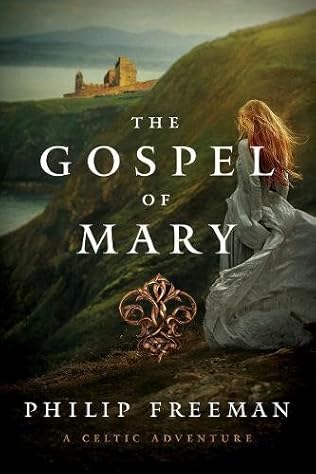
Phillip Freeman's "The Gospel of Mary": Book Review


book cover of 

The Gospel of Mary
Since I was a teen reading James Michener's "The Source," I've had a weakness for "So-and-so has discovered a missing Gospel" yarns. I liked the prolific Professor Freeman's recent Oxford UP retelling of Celtic mythology, so I gave this a try. Via an e-galley, I did not know until I finished that this is the third in his Sister Deirdre series. That explains some backstory I kept wondering why not more was divulged herein. I had no trouble following along, but it's better I assume to have caught up with the previous books, for the main character evidently has a complicated past and much to tell.

Not be confused with another, recent Irish-oriented story, Colm Tóibín's drama "The Testament of Mary," Freeman's "The Gospel of Mary" features the rapid pace, genial tone, and expository dialogue that fills us in on an Ireland when Christians still number few. Deirdre's grandmother was a druid and she claims the same identity, although when her mother died, her grandmother fulfilled her promise to raise Deirdre in the new faith. With allusions to a failed marriage, other past liaisons, and a child who died young hovering about, it's clear that Freeman's protagonist has had more adventures than most nuns might have, at least in later times. She lives with her friend and sidekick Dari in a monastery founded by Brigid, which to Rome's discomfort hosts celibate men and women together.

Rome's unease deepens as it sends a clever emissary to find out what the truth might be to a manuscript smuggled into the island with haste, secrecy, and danger. It is, naturally, the tale of Jesus told by his mother, and its passages intersperse, as they are translated by Dari from the Aramaic, with the fate of the two women as they get caught up in keeping their treasured text safe from the Church. The Church, after all, fears that its integrity will crumble if Mary's words are proven true, and even if they are not able to be verified, that the heresies and tumult generated by them will bring down Rome

It all moves satisfactorily. I read it in a sitting. Freeman has done his biblical homework, and he blends it with a quest that dashes about Ireland. There's plot complications, but the story line as a whole does not surprise. It's a pleasant narrative, and it likely will educate as well as entertain you.
(Amazon 9/5/17)

Tuesday, June 6, 2017

Jean Raspail's "The Camp of the Saints": Book Review

The Camp of the Saints - Wikipedia
Recent flotillas of refugees from Africa and Syria caused a few bookworms and pundits to name-check this 1973 novel. Liberals practically put "scare quotes" around a mention of what they term a racist screed. Conservatives may praise it as a "classic." I knew of it way back via the maverick Garrett Hardin's perspective; he appealed if in different aspects to both ends of the political spectrum.

It popped into my mind the other day so I sat down and read it. It took two sittings. Raspail, as here translated by Norman Solomon, has a feverish, testy style that Michel Houellebecq, in his formative years in France, I suspect may well have come across. However, as Houellebecq's mordant fiction gains the same condemnations in bien-pensant right-thinking and left-leaning circles as Raspail's book, readers familiar with H. may find an encounter with R. bracing, infuriating, or baffling.

Raspail is credited on the blurb for The Camp of the Saints as a prize-winning author in his native land. Yet this novel flails from the get-go. The end of the story, or near it, jumbles up chronology. The sneering tone of the misanthropic narrator, the overabundant detail, the cardboard characters, the fact you don't care about anyone in the entire storyline: Raspail has scores to settle, but whether you'll be cheering him on or chasing him away depends not only on your own ideological bent, but your tolerance (a theme put through the wringer herein) for prattling. Raspail has it in for his countercultural era of the slightly aging hippies and the faux radicals of the early 1970s. He also despises the press, and some of the admittedly best barbs come as his narrator skewers the posturing.

I thought of the New York Times, for instance, when I found a similar send-up of earnestly PC journalists, who lambaste capitalism and despise corporations and capitalism in the same pages whose sponsors are those fat cats, and whose underwriting, so to say, supports the fulsome claptrap.

The key criticism, as Hardin reminded American readers decades ago, is that the "lifeboat" (here not symbol but story itself, multiplied all over the ocean as refugees set sail for Europe and the rest of whatever is the Western world circa 1973) cannot hold everyone. Either the rich have to share, and become poor themselves as such largess will not balance but tip over everyone into poverty, or they have to defend their realms with force, and "contempt" as Raspail later put it, lest they lose it all.

Odd tangents speckle this work. Clement Dio, a preening poser of the Third World solidarity his own bloodline allows him to capitalize on in more ways than one, is the best of a bad lot. But Raspail's mouthpiece hates worker-priests (back when there were enough clergy to go around), and the Dominicans (not for once the Jesuits) come in for comeuppance. Funny that one Benedict XVI reigns. Along with the Church, the unions, the press, and the military all get their turn at this "roast."

Yes, Raspail makes some points early on about the hypocrisy of the West, the implosion of its value system in a secularizing (well, not quite as it's still France in the post-Vatican II guitar mass phase) and skeptical society, and the contradictions inherent in the post-colonial world supported by the five (now more like six and a half) billion whose labor and losses prop up the seven hundred million whites. "The Last Chance Armada" makes a few at first hesitate but the pressure to welcome the human tide from over the sea leads many addled or idealistic Westerners, guilt ridden and excited to expiate their sins of neglect and greed, to proclaim "We Are All From the Ganges Now" as the first wave from India crests and others then join the exodus to the Northern Hemisphere, at least the wealthy part.

The narrative, such as it is, lurches through scenes of the army, a strange tangent with Benedictine monks, the chattering classes, a token couple from the working class, and those in factories and offices who find, as all anticipate the Easter Sunday mass landing of the sordid ships and their cargo, the early advantages taken by those in France itself who have earlier emigrated, and who maneuver their own prospects, eased by the care or fear taken by their "host nation," as it capitulates to them too

Interesting idea. Promising set-up. Fumbled execution. Fizzled climax. Ho-hum resolution as the narrator and Raspail seem too wearied or jaded to bother carrying on after so many pages of rants.
However, the relevance of this scenario cannot be gainsaid. Look at headlines. (Amazon US 6/5/17)

Saturday, April 29, 2017

Donald S. Lopez, Jr.'s "Strange Tales of an Oriental Idol": Book Review


Look around an Eastern-themed gift shop or Asian-inspired garden and you may see a benevolent, rotund and inevitably smiling Buddha. Imported into Western culture, the familiar icon enters popular culture as a good luck symbol and a self-satisfied sage. What today's viewers of such images forget is that, less than two centuries ago, whatever was known or rumored about this wisdom teacher emanated more often from demonic or pagan connotations, rather than cheerful or chubby depictions.

This shift in representation has taken nearly two thousand years to spread, far from the homeland near the Himalayan foothills and Indian plains of the historical Buddha. An expert scholar on Buddhist culture at the University of Michigan provides readers with a compendium excerpting over eighty accounts of what the Buddha meant to the forebears of Christians (and, now and then, Muslims and Jews) who attempted to fit this acclaimed personage into their worldviews. Donald S. Lopez, Jr.'s {Strange Tales of an Oriental Idol: An Anthology of Early European Portrayals of the Buddha} takes up the conversion of the Buddha "from stone to flesh." That is, the statues and the portraits of this venerable personage filtered into the imagination of travelers and scholars. They might be mystified or terrified of what they heard or guessed about this fabled or feared entity, and they regarded him or it with "profound suspicion." Simply put, until 1801, the Buddha was not recognized as the founder of what the West invented as Buddhism. For previous tale-tellers, he was known only as an idol.

Lopez records over three hundred names for the Buddha between 200 and 1850. The litany stretches back to Clement of Alexandria around that first date. This Church Father distinguishes the Hindu Brahmin priests from non-Hindu followers of the "Boutta, whom, on account of his extraordinary sanctity, they have raised to divine honours." Not bad for the first attempt at defining the change from Gautama to Sakyamuni, from a pampered prince to a wise deity bestowing favors on his worshipers.

The professor's introduction sums up the intricate patterns of information about the Buddha as they were transmitted from the Indian subcontinent into the Middle East and across the many Christian and Islamic empires. Tellingly, for nearly a millennium, few reports of the Buddha found their way west. Marco Polo's celebrated chronicle ranks sixth among eighty-odd entries, for instance. After this report, however, versions multiplied along the trade routes set up by Christian missionaries and traders with China. Emissaries at the Great Khan's court linked with Armenian, Persian and papal contacts visiting Mongol rulers. These East-West ties tightened in the 1600s after the Reformation.

Among these, the Jesuit Matteo Ricci epitomizes the ambition of the Catholic Church to win over the Chinese. Fr. Ricci also speaks for the dismissal of the Buddhist teachings brought to China from India as a "disaster." Neither a "genuine record of the history of this religion" nor "any real principle upon which one can rely" exists within this faith. For it "lacks the arts of civilization and has no standards of moral conduct to bequeath to posterity." Ricci credits the lack of knowledge of Buddhism abroad with a rationale for denigrating its doctrines. The Jesuits may have adapted Chinese customs as their own to win over the rulers, but they persisted, as with Ippolito Desideri in Tibet, to oppose Buddhism

Other Westerners added their own reactions. These tended to be negative. They offered many adaptations of the Buddha, often without recognizing the true roots of the idol in a historical figure. Yet, Lopez cautions, no single Buddha biography is accepted across Asia. No canonical text exists.

Rather than posit a true Asian vs. false Western dichotomy, Lopez asks "whether the Buddha, then and now, here and there, is the product of a more complex and interesting process of influence." Therefore, Lopez allows many texts to nestle and jostle against each other, refusing to rate them. This approach fits into Lopez' career, spent producing learned works demystifying Buddhist tropes. While the collection of polyglot voices may daunt, he offers cogent introductions for each diverse inclusion.

For then as now, knowledge of languages varied. Motivations multiplied. Conversion of the "pagans" led to negative attitudes, such as Ricci articulates. Catholics encountering monasteries eerily like their own recoiled as if they walked into the haunts of devils. Gradually, spurred by archaeological, linguistic and military exponents, interest in what became defined as Buddhism supplanted a terror of its teachings. Ethnographic enthusiasm grew in the 1700s and 1800s. This anthology concludes, fittingly, with the 1844 monograph of Eugène Burnouf. This scholar of Old Persian and Sanskrit pioneered the presentation of a human Buddha, rather than a stone idol. And from that juncture, Western sympathy began for the founding figure of a world religion and/or an appealing philosophy.

"The myriad idols coalesced into a single figure, who then became a historical figure, a founder of a religion, and a superstition became a philosophy." So Lopez sums up the transformation. Textually-based Buddhism remains dominant in the West, parallel to the quest in the 19th century for an historical Jesus. Whether such pursuits have resulted in reform or regression is left up to the adept. (Spectrum Culture 4/4/17; Amazon US with slight changes 4/20/17)

Sunday, December 18, 2016

Newton's Third Law


Even if New Year's is two weeks away, I've resolved this past year to expand my reading material. The echo chamber's become a common phrase the past few months, derided by some who blame whatever ideology one leans to for keeping half of America tuned out from the other half. Both sides sometimes could care less about the other (small 'o' rather than The Other elevated by one side). But I figure it's stimulating to do so, and besides, I've always had unpredictable (a bit at least) and contrarian ideas.

So, I read Ross Douthat in the NYT regularly. This conservative Catholic intellectual's an anomaly, certainly. His take on the campaigns and culture wars from his perspective reminded me not of my Jesuit college, which was decidedly of the "social justice" tilt, but of a few authors I tried out in the stacks during my stint. I roamed them to find among the Eric-Gill- Hilaire Belloc- Chestertonian axis an argument for distributism, a return to guilds, and a William Morris-inspired direction of a benign reform less hostile to the spiritual than the Marxism and/or liberation theology favored by certain professors. I mulled over these issues in my undergrad years, during Reagan's first term, and while I opposed him, I found that the knee-jerk denigration of those like my family who voted for the Gipper as an antidote to the identity politics promoted by the Dems diminished the voices of "my" folks. Unions declining, education faltering, the Church diminishing, their trusted verities faded rapidly. This white working class is mostly mocked, but I understand it.

Not that I backed the GOP, but I didn't cotton to the attitudes of those limousine liberals either. The earnest Michael Harrington's version of democratic socialism appeared as one option some of my circle entered, if gingerly. We were from the blue-collar ranks, the first to go far with higher ed, from average parishes and schools. But the Jane Fonda-Tom Hayden in the People's Republic of Santa Monica's noblesse oblige the DSA exuded for L.A.'s NPR crowd on the Westside, few of whom were natives and many from New York and other bastions of privilege, rankled me instinctively. (I get that way whenever my hometown is critiqued by airy arrivals from wherever.) And when I questioned proto-Maoist radicals at UCLA a few years later during my doctoral quest, as to where their efforts to recruit among the likes of my father's machinists would wind up, as factories left the U.S., I did not get much response as to a shift to consciousness raising among the temps in their monitored cubicles.

Now, as many may have buyer's remorse as to whom they voted for to bring back those tool-and-die jobs my dad did, the choice of the right-wing, as fickle as predicted in their embrace of cronies from capitalism's elite to fill the Cabinet to come, bodes poorly for reforms. No surprise there. But in retrospect, an April 23rd 2016 piece by Douthat I found this morning in the paper pile shows how the lately fevered fears of certain "alt" sites and voices can be placed within a larger context, one the media pass by. I'm unsure how much aligns with what I stumbled across in college, but here goes.

Douthat documents the roughly 2/3 bias in programs (highest in my field of English Lit) against conservative candidates otherwise equally qualified for a post competing with a liberal applicant. 10% of the humanities professoriate total its right-wing. A minority no advocate lobbies for more spaces in the ivory tower. This movement Douthat labels as '“neoreaction,' which in its highbrow form offers a monarchist critique of egalitarianism and mass democracy, and in its popular form is mostly racist pro-Trump Twitter accounts and anti-P.C. provocateurs." (See here for more on the latter contingent's variety, tallied by one who delights to épater le bourgeois.) Douthat suggests these two phenomena emanate from a common core: "the official intelligentsia’s permanent and increasing leftward tilt, and the appeal of explicitly reactionary ideas to a strange crew of online autodidacts."

The Whiggish expectation that we advance inexorably towards a better future outweighs the Newtonian third law of actions triggering equal and opposed reactions. They may be balanced in that one President follows another, and their racial and social stances may be seen in opposition. But are they equal in reactions? Both kow-tow as any elected figure in the U.S. of any stature to bankers, developers, lawyers, tax-dodgers, connivers, and cabals. A shadow government runs our real system. For me, a change of the front man does not mean the backing band has changed utterly for the better. It's as if the lead singer lip-synchs what the talented songwriter pens, the charmer out of the spotlight,

Going beyond the easy depictions of idolizing Him, Douthat discerns a void on campuses. If a discontent wants to revolt against "tenured radicalism," what to do? Those think-tanks don't attack
"the very roots of the modern liberal order." (Deft spin to the derivation of a less-heralded radical.)

"Deep critiques" abound on the left.. Douthat notes that while scholarship on Carlyle or T.S. Eliot or Rudyard Kipling continues, few publishing on these writers would admit any admiration for their politics. Their often racist and anti-semitic outbursts, akin to the antebellum South, make this sympathy taboo. Yet when we erase polarized opposites of Foucault or Zizek, we may lack contexts.
But while reactionary thought is prone to real wickedness, it also contains real
insights. (As, for the record, does Slavoj Zizek — I think.) Reactionary assumptions
about human nature — the intractability of tribe and culture, the fragility of order,
the evils that come in with capital­-P Progress, the inevitable return of hierarchy, the
ease of intellectual and aesthetic decline, the poverty of modern substitutes for
family and patria and religion — are not always vindicated. But sometimes? Yes,
sometimes. Often? Maybe even often.
Both liberalism and conservatism can incorporate some of these insights. But
both have an optimism that blinds them to inconvenient truths. The liberal sees that conservatives were foolish to imagine Iraq remade as a democracy; the conservative
sees that liberals were foolish to imagine Europe remade as a post­national utopia
with its borders open to the Muslim world. But only the reactionary sees both.
Is there a way to make room for the reactionary mind in our intellectual life,
though, without making room for racialist obsessions and fantasies of enlightened
despotism? So far the evidence from neoreaction is not exactly encouraging. The official intelligentsia’s permanent and increasing leftward tilt, and the appeal of explicitly reactionary ideas to a strange crew of online autodidacts. is also evidence that ideas can’t be permanently repressed when something in them still seems true.
Maybe one answer is to avoid systemization, to welcome a reactionary style
that’s artistic, aphoristic and religious, while rejecting the idea of a reactionary
blueprint for our politics. From Eliot and Waugh and Kipling to Michel Houellebecq,
there’s a reactionary canon waiting to be celebrated as such, rather than just read
through a lens of grudging aesthetic respect but ideological disapproval.
Now, where are the insights Douthat invites? Tribalism has been blamed for the intransigence of the divides into which we are born, are classified within and expected to uphold for a demographic tick-box or a employer-mandated form. Order is fragile, but as with global warming and neo-liberal pieties, do these impacts merit dismissal as we crest into planetary chaos? The ebb of standards in the arts and discussion we lament within the chattering classes (at least of a certain age, before the advent of word processors and smartphones), but we engage in the same technologies and share the same memes as our younger charges. I personally get frustrated by the casual reversion to f-this and s-that all around now, but my peers shrug it off. I'm happy that the definition of family expands to same-sex couples and any whom have long faced ostracism. But I worry about the "single mom" trope as if this origin excuses any criticism of blame for the damage a fragmented home may inflict on young or old.

As for patria, I suspect this when nationalism stands for inbred mores and backward selfishness. Much as I have a soft spot for the Irish Tricolour, I remain detached about flag worship, and even the standing for the Pledge discomforts me as I've grown to realize this compromised U.S. Yet I defy its liberal norm in arguing if fruitlessly against open borders as I believe any jurisdiction by its nature should exercise self-deliberation among its citizens as to how many newcomers it can include. This clashes with everyone around me, but it's a tenet for me squaring with sustainable economies, eco-friendly lifestyles, and populist decision making rather than the centralized dictates that the au courant  musical hit Hamilton champions, if glossing over the real Alex's pro-British elitism and trade that favored the wealthy and the Feds rather than the states and those resisting Beltway power.

Religion needs no debate here. It's been contemplated for all my life, let alone many of my posts. The appeal of the atavistic and the ancestral pulses strongly within me. Its dangers and its delights create discomfort and rouse discussion. Suffice to say that "its strange viral appeal" buzzes in my sly soul.