Showing posts with label Cuba. Show all posts

Friday, June 2, 2017

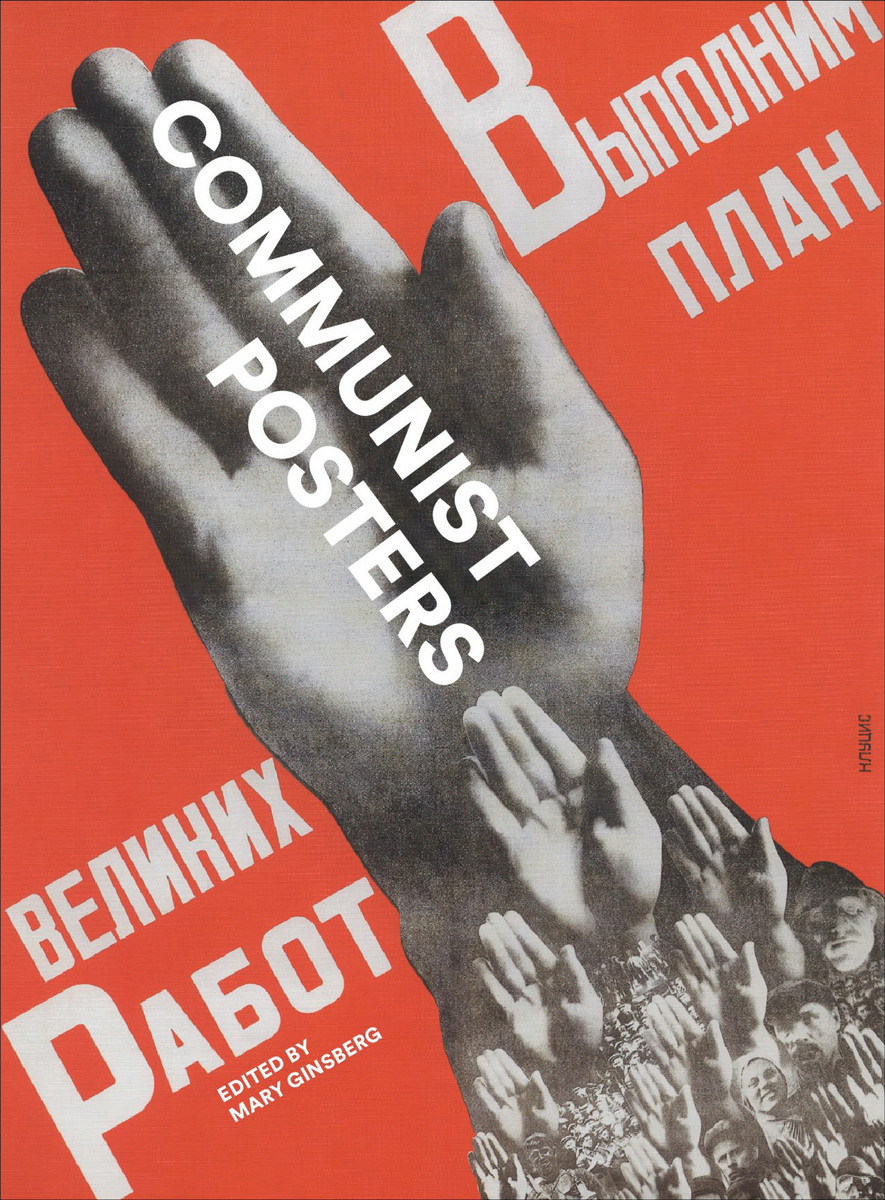
Mary Ginsberg's "Communist Posters": Book Review

cover of book
North Korea menaces again as a foe of the United States. Cuba waits as if eager for reconciliation. Regimes against which American expended much manpower and munitions fifty years ago now trade with their neighbors in Asia, the largest of which, China, is capitalist in fact if not theory. Headlines and Wiki-Leaks pepper the news and feeds with distrust of a sinister Russia, echoing the Cold War.

This range of reactions by the U.S. government and media to Communist nations makes this collection of posters from these and allied nations under red flags relevant. On the centenary of the Bolshevik Revolution, Mary Ginsberg edits and introduces the most comprehensive presentation in print of often vivid propaganda, that for a less screen-focused century, captured the eyes and the minds of hundreds of millions. They celebrated, endured, or hated the heydays of Fidel or Mao, Lenin and Stalin and the various apparatchiks who tried to implement their theories and schemes.

A representative example appears early on. Red Loudspeakers Are Sounding Through Every Home (1972), as Ginsberg observes, documents the use of images to instill obedience. In a Chinese village, slogans, songs and lectures emanate from speakers installed on the streets. Their indoctrination may have seemed inescapable. For such broadcasts cannot be shut off. Other means further the deification of the leader as well as his dictates. The home shown on the poster has only a framed portrait of The Chairman, surrounded by small banners with sayings and little red books. Outside, a family gathers.

Over 330 illustrations demonstrate the range and the scope beyond the U.S.S.R. and the P.R.C., Korean, Mongolian, Eastern European, Vietnamese and Cuban chapters provide essays by scholars. These cross-reference the pictures, providing a narrated guided tour that alerts readers to the themes.

These depend heavily on Constructivism and photomontage. Art as function and promotion through photography combine to sell the peasants and workers on these products of the intellectuals. What they peddle are exhortations to produce more, fight harder and act braver. The verbosity of the caption can weigh down the impact of the 1937 image. Sergei Igumnov's red fist emerging from the rolled-up sleeve showing off a worker's clenched and muscular arm strangles a snake with swastika eyes. What this depicts is: "We'll Uproot Spies and Deviationists of the Trotsky-Bukharin Agents of Fascism." Given the relentless purges under the Man of Steel, such creations linger longer for their visual force rather than the ever-changing explanations linking the art to the enemy of the moment.

As dynasties bore down, the masses viewed ideals. Aleksei Lavrov's The People's Dreams Have Come True (1950) has a grandfather resembling Lenin. He clasps a Young Pioneer's shoulder. The old man's smile encourages the slightly wistful, perhaps hesitant, fantasies of the boy, looking up from his book, penned by "a critic of urban social conditions." Pravda sits on the table of their ship's cabin. Behind their sofa a reproduction of "the famous Repin painting Barge Haulers on the Volga" is a bit blurred, but "confirming how terrible things used to be." Outside, ships sail past factories that gleam.

The last Soviet poster blurs into patterns mirroring 1920s abstractions. Other lands drew on their own artistic legacies. Mongolian folk art and calligraphy enter many of its first efforts, while later ones mimic the Chinese Communist preference for red banners, gesticulating vanguards, rosy cheeks and marching masses. Polish aesthetics, as evocatively shown on film posters, also grace political ones.

Silhouettes, shadows, stark typefaces and surreal figures shunted aside the Soviet template. Czech and Hungarian designers likewise incorporated pop art and psychedelic patterns into silkscreen and montage takes on opera, a new television model or Allende's brief Chilean victory. Anti-Americanism also heightens for Western audiences a Chinese imitation of an anti-Vietnam war mural, with placards of English-language denunciations of the war machine. North Korea dutifully perpetuates this type.

The appeal of stylized "characters in primary colors, along with shrill slogans, dotted with exclamation marks" predates the reign of Kim Il Sung. But their "visual recognizability and readability" sustain themselves for two-thirds of a century due to the simple, even atrophied graphics. As Koen de Ceuster explains in this section, campaigns prove unrelenting under the Kims, and so the shelf life of a given poster is limited: "the message prevails over the package." He also asks a necessary question: "Where does art end and propaganda begin?" For the D.P.R.K., art theory combines ideological with artistic equality through a unified concept. Agitprop exhorts the Koreans to work diligently against an Uncle Sam whose competing tanks, bombers and missiles always loom.
What distinguishes Korean versions is a frequent inclusion of a mythical horse flying over smoking chimneys and rice paddies. Eyes also lead the way as they flare up and as fingers point the way on.

Vietnam takes French and Indochinese influences, hand-drawn lettering, indigenous themes and guerrilla poses from street art for some of its varied products. They stand out as more awkward and more original than the Soviet, Maoist or Korean contributions. They perpetuate the raw, eyewitness sensibility of not an imagined but a real struggle against an imperialist invader, or more than one.

Another rich array of approaches results in Cuban artifacts. International influences entered into the island's art long before 1959. Capitalizing on tourism and a worldwide market, its posters were sold as commercial items. Diminishing the Socialist Realism quotient, they increase the use of stencils, hand-cut and silkscreened. Disparate objects may juxtapose; so may "humour and visual wit." Not to mention Castro's 1977 proclamation: "Our enemy is imperialism, not abstract art." Contrasting the sophistication of the Cuban propaganda against the simplicity of Mongolian, for instance, reminds viewers and readers of the connections one Communist enclave may enjoy, as opposed to another.

One closes this collection wondering what the future holds for political posters. Capitalist systems appeal to the watcher of a screen far more than the passerby of a placard. Scholars in this current century may have to hope that our soon-outmoded digital technology records the catchphrases and memes generated by the political spectrum today as carefully as archivists have these bold posters. (Spectrum Culture 12/1/17 with slight changes) 432 pages 04-22-17 Reaktion Books

Friday, December 2, 2016

Clann-ish


A friend of Irish and Greek descent living in Germany told me today how "we need to rally together and be the keepers of all that knowledge, skills and wisdom that is needed." In a precarious economy, on a weakening planet, and within political change and cultural clashes, I look within for support. Parties fail us, "leaders" betray, and ideologies writhe. Consider the late Fidel. As his rule over Cuba consolidated as opponents were eliminated and dissent crushed, his citizens learned that saying his surname was judged disloyal. So, his first name was used, or instead, a sly gesture of stroking a chin.

So, the outpouring of grief among my leftist friends leaves me unmoved. Hearing stories of flight from that island by classmates and students, the recognition of the health and literacy reforms the Communists brought are tempered with the cruelty exercised against his foes, and innocent people such as gays, a factor little covered in the media now, as are the 500 executed by firing squad soon after the rebels became the rulers. Of course, justifications for these deeds, the broken eggs for the omelette recipe, emit as pro forma replies by the convinced and committed progressives. Fidelity.

This faithfulness joined Cubans despite their privations and losses of freedom against their foes, conjured or real. The strength of the tribe for and against what Yuval Noah Harari in Sapiens calls "imagined fictions" enabled our ancestors to break out of their territorial and mental bonds. Then, by religion, trade, and money, ancient peoples formed nations and expanded their hold over others, too.

Imperialism has a bad name, sure. But Harari, balancing the accounts of humanity's gains and losses well in his book, warns us against too arrogant a reaction to our past. He shows the benefits of reason, while warning in his new Homo Deus against the rush to trans-human and algorithmic domination. The cost, he argues, of transferring our humanity into information systems rub by corporations caring only about data, and not consciousness, threatens to count out the irrational, the intangible, our ideas.

Reflecting on this, I opened an aging NYT Sunday Review. While the recent coverage of Facebook decries its "fake news" and its implicit blame that the election was lost for Her by His minions in Macedonia planting false sites and misleading memes, the reaction from way back last May by Frank Bruni betrays a deeper concern. In "How Facebook Warps Our Worlds" he begins: "But unseen puppet masters on Mark Zuckerberg’s payroll aren’t to blame. We’re the real culprits. When it comes to elevating one perspective above all others and herding people into culturally and ideologically inflexible tribes, nothing that Facebook does to us comes close to what we do to ourselves." While not a new phenomenon, this technology tracks us and reinforces our own prejudices and priorities.

After delineating the echo chamber and referring to how we distrust institutions and so retreat to our communities of the like-minded for security, risking their scorn and aligning ourselves with their trust, Bruni decries this self-perpetuating safe space. Therefore, he concludes: "It’s not about some sorcerer’s algorithm. It’s about a tribalism that has existed for as long as humankind has and is now rooted in the fertile soil of the Internet, which is coaxing it toward a full and insidious flower."

But the blooms from FB can brighten our outlook. Today I also found in my feed from five years ago this Salon essay from a Rutgers sociologist. Eviatar Zerubavel asks "Why Do We Care About Our Ancestors?" Like many pieces on Salon, it's lifted from a book so it does not read that well in part.

Still, he sums up useful perspectives that align with my own investigation of the yearning for the tribal in alternative religions claiming to remake or remodel native European spiritual traditions.

He wraps up his argument: "long before we even knew about organic evolution (or about genetics, for that matter), we were already envisioning our genealogical ties to our ancestors as well as relatives in terms of blood, thereby making them seem more natural. As a result, we also tend to regard the essentially genealogical communities that are based on them (families, ethnic groups) as natural, organically delineated communities." He notes how this "blood tie" is rooted in evolution itself.

He concludes: "Yet nature is only one component of our genealogical landscape. Culture, too, plays a critical role in the way we theorize as well as measure genealogical relatedness. Not only is the unmistakably social logic of reckoning such relatedness quite distinct from the biological reality it supposedly reflects, it oft en overrides it, as when certain ancestors obviously count more than others in the way we determine kinship and ethnicity. Relatedness, therefore, is not a biological given but a social construct. Not only are genealogies more than mere reflections of nature, they are also more than mere records of history. Rather than simply passively documenting who our ancestors were, they are the narratives we construct to actually make them our ancestors." This ties to the yearning for us to find a famous forebear (for me, all the way back to Conchobar mac Nessa in the Táin) at the expense of the less-heralded. But for me, that ends in 1797, as no Irish records survive before then.

This search for origins I find comforting in this chaotic world reducing us to data-mined digital data. I realize it's a romanticized quest, but not all of us find satisfaction in being reduced to Caucasian-this or white-that. Ever since I used to half-jest in school "I'm not an Anglo, I'm Irish!" I suppose I stood for this impulse. In Irish, there's more than one word for family. Tomás De Bhaldraithe (whose name shows how the Normans with Germanic nomenclature turned Gaelic in their own monikers after they invaded the island and supposedly turned more Irish than...) in his English-Irish dictionary defines:

family, s. 1 (Members of household) Líon m tí, teaghlach m. Family life, saol (an)teaghlaigh. 2 (Parents, children, relations) Muintir f. 3 (Children) Clann f. She is in the family way, tá sí ag iompar clainne. How is your family? cén chaoi bhfuil do chúram? What family have they? cé mhéad duine clainne atá orthu? A family man, fear tí agus urláir. 4 (Descendants) Sliocht m (g. sleachta), síol m. Family tree, craobha fpl ginealaigh. 5 (Race) Cine m, treibh f. 6 Aicme f (rudaí); Biol: fine f. 7 Mth: Number families, uimhirfhinte fpl. Family of sets, cnuasach m tacar.

So, related by blood and members of household appear to overlap, if distinguishable. Children occupy a third category, moving the clan forward in time. Descendants down the line have their own niche, and that of the race, a term we don't carry over as neatly into English, another. The term mórtas cine or pride-in-heritage expresses this well, a reminder of the positive associations in Irish kinfolk.

Saturday, June 9, 2007


My Son the Irish Cuban Cop

Leo performed the role tonight defending the glorious people's socialist democratic republic dictatorship in all its contradictions in his latest Silver Lake Children's Theatre Group performance, the spring play "Havana."

Actually, the cast and writers put on quite a complicated show, with 51 scenes, original songs by a crack band of pros. You followed the actors about the theatre complex; we proud parents following our son, who played and looked the part adroitly along with another, even more trigger happy partner, a girl surnamed off stage O'Brien. Compare garish image here of an androgynous Garda Pat from the oul' sod. (By the way, a fetching real-life TV reporter's named Soledad O'B. I read yesterday in the Forward of a girl at the only non-denominational, so naturally mixed, Jewish boarding school in the country, one Shoshanna O'B, who maddened her Orthodox mom by becoming Reform while there. As with the philanthropist of the NYC Orthodox who died a decade there, surnamed Murphy but nobody dared to ask why, a story lurks. As does why "soledad" gets redflagged by MS here and not "shoshanna." Spanish Nuesta Senora de solitude, fittingly also a prison name in desolate unbrotherly treeless southern inland Monterey Co. vs. Hebrew shoshannat ha-amakim, "lily of the valley." Who controls this media, anyway, nu?)

The surroundings added to the context. A few blocks south hard against the 101 is La Mirada Ave, home of the City's Worst Gang on the top #10, beating out our own neighborhood's Avenidas, the LM Locos. The play's held at the h.q. of the Assistance League, a ladies who lunch dignified teahouse and philanthropic organization founded way back when this area was glamorous, in the 20s, to help the poor of all creeds, complexions, or crustiness. At the break, out for fresh air, I glanced up to Sunset and saw, in an attempt I guess to cash in on the yuppification of Hollywood and the train station nearby, if not the massive Home Depot and the non-union Food 4 Less that replaced the union Ralphs for the area's immense East Hollywood barrio-Armenian-Thai enclave, another of those roughly 7600 Starbucks! Down the block past the Spanish-speaking strollers stumbled a drunk trying out his own bilingual skills on the folks out for a smoke. He literally crashed into two puffers in a row asking sort of for a match or a cigarette or both in some confusion.

Enhancing this multicultural LA moment was an earlier one. As both I entered for my "Visa" ticket and it also to be stamped, who else but the Oscar (TM)-winning editor of the contrived "Crash" preceded me. His son was on the Little League team last spring with Spuds, and the editor signed a poster for the Theatrical Child. Never talked to the prizewinner myself, but I appreciate his gesture.

I recall that he thanked pointedly his present helpmeet (who looks half his own age) in his Oscar speech. Got back at the alimony paid off to starter-wife? Point is, presumably this current partner crashed past me not once but twice while I was waiting in "customs." Talk about a poorly edited culture clash. Guess the insistent and sudden juxtaposition of disparate moderns, germane to the entertainment the editor and the play of the evening both shared, had rubbed off. Ham-fisted coincidences migrated from editor's labor to companion's leisure. Quite rudely and obliviously accomplished in person as opposed to on screen, she kept cutting across me. New Yorker squawk, gum chewing, leggy, svelte, low-cut blouse, deep tan plus olive skin, long permed tresses, donning her nametag: "Bunny."

Now that we are on public displays of self, I wore as a surprise that embarrassed my wife dearly a Quicksilver formerly called a field or train engineer olive hat ("super trendige im Fidel cap" goes one German caption on Google images). Ensemble enhanced by a black-and-rosy latinate shirt that my own olive-skinned spouse picked out for me Dios knows why years ago. I think she forgot all about la camisa tan suave. This to blend into the nightclub's tropical mood that complements my pale skin, blue eyes, and sandy greying hair so well. Que lastima.

Anti-capitalist, anti-communist dad here did admire the semi-jamonfisted way "Havana"'s agitprop emerged from the mouths of teens under our Broderick's inimitable direction (for more see this week's post by my wife at Casa Murphy at the link on the homepage of my blog). Part of that same "Crash" Hollywood community by extension-- along with my dear wife and 99.99% of the audience. But Brod's liberal heart beats even faster infused with Jewish humanism that energized the founders of the SCTG-- before they got ejected from the Los Feliz JCC!

Broderick's script, under the exegesis of his three young proteges, managed to make Castro's ambitions, megalomania, and idealism palpable. Well, as much as can be done by a scenery-chewing, lovable seventeen-year-old in fatigues, fake beard and geriatrically wobbly accent. Compare image here, surprisingly elusive on the net, of cap AND cigar in one snap of our Jesuit graduate and former prospect for Los Yanquis de la Nueva York. The police state there in Cuba vs. our own suppression of liberties post 9-11 seemed to also be implicit topics for elaboration. Since we only by its nature could see part of the play unfold, this may well have emerged behind another closed door during the evening's complext drama.

Given that probably the entire crowd save Leo and I loved "Crash," our "Havana" played to the same demographic and the same creators of such messages in our media. Better than jingoism, dogma, or T&A. Getting us to imbibe our ethical duty along with our escapist delight isn't easy to swallow. As it's been from Aristophanes or Shakespeare to whatever Hollywood's creators and laborers concoct for us each Saturday night... for the past two-and-a-half-thousand years.

Regardless of the medium, the question of why the rest of us corporate sellouts cannot let Cuba develop in its own custom after Fidel exhales his last habanero remains a neglected conundrum. We outside of Eastside or Westside, Starbucks vs. Consumer Whore latterati trudge 9-5 treadmills. Irish wanabees or Cuban emigres, we fuel our wage-slave debt-ridden, happily unequal, and cynically amoral economy. Meanwhile, 90 miles across shark-infested tropical seas, ice cream's cheap along with a two-system medical care (Michael Moore's "Sicko" in his own Oscar-pandering fashion simplifies the truth) system for foreigners vs. natives. Dollars speak louder across the world. Still, the oppression of Castro's regime (how'd they keep the effeminate performer in "Havana" out of prison granted his deviant tendency?) does uneasily jostle against tangible advances for its destitute. I heard a Chicano Marxist (almost synonymous adjectives?) professor boast that democracy need not be the goal of a nation. He defended Cuba thus.

Not that I agreed with him two decades ago or now. But, this play made me wonder.

Is this Communist double standard any less mendacious than our own free-enterprise, stockholder-appeasing paradise of Miami and points north by northwest? HMO/PPOs for a dwindling few peons vs. County General's mismanaged setup for the pobrecitos as we fatcats and anorexics irrevocably totter? Penthouse gusanos wherever they were born served by us robots. As we do to the affluent here, the rest of the planet caters to us the same. Reminds me of the film "Metropolis."

Does this status quo for the "developed" world represent the failure of any State to care for its masses? Can a socialist nation survive in our multinational hegemony? Locally, the overwhelming predicament of our city, county, and nation shows the results of a market economy that loves cheap labor and turns a blind eye to its borders. Democrats welcome new voters and Republicans woo old cronies. We who actually have to live outside the Westside face the consequences: too many impoverished and too few workers footing the tax bill. What happens to morality when we pay $180 billion for a war in Iraq as we slash basic services?

Down from la caja de jabón. Proud of you, Policiero Leo. Yo estoy orgulloso, mijo numero uno. End of lecture.