Showing posts with label Soviets. Show all posts

Sunday, June 18, 2017

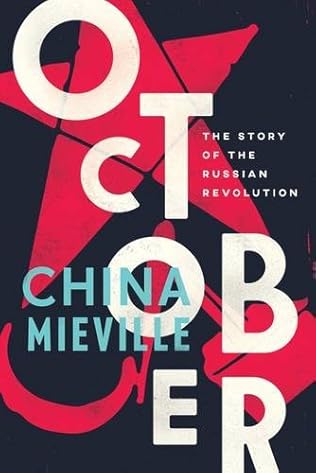
China Miéville's "October": Book Review

book cover of 

October
Known for his post-modern fantasy and science-fiction, China Miéville enriches these genres with his expertise in international relations and critical legal studies. Educated at Cambridge and the London School of Economics, he argues in the 2005 adaptation of his doctoral thesis: "The attempt to replace war and inequality with law is not merely utopian but is precisely self-defeating. A world structured around international law cannot but be one of imperialist violence. The chaotic and bloody world around us is the rule of law." Recently a very unsuccessful Socialist Workers Party candidate for the House of Commons, he has since helped to found the anti-capitalist "red-green" Left Unity party.

His biographical data assist the reader of this version of the Russian Revolution. Although a fellow-traveler alongside many of those whose tales he retells, Miéville sustains a detached stance, if an implicitly radical affinity, for the rebels and malcontents within the nine months of 1917 he explores.

He offers the pre-history of that year, especially the anti-tsarist tumult in 1905. That earlier October, Moscow's print-workers started a strike. The reason? Having been paid by the letter, the typesetters demanded added remuneration for punctuation. Massive unrest spread. Debating such resistance, Bolsheviks agreed that the time for a socialist uprising led by proletariat and peasantry remained premature. Their semi-rivals the Mensheviks counter that a democratic and capitalist insurgency is acceptable, given the need of the bourgeoisie to guide under-prepared factions in a backward land.

Miéville commences his chronology of the pivotal year in February of a century ago, in the former St. Petersburg. The imperial capital witnesses its mill-workers rallying. They turn to meet Cossack cavalry facing off against. then letting through, thousands of marchers again on strike. The horsemen stay still as protesters duck under their mounts. "Rarely have skills imparted by reaction been so exquisitely deployed against it." With so many of the military turned against their royal commander, by March the Mensheviks are in charge. Under Alexander Kerensky, the moderate leftists struggle to keep order. Vladimir Lenin returns from exile to incite a new "second stage" revision of his earlier opinion that the revolution could wait. He regards Russia as ripe for leadership by the workers allied with the poorest peasants. Rejecting collaboration with the Mensheviks, the Bolsheviks edge towards the seizure of the councils, the soviets, established by the proles and farmers. They want power now.

However, triumph will not hurry itself. The First All-Russian Congress of Peasants' Soviets convenes during May in Petrograd. Out of 1200 delegates, nine are Bolshevik and 14 affiliated. Urged on by Lenin and his comrades, their numbers will soon balloon. But others contend against them for a share of the action. Anarchists attempt to occupy a right-wing press. Not amused, the authorities push them aside. "Up with these anarchists, they decided, they would not put." A rare glimmer of levity lightens the recital of figures and the recording of events that may sink heavily, for this is quite a dense story.

While Miéville provides a glossary of key characters and an annotated reading guide, keeping the zemstov straight from the Trudovski remains a challenge for any novice inquirer unfamiliar with this milieu. To his credit, Miéville patiently lists the constantly warping factions and their fleeting moments of notoriety. Still, the pace of change occurs so rapidly that it requires very steady attention.

By July, the Kerensky government weakens. Bolsheviks bicker. Hearing armed masses approaching, someone "in the room gasped: 'Without the sanction of the Central Committee?'" Miéville remarks on the gap between party and populace: "How easy to forget that people do not need or await permission to move." This showdown nudged the Bolsheviks against the soviets, now dismissed as counter-revolutionary. Although they numbered 8000, a tenth of the Menshevik ranks, momentum was theirs. Under Lenin and Leon Trotsky, they sought "direct seizure of power by workers and the party."

August witnesses Kerensky despairing. "I want to take the middle road, but no one will help me." A right-wing military coup fizzled. September opens as the Petrograd Soviet finally adopts the Bolshevik militancy as a socialist wedge against the Provisional Government of the Mensheviks and their wavering allies. But this policy is rejected by a pro-Kerensky committee. Worsened by insistent opposition to Russia's entanglement in the Great War, troops desert and mutiny, filling the cadres of radicalized Bolsheviks back in Petrograd. Europe itself appears to tip towards the long-anticipated socialist revolution. German's kaiser totters towards chaos. Lenin reckons the time to act has arrived.

The titular month starts with Lenin returned from his flight to Finland. Disguised in a grey wig, he enters crime-riddled Petrograd. The last bastion between the Eastern front and it having been abandoned, those within the tense capital prepare for second overthrow of a Russian regime that year. "Upheaval was traced over a regular city dusk." Strollers continue; gunfire peppers cold air nearby.

Over an attenuated 26th of the Julian calendar (November 5th by the Gregorian reckoning superseding it the following year), Miéville depicts not a dramatic raid by eager recruits on the Winter Palace, but a stultifying endgame. Shots from a naval vessel meet with little response from cadres on the ground. Inside the grandiose redoubt: "Men skirmished in stairwells. Any creak on the floorboards might be the revolution." The victors find a dim dawn, with a hint of lightening above.

In a necessary epilogue, China Miéville charts the trajectory of the Bolshevik overthrow. While never diminishing the human costs of the Soviet triumph, he insists upon a balanced tally of the progress achieved for millions, in a dim but persistent era of advancement away from serfdom and bigotry, oppression and submission. "Twilight, even remembered twilight, is better than no light at all. It would be equally absurd to say that there is nothing we can learn from the revolution. To deny that the sumerki of October can be ours, and that it need not be always followed by night." At the close of Miéville's narrative quest, he considers the metaphor and fact of 1917 as a "revolution of trains." He aptly concludes: "The question for history is not only who should be driving the train, but where." (Spectrum Culture 6/8/17; in slightly different form to Amazon US 6-1-17)

Friday, June 2, 2017

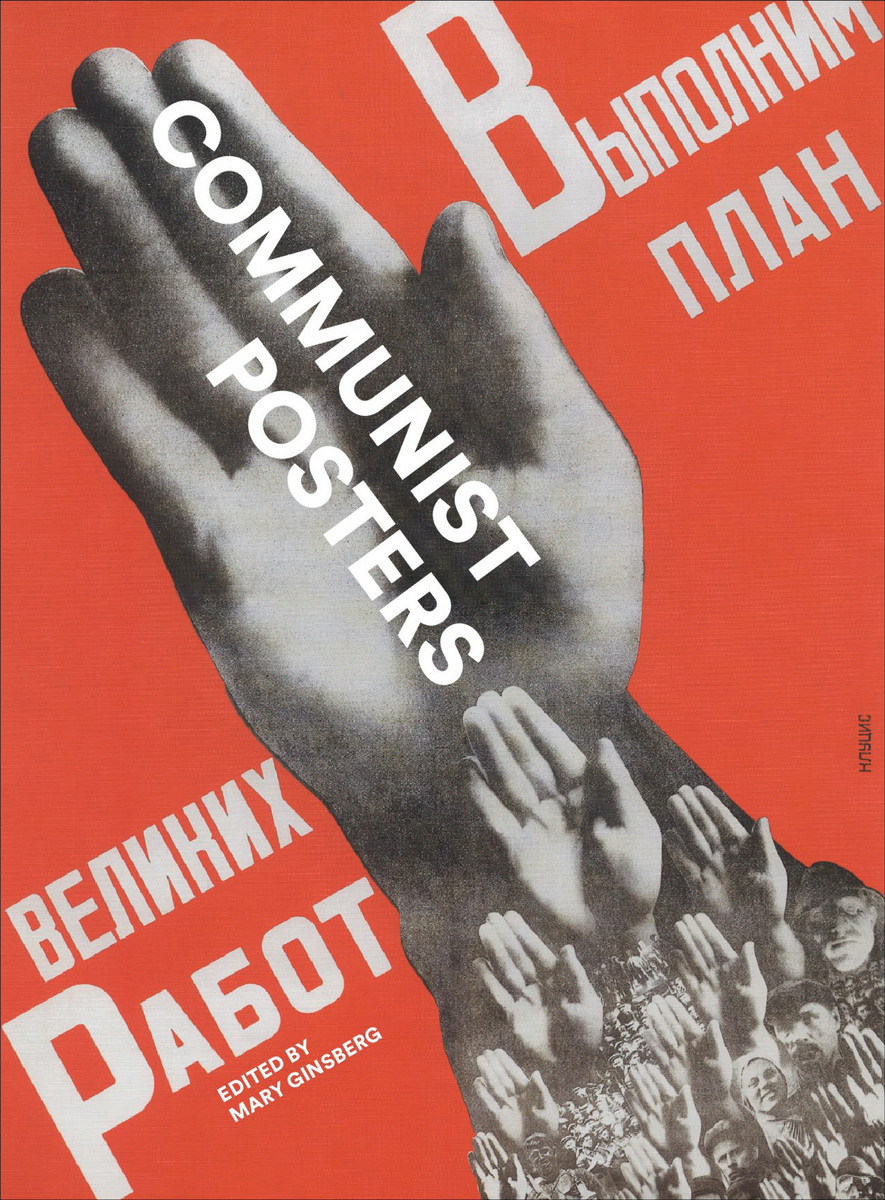
Mary Ginsberg's "Communist Posters": Book Review

cover of book
North Korea menaces again as a foe of the United States. Cuba waits as if eager for reconciliation. Regimes against which American expended much manpower and munitions fifty years ago now trade with their neighbors in Asia, the largest of which, China, is capitalist in fact if not theory. Headlines and Wiki-Leaks pepper the news and feeds with distrust of a sinister Russia, echoing the Cold War.

This range of reactions by the U.S. government and media to Communist nations makes this collection of posters from these and allied nations under red flags relevant. On the centenary of the Bolshevik Revolution, Mary Ginsberg edits and introduces the most comprehensive presentation in print of often vivid propaganda, that for a less screen-focused century, captured the eyes and the minds of hundreds of millions. They celebrated, endured, or hated the heydays of Fidel or Mao, Lenin and Stalin and the various apparatchiks who tried to implement their theories and schemes.

A representative example appears early on. Red Loudspeakers Are Sounding Through Every Home (1972), as Ginsberg observes, documents the use of images to instill obedience. In a Chinese village, slogans, songs and lectures emanate from speakers installed on the streets. Their indoctrination may have seemed inescapable. For such broadcasts cannot be shut off. Other means further the deification of the leader as well as his dictates. The home shown on the poster has only a framed portrait of The Chairman, surrounded by small banners with sayings and little red books. Outside, a family gathers.

Over 330 illustrations demonstrate the range and the scope beyond the U.S.S.R. and the P.R.C., Korean, Mongolian, Eastern European, Vietnamese and Cuban chapters provide essays by scholars. These cross-reference the pictures, providing a narrated guided tour that alerts readers to the themes.

These depend heavily on Constructivism and photomontage. Art as function and promotion through photography combine to sell the peasants and workers on these products of the intellectuals. What they peddle are exhortations to produce more, fight harder and act braver. The verbosity of the caption can weigh down the impact of the 1937 image. Sergei Igumnov's red fist emerging from the rolled-up sleeve showing off a worker's clenched and muscular arm strangles a snake with swastika eyes. What this depicts is: "We'll Uproot Spies and Deviationists of the Trotsky-Bukharin Agents of Fascism." Given the relentless purges under the Man of Steel, such creations linger longer for their visual force rather than the ever-changing explanations linking the art to the enemy of the moment.

As dynasties bore down, the masses viewed ideals. Aleksei Lavrov's The People's Dreams Have Come True (1950) has a grandfather resembling Lenin. He clasps a Young Pioneer's shoulder. The old man's smile encourages the slightly wistful, perhaps hesitant, fantasies of the boy, looking up from his book, penned by "a critic of urban social conditions." Pravda sits on the table of their ship's cabin. Behind their sofa a reproduction of "the famous Repin painting Barge Haulers on the Volga" is a bit blurred, but "confirming how terrible things used to be." Outside, ships sail past factories that gleam.

The last Soviet poster blurs into patterns mirroring 1920s abstractions. Other lands drew on their own artistic legacies. Mongolian folk art and calligraphy enter many of its first efforts, while later ones mimic the Chinese Communist preference for red banners, gesticulating vanguards, rosy cheeks and marching masses. Polish aesthetics, as evocatively shown on film posters, also grace political ones.

Silhouettes, shadows, stark typefaces and surreal figures shunted aside the Soviet template. Czech and Hungarian designers likewise incorporated pop art and psychedelic patterns into silkscreen and montage takes on opera, a new television model or Allende's brief Chilean victory. Anti-Americanism also heightens for Western audiences a Chinese imitation of an anti-Vietnam war mural, with placards of English-language denunciations of the war machine. North Korea dutifully perpetuates this type.

The appeal of stylized "characters in primary colors, along with shrill slogans, dotted with exclamation marks" predates the reign of Kim Il Sung. But their "visual recognizability and readability" sustain themselves for two-thirds of a century due to the simple, even atrophied graphics. As Koen de Ceuster explains in this section, campaigns prove unrelenting under the Kims, and so the shelf life of a given poster is limited: "the message prevails over the package." He also asks a necessary question: "Where does art end and propaganda begin?" For the D.P.R.K., art theory combines ideological with artistic equality through a unified concept. Agitprop exhorts the Koreans to work diligently against an Uncle Sam whose competing tanks, bombers and missiles always loom.
What distinguishes Korean versions is a frequent inclusion of a mythical horse flying over smoking chimneys and rice paddies. Eyes also lead the way as they flare up and as fingers point the way on.

Vietnam takes French and Indochinese influences, hand-drawn lettering, indigenous themes and guerrilla poses from street art for some of its varied products. They stand out as more awkward and more original than the Soviet, Maoist or Korean contributions. They perpetuate the raw, eyewitness sensibility of not an imagined but a real struggle against an imperialist invader, or more than one.

Another rich array of approaches results in Cuban artifacts. International influences entered into the island's art long before 1959. Capitalizing on tourism and a worldwide market, its posters were sold as commercial items. Diminishing the Socialist Realism quotient, they increase the use of stencils, hand-cut and silkscreened. Disparate objects may juxtapose; so may "humour and visual wit." Not to mention Castro's 1977 proclamation: "Our enemy is imperialism, not abstract art." Contrasting the sophistication of the Cuban propaganda against the simplicity of Mongolian, for instance, reminds viewers and readers of the connections one Communist enclave may enjoy, as opposed to another.

One closes this collection wondering what the future holds for political posters. Capitalist systems appeal to the watcher of a screen far more than the passerby of a placard. Scholars in this current century may have to hope that our soon-outmoded digital technology records the catchphrases and memes generated by the political spectrum today as carefully as archivists have these bold posters. (Spectrum Culture 12/1/17 with slight changes) 432 pages 04-22-17 Reaktion Books

Friday, May 5, 2017

"Vasily Grossman from the Frontline": Audiobook Review

Vasily Grossman from the Front Line Audiobook

While many eyewitnesses endured the siege of Stalingrad and the battle by the Soviets to free it from the Nazi invasion, probably none has the stature of Vasily Grossman. His novels recount his and his comrades' experiences, during and then after this Great Patriotic War. when Grossman like so many fell afoul of the Stalinist regime. The Man of Steel's antisemitism increased, and Grossman was censored by the state and investigated by the KGB. Luckily, he was not sentenced to prison or gulag.

As a war correspondent for Red Star, he volunteered for service and spent over a thousand days at the front. The BBC dramatization of three of his wartime reports is well-delivered. First comes a sniper's first two days. His name's Chekhov, but his prowess comes in targeting Germans, and ensuring that their own beleaguered situation grows as the Russians figure out the layout of their ruined city's heart.

Then comes an evocation of Stalingrad. Imagine it on a moonlit night among the bombed buildings and it may nearly for a second seem romantic. Grossman applies his prose style here for more effect than one would I imagine find in journalism from the battleground. It can be flowery, but it can also be deployed skillfully. In Elliot Levey's radio recital of his account, one feels its emotional tug again.

This increases for the bleak report on the Jewish question, as answered in the Ukraine. He reports only one Jew survives in one place, and he hears rumors of two others. Out of what he claims here three million dead, a testament to victims named by trades and traits accumulates into a dour litany. (Amazon US 4/22/17) 

Thursday, March 26, 2015

Marina Ginestà's iconic photo


"Iconic photo of Marina Ginestà on top of Hotel Colón in Barcelona." So says the Wikimedia caption. This was posted on my FB feed yesterday, and as I'd been reminded by a friend there to read Antony Beevor's The Battle for Spain, his 2006 revision of his 1982 book The Spanish Civil War 1936-39, I wanted to learn more. The Wiki entry for Marina Ginestà tells of her 1919 birth in Toulouse, her family's emigration to Barcelona, and her joining the United Socialist Party of Catalonia. That photo was taken by Hans Guttman (later, intriguingly, Juan Guzmán) who had left his native Germany to join the International Brigades, and then, 1300 SCW photos later, fled to Mexico, where he befriended Frida Kahlo and Diego Rivera. He and his subject here lived long. Juan died in 1981 in the Mexican capital, and Marina in the French capital, back to her homeland, in 2014. 

She was wounded later in the conflict, evacuated to Montpellier. To flee the Nazis, she wound up in the Dominican Republic, where she married. In 1946, she left, opposing the dictator Rafael Trujillo. By 1952 she was married to a Belgian diplomat and returned to Barcelona. I wonder how she fared, two decades under Franco and the fascists she had fought against. She went to Paris in the early '70s.

This was taken early in the war, July 21, 1936. The Wiki entry notes this is the only time she carried a rifle. For a reporter, this weapon may be more her prop. She translated for Pravda, assisting Mikhail Koltsov, in turn another character. He inspired Hemingway's Karkov in For Whom the Bell Tolls. He participated in the Russian Revolution, reported on the Spanish war and served as Stalin's go-to advisor for the Loyalists, before falling out of favor and being executed with wife #3 in 1940 or '42. 

Beevor in his thoughtful introduction (all I've read so far) cites Juliàn Marías, who "never forgot the expression of a tram-driver at a stop as he watched a beautiful and well-dressed young woman step down into the pavement. 'We've really had it,' Marías said to himself. 'When Marx has more effect than hormones, there is nothing to be done.'" Consider this and the conflicting reactions to this icon.

Saturday, February 15, 2014

Ag dul go Londain aríst, cuid a trí


Chuaigh muid trí músaeim Dé hAoine. Is maith Léna agus mé ealaine Breataine. Mar sin, iarr muid ag dul beirt is fearr i Londain.

Measaim go bhfuil an Tate Bhreatain is é mó fearr liom. D'fhóghlaim go raibh na deilbh le Jacob Epstein ar am seo. Chónaic mé "Tír gan fír" an deilbh cuimhneachain brúidiúl ó An Cogadh Mór le Charles Sargeant Jagger.

Sheoladh muid suas an Thames ar an bhád farontóireachta chuig Tate Nua-Aoiseach drámatúil. Nílím ábalta fháil ach seomra amháin a cur cuairt, faoi póstaeir propaganda Sóivéadach, áfach ann. Bhí suim agam níos mo i Músaem na Londain na nDugaí.

Tá Na Dugthailte áit plódaithe anois, an-iomhlán leis saibhreas óga agus trádála airgeadais. Ach, ní raibh siad mar mealltach nuair d'oibre na daoine bochta ann ar feadh na gcéadta ann.  B'fhéidir, tháinig mo shinste a obair i bPoplar ansin nó a fanacht anseo.

Thúg muid an traein go Canary Wharf go dtí dinnéar Indiach Theas ag Quilon in aice leis na Chlos na hAlba agus Pálás Buckingham. Ní raibh easca a fháil an bialann ann. Mar sin féin, bhí bia an-blasta againn ansin.

To London again, part three.

We went to three museums on Friday. Layne and I like British art. Therefore, we went to a pair of the best in London.

I think that the Tate Britain is the best. I learned this time about sculptures by Jacob Epstein. I saw "No Man's Land", a brutal memorial plaque of the Great War by Charles Sargeant Jagger.

We sailed up the Thames on a ferry boat to the dramatic Tate Modern. I was not able to find but a single room to visit, about Soviet propaganda posters. I had more interest in the London Museum of the Docklands.

The Docklands is a crowded place now, very full of young wealth and financial trade. But, it was not so glamorous when the poor worked there for many centuries. Perhaps, my ancestors came to work in Poplar there or to leave from here.

We took the train from Canary Wharf to a South Indian dinner at Quilon near Scotland Yard and Buckingham Palace. It was not easy to find the restaurant there. All the same it was a very tasty meal for us there. (Grianghraf/Photo: Thames)

Monday, September 9, 2013

Jáchym Topol's "The Devil's Workshop": Book Review

Jáchym Topol deserves your attention. Through a punk-inspired, postmodern energy erupting from his Czech homeland against its oppressors, he conveys verve, intellect, and, beneath the trot of his clipped or galloping prose, tenderness: if in Central European precedent rationed out to each according to his or her own needs. From a dissident family, a poet and a reporter for a samizdat newspaper, he helped his nation topple totalitarianism, finally doing so in 1989 by the gentle but insistent Velvet Revolution.

Topol's debut fiction conjured up diabolical vignettes memorably. He started as a rock lyricist in the 1980s, so his affinity for potent imagery shows. Out of five hundred pages of closely printed, dreamlike, and dense scenes, Mr. Novak and his heap of bones at Auschwitz loomed largest in his hallucinatory, bewildering 1994 trilogy City Sister Silver--translated ably by Alex Zucker in 2000. Even in the original language, that first novel confounded native speakers with its disjointed assault. It lashed out at materialism.

Attacking both state socialism and market capitalism, expressing the rage of those growing up in one system and suddenly under another, its urgency reminded me of Joyce and Pynchon more than his Prague predecessor Kafka. Think of the linguistic upheaval of A Clockwork Orange and the demotic fury of Trainspotting: in both film and fiction. (You can sample its first chapter translated here.) Topol returns to English audiences for his fifth novel (it appeared in Czech in 2009), with his much more matter-of-fact, unnamed narrator's voice channeled again through his Brooklyn translator, who captures Topol's conversational, insistent tone intimately. Zucker dedicates the work to the author, "my brother from another mother".

This short novel extends Topol's political direction adroitly, and more calmly. It starts in the teller's native town of Terezín, constructed in 1780 under Holy Roman Emperor Joseph II, who named its formidable redbrick, stolid fortress after his mother. (While the narrator's father claims Maria-Theresa, the last of the Habsburg rulers, "founded" the massive installation, that attribution is open to qualification; she died the year it was built.) Under the Nazis, this became the "city for the Jews"-- to show off their supposedly humane treatment to the Red Cross. After Soviet "liberation", Lebo, himself born in the imposing camp just prior to its downfall, survives as its guardian, to protect the humbler garrison town against obliteration by the post-Soviet government, who compromises by preserving only the camp. Lebo and those who've grown up there, many children of the camp survivors, rally. "Lebo didn't want to see Terezín reduced to a Monument and a few educational trails. None of us wanted that."

A commune rises, a loose camp of its own. (As Zucker notes in an afterword, this anticipates Occupy and other movements: he translated this in the fall of 2011 in New York City.) This attracts "bunk seekers", the second and third generations who search in the camps and bleak villages for traces of their forebears who had outlasted the genocide, or more often, that vastly larger contingent: those who had died. Haunted, their descendants must ask: "If it happened here, can it happen again?"

When I visited Terezín a decade ago, my then-young sons came along. Just before I read this novel, they told me that their most vivid memory was a placard at the real camp's ticket booth portal for ice cream. The juxtaposition of a place of endless deprivation and a symbol of quick satisfaction matched my own recollection; its interiors had been nearly emptied, after a flood of the River Vltava, and the emptiness of the cells and the lack of signs, furniture, or even other visitors added to its silent impact.

In The Devil's Workshop, a similar lack of specificity or detail leaves the foreign visitor to the camp vicariously in these pages filling in imagined scenes, as the equivalent gap in interpretation remains. The narrator does not play the role of a tour guide. This may stem from the familiarity of this site to Czechs; it may deepen the detached nature of the narrator's recollections about refusing to play to sentiment, as well as Topol's preference for efficient, even dry, reporting rather than effusions.

Concerning love, pursued by the narrator on fortress slopes where he once herded goats and now takes up with Sara, a Swedish granddaughter of a child transported away to freedom from the camp: "a roll in the grass was simple enough. And that's all there is to say about it." Levity or gush comes rarely to those raised here and those who peer into the shadows, one senses. Some sober pilgrims, descendants of the Czech patriots and Jewish masses kept and killed there, turn communal dwellers. "They knew they weren't in a medieval castle, but in an abyss where the world had been torn apart, a place without mercy or compassion, where anything was possible."

The narrator--back from prison--and his comrades aid Lebo by appealing to the conscience or the bank accounts of the wealthy to sustain Terezín. They amass valuable contacts. For a while, this grassroots experiment in self-sufficiency flourishes: goods are sold to tourists and ingenuity brings in cash. Sara designs a popular t-shirt, altering a certain Czech writer's image with a gallows and a stencil. "Theresienstadt: If Franz Kafka hadn't died, they would have killed him here." (This is as lighthearted as the suitably titled The Devil's Workshop gets.) By such enterprise, and by restoring the mentally ill and recuperating the bunk seekers, the modest commune succeeds.

But, its commitment cannot fend off the jealousy of bureaucrats. Scandals around Lebo are concocted by an envious press. The narrator flees, soon after meeting an older arrival at the campsite: Alex from Belarus, often called Europe's last dictatorship. Alex wants to turn the clout of Terezín's online support network against the despots of his own post-Soviet homeland, still fighting amongst itself.

Sneaking away as Terezín succumbs to "cops and doctors all over the place on account of a couple of grannies" (shades of Occupy), the narrator escapes via Prague and flies to Minsk. There, Belarusians clash as the president declares martial law. In Khatyn, Alex, leading a team of seekers more feral and less coddled than those who could afford to frequent Terezín, unearths catacombs packed with corpses. Matuška, who had ferried the narrator to safety across borders, urges him to do the math.

Stalin's henchmen murdered ninety percent of her nation's intellectuals. Czechoslovakia and Belarus have equal populations, but over ten times as many of the latter people were killed by the Nazis--and their Russian, Ukrainian, and Lithuanian collaborators. Alex informs the narrator: "The devil had his workshop here in Belarus. The deepest graves are in Belarus. But nobody knows about them. That's why you're here." Publicity and donors will enable Khatyn to outdraw tourists to Auschwitz. 

The battle over who controls the remains of four million Belarusians, what such numbers mean to a divided and shamed country where some assisted and some resisted, and who grabs their share of the tourist trade and international assistance elicits Topol's understated but firm pressure as he explores a touchy subject. This is one subject that all Belarus can agree on, and besides the income, this may achieve what a wounded nation needs for the living: the ability to finally let the dead rest in peace.

But first, their stories must be recorded, lest we forget. Topol dramatizes this in the latter half of the novel. Under the determined vision of Kagan, who as a boy made it through the ghetto and the mass grave, and Alex and their team of excavators in a land where all are bunk seekers, we see the results. Alex constructs what will be a museum unlike any other, out of a "Jurassic Park of horror".

I leave the reader to uncover the resolution. Topol integrates real accounts of barbarity skillfully into the quick snatches of testimony, and to his credit for this difficult theme, he does not revel in the re-creation of suffering. Yet, this novel proves grim. The narrator stays fresh in Zucker's translation through his everyday language and Everyman persona. But he must scurry about the settings the author designs for him as if fated. Topol turns an approachable character into a portentous archetype. 

As with his debut fiction, Topol wants to merge ideas and symbols into his perspective on the current Central and Eastern European predicament, dealing with the aftermath of of pain and deprivation. In a literary tale as short as this, while the results are more accessible for first time readers of his work, the meanings threaten to loom too large for it to carry. As the narrator finds: "soldiers come into the village and kill, houses and people burn--repeating over and over" the terrible stories then and now.

(Amazon US 8-18-13 in shorter form. As above 8/27/13 to PopMatters. See my brief take on City Sister Silver 6-19-03 at Amazon US)

Sunday, November 13, 2011

Andrei Znamenski's "Red Shambhala": Book Review

Why did early Bolsheviks sponsor expeditions for occultists obsessed with a Shangri-La? A Russian historian of shamanism answers this in his engaging study of characters caught up in an unlikely pairing. It matched Marxist communal ideology with New Age-tinged notions of totalitarian theocracy. It conquered, if briefly, the steppes of Mongolia as a vanguard for a pan-Buddhist takeover of Central Asia. Even before the October Revolution, plans to spark uprisings in the inner Asian fastnesses grew. Secret plans by geopolitical instigators circulated that the fulfillment of apocalyptic promises loomed, so the communist conspiracy to sign on fellow travelers here recruited strange companions.

Careful manipulation of shamanic myths and Buddhist prophecies crafted by self-made scholars and savvy spies sought, after the 1917 Revolution and during the Red-White Civil War, to advance the Communist cause. Convincing natives in the Siberian and Himalayan regions, a few adventurers reasoned this call to unity could challenge the British rule of India, weaken the Whites, and totter the Chinese warlords. Adventurers seduced by Orientalism told their Soviet overlords that native peoples across the East would rally towards liberation, and as ancient predictions came true, the nations that the U.S.S.R, inherited would take one giant leap closer to the Soviet-sponsored global triumph of the poor over the pampered. Professor Znamenski combines his expertise in shamanism and Central Asian teachings with Western esotericism, and the results, enriched by newly opened Soviet-era archives, provide an accessible entry into a fascinating saga. 

He prefaces his narrative with essential cautions. Rather than try to argue how one version of the famously puzzling tantric and hidden teachings of Buddhism combined with native lore do or do not align with the true version of Shambhala's myth, he regards each version as fitting whatever time and place created it. Znamenski regards every religious or spiritual manifestation as fluid, and this open-minded quality allows him to remain detached from the notoriously convoluted applications of difficult texts to simplistic political solutions. Even if the characters themselves appear less than logical about how Buddhist teachings can square with Marxist materialism and Leninist class warfare, the author here wisely keeps his distance from such fruitless attempts to make sense out of nonsense. However, as an aside, this book appears under the aegis of a Theosophical press, so I note that when it comes close to assessing the veracity of Madame Blavatsky's own inventions, Znamenski chooses to remain guarded or nearly reticent. 


Certainly, a century ago many looked to the East via Theosophy, magic, spiritualism, and the New Age to answer their doubts and dreams about the potential chaos and coherence of the modern era. The counterculture then romanticized, as did the Beats, hippies, and backpackers later, the appeal of an Eastern teaching. Both conservative and radical misfits reasoned that Eastern promises could redeem Western corruption and bring about equality, order, and the restoration of goodness over wealth. Many self-taught adepts wished or claimed to harness the inner powers latent in those who had forgotten arcane doctrines and magical methods. The repository for such solutions lay waiting in remote Shambhala, and the forces unleashed from its Central Asian or Himalayan hideaways could be harnessed to the Marxist goal of liberating the oppressed to fight for a golden era once the proles destroyed the aristocrats.

This tale opens--after some lucid and at times lurid introductory material on Tibetan and Mongolian teachings, cultures, and doctrine--with Alexander Barchenko. His occult pursuits influenced his idea for social reform. Discouraged by the Red Terror that obliterated the White resistance to communism after the October Revolution, Barchenko sought a peaceful method by which equal rights could be established and Marxism implemented without bloodshed. As a "Red Merlin" he wished to build a communist theocracy "controlled by peaceful and spiritually charged high priests of Marxism".


His boss became the chief cryptographer of the most secret of the Soviet intelligence agencies. This agency experimented with telepathy at a distance, re-engineering of mental powers, electronic surveillance, and what we would label parapsychology. Its chief, Gleb Bokii, agreed with Barchenko that Marxism possessed an appeal for Asians as a surrogate religion, if a transitional stage that could be manipulated among the peasants and nomads to convince them to join the Leninist banner and to bring about the victory of the downtrodden. 


Many appealing details enliven this stage of the story, as a few visionary Soviets support this strange plan. Whispers of mind control, nudism, orgies, mummified penises, a talismanic meteorite, and black magic circulated, while Znamenski neatly relates how eccentric and bold many early Soviet intellectuals might dare to be in a time of cultural disruption and erotic innovation. Watching over this scheme, the secret police amassed careful files which would later weigh against Barchenko and Bokii, as Stalin's paranoid executioners extracted confessions interspersed with salacious details from the brief heyday of 1920s radical indulgence. These reports were edited by the secret police to condemn a decade-and-a-half later culprits who flouted convention in the first flush of triumphant Red fervor. 

One who escaped the purges, Nicholas Roerich, takes on the role of a lifetime. Already well-versed in an odd mix of New Age and messianic ambitions, he and his wife had left tsarist Russia. This charismatic if manipulative pair of artists and occultists used whomever they could to further their hopes of a "Great Plan" that would unite Tibetan Buddhists across all of Inner Asia under the Panchen Lama. They even convinced a future vice president under FDR, Henry Wallace, to support their ideals, and the Roeriches erected a "Master Building" as a world headquarters which still stands on Riverside Drive today in Manhattan. The Roeriches dreamed of converting the planet to their scheme of transformed equality via enchanted transports of visions.

For a while, after the revolution, the determined couple returned to Red Russia to reconcile their ambitions with those of Marxism. They calculated that they could advance their plan better by aligning it with communist ideals of communal equality. They convinced a coterie to join them, financially or in person, to hasten their takeover of Central Asia, the epicenter for what they saw as an inspirational revolt of the peasants and monks against their lamas and warlords. The Roerichs donned costumes and roles as if natives. Nicholas posed as a reincarnation of the Fifth Dalai Lama so as to convince the local people of his mission. 

He and his entourage plotted with the Soviets and indigenous sympathizers carefully, but their plans to enter Tibet to make it a Marxist-Buddhist realm akin to the region of Mongolia--that region had recently been swayed by prophetic revisions to accept a materialist-millenarian combination of mystical overlords and enforced communism--rapidly failed. The party nearly froze before they were allowed to enter the suspicious and firm jurisdiction of the British representative over the Himalayas in Sikkim. There ironically their claims that the Soviet mission had for its success to overthrow British dominion in India were proven, if indirectly. 


The narrator comments how Roerich wore a face like a mask, one that it appeared he could remove at will. The couple, as with the other protagonists in this dramatic episode from early Soviet history, appear often as if to act with disguised motives. Znamenski uncovers in the archives of the secret police and recent studies from Russian-language sources the hidden facts unknown to the players then or until very recently scholars at large.

The early Bolsheviks boasted: "We are born to make a fairy tale into reality." For a few years, they tried to do this, in an unbelievable and rather cynical fashion. They chose to distort shamanistic teachings to play into mass resentment against imperialism and to upset the poor who would then presumably wish to seize wealth. While the juxtaposition of Buddhism with its teaching on non-attachment and Marxism with its materialist class warfare clash, this disparity escapes any comment by those participating in its proclamation in these pages. 

The Soviets in hindsight tolerated the games of the Buddhist role-players as useful to their own strategies. For instance, they had the Roerich party travel under the Stars and Stripes so if their mission met with unwelcome attention, it could be disowned by the communists; if successful, it could undermine the White Russian refugees fomenting trouble, while it strengthened the power of native nationalists, who would be employed by Soviet interests to counter Japanese imperialism edging by the 1930s into Inner Asia. 


By the time of the Japanese takeover of Manchuria, the U.S.S.R. tolerated less imaginative methods of exporting Marxism. The failure of world revolution to spread westward and Stalin's fears of rebellion caused the Soviets to contract their power inward. The fascist Japanese and the wary British were both feared. The Great Terror caught up those who had provided the vanguard of Soviet rebellion back in 1917. Even those who tortured and murdered Barchenko, Bokii, and thousands of loyal communists from the days of Lenin were themselves put to death a couple of years later. Stalin eliminated the cadre of any rivals to his regime, imagined or actual. 

Near the end of this history, Znamenski tells of a representative vignette in this sorry saga. A former junior lama took over Mongolia as a communist fanatic. He vowed to make the feudal system into a more equitable one. He killed resisting monks and lamas and drafted the compliant remnants into the army or concentration camps. By 1940, the Mongol Buddhist clergy was wiped out. The lamas were sent off to Siberian prison camps. But many thought they were headed to northern Shambhala, the predicted land of bliss.


Those lacking specialized knowledge of arcana have not learned much of this story, for until the fall of the Soviet empire, many records have been sequestered or linger in Russian-language academic journals. A few very minor slips in English usage reflect the author's Russian origins, but these occasions are far outweighed by the valuable contributions he provides so the rest of us can learn about these events and their scholarly sources. The transcripts forced out of doomed prisoners about their role in this Red Shambhala project make for poignant reading. 

They remind us of the fragile nature of idealism, and the moral costs of suppressing those who tried to temper the fury of the Red victory with some sensitivity to the cravings of the spirit and the capabilities of the mind. While the practical experiments of laboratories bent on superhuman creations failed as surely as did the subversive aims to spark revolt on the Mongol plains or in the Tibetan monasteries, the lesson of this unbelievable plot lingers in this thoughtful, instructive, and sad testament of grand hopes and puny fates.
(Featured at PopMatters 8-12-11; debate over this title ensues at Amazon US, but I stay reticent, although I posted this as my 1300th review there 8-16-11.)

Thursday, November 27, 2008


Alexander Cockburn's "Idle Passion": Book Review.

These chapters, more like related essays, explore "chess and the dance of death." Cockburn asserts a Freudian interpretation; "in the world of games lie areas of darkness, of taboos, of cruel instincts and vile desires. For the time being, let us narrow our focus to the chess player face to face, as in so many medieval woodcuts, with Death." (13) Chess excludes chance and emphasizes skill; this relegates chance and accident to the margins-- away from where they fill history, science, and progress, and for Cockburn this ludic superficiality proves the game's idealist unproductivity.

Sections delve into Paul Morphy's fate; Nabokov's "The Defense," (reviewed by me here and on Amazon US); Stefan Zweig's novella "The Royal Game;" the social history of the game; miseries of its modern champions; its Soviet promotion and its Cold War symbolism (in the US: "we play poker, they play chess"); Bobby Fischer and Marcel Duchamp; and game theory. "Games become a strange parody of our existence, an ironic emblem of neurotic vanity." (95) Artists can sell their works; they produce tangible objects. Chess players do not, and even fewer masters than artists can make a living at their driven avocation. Why they devote their lives to a restless compulsion may not be answered in these pages, but they do spur Cockburn into his own treatment.

He relies upon Norman O. Brown's "Life Against Death," Johan Huizinga's "Homo Ludens," and especially Ernest Jones' "The Problem of Paul Morphy" to present cautionary case studies. He accepts that Freud can give rise to vapid speculation, but he relentlessly counters "the hostility of many chess players to psychoanalytical comment on the game," as "patients often fear that analysis will take their sublimations away by revealing their defensive function." (26)

Although unconvinced by Oedipal reductions of King-maters and Queen-pursuers, I followed patiently Cockburn's earnest efforts. He finds a lot of repetition, compulsion, repressed homosexuality, masturbatory fantasies, and morbid anxieties in the lives of a few grandmasters. Still, I am uncertain if this proves his point that chess if pursued at its highest levels can be equated with pathology.

However, his aside that this particular obsession rarely manifests itself in women "because they are happily without the psychological formations or drives that promote an expertise in the game in the first place" remains provocative. As J. C. Hallman's "The Chess Artist" and Paul Hoffman's "The King's Gambit" (also reviewed by me here and on Amazon US) more recently explore, the male-dominated world of chess professionals does invite psychological explanations. Cockburn contrasts this patriarchical realm with the reality that (until so recently that as of 1974 when this book first appeared the freedom may not yet have truly happened) "women have never been allowed the cultural space to foster that lethargic, yet zealous commitment to a useless pursuit that has fostered the bizarre careers of the great champions." (47)

Relating this insight to a lively summary of medieval chess, he shares Kenneth Colby's idea that the Queen's suddenly expanded force heightened aggression. "The innovator, argues Colby, was probably a weakling who identified with the weak King and desired to create a strong woman who would contend against the world for him." (121-22) (That the Bishop also found his reach extended always merits less attention!) Colby and Cockburn anticipate Marilyn Yalom's popularized, romanticized, if simplified argument a few decades later about the parallels between stronger female monarchs and-- around 1480-- the apparently much-delayed "birth of the chess queen." Yet, Cockburn counters with his own idea.

He reminds us that after the Middle Ages, women apparently played less often. He wonders if the Queen signifies "the degeneration of the feudal system" as "advanced technology" gives the advantage to attack rather than defense. He earlier investigates how two dozen legends exist as to why chess began; eight themes can be classified. Father murder-- chess exists as the "therapeutic agent"; war preparation; war substitute; diversion; intellectual contest; moral education; "the mater dolorosa" theme. (100) He seems on solid ground as he suggests that the medieval passion for chess may serve "as a device for sublimating political aspirations; the empty omnipotence exercised by his player over his pieces is consolation for lost power." (111) But, it will not help him regain land or command.

This supports his later studies of how chess became-- in early modern Europe-- the mark of a dispossessed gentleman of suspect and devouring leisure, as well as the trade of a con man. Or a villain (in perhaps its earlier meaning as well as its current one!): in films such sadists "often play chess. Heroes rarely do." (n. 6, 230) Cockburn's clever at distinguishing the rise of gambling and card sharps at this historical stage, as they displace the nobles who are caught between the bourgeoisie and the centralization of monarchical control.

In turn, this segues well into the Soviet exertions of what, in one of the best stretches, can be shown as a contradictory ambition of the USSR. Written at the peak of the Cold War, just after Fischer had beat Spassky, this perspective may be dated, but it's valuable for the tensions he dissects. This sentence from Pravda in 1936 typifies the Communist ethos: "Recently an All-Union Chess and draughts Congress of pig-breeders, dairymen and zoo-technicians met in the Stalin state farm, situated in the Moscow region twelve miles from the nearest railway station." (144) The problem, as Cockburn shows: chess could not be but "a perfect leisure activity: politically safe, sedate, and noncollective." (150)

He's a bit muddled on differentiating individual commitment to chess from its collective uses, and how his earlier thesis of its employment as a means to channel the frustrations of a group shut out from power aligns with the USSR's sponsorship, but he may after all mirror the inherent dialectic within the game! The Soviets tried to install chess as the ideal expression of dialectical materialism, but when it came to practically harnessing the efforts of so many pig-breeders-- or state-sinecured intellectuals-- away from their checkerboarded leisure back into the grueling construction of the "Worker's Monarchy," the synthesis eluded the commissars. "But what an irony for a socialist society to have achieved its greatest cultural triumphs in the arena of chess-- a parody of what the emancipation of the human personality can involve." (154)

That failure sums up Cockburn's reactions. The game imitated the orders of society in its ancient battle array and medieval ranked orders. But, with professionalization, the pursuit turned into work. Chess beckons with the promise of perfection, but humans cannot attain it given its receding horizon of a nearly infinite number of moves. The players "'know more rejection that any artist ever has.'" (Frank Brady on Fischer, qtd. 181, 195 & 216).

Thus, at the levels such writers as Hallman, Hoffman, and David Shenk (in another book reviewed by me here and on Amazon US, "The Immortal Game," which delves into the perfect example of Duchamp) later plumb, Cockburn trails after those who attain this rarified existence, playing a game that no longer's leisure. "The world of the expert player becomes an increasingly hermetic one, in which the repressed matter sublimated by the game may return with increasing vigor and malignancy." (215) As Zweig lamented: this pastime lures the unwary into "thought that leads to nothing," by "the ludicrous effort to corner a wooden king on a wooden board!" (qtd. 76 & 87).

(Posted to Amazon US today.)