Showing posts with label Irish Catholic. Show all posts

Sunday, June 28, 2020

William F. Buckley's "Nearer My God": Book Review

Nearer, My God
I chose this on a whim as it was so far out of my usual orbit. No recollections of the old sod or stickball, and barely any for altar boys and fearsome clergy. Instead, a patrician account and series of reflections and reactions to the course of Catholicism from the venerable era in which Buckley was elegantly raised and the postconciliar malaise which has affected so many in the less certain Church.

His noblesse oblige permeates. There's a couple mentions of devout black butlers, but that's about it for class consciousness. It's rather astounding to follow this chronicle, so removed from the reality most of us share when it comes to education, privilege, or sailing at every opportunity at a summer home. This elevated lifestyle unfolds, and Buckley surely as he's accustomed to the manor/ manner born comports himself as he's been raised. It makes for a very curious spiritual autobiography/ FAQ.

For Buckley turns this midway into a novel experiment. He interviews a few of his friends, mostly converts, and all conservative fellow-travelers, often at the National Review, naturally. They also feature priests who've transferred to Catholic clergy from Protestant denominations. Buckley surveys their takes on many questions he raises about dogma, belief, and practice. Although as a cradle Catholic I must confess none of the statements he compiles would have convinced me to join "Rome," it's instructive to learn the mindset of those coming to "the faith" without being raised in it.
I could follow the theological details, but for many who admire Buckley, this granular examination may bore or bewilder. There's far less of his famed politics, and not much of his wit or rhetoric either.

It does all make for an oddly paced book. It's more a series of explorations and reflections, although the central theme of examining what persists post-Vatican II as the liberals often left the clergy and left the administration to overworked and understaffed priests and laypeople is important. For it demonstrates the rebound, if by default given the numerical advantage of the diminished remnant in control, of the traditionally minded episcopate and papacy, of what's a dwindling number of cradle-born congregants in America and Europe. This does all tilt in Buckley's view, as expected, to slant away from a global awareness of how the Church will fare as its center slides towards the "South."

As a result, this work will appeal to the small coterie of like-minded sympathizers with both Buckley's worldview and likely his class and background. The name-dropping may come without hesitation to this author, but it does remind the hoi polloi of our place among the pews and practically as peons. Few of the rest of us may be able to enter this intimately connected and convinced realm even via print, but it's a document to this reaction to what was meant as a reform to appeal to millions presumably reluctant to accept a pre-modern Church, even though the results in sweeping that aside enchanted far fewer than anticipated, at least among Buckley's entitled cabal. (Amazon US 12/12/17)

Friday, May 8, 2020

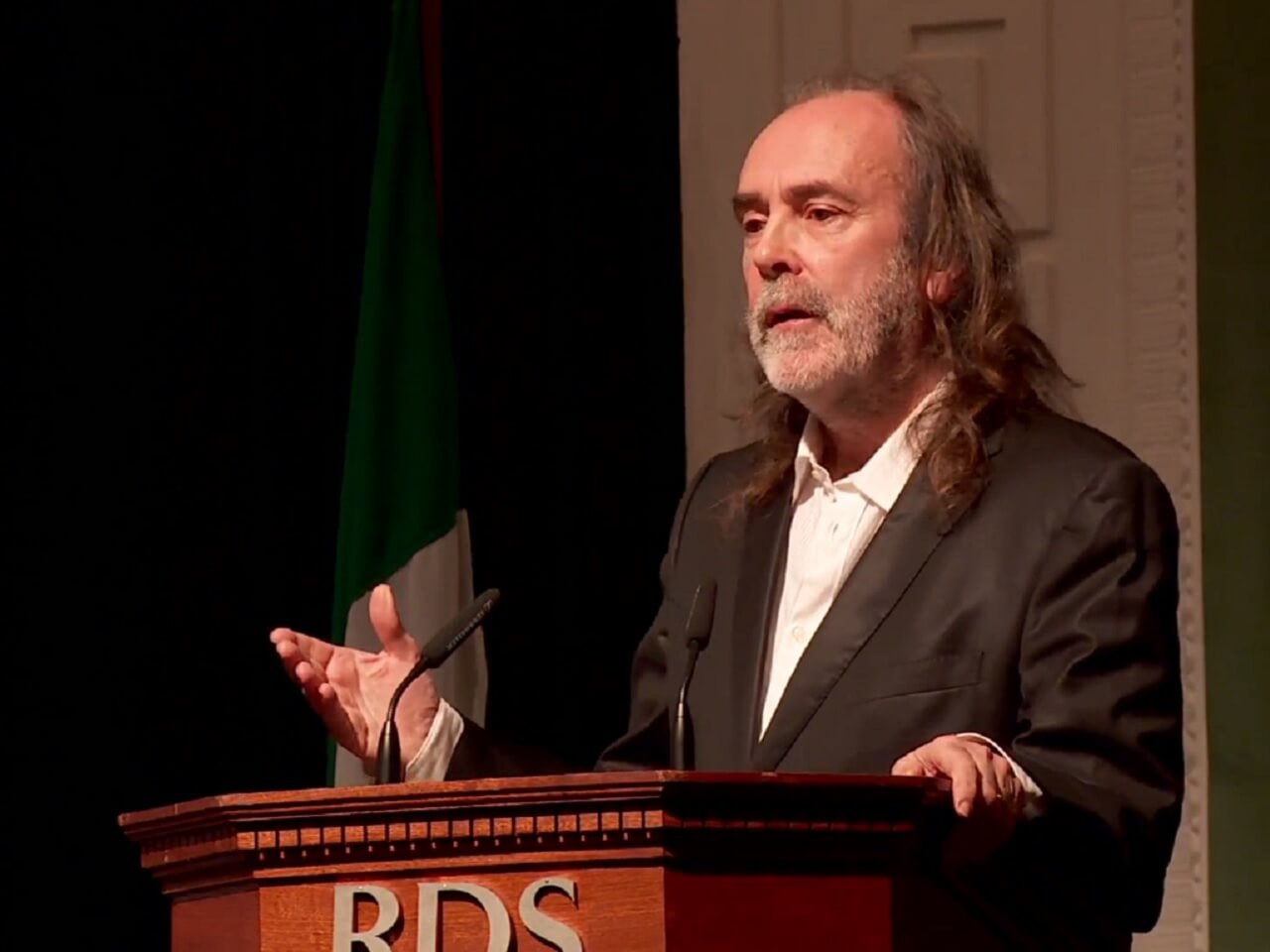
“The Intelligent Catholic’s Guide to John Waters.”

 john waters

“The Intelligent Catholic’s Guide to John Waters.” OnePeterFive 5/7/20

When a maverick journalist opposes popular opinion, at least as promoted by prominent media, what happens next? For rock critic turned cultural commentator John Waters, it's condemnation followed by self-imposed exile from Dublin's left-liberal, bien-pensant paper-of-record, The Irish Times.

This unrepentant dissident, not to be confused by Americans with Baltimore's cult icon and iconoclastic filmmaker, defends his patch of emerald turf against our new world order. Not (only) that of the Bushes, but of those who banish any trace of transcendence. As a longtime correspondent, Waters speaks for a “Peter Pan generation” who entered a dream-scape never glimpsed by their progenitors. Born in 1955, he and his peers from the 1960s through the 80s found themselves, boosted by a Celtic Tiger economic engine, “as foreigners working from home and emigrants in our own land.” They ushered in an “unassailable” secular agenda, rejecting Catholic, communal, rural-dominant mores once and for all.

John Waters continues his assault on post-Christian Ireland in Give Us Back the Bad Roads, his ninth book (2019). His first, a surprise bestseller Jiving at the Crossroads (1990) roughly coincided with his father's death. The period since both events unfolds in fits and starts, as the son addresses that humble mail-coach driver in a small town in Co. Roscommon, who taught him the value of manual labor and the trust in tradition. (As a relevant aside, to show how small Ireland’s networks of who-knows-who remain, my family at their farmhouse—now abandoned as all my relatives emigrated—would have gotten their post delivered by Waters and son, near the first village north of their own market-town.)

John’s career began covering music gigs for Hot Press, an upstart newspaper whose emergence proved well-timed with the punk explosion, hedonistic excess, and the demands of those raised in the wake of Vatican II to become not “the Pope’s children” addressed by John Paul II in his hyped 1979 tour, but a generation freed from clerical submission, censored expression, and class-bound economic stagnation. The results of this leap into liberation led not to freedom but to incarceration within a cunning and callow bureaucracy bent on enforcing standards of a politically-correct generation, his mates, and heirs.

This blow-back fuels Waters' longstanding determination in print and by his own interventions with similarly suffering fellow Irish families to defend the “blood link” of relationships, against referenda on “divorce-by-demand,” government intervention in the cause of “children's rights,” same-sex marriage, and legal abortion. Quixotic as this principled opposition remains in Ireland's Anglo-Americanized monoculture demolishing its customary “moral paradigm” that a younger, brash, “up from the country” Waters had volunteered to undermine, his mature self favors “common sense.” Although caricatured as a Catholic bigot by his former colleagues--“hired guns”-- and their “progressive” political-clerical cronies, Waters grounds his critique against the imposition of consumerism and corporate “rewards.”

These have obliterated his father's craft and his native town's legacy of community, sly solidarity, and respect for humble dignity. Waters witnesses the transition from his job as a railway clerk to those he and his eager counterparts sought as if Euro-topia at last, but winding up a “screen slave” or a “cubicle hostage.” The trajectory Waters has mapped in his seven intervening books gradually finds its aim. He tires of the distracted, profit-mad, sex-and-drug addled consumerism aided and abetted by his cohort.

Waters' focus, despite the repetitions (common as his many collections blending reporting, research, memoir, and cultural critique often resurrect his past and present predicaments as a prophet without honor in his homeland) sharpens. Returning to his paternal townland in a “strange collision of farmland and wilderness” overlooking Ben Bulben on the Atlantic shore (and Yeats' grave), John Waters watches turf “smoulder like Gabriel Byrne.” Bent on avoiding school on Monday, he had tried to “concentrate like Uri Geller until I conjured up a pain in my stomach.” Tellingly, Waters warns of what will transpire if the embattled “capacity to be human” gets trodden down by an Irish mob sworn to steamroller over the valuable contributions of a tradition rooted in centuries of hard-won verities rather than clogged with the media's “effluent and lies.” Waters imagines a lawn laid atop a yard of concrete: “it may briefly give the impression of health, but eventually, for obvious reason, it withers away.” Without a “consciousness of the absolute,” people will fail to nourish a mentality devoid of religion and dismissive of this venerable “public expression of the total dimension of human nature.”

Waters’ reversion to a measure of Catholic practice emerged gradually. He attended traditional Latin Mass services held at St. Kevin’s in Dublin, which were approved back in 2007. He concludes Lapsed Agnostic (2008), by documenting his growing attraction to the conservative, post-conciliar successor to Italy’s Catholic Action, Fr. Luigi Guissani’s Community and Liberation movement. Since early 2017, he contributes regularly to First Things. Last autumn, he was featured in E. Michael Jones’ Culture Wars. However, a careful parsing of John Waters’ writing presents his quest as one driven arguably far more by his own standards for uncompromising truth as any dogma. As he asks: what happens when a third generation in Ireland, and by extension, the formerly catechized realms across the world, matures with no exposure to the Faith? What follows for Ireland when the “don’ts” of Catholicism fade away?

These questions merit wise responses. Many who serve as leaders in the alternative Catholic media enter from other denominations, and, of course, perhaps none. Yet, intelligent and articulate insights from those left adrift in the last fifty-odd years, brought up in families still faithful, but who themselves fell away suddenly of slowly, often gain less vocal attention or press promotion. John Waters’ halting pilgrimage away from progressive piety might, thus, be guided well by an exchange from a once “center-left” Italian colleague in the Fourth Estate, Aldo Maria Valli (b. 1958), and composer-liturgist Aurelio Porfiri (b. 1968). Their narrative, translated last year as Uprooted: Dialogues in a Liquid Church, remains rather rare, as is that it's written by cradle Catholics too young to remember the Latin Mass as it was with any firm memories, but old enough to have undergone revised regimens post-1965.

It’s to be hoped that more thoughtful examinations of the effects of the counterculture on those now-aging Catholics who have grown apart from the Church in the experimentation and innovation may guide those who, having been raised in the pontificate of John Paul and his successors, seek solace. Not only aesthetic comfort, but, as Valli, Porfiri, and Waters concur, a way to survive amidst discontent and doubt. This demographic has been overshadowed, but it too deserves inclusion among the saving remnant. They had no recourse to clandestine TLM’s or conscientious objectors in the 1970s or 1980s.

Once recovered, after inner struggles against doubt and external battles against detractors, a reverence for the sacred, reduced among millions of cradle Catholics, lingers on. Here, Waters stands again, firm.

Headlines this past month in the Irish press reveal John Waters’ protests against a new shape-shifting foe. He and pro-life campaigner Gemma O’Doherty (another target of attack by the chattering classes) rally against COVID-19-related restrictions on public movement, in some circumstances only within a radius of two kilometers of home. Waters and O’Doherty sustain a long tradition of dissent against whatever draconian dictates they judge to come down from powers that be. Given both figures’ increasing outreach to audiences deemed beyond the pale of acceptable neo-liberal or state-socialist opinion, what transpires from their appeals to the marginalized and discontented in the Catholic circles mapped as “here lie monsters” as no-go territories will be worth watching as we continue into what the car commercials were the first to name “uncertain times,” as we ponder marks of beasts lurking ahead. 

P.S. at the site: OnePeterFive. {I was nearly at the maximum word count, so I did not get into the details of his past books, figuring that the space needed should be for introducing John Waters to a wider audience. But one of his earlier collections of essays (1997) was titled "An Intelligent Person's Guide to Modern Ireland," in turn riffing off of George Bernard Shaw's "An Intelligent Person's Guide to Socialism." In case anyone's wondering why I chose that odd and a bit verbose title.}

Monday, June 12, 2017

John Boyne's "The Heart's Invisible Furies": Book Review


Hearts Invisible Furies von John Boyne. Bücher | Orell Füssli


I liked John Boyne's depiction of two priests in the Ireland changing over the past fifty years, "The History of Loneliness." A few years later, Boyne returns to his native island, with a much longer and ambitious portrayal of another man who over the past seven decades has witnessed, and been a part of, the massive social changes there. The boy raised as Cyril Avery tells his coming-of-age saga from his mother's conception of him in 1945 up to 2015. The narrator's voice also tells part of his birth mother's predicament. The two lives intertwine and separate, in a vividly told tone.

"The Heart's Invisible Furies" in its blurbs sounds cliched: redemptive power of the human spirit, you laugh and cry, beloved author. However, I am pleased to report that beyond the boilerplate, the praise is merited. Boyne's an author aiming at the popular audience which was disdained by Cyril's "adoptive mother" (read yourself to find out why this phrase is so stressed) as a novelist herself. But he integrates period detail, character studies, and social commentary adroitly. It's clear that beneath the accessible story-line and snappy pace, that Boyne's ear and eye craft a careful fiction.

A fiction not too far from fact, certainly, in the clerically dominated Ireland that looms over this as his previous theme in his earlier novel. Boyne does not offer facile stereotypes, but he delights via some of his restive Irish men and women to challenge the dead grip over the generations. While the opening scene led me to wonder if he'd lay it on too thick, as the plot develops, and as it twists and turns, nuance enriches the telling.

Sexuality, and those seen as aberrant in this period, gains too Boyne's careful depiction in the protagonist. I will not divulge any developments. Suffice hear to say that Boyne presents a thoughtful, entertaining, and believable voice through which to tell the stories of son and mother.

And many more. One favorite scene a third of the way in features Brendan Behan in a great cameo. The conversation, or what the Irish call the "craic" snaps, crackles and pops in this as in many chapters. Boyne does indeed make one smile and wince, and with grand figures such as his "adoptive parents," the louche Charles and the aloof Maude to set off our picaresque hero into modern Ireland, you see how his formative years go.

Finally, the prose does not call much attention to itself, as the talent Boyne has is put into the narrative in modest but well-earned application. Yet a few phrases do linger. I could "devour a small Protestant" says one friend to another after a long journey by bus from the far-off hamlets of West Cork. In their destination of Dublin, the Liffey runs "determined" to slough off its brown waste as it hastens seaward. Praise is given as convincingly by one to another akin to a Parisian lauding a meal in "Central London." This is recommended, as both engaging and provocative.

While the contexts of "unwed mothers" and their offspring have, like the clerical abuse coverage, gained much by journalists and filmmakers of late, depictions in popular fiction not of the crime genre, aimed at a wider readership, but not sensationally, gain depth by Boyne's careful efforts. (ARC review; Amazon US 6-11-17)


Thursday, June 8, 2017

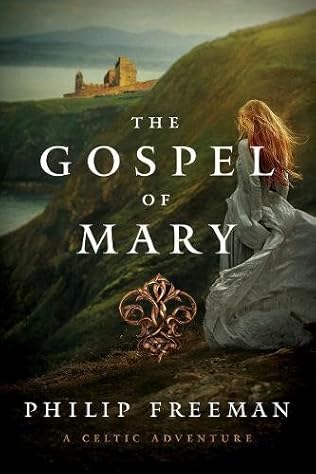
Phillip Freeman's "The Gospel of Mary": Book Review


book cover of 

The Gospel of Mary
Since I was a teen reading James Michener's "The Source," I've had a weakness for "So-and-so has discovered a missing Gospel" yarns. I liked the prolific Professor Freeman's recent Oxford UP retelling of Celtic mythology, so I gave this a try. Via an e-galley, I did not know until I finished that this is the third in his Sister Deirdre series. That explains some backstory I kept wondering why not more was divulged herein. I had no trouble following along, but it's better I assume to have caught up with the previous books, for the main character evidently has a complicated past and much to tell.

Not be confused with another, recent Irish-oriented story, Colm Tóibín's drama "The Testament of Mary," Freeman's "The Gospel of Mary" features the rapid pace, genial tone, and expository dialogue that fills us in on an Ireland when Christians still number few. Deirdre's grandmother was a druid and she claims the same identity, although when her mother died, her grandmother fulfilled her promise to raise Deirdre in the new faith. With allusions to a failed marriage, other past liaisons, and a child who died young hovering about, it's clear that Freeman's protagonist has had more adventures than most nuns might have, at least in later times. She lives with her friend and sidekick Dari in a monastery founded by Brigid, which to Rome's discomfort hosts celibate men and women together.

Rome's unease deepens as it sends a clever emissary to find out what the truth might be to a manuscript smuggled into the island with haste, secrecy, and danger. It is, naturally, the tale of Jesus told by his mother, and its passages intersperse, as they are translated by Dari from the Aramaic, with the fate of the two women as they get caught up in keeping their treasured text safe from the Church. The Church, after all, fears that its integrity will crumble if Mary's words are proven true, and even if they are not able to be verified, that the heresies and tumult generated by them will bring down Rome

It all moves satisfactorily. I read it in a sitting. Freeman has done his biblical homework, and he blends it with a quest that dashes about Ireland. There's plot complications, but the story line as a whole does not surprise. It's a pleasant narrative, and it likely will educate as well as entertain you.
(Amazon 9/5/17)

Sunday, March 12, 2017

Cradle Catholic

"I was educated in public + parochial schools in L.A. and was raised very Catholic. I was taught by and still know many devoted people, lay and clerical. I am no longer practicing, and the family I have married into and raised two sons in is not Catholic. I weigh the good the Church has done with the bad; I stand apart. BTW, 1/10th of Americans are ex-Catholic. If not for immigrants, the parishes would be empty indeed in many places. As w/ Ireland now." 
I posted this on a Facebook feed after a friend there, a native of Dublin now living about 30 miles east of me, reflected on raising his children non-Catholic. He and his wife were cradle Catholics.

Another friend, whom I admire for his principles hard-won and doggedly expressed against threats of violence to him and his family, assists his local St. Vincent de Paul charity in his Irish small city. He reasoned that in the absence of state assistance, the poor and the neglected earn their keep and their minding from volunteers such as himself. I accompanied him on his rounds, as two men are assigned to go together to avoid any disrepute. Although an articulate and vehement non-believer, his background, like nearly all the Irish friends I have, remains embedded in our tribe, our "romish" clan.

A week ago, I received an Ancestry DNA test to take. Lacking knowledge of my genetic history in the absence of contacts, my wife suggested I spring the $100 for this. It will match my autosomal DNA with any others in the pool at that site. Unfortunately, there's no one database. FamilyTreeDNA is a rival, with its own tests and participants. And then there's Google's 23+Me (although limited now on what it can share about health findings), and in Europe, MyHeritage. This can all add up to a few hundred dollars, and not counting the pricier Y-DNA paternal and mitochondrial offerings for deeper knowledge. Still, for those of us cut off or ignorant of the strains good or bad within us, it's progress.

When I got to the religious affiliation, I hesitated. Unlike Ireland and many nations, one's denomination is not asked by our census, and rarely have I ever had to tick any box for it on any document, I realize. I put "prefer not to answer," but after reading the reactions to the sad revelations revived about "the Tuam babies" scandal at the ironically christened Bon Secours Mother and Baby Home, I am reconsidering. I leave certain details discreet, but suffice to say that this home rose in the vicinity of where my grandparents would have grown up, and that "by the grace of..." in my own family tree...So, that makes me wonder. Despite my own disaffiliation, by tribal ties, for probably 1600 years, my ancestral allegiance among my nameless forebears has been to this Church.

Therefore, for genealogists, my data may align better with narrowed parameters if I claim this identity. It may no longer be mine in action, but in my origins, however free of genetic influence, the patterns imprinted in my psyche, my quirks, and my outlook may gain some traces of trauma passed down, as has now been confirmed, by a harrowing series of unfortunate events, so to say, endured.

In conclusion, I leave this generalized for protection of my own story, and what I know or do not know of it remains mostly occluded by law, reticence, and time. But my search for origins, to dispel my own conception when I was brought up of my own "origin myth," persists as a strong factor in my own makeup, both of nature and nurture. And reflecting on the terminated stories of so many near my "home turf" I realize I will have to go back and change my affiliation, in testimony to this inheritance.

Saturday, November 19, 2016

"Her Exiled Children": The Irish in Montana


A month ago, I attended this gathering of scholars and supporters in Missoula. The American Conference of Irish Studies-West regional meeting coincided with the exhibit "Her Exiled Children". In turn, to my surprise, these events dovetailed with a visit to Big Sky Country from the Irish Ambassador to the U.S., and the Governor of the state. The locals were out to welcome us delegates.

Professor David M. Emmons, Irish West expert and retired historian at the U. of Montana, guided our bus tour. We rode past the Clark Fork named after the explorer, and then the back way on Highway 1 to skirt more riparian valleys. The weather forecast was for rain, so I dressed the part, but I did not need to, as the climate was brisk but clear. Recent snowfalls speckled peaks. Far away from 90· L.A.

We stopped after an hour and a half in Anaconda, a copper mining town that stood out not only for its stack (my seatmate compared it to Sauron's tower) but its hardscrabble endurance as an Irish-managed production hub for that mineral much of the past century. It was a bustling region where the bosses were Catholic, as well as the workingmen and women. Little cabins attested to the life of the miners and their families, who walked out to the mines and back, by the railroad, self-contained.

The steadfast Corkonian, Dr. Traolach Ó Riordáin, told me that the children of Seámus Moriarty only spoke Irish at home back then, but that such fidelity to Gaeilge was the exception. But I never heard such an amount of an teanga beo in America before, for he and others chatted away in it, naturally. My two halting attempts failed to rouse responses. When I complimented his young son on his tweed hat, or when I warned him to be careful as he lugged a concrete block in the cemetery, both attempts at conversation were ignored by him. Will nobody ever understand my bleats, as exiled Gaeilgeoir?

You can see me in this snapshot at the AOH breakfast hosted for us at the Anaconda branch, one of the few west of the Mississippi, and one still, I am happy to report, thriving today after decades on. I never expected such a reception and it testified to unapologetic pride I felt during my too-brief visit. This mortás cine is perpetuated by the Friends of Irish Studies in the West, which I've happily joined.

Butte dramatically perches on the side of a massive pit. So much so that neighborhoods of Italians and Eastern Europeans were dug into, for the resources beneath outweighed the value of those on the top. The memorial to hundreds who died in one of many accidents is moving, with flags of many nations around to commemorate the losses of those from around the world driven to that far corner.

I heard the daughter of the famed poet Nuala Ní Dhomhnaill exclaim "there's Turkey!": land of her father, as we all entered the marker area. Sure enough, the lists of the dead were diverse, although mainly Irish. Back then, almost 100,000 lived there. Now as in Anaconda, far fewer: a third of that.

Montana boasts even today at 27% the highest percentage of Irish-identified U.S. residents. That cheered me. I knew historically there'd been many miners, but I did not realize how many stayed.

Vowing to return, to the Mining Museum, the town excited me. The downtown again struggles, but its buildings preserved from that boom era could entice the bold and brave today, to restore and care for them a mile high. Up by Walkerville, dwellings stretched out in precarious, attenuated, thinning lines, presumably to avoid the subsidence that would swallow them up from those voracious excavations.

The archives there attracted me. I wanted to scrabble in them, especially for Fr. Michael Hannan's diary where he lamented his stay among the squabbling clergy and all those non-recalcitrants from Hibernia not sharing his belief in a particular brand of Fenian payback. Professor Emmons showed me the scrawl of photocopies of the priest's diary: not easy to decipher. But he published his findings in The American Journal of Irish Studies (2012 issue; abstract only, alas, online for we the curious).

The cemetery walk in Butte also alerted me to the many graves from the Spanish American War, next to a Mass Rock memorial. I wondered why the amount. The number seemed disproportionate for the city. I suppose to me, any death toll is more than it should be, going to fight in such dubious battles. A lesson for all who labor to resurrect the names and deeds of those rallied to a cause, and with arms.

Friday, November 27, 2015

To Adare then to Dun Chaoin

On the guest bathroom's basket above the toilet upstairs, nestled a Penguin Black Classic. Nietzsche's Aphorisms of Love and Hate. I leafed through it, and it was well worth our hosts' Tony and Sinéad's pound sterling. If I was not so in need of sleep, I'd have stayed up reading it.

The next morning, we talked until Tony had to leave Corduff for work, so our long drive from Co Monaghan to our next friends in the perennial Tidy Town award-winning Adare, south of Limerick city. was delayed. However, after we had to say goodbye to him and Sinéad, our GPS itinerary detoured us across many stunning autumnal scenes as we slowly traversed via Eden Road the Kilmainham Woods of Co Meath. I thought of Brinsley McNamara's melodramatic "tell-all" tattletale on my Kindle from a century ago, The Valley of the Squinting Windows as we passed a sign for Delvin in Westmeath. Vivid leaves shone in the late afternoon and gradually we headed into sunset over Birr, mentioned by Joyce surely somewhere.

The radio featured, in slim pickings, Gay Byrne hosting a mixture of classics and reverie on RT'E Lyric. Continually rankled by the miserable fare sung on either BBC or Eire's wavelengths, I supposed I showed my age, relegating myself to near the dreaded 55-and-up demographic, sometimes that which lacks any number on the right side of that classification. Two locals in Co Monaghan had glared at us from the upper ranks of that cohort, with their little dog, as we halted at a crossroads. A bit down the road, a hardened redhead lass with a stroller, for whom we stopped to let her and her larger dog pass by. pushed past our smiles with undisguised contempt. Was it our Dublin plates?

By the time we made it to Adare, it was dark. Traffic jammed the picturesque village, but not for its charms. A drunk driver, we later found out from our host (who knew by repute and custom the culprit in question), had crashed and blocked the main highway. I felt sorry for the drivers caught for hours.  This is the major thoroughfare between Limerick and the South-West, and there's no easy diversion.

To our surprise, as the last time we were here, the motorway being built bypassing other local towns, it ran straight down the middle of Adare. I was baffled, but it did mean that the town profited from the constant hum all day into the night. So, our rental car had to maneuver to get the space in front of Seán Collins & Sons pub. We had a nice chat with him and his wife, Bridie, about the pressures of the business he continued from his father in that town, and about the small hotel we stayed in that they had bought since we'd last visited. The pubkeeper's trade is a patient one, requiring constant surveillance of the staff, chatting up patrons, and dealing with exorbitant fees for such as the "rights" to play a radio or TV channel in the place. It filled mostly with locals, who greeted and paid farewell to each other in that spirit of bemused camaraderie presumably deepened by decades of proximity.

After a night at their hotel, and then a happy breakfast with Seán and Bridie, we departed for Kerry. Our first time there, the Kingdom beckoned us for its breadth. Tralee bustled with corporate parks and upscale hotels, then Blennerhassett's giant windmill. In Camp/An Com, a pit stop. In the petrol station's cafe, lunch drew in many hunched over their soups and coffees. The wind blew off the Atlantic, as we perched up just out of sight of it, and we could feel the change in the blustery air. We were nearing the Corca Dhuibhne Gaeltacht, one of the last redoubts where (a bit of) Irish survived.

Layne pointed out a fort overlooking the highway as we left the village, and I later wondered if this had any association with the legendary landing of the Milesians on the hidden shores below, and of the healing of maddened maiden Mís made memorable in Austin Clarke's elegant, even erotic, poem.

Séan had shown us his photos of the one-way, dramatic Conors Pass road, and this tempted us. But construction was afoot there, so we had to go the safer if still hairpin route into the rolling hills down into little Anascaul, busily promoting Tom Crean, a local who found fame for his Antarctic expeditions with Scott and Shackleton. Now a brewery hustled a lager named in his honor. Nearby, a rebel who fought in the Rising and later died of force-feeding while imprisoned, Thomas Ashe, had been born in Lios Póil, received only a modest road sign indicated the townland where he began. In today's market-targeted Ireland, you can see which of two local Toms, without a doubt, gets lauded.

The day was overcast, so colors of green and brown were more muted, and glimpses of the strait between the Dingle and Iveragh peninsulas were infrequent. But the weather held and we felt lucky.
Famously, some mercantile-minded locals of An Daingean cross out the signs (I saw one outside Ventry/ Fionntrá) indicating nowadays in the Gaeltachtaí the non-anglicized location names. But entering Dingle town, the tourists seem to have found the home of Fungi the Dolphin nevertheless.

Off-season, a lot was closed, so we figured that it'd be no-go to voyage into the harbor in a search for that noted citizen of the town. Tour buses gravitate here, and as one who'd been patiently driving on narrow roads, and often had only the windshield's view as my own as I passed many marvelous vistas, I could not naysay those who had the comfort of a vehicle from which they could gaze out.

We walked the seaside road past tracts you could find in suburban Tallaght or Swords, catering to the summer's rush of visitors. They faced rows of colorful older houses, dated to 1909 and all numbered. The contrast summed up much. Reading Peig Sayers or the other Blasket Island writers, you can conjure up the past, when that as a market town attracted the peasants on foot or cart, and where the garrisons of the Crown fought during the war for independence on the same road that brought us in.

After we climbed up Goat Street, past more housing estates and an stately but abandoned-seeming school, we descended back into the lively core, where we purchased a few gifts at the bookstore. Both Seán, whose grandparents were from the town, and Tony, who knew such treasure-troves well, recommended that I (and Layne, who had long learned to drag me away from these dens of iniquity), stop in. Its owner was markedly taciturn, but we figured he could use our euros. The single book (although I could have spent 300 euro--the singular as the Irish say--easily on my itinerary on such) I took back was Daragh McDonagh's Tochar, about a secularized Catholic from Derry taking the old pilgrimage routes. I felt it was a path I followed, and I will review and report on it in due time here.

The Catholic church also on Green Street was enormous, built on wealth from Peig's peasants, and those emigrants who may have made good from their trade or their own capitalist endeavor. Now the Díseart Centre of Irish Spirituality run by Sacred Heart University in Connecticut, the Sacred Heart chapel featured Harry Clarke's stained glass. I had seen his fluid craft in the Hugh Lane Gallery in Dublin and I admire its clear lines. Layne rightly recalled a resemblance to another artist we like, Eric Gill, from this same period when the medieval and the guild appealed against capitalist frenzy.

I thought of our fervently non-theist friends in Drogheda. In their bathroom, a few copies of  The New Humanist lay waiting. I found Tim Minchin's interview in a 2010 issue. He remarked that he saw no harm in "magical thinking" unless it caused harm, and I contemplated as often in my European travels the fate of the Church, its sanctuaries so spacious, as its congregants dwindled and died off.

Later on this Grand Tour, Layne noted my Pavlovian instinct towards any open church door. Surely this attests to my early imprinting, and I confess that I enjoy peering into any Catholic sanctuary. I've lost belief in the visions and doctrines it memorializes and inculcates, but I retain fascination for the cultural impacts and artistic legacies left by the Church over so many centuries, for better and worse. And, I suppose part of this calls up yearning, a return to safety, a quiet space enclosed and restorative.

We needed to get to our next room, so we drove north, the long way around so we'd in my hazy recollection go counterclockwise, the way I estimated best to see an ocean view. I guess I confused in my travel blur the Ring of Kerry (that next peninsula down) from the Dingle, but this took us to the iconic Gallurus Oratory. In my mind, this stone chapel, so modest next to the one of the Sacred Heart, endured fourteen centuries wind and sea on a barren outcrop overlooking stormy ocean tides. Instead, it nestled in a field, safe from view as it was closed off-season, and we barely glimpsed it over the fields and horses, from a gravelled parking lot of the empty carpark and luncheon spot for tour buses.

The number of new construction of subdivisions around An Clochan astounded me. I suppose while many decry the loss of Irish as a community language, they look to the schools. But as in my own study at Oideas Gael Uladh in Glencolmcille in Donegal a few years ago, the inward turn of the native speakers, who cannot be bothered to deal with the hesitant inquiries of wave after wave of students and daytrippers, leaves those trying to practice it left to struggle among themselves in class.

Also, I doubted that these largely second homes or vacation spots, given the massive distance even by cozy Irish standards from any commerce, were crammed with post-Tiger Gaeilgoirí eager to revive an teanga beo. We progressed at a horse's pace sometimes over gravelled byways, past farms or past McMansions. For all I imagined, Germans, English, and/or Dubliners might ease their BMWs into the asphalt driveways on weekends. The stark fact that the most prominent eatery and b+b in our next destination bore a German surname stood as testimony to me of who had moved into the homes the farmers or fisherman left behind. Surely, it's a primary reason why Irish fades from our hearing.

But I too am complicit. Lured by beauty and detachment from the city, I pass EU hikers on the winding roads, walking the designated route, and buying pottery and scones, from whomever remains, for these residents need to make a living. Here, survival of Irish matters far less than their own, in an economy perched at the far end of an island battered by austerity cuts and weak currency.

The next place of any size, Baile an Fheirtearaigh, was a remote holdout for pirates resisting Cromwell. It draws language learners to its center, similar to Oideas Gael in the northwest or An Ceathrú Rua in Connacht. Its museum was closed. Although as we crawled through the village, I noticed the door open. I was hopeful, but it was a cleaning lady. Three pubs in a row, one titled to me as a talisman Ó Murchú, loomed as the only thriving eateries for many a mile. We were hungry, too.

We finally found the next place. Asking at a very well-stocked cafe-gift shop, the owner failed to recognize the host. It turned out she went not by her name but a nickname known to her neighbors. But we had no indication of this with our correspondence, with her, and she kept insisting as we tried to find the "stone cottage" that any GPS could find it easily. Reduced to looking for that architecture, in a bucolic landscape that as Peter O'Doherty's photo above shows, has been speckled since Peig's death with many more structures, whitewashed or unvarnished, we despaired. Darkness on the edge of the Atlantic, next stop Boston, comes quickly in early November, and when we at last located the b+b brown sign at a junction and up a lane, we were exhausted. The tea was bagged, the loaf dry, so we went over the Camras road Peig describes often, into Fionntrá. We'd found online two restaurants that garnered rave reviews, one saying it was open all year on its website, but of course it was not.

Neither the first nor the last time on this trip, but this was Ireland. I liked that huddled townland, which I think is Baile na Ratha, and that blue house on the road with a for sale sign. We all can dream, even if I'd wake up to French trekkers or Japanese tourists with selfie sticks out my window. No matter how worn out the roads there make me, the breezes and the briskness boost my spirits.

Dun Chaoin fills a lovely series of fields. It slopes down to the shores facing the now-deserted Blaskets, and they loom like mounds from bygone civilizations from the Atlantic. Peig had been famous as a chronicler of life on the Great Blasket, but she grew up in the townland she called Vicarstown, as well as closer to An Daingean by the way of her school and her parish both in Fionntrá. She only moved to the Blaskets after she married. There is no center of her natal settlement, and Dun Chaoin instead spreads out as smaller hamlets on and off the twisting, if now paved, lanes.

The summit that opened up Ventry's vista must have been appealing in the day, but it was pitch black now, and oncoming cars roared past us, blinding me. Dingle was in the distance, but its lights discouraged us from another night of pub grub. So, a few miles from where the surviving soldiers from the shipwrecks of the Armada were slaughtered, we settled for take out: Spanish wine, sandwiches, and fruit from the local seller. I heard him chatting in animated Irish with customers. When I left, I shyly tried my thanks and my valediction with the correct grammar. He replied "Slán" and I could sense in farewell his sly bemusement. As Seán Collins had predicted of my attempts to hush, look native, and blend in  (as he had years ago teased my being a "professional Irishman, come to teach us what we did not know,") wait until they hear you speak Irish with an American accent.

Monday, October 26, 2015

John Boyne's "A History of Loneliness": Book Review

“Sure the mammies pushed us all into it.” Early in John Boyne’s novel, Father Odran Yates blurts out this explanation to the Archbishop of Dublin about why so many men once entered the priesthood there. A History of Loneliness dramatizes Father Yates’ (and given his insistence on keeping up appearances, it’s either Odran to his family or Father Yates to everyone else, not Father Odran) determination to continue as a good man. This becomes tougher during the last thirty-five years, as Ireland reacts to revelations of sexual abuse by too many in the clergy, and the government-sponsored collusion in shielding offenders from justice. Starting with his admission into the seminary as a teenager in 1973, up to the 2013 realization of his complicity in enabling his classmate, Tom Cardle, to avoid accounting for his own crimes against young men, Father Odran, in Boyne’s narrative, leaps back and forth in time as he tells us his story. He and Tom are men with a “history of loneliness” who have found their long-held position in Irish society erode, as challenges to traditional power have undermined the status of the Catholic Church.

Boyne carefully examines Father Odran’s predicament. While as a young man, he was brought up by his widowed mother to believe he had a vocation, he admits that this calling suited him nonetheless. He was brought up in the last generation to regard the priesthood as a respected career, and in the early 1980s, on a crowded train, the young priest resents the fawning attention given him, constantly, by all whom he meets. Wishing for everyone to leave him alone, he wonders “how a small twist of white plastic could inspire so much devotion.” He remembers, as always in public, that he wears his clerical garb. He chats with a Jewish refugee from the Holocaust, who reminds him not to resent those who pay him respect. “And one day that might change. And then there will be no more food for your friends. And you will all go hungry.” This moment will come two decades later, after the reports on clerical abuse and state cover-ups will enrage many Irish men and women. How one priest shifted from the moments of praise to the years of contempt creates a fluent narrative, through moral heft and measured judgments. While it wobbles through digressions, the central character holds one's interest.

Terrified of difference, seeking conformity, a few idealistic or resigned young men entered the seminary. Some found themselves pressured, as in Tom’s case, to remain there despite their unfit nature for the priesthood. Boyne illustrates the demands placed on those channeled into the clerical system, and the indifference with which many were treated by their superiors in the hierarchy.   The archbishop responds to Father Odran’s question in 2007 about Tom’s guilt in the crimes for which he is accused: “you can go back to your precious school and teach the little bastards about respecting the church.”

Soon, however, the Archbishop is disgraced for his own role in the abuse scandal, as he moved priests such as Tom about from parish to parish for decades, to evade accounting for his sins.  At his classmate’s trial, Father Odran notes the prevalence of black in the courtroom. He and the judge share “the pigment of power” in their garb; Tom appears in layman’s attire. His classmate reflects: “Of course the shades in my profession changed as one advanced through the ranks, from black to scarlet to white; darkness, blood, and a cleansing at the very top.” Boyne’s way with a phrase works well here, and the ease with which the author intersperses an occasional analogy or image into the priest’s first-person narration convinces the reader of the self-awareness of Father Odran about his own difficulties with his role. 

While a backstory placing Odran as a seminarian during his last terms of study in Rome, serving as a papal assistant in the Vatican chambers in 1978, the year of the three popes, remains a somewhat melodramatic if clever device engineered to account for his subsequent lack of rank in the Irish power structure, it does feature a sympathetic portrait of the Patriarch of Venice. Cardinal Luciani treats Odran kindly. This thoughtful man reigned for a month as Pope John Paul I. His predecessor, Paul VI, ends his only conversation with the seminarian by asking the unanswered query: “What will we do with Ireland?”

The answer comes after more popes, as the Vatican’s corruption reveals the Church’s inability to justify its control, given clerical misdeeds and a culture of protecting its own against the law and the laity.  Father Odran hears Tom’s plea of not guilty and feels a “darkness stirring” about his own fault, “for I had seen things and I had suspected things and I had turned away from things and I had done nothing.” Again, the direct style Boyne uses to convey his protagonist’s epiphany keeps the reader listening to Father Odran, but also able to distance an ethical reaction to his self-realization as it unfolds, after he has suppressed it for decades, from the seminary on. He struggles with how to treat Tom: “If I cannot see some good in all of us and hope that the pain we all share will come to an end, what kind of a priest am I anyway? What kind of man?” Throughout the narrative, Father Odran strives for decency, but he appears to have done so too quietly, as he has been spared the torments of some of his sexually frustrated or temperamentally warped colleagues, for the most part. Yet, he suffers, as this novel shows.

The guilt Father Odran finally articulates eludes facile resolution. Boyne leaves him at the end of this novel lamenting the current state of his homeland. In 2013, at fifty-eight, Father Odran speaks perhaps for his author and for many Irish who watch as European bankers intervene to impose austerity measures. Neither politicians nor priests command respect any more. Ireland has become “a country of drug addicts, losers, criminals, pedophiles, and incompetents.” Among them, Father Odran finds himself despised, as a survivor of clerical abuse hisses “pedophile” at him, not the only time in this narrative. 

Boyne’s story is recommended, along with Kevin Holohan’s satirical 2011 take on this serious subject, The Brothers’ Lot, as a depiction of the institutional breakdown of a pillar of Irish society. The fall of the Church from grace has received belated scrutiny by journalists and historians.  But for fictional treatments, which allow us to enter the minds of those who entered the ranks of the clergy under the pressure or cajoling of mothers once not long ago, A History of Loneliness fulfills a need for a novel on this timely, sad, subject.

This appeared in altered and shorter form on Spectrum Culture 2-5-15. See also Amazon US 2-2-15.

Monday, October 12, 2015

Diana Walsh Pasulka's "Heaven Can Wait": Book Review

What happens to a belief in a doctrine once those who teach that try to sidle past it, in hopes of moving on? For purgatory, the Catholic concept has always been elusive to pin down. Diane Walsh Pasulka excavates its concrete aspects. In this short but well-documented work, she reveal practitioners' views of the afterlife, of their attitudes towards the dead, and of their interpretations of Catholic history. The chapters treat the evolution of the purgatorial dimensions, over many centuries.

Pasulka examines devotional and popular culture as they intersect to inculcate and elaborate this puzzling notion. For, since it was first formulated in the Middle Ages from vague suggestions found in Scripture, to meet the demand for a transitional stage of cleansing a sinful soul before it could enter heaven, purgatory presented a problem. How to align earthly time within a waiting-room into the eternal after the specified duration of a soul's sentence has been carried out challenged the Church.

First, Catholicism long defined purgatory as "a physical place of real, not symbolic, suffering". Second, it has been clarified in the post-Vatican II era as a condition, rather than a tangible state or site, of purification. Its position in the afterlife has been occluded. Growing up, I heard my family often urge us to "offer it up for the Poor Souls". This notion captured the expectation one's own sacrifices on earth were transferred to the faithful departed. Over the past half-century, this concept has faded for the majority of Catholics now. Those who aim for an afterlife expect they'll make it into heaven, with little or no preliminary cleansing from sin. But a few Catholics try to remind others of the poor souls, who seem to have been placed there by a harsher, more judgmental, more sin-concerned Church than the one that has replaced it with cheerier assurances of divine love and God's forgiveness. Pasulka investigates those today who revive apostolates aimed at succoring souls needing earthly assistance. She precedes this section with a detailed look at the one place where medieval Christians asserted an underground cave entering purgatory existed, Lough Derg in Ireland.

As a religious studies professor, Pasulka places the concrete manifestation of purgatory within what Pope Benedict elaborated in 2005 as a "hermeneutic of discontinuity and rupture". Purgatory, facing nearly the same fate as the now-discarded otherworld of limbo, languishes. The Vatican, stressing a "hermeneutic of renewal" as it reforms what it deems outmoded teaching and ritual, leaves those still believing in purgatory in a neglected niche. The bulk of this book explores these niches, as they were made real for believers in the past. These existed outside the official dogma dispensed by medieval and early-modern Rome. Whether purgatory was a literal fire or not, whether its punishments had to take place after death or during life, and the nature of the punishments as physical, mental, or spiritual were all left, in Pasulka's narrative, open to conjecture. Pilgrims to Lough Derg flocked to a place where they could endure fasting, kneel on rough rocks, and cleanse themselves of their sins.

She diligently collates archival data and scholarship on this place. However, the experiences of the thousands who still make the "stations" on this small island in Donegal today gain far less attention. The narrative favors scrutiny of previous Lough Derg events, whereas the subtitle or her book promises a focus on "devotional and popular culture". Her narrower perspective, dominated by Lough Derg's history, does not provide the reader with enough instances of how purgatory's physicality has emerged in the material practices of many Catholics, not only in Ireland but beyond, over the centuries. Instead, most of this book places Lough Derg within sectarian debates, within the Church, documented in periodicals between 1830 and 1920. These also influenced Protestant opponents.

An engaging look at the Museum of Purgatory in Rome, purporting to display proof of those who have received messages or encounters from the Poor Souls, prefaces the chapter about those desiring to revive attention to the plight of those left languishing. Pasulka summarizes a recent attempt to figure out how many of the departed need prayers. "The Mission to Empty Purgatory" uses calculations to tally how many remain in that purging place, and how many prayers are needed for their release. She adds: "The calculation also takes into consideration the number of future souls who will be in purgatory and publishes the number of prayers needed to account for the current birth rate."

Here, the tone lightens. Pasulka speaks of those she interviews, and of her own uncanny brush with the inexplicable connected to her research. If more of this study could have been given over to contemporary attitudes towards purgatory, as it recedes from many memories, the narrative would have increased its relevance for today's audience. Some typographic errors remain. The scope of this welcome view of a concept many Catholics once knew well and many non-Catholics once derided is narrower than the title promises. Perhaps other academics or theologians will return to this subject, which reminds us of how many or how few Catholics nowadays counter the "anti-materialist bias" of the Church as they insist on the reality of relics, imagery, rituals, concrete structures, and empirical evidence to support their traditional beliefs in purgatory and the connection it has with life on earth. ("How Do You Pin Down the Concept of Purgatory" to PopMatters, 7-21-15; Amazon US 8-1-15)