Showing posts with label meat. Show all posts

Tuesday, April 15, 2014

Fáilte go Nestor

Cheannaigh Léna mo triú bonsai le déanaí. Bhuel, bíonn seo difriúl é go fírinne. Mar sin, tá sé bláthanna agus níl sé buaircíneach beag chomh Bráthair Áitil agus Páidí.

Déanaim mé a cheangail idir Léna agus mé ag dul go Naomh Crios ag fhéiceail ár chairde Bob agus Crios ansuid. Sheolaidh siad Bráthair Áitil chuichi riamh an marbh na mathair na Léna. Thúg muid Páidí nua go Naomh Crios ar leath bealach an bliana seo caite agus go dtí ár bhaile a dhéanamh cara nua chun Bráthair thuas staighre sa ghrian, lenar dhá cait ag coladh.

Ainmithe Léna sé do Nestor. Dúirt sí mé go raibh sé mar gheall go bhfuil sí "empty nester" an bliana seo. Mar sin féin, shíl mé faoi an Íliad...agus "Ulysses" le Seoigh, ar ndóigh, go tapaidh.

Fuair sí é ag an áit céanna, nuair áit a mbíodh Páidí ar feadh Mhárta seo caite. Bíonn seanfhear tSeapáinis faoi chúram na plandaí ag an taobh na bhóthair go Coalinga ann. Measaim faoi sé gach uair a théann mé an comhartha buí B-O-N-S-A-I ann.

Tá suiomh ag fás na crannaí beag ag imeall Bóthar Cúig ag trasna ó Feirm Harris in aice leis an sli amach go Coalinga ann. Tá áit mór leis béilí úr, ach tá eallach chruinniú agus maríodh ansin. Tá trua agam nuair a théann.

Is féidir leat boladh an boladh láidir ó an Bóthar Mór. Bhain mé úsaid as feoil a ithe go leor an chuid is mó de mo shaol.  Anois, is dóigh liom ciontach as ithe iasc! B'fhéidir, is cuimhne liom Nestor agus a chairde ag fás faoi an spiorad na beatha ansin, agus ina bhaile anseo.

Welcome to Nestor.

Layne bought me a third bonsai recently. Well, it's different, really. That is, it's a flowering and not a little coniferous like Brother Juniper and Paddy.

I make a connection between Layne and me going to Santa Cruz to see our friends Bob and Chris up there. They sent Brother Juniper to us after the death of Layne's mother.  We took new Paddy along halfway to Santa Cruz last year and back to our home to make a friend for Brother upstairs in the sun, by our two cats sleeping.

Layne named it for Nestor. She told me that it was because she's an "empty nester" this year. Nevertheless, I thought about the Iliad...and "Ulysses" by Joyce, of course, immediately.

She got it in the same place, where Paddy was from during last March. An old Japanese man takes care of the plants on the side of the highway to Coalinga there. I think of him each time I go past the yellow sign B-O-N-S-A-I there.

It's a site growing the little trees next to Interstate 5 across from Harris Ranch at the Coalinga exit there. It's a big site with fresh meals, but the cattle are raised and killed there. It saddens me when I pass.

You can smell the strong odor from the Interstate. I used to eat lots of meat most of my life. Now, I feel guilty eating fish! Perhaps, Nestor and his friends are a reminder of growing concerning the spirit of life there, and now here at home.

Monday, September 6, 2010

Jonathan Safran Foer's "Eating Animals": Book Review

This book helped lure my teenaged son away from meat and fowl. At his school, he and his brother heard Foer speak at his school after last Thanksgiving, during his book tour. While my older son reverted to meat soon after, my wife and I have stuck with my younger son. We finally gave up chicken and turkey as we had gradually beef and pork.

I mention this as testament not to the message Foer promotes, for that's familiar. But he convinced my family of his thesis: "We need a better way to talk about animals." (33) Like billions of consumers in cities, we ignore factory farms as "animal agriculture." This system comprises 99% of all meat which we buy as "processed." I use Foer's euphemism for the slaughtering and butchering methods that he, in a clandestine night visit to an enormous turkey "farm," compels us to witness. He relates what "rescue" means for one small bird, unforgettably.

That is, he does not sentimentalize, preach, or pander. He stays calm. "Just as nothing we do has the direct potential to cause nearly as much animal suffering as eating meat, no daily choice that we make has a greater impact on the environment." (74) He integrates facts accessibly; the graphic presentation familiar from his novels here increases his data's power. 40% more of an impact on global warming than all of transport combined is due to animal agriculture. A KFC chicken (a drugged football with feet) lives 39 days and an "organic" one but 42. For all the fish discarded when serving a helping of sushi, the true haul of that catch would fill a plate five feet in diameter. Cattle now live only 12-15 months. On the slaughter line, cows may survive for seven minutes after they're supposedly stunned and bled.

He confronts how we get what's on our plates. He challenges us to engage in dialogue with our neighbors, and with our families. He visits the touted "natural" alternative of Niman Ranch; he learns that this once-idealistic business has just been sold to a factory farm. His interspersed accounts from a PETA activist, a family-based turkey rancher, and workers involved in the raising, care, and killing of animals enrich this narrative's depth.

Foer's grandmother during the Holocaust literally risked death rather than eating pork: such an example burrows deep into ancestral contentions where food and survival contend with conscience and commitment. His Judaism and its kosher tradition also deepen this tension. He faces disengaging from thousands of years of lamb-shanked Seders, and childhood Thanksgivings and barbecues. He examines how our "table fellowship" tests the bonds of family and friendship vs. those of individual ethics and global betterment.

At times, as with his musings on Judaism and his family, its organization jumps about, as his novels do. It can be diffused or contemplative. It also stays hard-hitting and open-minded. It's challenging now and then to figure out its direction. So, this narrative may confound those wanting a more disinterested arrangement of anecdotes, factoids, reporting, and reflection. But I was surprised how fast the pages flew, despite or because of its idiosyncratic pace and unflinching attention to quirky or grisly detail.

Foer spent three years researching this book. He wrote it to explain to his newborn son why his father chose not to eat any more animals. "Will he be among the first of a generation that doesn't crave meat because he never tasted it? Or will he crave it even more?"

As with my older son--who has chosen to not eat meat when at home--my family along with many readers may agree with Foer's pronouncement: "The justifications for eating animals and for not eating them are often identical: we are not them." (63) Yet, we can not claim ignorance any longer. For, reading this, and honestly articulating the unease about our fried chicken, cheap burgers, and greasy drumsticks--and the fish that I admit I still eat, more guiltily than before--you will close this book more conscious, more humanly aware, of the choices we all make three times every day.

This is why, even as Foer remains a nuanced proponent of vegetarianism, he finds that compromise with organic this or free-range that sells short our potential to solve the dilemmas that factory farming presents as Third World demand increases the bargain-priced flesh. We eat 150 times more chicken than our families did 80 years ago. Until 50 years ago, small farms were where we got our beef and chicken. Now, rural alternatives barely exist; family farms continue to give in to the Combine, as has Niman Ranch.

"We perhaps know more than we care to admit, keeping it down in the dark places of our memory--disavowed. When we eat factory-farmed meat we live, literally, on tortured flesh. Increasingly, that tortured flesh is becoming our own." Suffering worsens; the climate warps. The money that feeds animal agriculture comes from our subsidies, our taxes, our pockets as we shell out for a Happy Meal or a filet mignon. Foer ends with the "question of eating animals" as "ultimately driven by our intuitions about what it means to reach an ideal we have named, perhaps incorrectly, 'being human.'" (264)
Posted to AmazonUS & Lunch.com 7-20-10; and PopMatters 9-1-10. Eating Animals website.

Monday, March 8, 2010

Colin Spencer's The Heretic's Feast": Book Review


My son asked if one could survive only on meat. Contrarily, I looked up this history of vegetarianism to find out. Orthodoxy and conformity long allied with the herding & consumption of animals. To those in control, those refusing to eat flesh posed a social and moral threat. Not eating meat equalled rebellion against the state, the faith, and the norm.

Spencer starts with early hominids and ends with fast food. He roams necessarily widely, if focusing most modern attention to the British take on vegetarianism. Egypt, Greece, Rome, China, and India all earn ancient testimony for a long-lived counter-cultural tradition. While Middle Eastern and Mediterranean cultures appear to have come down harder on what become known as "Pythagorean" practices, the Hindus seem to have had a more balanced approach. A "dharma-sutra" ca. 600 BCE counselled: "In eating flesh, in drinking intoxicating liquors and in carnal intercourse there is no sin, for such enjoyments are natural, but absention from them produces great reward." (qtd. 76)

For the West, however, resistance to meat-eating smacked more of deprivation than moderation. Spencer defends deftly the reputation of Epicurus as more principled than "epicurean" today connotes. Gluttony came from satiation which left one more deprived than before, Epicurus reasoned. So, as with any addiction or longing, the cure stemmed from avoiding anger, irritation, and lust. Pleasure, thus controlled, did not lead to overindulgence but to self-restraint as "the absence of pain."

But such subtleties were lost on many pagan and Christian critics. Sacrifice harbored in its action food plus energy to equal meanings charged with much more than merely roasting a beast. As with Jews, Muslims, or Hindus in their dietary choices, it was impossible to keep secret one's preferences: "the lifestyle is an unspoken criticism." (97) For a radical, it became a mark of humanity and higher standards that often "makes meat-eaters uneasy and they often react aggressively."

The heretical associations of vegetarianism in the Bogomil, Gnostic, and Cathar movements outraged the Church. The renunciation of meat did come out of a more negative refusal by the dissenters to separate themselves from the profane, rather than a celebration of the natural realm as deserving of its own rights. "It is a doctrine that expresses fear of humanity more than a love of God. With such ideas, animals became too easily associated with the devil and his evil minions, hence the domestic cat came to be seen as the witch's familiar."(161)

For most people now as then, vegetarianism may have been involuntary, furthermore. Not out of religious objection or ethical solidarity, but because of poverty. Only when surpluses exist can a community afford a minority to find alternative foods. For a few faithful Christians, monks and saints, renunciation of meat was not identical with vegetarianism, perhaps oddly to us. Heretics were linked to vegetarianism, but clerics were not. "For a vegetarian philosophy to exist, it needs an ethical system of greater power and significance than the prevailing code in society." (181)

The glimmers of this began for the West with those who chose, for ideological reasons, to eschew meat. The Renaissance alerted Leonardo da Vinci and Giordano Bruno to the options argued by classical predecessors. Here, as in Bruno's proto-holistic system, or Leonardo's rarely cited vegetarianism, a sympathy for animals within the cosmos begins to emerge. Suffering elicits sympathy, and rather than a Christian solution, humanists begin to compete with the Church for an earth-based understanding of harmony and kinship.

As modernity dawns, Spencer concentrates on Britain. The Victorian denial of flesh and its promotion of unadulterated, but often unsalted or unspiced foods, formed the common English stereotype of sandals and nutloaf, bland pablum as fare for pale aesthetes and bearded cranks. This was a wise reaction to the horrors of slaughterhouses, true, but one that went so far in its po-faced rejection that its grim, ascetic influence lingers nearly two centuries later. Dogmatic puritans, the 19c and early 20c proponents of vegetarianism often carried with them a severe air.

George Bernard Shaw, Edward Carpenter, and Leo Tolstoy, famously, symbolized the intellectual contingent. George Orwell fulminated in 1930: "One sometimes gets the impression that the mere words 'Socialism' and 'Communism' draw towards them with magnetic force every fruit-juice drinker, nudist, sandal-wearer, sex-maniac, Quaker, 'Nature Cure' quack, pacifist, and feminist in England." (qtd. 299)

Orwell objected to a vegetarian, for not being able "to relate to the working classes," in Spencer's interpretation-- as "a person out of touch with common humanity." Faced by such prejudice, our author wonders if Orwell's disgust is with the bourgeoisie associations; "If Orwell could have found a vegetarian coal miner he might well have written differently." (300) Orwell continues his own holy war against what Spencer labels a "secular heresy" for the Victorians. Immorality, sexual license, and fervent egalitarianism allied with it in popular opinion.

The book moves predictably if appropriately into an outcry against factory farming and ecological degradation. The examples are well-chosen, if again largely British. This is one shortcoming, perhaps, for readers expecting a global treatment; the book narrows as it nears the present into a study of British reactions to the vegetarian refusal. Spencer writes with verve and compassion, and has read widely. The book can be a bit repetitious, but he makes his claims and supports them well.

We face, he concludes, a dual challenge. Consumption of meat psychically for most of us still marks a celebration, an entry into affluence, a fine night out to cash in a bonus or impress a date. Yet, he reminds us that, despite the persistence of the off-beat vegetarian caricature, abstention from meat also runs through our history back to ancient times as a reminder of our higher nature, in league with Nature.

Today, the notions may persist of woolly-headed middle-class do-gooders, but Spencer, writing this in 1995 (reprinted as "Vegetarianism: A History"), also notes a sea-change in attitudes among those who came of age in the hippie era. Urbanization perhaps ironically or appropriately drove together the scattered rural-based resisters to the meat-eating rule, and the media and markets allowed people in cities to rally, shop together, and raise their own crops in gardens. The seeds of today's farmer's markets, locavores, and green cuisine might be planted a century ago in such alliances. (Posted to Amazon US 1-21-10)

Friday, December 4, 2009

Keeping kosher, being 'yosher'


No, I never heard of "yosher" either. If "glatt kosher"'s totally, well, kosher, than "yosher"'s "ethically straight." The Conservative Jewish movement's advanced a new seal of approval, based not on how an animal's ritually slaughtered, or if it's cloven-hooved or scaly-finned, but if social justice was followed in the working conditions under which the animal was killed. And, if living wages were paid those we (usually vastly under-)pay to do such grueling and unpleasant work.

Jay Michaelson in "The Forward" reminds me of my cyber-pal "Bo" at Cambridge; they both are true polymaths, and share a lot of interests and orientations. Michaelson's "The Polymath" is one column my wife and I turn to first, and we always admire M's ability to combine disparate topics elegantly and with erudition. I may envy his going off for months on end to his Himalayan retreat, as he's Buddhist too, but he does offer readers less enlightened as me a chance to enter his mindset.

In his Nov. 27, 2009 article "Magen Tzedek: Model of the Jewish Future or Show Without an Audience?" he discusses the impact, or lack of, for the Conservative movement's creation of a new seal of rabbinical approval. He doubts, as do I, that many in this now-declining middle ground between Orthodox and Reform will bother to follow the idealistic guidelines. But, he proposes that their truer target may be those outside Judaism.

Here's his logic. Ethical relevance may enliven progressive Jews as ritual observance has Orthodox ones. The latter always try harder, and are either castigated or celebrated by other Jews, and others perhaps (despite the prejudice, the scandals, the ancient libels) for their extra effort. More liberal Jews, frankly, as Michaelson notes, seem content not to fight as hard for their beliefs.

This shift from the letter of the law to the spirit may echo, I add, for a wider Christian or secularized audience, a more congenial approach that's congruent with the eco-kosher and earth-friendly campaigners who may choose the Magen Tzedek as a sort of Green Star (like a gold one?) for their food. He doubts that Conservative Jews will flock to buy such products, for the laity ignore most of their rabbinical regulations anyhow. Orthodox Jews will stick to their own "hescher" seals and Reform Jews rarely keep "kashrut" almost by definition. So, who's left? Non-Jews who care.

Michaelson cites how kosher's big business. A 15% growth rate annually and a $9 billion market. The same issue by the way-- in a paper that the past few years exposed the scandalous conditions at Postville, Iowa, with Rubashkin's "Aaron's Best," until the coverage dismantled the nation's largest kosher meatpackers-- has a front page headline: "Hasidic Village's Neighbors Have Slaughterhouse Blues" as an ultra-Orthodox sect tells less than the truth and plays loose with zoning in their rapidly expanding enclave into what was once semi-rural upstate New York. This, to me, also worsens the community and the ecology, compounding the immorality involved. People proliferate; resources shrink. The chickens processed in the 5,000 square-foot facility-- and the 26,000 one planned for cattle-- may emerge shrinkwrapped with a kosher seal, but the manner in which the structure was "approved" and licensed fail to convince me that ethically, truly honest and righteous procedures were followed in its construction.

The Orthodox, with high birthrates that turn bucolic dirt roads into thronged tracts, drive much of the kosher market, but so do, Michaelson tells us, 55% of the consumers who buy kosher not out of religious allegiance but because they believe it's healthier. While this, as the Postville exposé showed, is a half-truth, it does open up an avenue for expansion. Few Jews may take the trouble to support Magen Tzedek, but non-Jews might, if they seek out assurance of sustainably made products.

In this direction, as with other initiatives, Michaelson moves in a typically thoughtful fashion. He now ties together this thread into a bigger pattern. I quote his next paragraph in full:
In the coming century, sociologists tell us, Judaism will become less like an all-or-nothing proposition — ethnicity, identity, culture, nation and religion, all wrapped up in one — and more like one source of values, identity, spirituality and culture among many. We should get used to someone practicing Jewish dietary laws, Buddhist meditation and secular ethical values, whether that someone is born of a Jewish mother or not. Jewish culture and religion are going to survive not because of endogamy, but because they remain relevant to people of all ethnic and religious backgrounds who find them to be meaningful. Like it or not, the Kabbalah Centre, Matisyahu and the Magen Tzedek are the future of Judaism; they thrive not because the Jewish tribe maintains them, but because they appeal to a wide range of people.


Now, as one who fits into one of these sentences above tangentially neatly, I perked up. Like his column in a paper few in the larger culture may have even heard of-- at least in its English-language succession to the once-thriving Yiddish socialist daily that many greenhorns read in the Big Apple over a century ago, keeping its subscription a ritual even if they abandoned kosher when coming ashore-- Michaelson's voice may remain marginal. Yet, his reminder of how those on the side can push change glimmers elsewhere in this very same issue.

A grandson of a rabbi who came in 1908 to backwoods Vermont from the shetl concludes an article on Bennington's community of Jews: "Judaism doesn't always grow from the center. Sometimes it comes from the edges."

My wife watched raptly a BBC documentary by Hannah Rothschild, great-niece of Pannonica R., the "Jazz Baroness" who played muse to Thelonious Monk and other "cats" in a remarkably checkered career even by eccentric English mores, and in that issue, there's a piece on how she influenced, as a patron and inspiration, American jazz. "Nica" (named after not a butterfly as thought but a moth) left her husband and children to circle the bright lights of a trés-hip, but rebellious and segregated, culture in late '40s Manhattan.

I admit that even when studying Jane Austen as an undergrad I bristled at a gentry's amassing of lucre off the backs of the nameless proles. (However unfairly I expected that authoress to evince proto-Marxist tendencies.) So the doc's plaints about Poor Little Rich Girls trapped from realizing their full potential amidst batteries of gilded cutlery and ranks of liveried footmen failed to elicit my tears. Injustice and justice tangle here. Jews in Europe were made to enter financial trades since they were excluded from owning land, commanding the military, or profiting from most occupations. So, Rothschilds amassed immense fortune. Did that restore justice, or compound injustice? They and "court Jews" before them entered inevitable deals with devils in power.

If attenuated Judaism as it flowed into Nica's life's choices remained clouded in the film, her family's vast wealth failed to save her relatives from the death camps. Their holdings may have well brought terrible blame upon these victims of antisemitic laws that gave their ancestors no other choice but to become what the nations who killed them had caricatured and cartooned. Perhaps her post-war mission to spread the gospel of bop, and to succour its black evangelists, gave her a reason to use her own outsider status tripled-over (at least) for what she saw as justice?

That's what that Magen Tzedek means: a star of justice. It's what Jews and gentiles are commanded to pursue in Scripture. On a related note, I answered yesterday a prisoner whom my wife and I will visit for the second night of Hanukkah soon. He asked me about Judaism and wished he could find a correspondence course to teach him more. (We have sent in books but these are subject to the whim of the guards whether or not they reach him rather than be torn up and discarded for "security reasons.")

I wrote him how I figured Chabad might have spearheaded (if anyone) such outreach. But, knowing how much that faction's "visiting rabbi" makes off the few perfunctory visits he pays to the few practicing Jews in a vast, remote California high-desert penitentiary, and how he tended not to impress this prisoner in past encounters, I assured him I'd look into this myself. On the margins, he tries to connect to a faith in which he was not raised, but which today, in his condition, calls out to him as justice is both exacted upon him and rises within him as he tries to-- here's the other trendy phrase of Jews today-- "repair the world" with "tikkun olam." He occupies a small section of "olam" in his cell and the limited space where we'll visit him. I wonder how "kosher" any rabbi'd certify the conditions in which he is housed at a cost of $50,000 a year, mainly spent on guards and certainly not on him.

We warehouse the weaker and we look away. My sons after hearing Jonathan Safran Foer speak at their school about his new book, "Eating Animals," are now pushing aside even leftover turkey. We don't eat pork or shellfish, but we don't technically "keep kosher" for other meat in a way that'd please rigorously observant Jews. Still, we make an effort, and our kids do too. Not out of any fear of divine wrath, but as a discipline and a reminder of the consquences of our actions each day. That's all.

First me, then my wife, had gradually weaned ourselves off red meat the past couple of years. Fish and birds still fill our plates. As she was a vegetarian when we met I still feel guilty about my own insistence on seared slices and sizzling chops. I miss them now and then when I smell them, but no more or less than shrimp and bacon, once two foods I swore I'd never give up but then did-- quite easily.

Our two sons decided to give up beef very recently, after the talk by this author known best for his own encounter with the shetl and the aftermath of the camps, fictionalizing his own trip to Ukraine to search for his family's fate, in his novel "Everything is Illuminated." The connection of slaughter in camps and that of cattle turns a lot of Jews off. They find it justifiably in poor taste, no pun intended, to equate the fate of the six million with that of the millions of animals we herd and prod and cut and eat.

While I agree that the victimization rhetoric may be risky, I also note, as I care for my slowly dying half-poodle pal Fido, that in looking into an animal's eyes, we do face our own complicity. We keep some alive but munch on others. She does too, but we differ in that we can make choices that animals cannot, by our own dominion. Given the command to rule the earth-- to name and corral its creatures-- have we progressed deep down from the attitudes of Torah's Bronze Age? As I have tiresomely recounted on this blog, in such a primitive setting on the edge of Europe, a stroll away from dolmens raised up well before the pyramids, the meeting of my gaze with a sheep in a trailer trundling down a Donegal road confirmed my attempts to give up four-foots.

I heard at Thanksgiving my vegetarian guest gently remind another friend: "I eat nothing with a mother or a face." This person strives towards true mindfulness. When he shows by example, I tend to listen. He's working with a program to raise awareness among local farmworkers and their families about their own ties to the land, and to cultivate beyond the affluent and formally educated true responsibility. Too often, we find in Brooklyn or Berkeley a few lucky folks able to afford being true locavores and buy expensive fare at an organic farmer's market, while most of us go to the big-box, non-union chain, and others-- as the New York Times reported last Sunday-- join the burgeoning lines for food stamps. Across all these actions, agribusiness even for purists forces many to compromise. Our vegan neighbors grew their own little crops in their yard last summer, but I had no idea where it all went, as I watched chard seem to shrivel up under our relentless heat.

We all choose what to eat. The bonds that pull us to feast with one another amid our pets bridle between us and the flesh we devour, and this difficulty should make us all question this most daily and habitual of actions. We may pray over our dishes before we consume them, as priests did when they propitiated YHWH at the Temple, but in roasting a fatted calf or our stuffed turkey, we still realize, deep down, how we may risk taboo. We ask forgiveness to Our Father-- for we know what we do.

Find out more here: "Magen Tzedek". My wife did not read my blog entry as she wrote "Eat Love Die" this week-- it appeared a day later than mine-- but you'll agree that they do mesh nicely.

Saturday, June 13, 2009

"Head on, Feet on": Kosher & "Buddhist style" chicken

"Young Chicken. Free Range, Raised without growth stimulants. No added antibiotic. Buddhist style: Head On. Feet On." Label for "gà Vikon: A Heritage Chicken" that I cooked recently. I never saw a dead chicken with head and feet, but Layne told me that's how they'll be now.

Perhaps thanks to the anti-caged hens law we passed when (other) voters defeated the same-sex marriage proposition last fall here in California. The juxtaposition of more voters approving birds' rights than gay rights infuriated activists. Still, perhaps pleasing Peter Singer's "animal liberation" supporters and my vegan neighbors, we can see how a concern for human dignity need not and should not cancel out ethical treatment of how we care for the animals we depend upon for food. (I see today's paper has PETA bemoaning the century-old custom of tossing high dead fish at Pike Place Market in Seattle, which to me goes a bit too far; they ask if "dead cats" were hurled if we'd applaud, and I admit I might given my gallows humor.)

That picture you see above's on the bags of the two chickens Layne had bought, cheaply and grown in Azusa a few miles from the Alhambra Asian market she shopped at. See a brown, rather resolute fowl standing, or slightly strolling, amidst a green lawn's otherwise flat and undifferentiated expanse. Not likely to have been our chicken's last sight, given the industrial and dusty nature of my native San Gabriel Valley. Still, the reminder of "Free range" did coincide with the stated intention of the plurality of Golden State's electorate to allow chickens more room to roam before we grabbed them for eggs, or hauled them off to decapitate and cook.

The eyes of both chickens were glazed over by skin of sorts, a membrane that reminded me of a fetal being. I'd been musing about kashering and Buddhism both as I prepared the dinner, reflecting on our weakness that needs animals to die so we can live. Nothing deep or profound, as my Corgi watched me with eyes glinting more brightly than the knife I honed. But, I am trying to become more aware of what I do. Then, as I considered such issues, I saw for the first time the writing on the label, leading down to "Buddhist style: Head on. Feet on." I figured it was some sort of sign, bibliomancy on a bag.

I did it wrong, of course. The feet had been tucked into the skin somehow, and my dear wife chastised me on her return when I'd only cut part of the legs off. I figured culpable ignorance this first time out. Their heads came off with difficulty, if no more than turkey necks I'd had to sever, or chicken necks I twisted off by the dozens in a college summer job deboning vast amounts of fowl boiled the previous night so as to be disassembled by my hand at the meat-pie restaurant every morning. I can still take the meat off of a chicken practically blindfolded, separating fat from skin from meat and bones mechanically, if manually.

Talk about minimum wage, unskilled labor; I got the job in the midst of Reaganomics at the state unemployment agency across from ironically named Easy Street in El Monte one sweltering summer. Down the same street from the Asian market, if directly prior to the massive influx of immigration the past twenty-five years that would change the Valley from blue-collar white and Latino to many more Latinos and Asians. The whites and Asians demographically and suddenly switched; the Latino population kept growing. The only white person for miles even then, I had to walk from my house to the office down a boulevard belying its French inspiration past stucco shops and asphalt vistas in shimmering June heat that marked the Valley as a downscale wasteland; as a college student on grants and work-study, I had no car.

In school and in college, I'd always had to walk or bike or take the bus. On another level of austerity, I'd never had to dissect animals, given parochial destitution. So, this chopping off of feet and neck-head meant a sharp blade and fast instruction. Why should a bird's dead eyes move me more or less than those of a fish, the eye of which we tossed to the Corgi during our meal a few days before the chicken dinner?

Associations: thinking as I was why the apropos if un-clannish surname "Turnbull" in Seán Ó Riordáin's existentialist, unsettling encounter in his Irish-language poem that came to mind unbidden yesterday as I walked along on a break from work. I used my schoolboy Gaelic as a mental leash (Beckett's French a predecessor however rarified!) for my tugging English. I wondered:why should I "see" the eyes of one animal I eat differently than any other?

As the poet puts it, first in his Irish, then in Gabriel Fitzmaurice's translation of "Malairt" ["A Change"]:

'Gaibh a leith,' arsa Turnbull, 'go bhfeice tú an brón
I súilibh an chapaill,
Dá mbeadh crúba chomh mór leo sin fútsa bheadh brón
Id shúilibh chomh maith leis.'

Agus b'fhollas gur thuig sé chomh maith sin an brón
I súilibh an chapaill,
Is gur mhachnaigh chomh cruaidh sin gur tomadh é fá dheoidh
In aigne an chapaill.

D'fhéachas ar an gcapall go bhfeicinn an brón
'Na shúilibh ag seasamh,
Do chonac súile Turnbull ag féachaint im threo
As cloigeann an chapaill.

D'fhéachas ar Turnbull is d'fhéachas air fá dhó
Is do chonac ar a leacain
Na súile rómhóra a bhí balbh le brón--
Súile an chapaill.

-------
"Come over," said Turnbull, "and look at the sorrow
In the horse's eyes.
If you had hooves like those under you,
There would be sorrow in your eyes."

And 'twas plain that he knew the sorrow so well
In the horse's eyes,
And he wondered so deeply that he dived in the end
Into the horse's mind.

I looked at the horse then that I might see
The sorrow in his eyes,
And Turnbull's eyes were looking at me
From the horse's mind.

I looked at Turnbull and looked once again
And there in Turnbull's head--
Not Turnbull's eyes, but, dumb with grief,
Were the horse's eyes instead.
"Brón," sorrow or sadness, repeats five times. Relate this to the fallen shell within which live sparks try to rise in Kabbalah; the "dukkha" or suffering permeating Buddhist teaching of the unsatisfied flesh. Out of such meditations, such confrontations demand compassion: Irish and Jewish and Buddhist and secular all sift with my ancestral Catholicism. I suppose my worldview deepens as my contradictions accumulate. Such may be maturity, as this month I will near closer the half-century mark; my bones begin to ache often with intimations of my next fifty years best or worst. Our bodily appetites never cease. Maybe, as all traditions tell us, we can start to control them, to master them. I try this now and then by thinking in halting Irish rather than my glib English.

Turnbull's eerie exchange comes to mind often when paralleled with my own witness on a Donegal road two Junes ago with a dirty sheep in a trailer looking back at me with its direct gaze. "Hooves under me," I had been trudging a silent hike in a threatening dusk, relief from my Irish-immersion classes, but I was talking to myself in Gaeilge to test my travel-weary memory and acclimate myself within the lunar, treeless, scoured, storm-lashed Gaeltacht landscape. Silence nearly total.

At that "insight," although on my trip already I'd not eaten meat since the chicken (that or beef) on the plane over, I vowed to pull back from what I craved, as a meat-and-potatoes guy. I'd once loved shrimp and pork chops, bacon if not ham. I gave those up nearly twenty years ago. When in Ireland, I tended not to eat any meat, to test myself and put that "fence around the Torah" observance of this one obligation at least. In a land of little kosher, it reminded me of what I've chosen to control.

For, I craved meat. I still eat it, no salad days for me, but no longer at least from four-foots. If I want more bipeds inside me, I must learn to chop heads and look at eyes. By this task, I assume a bit of responsibility for my actions.

I turned out, I admit, a delicious meal. Layne's instructions e-mailed to me I figured she'd garnered from a cookbook. But, it's her off-the-cuff culinary genius!

My wife sent me these directions which I copy for your inspiration and perhaps imitation:
This will show you how to remove heads and feet:
["How to Butcher a Chicken" blogsite.]
Try it with sharpest kitchen sheers. [sic: shears. Editor's note.]

heat oven 325 [I'd say 350 but she--"the meat's too dry"-- disagrees with me and the boys.]
There is a zip lock bag with long green Chinese chives. Snip some of these with scissors into 1/4 slices--about 1 1/2 cups, add about 1/2 cup garlic cloves and 2 sliced lemons and 1 tablespoon of salt, 1/2 t pepper and stuff chicken cavity. Melt half cube of butter and add juice of one lemon. Brush this on chicken and sprinkle with salt, pepper and a little paprika. Should bake about 1 hour.
The link is to a lively (blogsite rather than a video) from "Herrick Kimball, inventor of the world famous Whizbang Chicken Plucker" who in ten steps takes you through the chicken butchering process. Nobody who lives among animals made food stays sentimental long, any more than in a morgue, on a hospital staff, or in the police force. The crew looks quite happy in their work, and I'm reminded of my dad telling me how he saw a chicken running around with its head cut off as a boy, or our babysitter taking Leo as a toddler on the bus to nearby Chinatown to buy a live chicken from the store with, what else, a giant rooster adorning its facade, like an idol perching among the jolly buddhas and pagodas there. Perhaps his ancestors followed the shetl custom of "kapporot" when a person's sins are transferred to a fowl (rooster or hen depending on the sinner's sex) who's swung around one's head near the arrival of Yom Kippur. Said bird's then donated to the poor. Eat well before you fast. Moderation, not excess; don't starve yourself too much, but don't stuff yourself. Again, there's a subtly ethical concern in this ritual, as with kashrut and "Buddhist style" slaughter.

I'm re-reading, after fifteen years when it appeared, Rodger Kamenetz' "The Jew in the Lotus," about the historic encounter of a rabbinical delegation with the Dalai Lama in October 1990. I was learning about Judaism when I read it originally; now I am adding an interest in Buddhism that builds upon my longstanding interest in Tibet. Perhaps that will illuminate a dietary intersection between the two traditions. Already, Blu and Rabbi Irving "Yitz" Greenberg in their Indian travels with Kamenetz and the minyan (if not for Orthodox--part of the problems that plague their negotiations!) of delegates encounter difficulties in staying Torah-true to their version of Modern Orthodox kosher, as opposed to their liberal brethren. Even vegetarian may not suffice, for the oils and preparations may mix with other foods in their prepared vessels. Arriving in Dharamsala, however, to their delight, the Greenbergs find the Tibetans have kashered their kitchen totally according to exacting directions sent ahead of their entourage.

I admire the Greenbergs, for going hungry on a flight since the Brahmin meal served may not meet their halakhic standards shows no small adherence to discipline on an arduous journey. Yet, as Kamenetz subtly shows, the challenge of the whole meeting with the Dalai Lama also rests in the visiting Jews' self-control not to take charge of every situation for dialogue, but to learn to step back and listen and understand. This respect, nonetheless, can clash in turn with Jewish prohibitions on idolatry and consorting with "pagan" practices. So, even in this meeting, rigidity remains for some a paramount concern, for how else, some reason, will Jews survive a diaspora among the heathens. Out of their lessons, perhaps the Tibetans will learn how to endure exile. But, can they sustain tension between fidelity and flexibility?

Kamenetz cites a young woman's view of Judaism: "An old man saying no." Restriction, as any parent or teacher learns, beats permission. There's a general belief I'm sure my vegan neighbors would share that Buddhism eschews meat. In fact, as the Tibetans show by practicality in their arid homeland, this restriction did not become universal among practitioners. Last month, I reviewed here (and on Amazon US) Dzongsar Jamyang Khyentse's "What Makes You 'Not' A Buddhist"-- this Bhutan-based teacher tells us early on that "eating meat" does not keep you from being a Buddhist, but in his conclusion, he informs us that one must not kill any animal. So, I'm not sure; Buddha's monks could receive meat as alms if the animal had not been killed especially for them.

As with Torah, perhaps later Buddhist restrictions grew as debate ensued and laxity loomed. Layne and I discussed after going to temple last week how boring the parshah was, how full of minutiae about the clan of Gershom having their tabernacle tasks assigned. Out of this, she suggested, we can see the truth of the Torah: if the Hebrews had been only concerned with grand narratives and origin myths passing as reality, they'd not have included these dull bits of legalisms and bickering.

I'm sure these discussions, over two-and-a-half thousand years in both cases, resulted in splits and factions and rivalries. Oddly similar to Judaism, Buddhism lacks much "original" textual lore about its purported first teacher to bicker over; the life of Buddha's probably about as scanty as the veracity of Moses. The bulk comes after those who follow such men hash out the details. After the revelation at the deer park, the fire sermon, the theophany at Sinai, the Decalogue's simplicity, the texts begin to surround the original documents, the pithy commandments, the four noble this and the eightfold that.

Out of this, we find kosher expanded and meat also accepted or denied. And, eventually, the Dalai Lama insisting that if science proves rebirth wrong, the belief must capitulate to reason. And, eventually, the rabbis designing ways to stay "Torah-true" in an electrical age with Rube Goldberg devices, inventions as ingenious as those for Sabbath-compliant ovens, but such are the necessities of keeping a faith alive for centuries amidst pressing daily anxiety.

Website and source of photo: Vikon Chicken Farm, Azusa. Translation & original poem by Seán Ó Riordáin (1917-77). "Malairt"/ "A Change": Gabriel Fitzmaurice, "Poems I'd Wish I'd Written: Translations from the Irish" (Indreabhán, Co. na Gaillimhe, Éire: Cló Iar-Chonnachta, 1996): 38-9.

Monday, December 1, 2008


Ag gabháil buíochas.

Bhí mé ag ceiliúradh Lá Altaithe leis mo theaglach agus chairde le deanaí anseo. Feicfeadh tú ar an griangraf os cionn go raibh duine fásta amháin ar ár bhord! Níl tú ábalta feiceáil Bob, mar sin féin! Tá sé féin taobh thiar díomsa. Bhí sé céim dochtúra a fháil ar feadh samhraidh seo caite.

Tá mé in aice liomsa ag imeall ár chlár. Dúirt Léna go raibh ceaptha leis an íomhá seo 'eisint agamsa'! Ansin, Bob agus Risteard. Tá sé ag obair ina tíonscail na scannánaíochta leis Léna. In aice leis, tá sé Neans agus a céile Dónal. Is beirt ceolteóra siadsan. Tá mo bhean chéile Léna ar chúl eile ansuid. Bhí sí ag cócaireacht bia níos blasta orainn uile.

Shúigh síos Chríostín i ngar a fear chéile Ciardha. Is seandalaí é. Chaith sí go minic ar a leathanta saoire níos i gcongarach cá bhfuil i gconaí Bob agus Críos anois! Shiúlfaí idir dha teach ina cuig noimead go furasta.

Is Ciarraigh ag seinm giotár a dhéanamh mar cheird. Tá Dónal ag seinm gléasannaí cheoil go leor freisin. Is maith Chríos ag seinm giotár freisin. Ach, níl Chríos seinnteoir is gáirm dó. Tá sé féin ag coinneail uisce úr ina sléibhte Naomh Crois. Is lánúin phósta is nua anseo, Chríos agus Bob. Phósadh siadsan an fiche is trí lá Dheireadh Fómhair seo caite.

Cé bhfuil ag an dara chlár? Bheul, d'ith páistí ann. Bhí siad Leon, mo mhac. Tá sé is sine de bheirt. Thóg Niall an griangraf seo. Ár ndóigh, is Niall an dara mac againn. Tá inion Linda agus mac Criostín (an triú ceann anois?) de Nheans agus Dhónal. Chuaigh Jairo fós. Is sé mac hÁine, ach ní raibh sí ag tagtha ann.

Bhí féile chéad seo go leor go raibh ag déanta ár chistín nua. Bhí iontach Lhéna mar úsaid a gréithe cócaireachtaí agus an oigheann agus dhá inneal a ní i bplataí. Phioc si na dathannaí gorm agus glas agus oraiste ar na seomraí anseo fosta.

Cheannaigh sí teilifís níos mo. Cén fáth? Iarraidh sí agus mo mhac a breathnaigh cláir nuair go cruinnithe ar an urlar ar lár ar ár bhaile.

Féadaim a rá go mbeadh ag fanacht anois agus ansin, ach fásaim go míshhaimhneach go taipidh. Is dith orm a fágáil ar mo leabharleann beag. Toghaim áit níos suaimhneasach go géarr.

P.S. Scríobh mé alt is mo seo go luath, ach ní raibh foclóir agam ar dtus. Bhí sos an uair roimh sin go muineadh. Chaith mé ar fad faoi ag obair as Gaelige ar mo h-inchinn amháin. Ní raibh fhios agam frasai agus bri go hairithe. Rinne mé nótaí as Béarla nuair níl fhios agam leagan Gaeilge ar mo h-intinn. Mheas mé go ard, agus bhí ag cleachtadh a cabhair agam.

Giving Thanks.

I celebrated the day of Thanksgiving with my family and friends recently. You can see in the photograph above that there were only adults at our table! You are not able to see Bob, however! He is behind me on the far side. He got his doctoral degree during the past summer.

I am nearest at the edge of the table. Layne said that this image captured "my essence"! Then, Bob and Richard. He works with Layne in the film industry. Next, there's Nancy and her spouse, Dan. They are a pair of musicians themselves. There is my wife, Layne, at the other end over there. She cooked a very tasty meal for us all.

Kristen sits down next to her husband, Carey. She's an archeologist. She spent her holidays often very near where Bob and Chris are now living! One may walk between the two houses in five minutes easily.

Carey plays the guitar, making his living. Dan plays many musical instruments also. Chris likes to play the guitar too. But, Chris is not a musician by his trade. He himself keeps the water fresh in the mountains of Santa Cruz (that same word again [~cross!]).

Who's at the second table? Well, children ate there. They are Leo, my son. He's the elder of the two. Niall took this picture. Of course, he's the younger son of ours. Linda's the daughter and little Chris the son (the third one now?) of Nancy and Dan. Jairo came too. He's the son of Ana, but she could not come there.

This was the first grand feast that was made in the new kitchen. Layne marvelled at using her cookware and oven and two machines for washing dishes ("dishwasher" is not in my Irish dictionary). She picked the blue and green and orange colors in the rooms here as well.

She bought a larger television. Why? She and the sons wanted to view programs when they gathered on the central floor of our house.

I might say that I stay now and then, but I grow restless quickly. There's a need for me to leave to my little library. I choose a more soothing place shortly.

P.S. I wrote most of this entry earlier, but I did not have a dictionary on me at the start. There was a break before teaching. I spent the duration working in Irish only in my brain. I did not know a phrase and a particular meaning. I made notes in English when I did not know the Irish version in my mind. I reckoned mightily, and it was practicing to help me.

Monday, August 18, 2008


Na Biannaí t-údar is fearr liom.

Tá lóntaí difríulaí agam. Is maith liom slí bheatha níos cúinge, mar sin féin. Beathaím agamsa féin leis arán dubh nó seagal. Ithim gránach go minic ar an maidin. Bíonn i ngá min choirche le déanaí. Cén fáth? Caithim go bhfuil ag breathnú mo chroí.

Ithim súthaí talún go leor ar mo bhricfeasta. Brúim silíní, nó súthaí craoibhachaí, leis yoghurt freisin. Ní maith liom caora finiúna an oiread. Tugann mé úll milis nuair bainfidh dom ag obair. Iosfaidh an tortha chomh lón agam.

Faighim go bhfuil ag ithe is fearr i ndiadh tiocfaidh mé ar ais ar mo theach. Fillim ar an tráthnóna. Beidh ocras orm. Bheinn ádh mór mura ag déanamh cócaireacht dinnéar againn ar an oíche sin!

Ithimid suipéar ar cheile mar is gnách. Iarraidh Niall agus León feoil; do thuismitheoirí sicín a ghlacadh de rogha ar réim feola mo bhean a ite a tí agus mé féin. Tosaím a thabhairt do iasc thar idirchúrsaí go hidéalach. Ach, tá mé go raibh mé ag fanacht amháin anseo ar an mbord.

Ar íosfaimid milis? D'ithinn brioscaí rionnt mhaith. Go deireanach, bím go n-ithe mé siad níos lú. Beidh maith liom brioscaí leis míreannaí seacláide fós. Déanann Léna agus Niall siad is fearr.

My favorite foods.

There's different nourishment for me. I like a narrower path to health, all the same. I feed myself with dark or rye bread. I eat grains often in the morning. I lately need oatmeal. Why? I must be looking after my heart.

I eat strawberries a lot at my breakfast. I mash cherries, or raspberries, with yogurt often. I do not like grapes as much. I will take an "eating apple" when I will take off for working. I will eat the fruit as my lunch.

I find that I am eating best after I will come back to my house. I return in the evening. Hunger will (usually) be upon me. I should (habitually) be in a great fortune if Layne will be cooking dinner for us on that night!

We eat supper together usually. Niall and Leo ask for meat; for their parents chicken is to be called for as the choice rather than a meat dish eaten by my wife and myself. Ideally, I choose from fish as a entreé. But, I may be the only one who should be staying at the table here.

Shall we eat sweets? I used to eat cookies quite a lot. Recently, I (customarily) may eat them less. I will like cookies with chocolate chips, still. Layne and Niall make them the best.

Photo/Grianghraf: Our Food Pyramid/ Ár Pirimid Bia. Eachléim, Clochar, Béal Átha an Fheadha, Co. Mhaigheo, Éire

Sunday, August 17, 2008


Something's Not Kosher?

I've been following in the "Forward", the leading weekly newspaper for the Jewish American community, the debate over the INS immigration raids and the PETA activist undercover spies who combined, if more by timing than coordination, to bring Postville, Iowa, into the national spotlight. May 12 found the INS raiding the factory and arresting 400 illegal immigrants. It's since come out that some had given papers claiming that they were old enough to work, but were underage. The trials of the workers have been criticized for their rapidity. The Catholic parish there has served as a sanctuary and recently rabbis, ministers, and human rights advocates rallied there in protest of the INS raid and the plant's practices.

In defense, the owners have turned to PR, an explanation that they cannot be held guilty for the false documents presented when the laborers were hired, and that the restaurant workers' union's been engaging in its own duplicity in setting up the raid. They claim the union, liberal rabbis and church leaders, and pro-illegal immigration defenders have conspired against them. Additionally, as reported earlier in the "Forward," a smear campaign or a boycott on moral grounds, depending on your point of view, has been brewing since earlier this year, fomented by sneak videos taken by PETA infiltrators.

I reckon few of you may know about this coverage, so that's a bit of background. Most markets outside of the (sub-)urban Jewish demographic don't carry much in the way of kosher products. If you want meat, chances are that a few fryers or cuts in the freezers in stores near where I live will sum up the total of kashrut. And, odds are that they're from Aaron's or David's brands straight outta Postville. (Stephen G. Bloom, by the way, published a book predating this latest fracas, titled after the town, as exemplifying the Latino and Third World culture clashes in the heartland, as Hasidim from New York City and Guatemalan peasants brought Iowans face-to-face with considerably exotic faces, sounds, and cuisines.) The Rubashkin family's firm distributes kosher fare to most U.S. chains and it's pretty much the only alternative you'll find beyond the Pale of Settlement, so to speak.

Now, Leo had asked me a few months ago if I tried to stop eating meat (four-foots, but that's a start, right?) for moral or health reasons, and I demurred. But, reflecting on his question, I'd probably say both, with attention to how animals are killed according to kosher standards-- or halal as Salman Rushdie's "The Satanic Verses" movingly describes-- in a manner that ensures the beasts must be conscious as they die, so as to better realize their fleeting mortality and lost chances. Rushdie's vignette disturbed me when I read it six weeks ago, and as we ate at Harris Ranch as is our family custom on the way back from SF to LA-- surrounded by enormous, smelly feed lots fittingly south of a prison or two alongside desolate Interstate 5.

So, since I still gobble turkey and nibble chicken and adore fish, am I a hyprocrite? Thanks to a picky palate and a distaste for greens, I'll never munch salad, nor can I unfortunately live as I'd like on bread and berries and beer alone. All I can say is that I am progressing, and the discipline for nearly two decades of keeping some loose degree of kosher in the broad "biblical sense," as liberal Jews finesse it, has made me more conscious of my body, my regimen, and my responsibility.
That, to me, is the "reason" for kosher-- not out of fear of some Levitical deity's wrath, but to foster an awareness of one's relationships with nature, and the possibility for one's self-control over one's appetites. And, as I still miss shrimp and loved pork chops, I still feel the sting, as I should, now and then.

So, I understand that kosher to me fits into the category of dicta told in the Torah as not a rule applicable to all people, nor one based on reason. It's a third type, the command you follow just because It Says So. I have no problem with this, despite its lack of logic. Paths towards betterment which promise spiritual rewards expect you to heighten your conscience and your consciousness. The controversy swirling over the kosher slaughterhouse in Iowa involves, then, a relevant opportunity to examine what we mean when we talk about kosher.

Adherence to Torah-true standards of killing animals and salting meat? Inclusion of fair labor laws, wages, and legal status for workers? Not eating, as some in the Jewish Renewal and environmental movements argue, meat at all, and going back to the pre-Noachide state that we were meant to begin our life on this earth with, when we ate fruits (watch that apple) and grains and vegetables in our Edenic garden?

Here's a variety of snippets from The Forward's articles on this vexed topic. In July 31st's piece,"Marching with the Faithful in Iowa," Micah Maidenberg visits the pro-workers rally.

Outside the plant gates, Rabbi Harold Kravitz of the Adath Jeshurun synagogue in Minnetonka, Minn., spoke about the Jewish basis for worker rights. As Kravitz spoke, Getzel Rubashkin, a grandson of the owner of Agriprocessors, emerged and stole the attention of many reporters.

“Agriprocessors doesn’t have any positions on immigration. Agriprocessors doesn’t have positions on ethical culture,” said Rubashkin, who had a curly beard and glasses. “It’s a business.”

Hasidic workers wearing yarmulkes and knee-high rubber boots came out from the plant to listen in, some of them smiling curiously. Responding to questions about potential legal troubles his family may face stemming from the raid, Rubashkin said, “God watches out for people who do good.”


From "Kosher Fight Turns Rabbis on Each Other," Aug. 14, Anthony Weiss discusses the bitter words between liberal and conservative Jewish leaders on the ethics of the raids and boycotts vs. the morality of eating kosher meat. The Lubavitchers have, as Bloom explored in his book, attracted considerable media exposure for their factory expansion in Iowa:

“I think there’s a general feeling that in the Orthodox community, in many Orthodox communities, and especially in the more Haredi, more extreme Orthodox communities, there’s more concern for the strict rules of halacha, for how you cut the animal’s throat and how you examine the lungs,” said David Lincoln, rabbi emeritus of New York’s Park Avenue Synagogue, on a recently broadcast episode of the “Rabbis Roundtable” on The Jewish Channel television station. “They’re not really concerned about whether you’re stealing, or whatever, or going into court and perjuring themselves.”


Rabbi Pinchos Lipschutz, on Aug. 14 in "What We Saw at Postville," eloquently defends the inspections of the Orthodox rabbinate to the plant. This article responds to a critical editorial. The whole piece is worth reading, but if I cited every relevant reference, I'd wind up repeating the in-depth attention that the "Forward" devotes to this important topic.

The Rubashkins do indeed have a history of past behavior, but it is far from the checkered one portrayed by the Forward. Aaron Rubashkin and his wife are famed for treating everyone with dignity. They dispensed food and charity to Jew and gentile for more than four decades. Anyone who grew up in the Boro Park section of Brooklyn surely remembers the Rubashkins’ restaurant, which has fed more non-paying customers than real patrons.

Postville’s mayor and the local Presbyterian minister reported that Aaron Rubashkin is still up to his old tricks: He helps with the local food bank and the families of the workers who have been detained still live in Rubashkin housing, many paying discounted rent. He contributed to the construction of a non-Jewish community center in Postville. As the Presbyterian minister told us, “everyone knows if they have an event in the community you call Agri and they are willing to help.”

But no matter. The past is no indication of the present, and so I and two dozen other rabbis and community leaders went to see for ourselves.


Anthony Weiss, June 5: "News From Postville May Be Treyf, but Kosher Customers Keep on Buying," quotes sociologist Steven Cohen. Of course, most buyers of kosher meats are Orthodox or at least very strict Conservative; many of these shoppers appear to shrug off their choices. They contend that any slaughterhouse engages in the same practices as in Postville, and that there's no alternative available most places. Surprisingly, many observant Jews have not even heard about the raids and charges.

Rabbi Daniel Isaak of the Conservative-affiliated Congregation Neveh Shalom in Portland, Ore., said that one congregant e-mailed with concerns about Rubashkin’s meat but complained that the only alternatives were to give up kosher meat or stop eating meat altogether, neither of which was desirable. Isaak said the e-mail was the lone mention of the issue, though he estimates that 20% to 25% of his congregants keep kosher in some form.

[Sociologist Steven] Cohen suggested that buying patterns might not change unless a clearer message emerges from pulpits and organizations about the moral implications of eating various kosher meats.

“People are unclear about whether all kosher meats are ethically tinged or some, or whether there was a problem in the past and it’s cleared up,” Cohen said. “And people who are committed to eating kosher and having kosher meat as part of their rituals are loathe to give up a part of their religious identity for a point of moral principle.”


If we get around to cloning meat, might this end the three-thousand-year-old halachic problem? Could any vegans return from pecking at nut burgers to devouring Whoppers? Perhaps not. Yet, if most people could eat safeguarded, and perhaps "naturally" produced-- if from cells in a lab rather than in a cow's belly!-- meat without stunning it first and then knifing it, perhaps the Orthodox would well shun the results as halachically unsanctioned, and perhaps their tie-dyed cousins might agree, for environmental reasons.

I wish they'd make soy patties tastier, and as for fish and birds, I do confess I regard them at least as further down the food chain, and give me credit as it took me four-and-a-half decades to overcome my the first half of my meat-and-potatoes palate. Yet, I suspect, as with the harried consumers interviewed in the "Forward" (and there's a lot more in the way of articles there on the subject), many would scarf down whatever flesh proves cheapest and tastiest. We do follow our grazing, animals ourselves. The Torah knows we should know better, but even it makes room for human weakness. And, in Canaan, it'd have been much harder to pass up the fatted calf kebab passed around the communal campfire. As for illegal immigration, forged documents, and exploited workers, that's another debate or two.
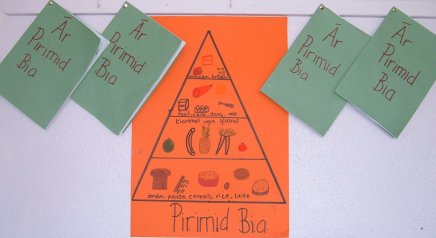
Photo from a Trader Joe's, 2006. From an informative site, itself gaining a quarter-page by Anthony Weiss (again!) on July 24th, "Blogger Focuses on Orthodox Foibles," analyzing traditional Judaism from the inside-- by an ex-insider: FailedMessiah.typepad.com

Wednesday, June 11, 2008


A Year Without Four Feet

That is, the flesh from quadrupeds in my gullet. Spending my life until last June self-described as an utterly devoted "meat and potatoes" sort of guy, I find that I don't miss meat. This amazes me.

Reading a student's research paper today, I reflected on why I made my choice. The essay told how a PETA video shown to this student in high school did not have any real impact, but the soft-sell message of the wildly popular "Skinny Bitch" book did in its subtle persuasion for gals like her to go vegan. Leo the other day asked me why I stopped. I averred a bit, saying it was part health, and part moral, but I downplayed any emotional incentive. He responded that if I had given up meat for morality, he would have found it easier to do so himself.

There was no road to Damascus moment, although I have written inevitably earlier on this blog about my hike on a less arid path in the gathering gloom eight miles or so late one night, or long twilight, from Glencolmcille to Malin Mór to Malin Beag and back in what became before midnight a steady rain in from the raw Donegal coast. I had begun to stretch my legs around 9 p.m. after the first harrowing day of an all-Irish immersion course. The light grows dim there only around 11, and by 3 or so it's already glowing again in the mid-summer that far north.

Before I knew it, there being but one way and that eventually a dead end four miles or so on, I kept walking into the gathering gloam. I talked to myself with as much Gaeilge as I could practice, mile after mile. The whole time perhaps two cars passed me. My sturdy Slovenian shoes and my waterproofed coat kept me cozy, and I recommend for any one in Irish climes to take a simple accessory: that little scarf knotted up around my neck ensured none of me got wet (except my glasses) and I packed it at a fraction of a bulky sweater. That, the jacket, and the boots proved my best investment. I still wish there'd be an invention to repel drizzle off one's specs. Yes, I know of hats, but they ruin my hair. Yes, I wore a hood, but it was no help.

On that by-road, a trailer passed me in the same direction with sheep, those that earlier I had in turn trudged past. How I know this as a citified pansy I am not sure, but I did. One ovine occupant appeared to scrutinize me as our eyes met. We kept looking at each other. The sheep faced me, peering into my gaze as the trailer towed the animal off to its byre after a day's grazing. Our looks locked.

Seán Ó Riordáin has an Irish-language poem about a farmer, Turnbull, who recounts how a horse's eyes passed into his ken by osmosis or imminence. It's like that, but less into the mystic. All I can say is I resolved at that moment of kinship between mute man and canny beast to keep up what for already a week in flight and at Limerick I had started. On the plane I demurred the beef-- which looked better-- for the chicken, and figured once in the land of euro, with no dough to spare and needing to travel light, I would eschew meat and try to eat veggie. (At Gus's bbq locally not long before, I had ordered the boys on a Dad's night out their baby back ribs not knowing they were verboten even by our uber-liberal kosher; another time I had done the same with a blasted form of spareribs. The nearest true smokehouse is out of business anyway now.) This total avoidance of tasty tender sinew had worked for me on past trips, when I avoided any meat in case pig hid in its blankets of sauce or spuds. I continued to stay veggie, with the exception of chicken at my host's couple of meals in Belfast; it's hard enough being a polite guest in an Irish home without making it awkward to turn down bacon and pork products of all kinds as it was, let alone beef or lamb, so some accommodation was understood. But, I could not believe my success.

One of the people in the house I stayed at next to Oideas Gael sensed I was not a true vegetarian. Probably because I turned down communal salads. She asked me and I denied I was, but I told her it was for my financial situation as well as a self-testing experiment. Even the sturdy American women who signed up for the hillwalking course, I noticed, gobbled down the local shop's Britishly frozen dinners full of chemical sludge. Maybe if they were Californian it'd been different: I figured they lived where Applebee's proved fine dining.

Such Birdseye fare appeared quite popular in An Teach Mór the fortnight I was there with all the tenants, including a surfer from Cork, a New Zealand trekker, and a couple of formidable mountaineering women of an uncertain, tough, age. Even the determined woman, coughing the whole fortnight, but not contagious, who faced summits in whatever gust from Berkeley ate like somebody from, well, anywhere but the supposed demographic(s) of the East Bay. Our marathon runner, a willowy blonde teacher from Dublin who ran up a steep slope to the Tower and back in amazing sprints, devoured factory effluents along with my fellow Americans, Brits, Kiwis, and native Hibernians. I concocted slumgullions closer to my temporary home: delicious cheese, treacle bread from a nearby bakery, onions, lentils, rice, seeds and legumes galore, tomatoes, apples, and peppers. I ate well, I thought. Even if nobody else agreed.

Despite almost a month apart from my dear spouse, the best cook in the world, I had thrived on grains, vegetables, fruit, yogurt, soup, and bread. I survived. I felt fine, walking everywhere when the record-setting summer's rain permitted. She never thought I could do it. I'm not even sure if I had fish, come to think of it, but once or twice. If salmon had come my way except for one or two noshing episodes at University College Dublin's bookstore book launches sponsored by the conference, I certainly would have. Biscuits, tea, wine and cheese receptions, and supper that turned out to be tiny bowls of salty snacks at one function proved the total of two universities' largesse-- funded largely on our own reg fees. Still, the vintner's choices at the a pair of welcome UCD shindigs proved more than palatable.

Have I learned any deep insight? We still ladle out disgusting chunks for cats; the dogs scarf kibble, dessicated chicken tenders that remind me of beef jerky with a suntan, and scraps from the boys, who munch burgers and steaks. But, after a fling in public now and then with prime rib, my wife's becoming less carnivorous, and reverting if in a lateral fashion back to the vegetarian with whom I fell in love nearly twenty years ago. I'm sure, although her blog lacks tags, that you can find her account of my inimitable meeting at her house for my first meal there and what she served me as her first domestic repast. My face betrays me when I lie or when I taste, enough said, and all my manners could not hide the truth. She tried. I tried.

My inability to digest or even masticate greens and my hatred in toddler style of cold leaves and oily accouterments does provide an insurmountable barrier to further dietary retreat on my part, and there's the kids to feed, so we do our best. It's texture you miss, not grease. I find any bulk faking it as meat cannot really be discerned in a casserole or sandwich anyhow, given enough sauce or spice or starch.

I feel little sympathy for birds and fins compared to goggle-eyed puppies, although even this may change. (Niall assures me that fish lack nerves.) That sheep I saw, staring back at me, differed not from its mates in that flatbed crate, spray-painted and dirty wool. Like most bedraggled people I pass on other strolls closer to what passes for civilization, it's not the outward appearance that moves hard-hearted me here. Sheep or human, I have to establish eye contact, touch a deeper mood, feel some connection. I cannot say any compassion has enriched me that powerfully, but perhaps it's a shift of my wavering, skeptical, seeking spirit aligned more subtly. I'd like to think so.

Maybe credit assigned yoga, unawares of any logic. Another paper I graded told of a disenchanted young woman's search beyond Catholicism and her embrace of Buddhism, and I noted with my pedagogically incorrect red pen hovering in hand (she's a terrible proofreader) of the injunction not to harm any living thing. I recall how this was waived for the Tibetan varietal, given their rather lackluster flora compared to their livestock. I wondered if meat-raising countries like Tibet or Ireland bred far fewer vegetarians historically, or more now.

My meals are preferably gobbled hot at least in part. Come to think of it I want even my toast, my oatmeal, baked apples, and my warm tortillas. Food served at a higher temperature than my body or the noonday thermometer is my preference no matter the weather. Chicken and fish still suffice. I crave fiber.

Problem is, I'd love to live on grain, tea, and berries, but I have not found any Beverly Hills or Palm Beach doctor's diet prescribing this attractive regimen yet. Manchán Magan's "Angels and Rabies" tells of his meeting with a Western drop-out in the Andes flourishing after two decades living only on fruit. But recalling the harangues from St. Simon Stylites, the discredited Marian visionaries at Garabandal, or the urban folktale from Santa Cruz of the man who lived the past nine years on a diet of only the air that he breathes, I doubt that Irishman's pal's veracity.

Photo: My setting was very much like this Irish scene that June evening. But it rained more.

Friday, April 6, 2007


Pigs, PETA, Porky's, Pesach & me.

Or, the Consolations of Philosophy. My hours of Good Friday-meets-Passover afternoon chock full o'thoughts begin with a painted pig on a swap meet wall and wander long into Big Questions to stumble again into pigs and kosher.

From the Blue Line as it stops at Vernon station, La Michoacana swap meet stands overlooking Long Beach Boulevard along the tracks. On my train rides a couple of years ago, I used to notice most the painted signboard above the little entrance "LITTLE KIDS: Articulos para todos los ninos." (I can't add the tilde.) Still under the litigious aim of a certain Walt D's fighter planes manned by lawyers intent on obliterating any unsanctioned trace of certain quasi- anthropomorphic animated characters known to billions as one of their first identifiably named toddler sights, Mickey M and Donald D drive toy cars under the large lettering. Now, however, I tend on said commute to ponder as the train halts the few seconds where the window frames the other side of the sign. CARNICERIA. Not much needed here for explanation. A steer looks out from the right-hand drawn circle; a pig from the left. The pig, white, gazes patiently, wistfully.

Vernon, if you go up Soto, passes on the right the Farmer John slaughterhouse. Vin Scully used to assure us during pauses in the Dodger games that their products were "easternmost in quality, westernmost in flavor." See, the West always has this inferiority complex. Analogy: America is to Britain as the Western US is to the ___. Still, we get the snazz (a word I discovered yesterday comes from sneachta, snow in Irish and by extension "polished" surface dazzling viewer turned admirer) if not the craft in typical fashion also extending my analogy.

On the entire side of the building, you see only a vast mural: green fields with cavorting children, black and white, and pigs frolicking, understandably eager to stay out of reach of the pursuing lads. This makes me every time, which is rarer now than when I taught in South Gate and used this route to get north through East LA back to Echo Park and then our other truer Eastside home being east of the LA River, wish I had the fortitude and the palate to be a vegetarian, or at least a non-meat muncher. I can't say I have much compassion for fish and chickens; birds don't move me much either. But quadrupeds prove often more expressive, less bulging dots as eyes and rounder, again humanized gazes.

However, Clarabelle the Cow was an early failure in the Walt D ratings. Cows and the like did not tug the cinemagoers' hearts and tickle urchins' chins as did mice and ducks. Porky was from the rival W. Brothers, yes-- a studio more aggressive and smart-ass than the prissier Walt D's. (An aside: yesterday an unlicensed illegal immigrant (don't know, stern PC-ers, if he was working "sin papeles" as "undocumented") with .024 alcohol in his system drove his SUV in the wrong direction at 2:30 a.m. to kill on PCH a film director and his son. The Times had a typical LA moment: headline on the second page of their article: "Director of Classics 'A Christmas Story' & 'Porkys' Dies in Accident." This whole "Crash" scene sums up much in my hometown today.

What adds to this scene is that the article explained that director Clark based "Porky's" on his own 1950s teenaged reminiscences growing up (sic) in Florida. In less fevered scenes, I did grow up as "Kennel Boy," in my spouse's estimation, in surroundings not dissimilar to the industrial zones in which slaughterhouses, tool-and-die shops, or concrete pre-fab walled blocks churn out whatever widget has not been sent off to be made in China for a twentieth of the price to send back to us. So, what's my point? I'm getting there.

Anybody who shares my predilection for "spontaneous divination" (a mental activity I had no external verification of until I read Yukio Mishima's "The Sound of Waves" where the protagonist bases his decision on whether crows he happens to glimpse up at will touch down on telephone wires at a certain moment or not) may understand my madness' method. (As I type, a Northern Irish punk-metal band, Therapy?, sings "Jesus without the suffering" as Good Friday enters the second hour of its three-hour afternoon period of introspection.) I came home thinking about the painted pig. I then was mulling over the fact that I had not eaten much meat lately, enhanced by the modifications that Pesach exacts from our regular fare. Niall came home and I showed him his junk mail, a PETA questionnaire with two "gifts" inside. I told him that his mother (unlike surely both grandmothers of his) always followed a rule that she would not avail herself of such a gift unless she contributed to the cause sending the "gift."

I suggested that he fill out the questionnaire, for if he wanted the address labels and stickers, it only made sense as The Right Thing to Do. He did, and he and I both pondered the predictably phrased questions to which certain yes-or-no answers appeared, to say the least, very unlikely. Especially considering the target demographic. It reminded me of some Orwellian trap or the litany of inquiries offered to passersby of Hollywood Blvd. or a related site on the former Berendo-meets-Sunset corner of LA. The choices seemed as predetermined as a yes-vote for the Politburo or Saddam or our local gerrymandered Latino Democratic pols. Leo had recruited his brother into the ranks of the newly evangelized making a stand for PETA against cruelty to our animal companions during big brother's brief coming out as a Non-Meat Eater. I did admire the effort that he stuck to this conviction for a few weeks last summer after he came back from the Minnesota State Fair shaken by gazes similar to that of the painted pig.

Little brother has not finished the survey, or at least did under mom's supervision upstairs out of my earshot, but it's magnetized to the fridge today. We were not sure how to send the dollar he wanted to donate. His parents feared entering a demographic niche that opened us to telephoned, e-mailed, and perhaps personal doorstep earnest methods of sophisticated market research (see previous blog entry on Claritas, for example) assault by implied consent.

To think that my dear spouse on one of our first if not the first farings of fare featured at her little Echo Park cottage offered me, as her druthers then, a veggie repast I could not literally eat. You know me and lettuce and the like and my (thanks to son number one inheriting said trait and the concurrent mid-1990s-era proliferation of billable medical conditions now called Sensory Integration Disorder rather than my wife's term "simply being an asshole") reaction.

I tried, I really tried. If I could live on pasta, bread, granola, and grains I would happily forego meat. This reminds me. I have been making my own giant jar of trail mix for my own SID-enhanced taste buds. Cheaper than the speciality bags at TJ's, and most nuts tend to irritate my lips. I guess I pioneered the now-rampant epidemic of childhood food allergies. I shake up the sum of a bag or so each of pine nuts, sunflower seeds, pecans, macadamia nuts or soy nuts, blackcurrants or raisins, dried cranberries or cherry bits, and last batch packing-materialish chunks of dehydrated pineapple and strawberries as a healthier if not less fattier snack mid-day rather than roaming for cookies as is my lifelong want. This is only my second batch ever. The first was saltier and had the mac nuts; I opted for this one to have more fruit and nearly no salt. Diet demands discipline.

After the break, I regain energy. Here come the Big Questions. Curves ahead.

The questions I ask myself today of why I diet, why I follow the rules I impose upon myself although they are not of my invention lead to larger concerns. I cannot say I regard any truth beneath what we humans fumble about with as a window into the ineffable and the "event horizon" of our impending individual and eventually universal oblivion that seems our realm's likely fate. We live in a universe that is .4 visible matter, .26 dark matter, .74 dark energy. Astronomers now doubt we can find out much, as opposed to guessing and sadly calculating about the 96% we cannot see. They tell us we may simply have to accept our inability to know it all. By our very nature we are limited.

Universes could have popped in and out of existence without any prime mover or uncaused cause, contrary to Genesis or Aquinas or Aristotle. Scientists more skilled in these matters than the writers of Leviticus tell us that there are 125 billion galaxies in our universe, the one that our ancient forebears conceived of as fixed stars and rotating planets in a heavenly ceiling, a firmament revolving about us like the panorama above us at a darkened planetarium. Loss of a human-centered or God-centered world leaves us bereft. I sound like Beckett. (Read concerning this existential condition John Calder's thoughtful and poignant book "The Philosophy of Samuel Beckett"-- of course it's reviewed by me on Amazon.) Three thousand years later, our cosmology charts not a tidy sphere sheltering us but a vast universe 70 billion light years across, judge of our immense insignificance, our accidental existence, our fragile planet.

I sense as I write this how far I have travelled from the afternoons I stood in a cool and fragrant church before a veiled altar and covered statues to kneel and kiss an extended cross. More and more I admire those who do have this belief. Of all people, I read Maeve Binchy in a recent "Irish Voice" interview lament her own loss of faith, suddenly, forty years ago. She told the interviewer she was not liberated, rather regretful, that this absence had entered her life, but she could not deny it. Why do we persist in our rituals, our reconstruction of Celtic tree calendars or lunar charts adding up full moons to align our drifting selves along some plumbline? Even if we are holding each end, or our ancestors, or our fellow congregants rather than angels or the aura of departed Cú Chullain or the well-named Ein Sof. More and more I share perhaps for my mental health and spiritual stability if not as a theologically consenting witness in what my dear wife has also acknowledged, the Shekinah, the feminized presence of a divine force.

Fitting that in sex and longing and dreams and reveries and happiness and doubt this force arises most powerfully. It may not be generated beyond the sum whispers of our gliding prayers, our sighs, our endearments and our own curses. I don't know any more than you do. Some of you may have faith as I once had. Many of you probably don't, perhaps as the cliché goes God has not moved away but we have moved away from the divine. Do I still have the "gift of faith," as aptly phrased, or not? Is my fascination with what Rudolf Otto in "The Idea of the Holy" called the "numinous" my evidence of belief, or only my wish for such? But, as when a pothead claims to have entered the doors of perception and viewed the ultimate truth, how do we know that any vision we generate is beyond the feeble pulse of our own minds, however chemically altered by endorphins, THC, or enlightenment? I think the Buddhists were on to it, the more I age. Getting ready for your annihilation rather than your salvation. Helping others along the way into this emptiness if needed as a generous gesture of shared humanity rather than divine commandment before you too plunge into the unutterable. Accepting the wheel.

Boethius, waiting for execution in a Roman prison, at the start of what he would not have called the Middle Ages, after offending his supposed "betters,", wrote the Consolations of Philosophy. He urged one's acknowledgment of one's limits, physical and spiritual. For him philosophy gave bow to her better, Theology, in good Christian etiquette. Still, he gave more credit than the first five centuries of Christianity often had to her Greek forebears' own considerable effort in working out the same problems I and you must about our existence and our predicament as mortal prisoners facing our own green mile, neither knowing the time or the hour or even being able to choose our last meal, except in rare circumstances that Socrates or Gary Gilmore shared.

This late Roman and early medieval bureaucrat was one of the popularizers, in his own diligent effort to escape if not the actual than his metaphysical fetters, of the image that symbolized what the Rotam Fortunae promised medieval man: regnabo regno regnavi. I reigned, I reign, I will reign. This depiction showed the Queen of Fate. Back then her hand may have been seen to have been in turn a marionette under control of the Almighty Master. Now we may see Fortuna as the whirling of the string-theory and quantum-physical universe of time and space. The man lowly raised himself as the wheel spun and then by no power of his own the wheel lowered himself and his fate again shifted, and all the litanies and novenas and devil's pacts mattered not.

Romanticized or dramatized, however, nearly all of us possess an awareness beyond ourselves. This does not prove its divine origin, much as I wish it did. I recognize without condescension that billions out there hold the opposite view, that our wish speaks to its inevitable fulfillment. But there is a sense that wafts above all of us, around us, in both our inspired and our infernal moments. Whether this emanates from a divine origin beyond our .4% verifiable perspective or not is impossible to tell. Does it matter if I believe in its extra-terrestrial source? My belief or its lack will not conjure up or extinguish the unseen Creator of the Universe one way or the other. Whatever we fail to see may be perpetually or at least temporally beyond our ken, from the inconceivable .96%

John Hick, who has thought about the questions of the ultimate similarity of the faiths many share and developed over a long theological career the concomitant denial that any religion holds the key that alone will unlock the door to a reward, earlier wrote a classic study, "Death & Eternal Life." (I think of Hans Kung-- umlaut needed-- and his more realistic title "Eternal Life?") He suggests the thought-experiment of two souls, or whatever they are, after they die. One believes in immortality, the other doesn't. They round the perceptual corner. One is proven right. Either the New Jerusalem, the Celestial City, awaits as the desired prospect or nothing looms at all. Only the void. A Buddhist once assured someone as fearful as me: were you afraid before you came into this world? No. Therefore why should you be afraid of what is to come?

Yes, but does this not depend upon a post-mortem awareness anyway? I know Hick works this into his argument. He's only human. How else can we grapple with a moment we do not know exists or ever will, much as we hope it will or insist upon its culmination. Hick's merely delaying the moment of death and imagining from our .4% desperation the moment that follows, a moment that consumes itself into extinction, a non-Teilhardian event-horizon without a noousphere. Paleontologist and Jesuit: the right combination for his eidetic model. He hoped for our absorption, evolving as beings into the Other's embrace at last. Abbé de Chardin knows now if the Celestial City beckons. Or he knows nothing, and can know nothing. Rest in peace, Father.

Contrast this to an earlier French thinker. Blaise Pascal's wager always struck me as insincere. If God is out there, why would such a power condemn us for not acknowledging what we cannot know truly in our .4% state? Einstein cautioned that "God does not play dice," that the universe follows rules. So, does this not upend the Pascalian thought-experiment that tries to outwit God as if "He" is the Devil and we are a backsliding, finger-crossing Faust trying to renege on the eternal deal and find an out? Pascal suggests we believe if only because otherwise we have a lot to lose, and if we're wrong, there's no problem anyhow. Clever as a philosopher should be. But this does not prove anything. In that sense it is a more "modern" answer than Boethius could have at least outwardly dared to suggest, even if he was already doomed! On the other hand, why should we merit eternal life among the mites and lice and dogs and pigs who we claim decline into dust while we somehow in our rarified semi-divine essence are given the chance to become better than all the life around us, to rise up into resurrection and fulfillment in a manner denied simpler and less embittered or less deluded forms of life evolved over 1.7 billion years of our own universe one among many?

This is news to nobody. We all have to work out our own narrative arc, an ending we will never know even as we act as the protagonist against the antagonist whose victory we cannot thwart. In the meantime, during our few decades, most of us enter into the arc and complicate it mightily with 613 mitzvot and a decalogue and 113 sura or 900 names of God. It's a game that some of us find we like to play as children and many of us keep playing as adults. A natural game, like our imaginary friend once invited us to enjoy. This mental invention of a religious superstructure that springs out of our projection outside of ourselves into a greater entity that solves what we cannot seems to be a natural neural construct,. At least according to Daniel Denning's recent "Breaking the Spell." (See my Amazon review! I don't agree all with Denning or Sam Harris-- in my review of his "The End of Faith"-- but both studies provoke and upend as they are meant to do in Voltaire-like fashion the conventions of the regime we live under.)

Now, why then, Denning asks, has the religious impulse survived then, if it is not "objectively" true? He suggests it gives us an advantage in grappling with our mortality, bonding with others for altruism, and attracting others of a healthier mindset with whom we can mate and breed similarly tending offspring passing on this trait. Harris wishes impossibly that if each parent could tell his child the truth, there would be no more religious dissension or metaphysical delusion. But how could each parent step out of his or her own belief system to grasp some objective, rational, Penn & Teller, Skeptics.com assertion of the falsity of the supernatural? Denning perhaps, although it complicates and confuses his argument, at least allows some common ground with the authors (See my reviews!) of the misleadingly titled "The God Gene" and "Why Religion Won't Go Away." These books counter that we have an in-built tendency that does not reveal the lack of a religious plane but instead explains why we generate one. Despite the titles of the last two books, neither one claims this "proves" any divinity, although foolish readers who cannot see past the titles (good for marketing, naturally as they caused me to peruse them!) fell into this predictable, and perhaps for the authors and publishers lucrative, trap. Frank Tipler among others has posited that we may rather live in a universe designed for our emergence and understanding of our selves within it according to an anthropic cosmological principle, but this seems to my feeble imagination a version of Anselm's ontological principle in that it sets up a deity in charge of it all to make its point while failing to prove that deity itself.

Religion sets up for us all, theologian, scientist, or mere blithering blogger a tremendously varied set of holes at a professionally commissioned luxury golf course for us to face. Religions: what are they but cleverly man-made obstacle courses? They are designed often long before we enter the scene. We often know little of their designers and few if any have met them who we can talk to. Hearsay and wishful thinking and rumor swirl about the intents of the architects of these vistas we face. These expanses ahead may take many years to trudge, and the eighteenth hole never seems much closer than when we started. The overall map of the course is hinted at but nobody's sure of what it really looks like from a firsthand view. Many think they have guessed the setup. The course challenges us to overcome our handicap and eventually despite sand traps of reason and watery graves of logic and dense thickets of doubt to beat these back and somehow hold out for the gold medal of redemption? Surely a more admirable goal than gold.

Did not Paul himself speak of running the race for such a prize? Paul also came to reject his people's practices on such days as Passover, replacing the tangible evidence of the seder with the transubstantiated sacrifice. Peter Wilson in his "Ideas" (see my review!) cites evidence that ties Greek resurrection and immortality concepts to Orphic cultic practices that may have entered into Pauline thinking. He also intriguingly if tenuously connects yoga with earlier quests to enter immortality and also wonders if magic mushrooms, more or less, fueled Orphic and earlier Middle Eastern journeys of bodies into their imagined souls in the Otherworld. In turn these too encouraged Greek and indirectly Hebrew conceptions by the Axial Age of immortality, salvation, and mystic transport into a higher form of existence. For Paul, in a vision, a blanket full of treyf was offered him to partake of. The Torah was superseded by the Eucharist. But is eating your god, as in Orphic and Orpheus devoured by the harpies, any less confusing than abstaining from camels or shrimp? I intellectually know the arguments that Jews make order, boundaries between categories. I admire Mary Douglas' seminal "Purity & Danger." She states that some of us try to impose clarity and distinctions, illogical as they may seem to an outsider. They have an internal sense even if it or because it goes against the norm of everyone else. Religions thrive on martyrs.

Apropos, the arguments over the Real Presence have felled many forests. Objectively, each holy action that we re-enact by definition is nonsensical. So with most religion-- isn't that the point? Beyond reason? Paul again urging his followers who also must have been jeered at to become "fools for Christ." Francis of Assisi as jocularus Dei. Hermits on mountaintops. Ss. Felicitas & Perpetua entering the arena singing hymns as they, barely women and at least one pregnant, face the lions. Hasidic rebbes posing as shetl loonies to make their parable's point sharper.

Silly as not eating pig or mixing meat and milk may logically be, it does remind one that not all the body or spirit longs for can be satisfied. The Jew and Muslim think the Mass a mumbo-jumbo of imaginary legerdemain. We ask the Hindu how they can see Vishnu in a cow. Wicca's claim that forces may be felt and reckoned with beyond our sight compels many to brand it devilish. The Christian cannot figure out what's the big deal about shellfish or beer. A certain entity calling itself a church for tax exemptions (not the first however) eschews psychiatry. But, billions go along with such restrictions. Some think they risk eternal expulsion from the comfort of God for violating even the fine print, let alone the posted sign. Many do not, but they still lend their support, nod their heads, go along half-wondering out of politeness, bemusement, loneliness, loyalty, love, fear, or indecision.

Think of all the grown-ups who persist in following practices even as they do not wholeheartedly and with "mental reservation" (as certain clergy recently were counselled in withholding information about molestations in our own Archdiocese, so as by canon law to protect the interests of said Church) sanction their divine origin. Is this the Pharisee prattling about in public and not the Publican going to his room to pray in private? The old look at hypocrite Tammy Faye or lying Jimmy Swaggart attack, the reflexive distrust of the message if its messenger falters, the Donatist heresy renewed? Are we guilty of adherence to the letter and not the spirit of the law? That old Christian canard against the Jews or anyone who wasn't their particular and ever-fragmenting Jesus-faithful, Gospel-truth, Magisterially-loyal denomination?

Or, is it a mature order in which we moderns assemble-- even if unaware-- our priorities? We follow that which has no reason not to be unreasonable but to witness to our inborn tendency towards that beyond reason. Why else do we get hungry? Why give in to momentary pleasure that results (until the Pill, gift of a Catholic Dr. John Rock in 1961!) in a lifetime of care for another weaker (at least for a decade or two) than us? Why adopt children, on the other hand, or bother to care for the frail? Denning may explain these drives for food and sex. Now unlike our biblical legalists we know these urges are rooted in actions 1.7 million (ability to take stones from quarry site and carry them to a site a mile-and-a-half distant to be made into tools showing future-oriented thinking's arrival) or (like our sweet tooth shows "sugar me animal want" and this spreads the seeds of the plants by crazed consumers further for dissemination in animal feces) 500 million years ago. But, logical as we otherwise pretend we are, we go along with the game. Character-building, that's the rationale we give for Little League and Sunday School. Parents tell their children their own version truth, even if this is not Harris' vision of a world of perfect atheists secure in their existential plight. Pilate to Jesus: "what is truth?"

(Even Jewish "non-Jew" Harris confesses in his book his admiration for Buddhism and meditation-- back to the one religion that denies God and therefore furthers its usefulness for many non-theistic or iconoclastic modern Jews-- secular or otherwise! I do wonder how Jews reconcile all those colorful statues of copulating deities., grimacing demons, and sinuous bodhisatvas with a desert-harsh Abrahamic practice shared with Islam of rejecting any idol or image of the divine presence, but I admit ignorance. My wife's correspondent Mr. Gould-Saltman, esq. might enlighten me. It may be akin to my distinction between worship of God versus veneration expressed by a parishioner to a Catholic saint or Mary, in plaster or idea.)

Back to my main point, we find ourselves drawn outside our own limits. We assemble often with others to bond in drawing a "fence around the Torah," to stock a church with statues and tapestries, to fill the office of a Jewish atheist with figures of the Buddah, or the determined invention (see a naturally reviewed J. C. Hallman's "The Devil is a Gentleman," a really misleadingly titled study of William James and American 20c religion's fringe movements) of new cults that may or may not grow into established religions. Hallman notes that atheists have their own symbol to put on military dogtags or their related graves, the letter A within an atom. Even non-believers, as Hallman studies well, create their own forms of organized observance. I guess Dennett (also a Jewish atheist I recall!) is right, not Harris? Denning might like Harris' suggestion to come true, but as we are hardwired, it may be impossible to evolve for a few million more years. (Arthur C. Clarke mused that in a thousand years, anyone professing belief in a deity will be committed by his stoic peers into an insane asylum.)

My fittingly if maddeningly endless expanding thoughts threaten to increase entropy in you the reader, by now, so I will retreat from the edge of my universal flight into infinity and beyond. Down to our insignificant planet and a few forms of its people's models for how the universe works under the rules we come up with, the debates between Sunni and Shiite, Sikh and Hindu, Episcopalian and Anglican Communion, do not shrink into inanity for me. Many think they do, but I confess we need a side to cheer for, no matter our team. We all bond, as Hallman documents, as American Atheists, neo-pagans in Seattle, seekers of UFO-laden Urania, as the monks of New Skete, or beatniks and hipsters defying everyone else as the Church of Satan!

Thus we prove our devotion to rules of the game. Worshipers or fans, we all are no less die-hard. We Dodger fans (except "play fair" spouse who should read what an uncaring, utterly immoral thug morally as well as mentally Mr. B. Bonds is in today's LA Times, non-Sports, front-page section feature) jeer Barry Bonds by we Dodger fans. Cubs fans pray for a pennant. Irish football fans along with me quiver over a Cup chance; the lowly Lions of Millwall-- a fan of which I am tangentially one by curious atavism-- actually managed as a true miracle if not to best than at least to play Man U in a Premier F.A. Cup 2004 Final. The reviled Memphis Grizzlies earned my affection after I saw them at my first and I hope last Lakers game take on LA's tawdriest. strutting, whorish, prima donna squad and at least hang in there, considering the hapless expansion team has the worst record in the NBA. Pakistan's cricket manager's murdered after Ireland (!) defeats the national team. My wife and I untangle the finer points of an article by Jane Kramer in the recent New Yorker about "The Pope and Islam." I take the pontiff's side rhetorically to argue against her! Even though I agree. Thomas Aquinas would have agreed with my methods if not their conclusion.

By these actions you will know us, in our bickering, sinful, idealistic, and fight-to-the-death combative spirit. We are as quick to condemn as commiserate, it seems. Few of us can nourish the cultivation of the peaceful and detached unless at an ashram or monastery, but nearly all of us know the respite such moments of fleeting insight give. Expulsion from the garden: a common story. How we got in the mess we're in. But we all recognize that submission to a power or lure none of us can explain. It impels us towards a goal always receding into the distance, as elusive as that Cubs Series win, or the Cleveland Indians for that matter. Why, then, keep trying?

We celebrate a pilgrimage for which no historical evidence exists. Passover and the flight that inspired Walt D's Dreamworks successors, who at least in surname remained MOT's, to voice Moses by Robbie Benson in admittedly moving animated and CGI'd magnificence as "The Prince of Egypt," is as legendary as the ancestors Queen Scotia of Egypt and Nial the Scythian scion who married that daughter of the cruel Pharaoh. Horrified at what he was doing to the Hebrews, Scotia fled her native land and with Nial sought the deserts of North Africa. And, as you can read in Bob Quinn's maddeningly argued but intriguingly suggestive "The Atlantean Irish" (you know where my review is), my tribal engenderers strayed along the Mediterranean until their offspring engendered my clan that eventually made it from Iberia northward. (For more lore, you can also look up my article in (gen. ed.) Seán Duffy's Medieval Ireland: An Encyclopedia under "The Jews in Ireland.")

So, Sam Harris, you who know not only philosophy but neurology, what do I tell my children about the truth of the Hebrew's origin myth? Professor Dennett, millions of the remnants of your own attenuated but still extant people still tell a story every spring that no book outside the Bible can document. Jews are told to enact the Exodus as if it happened anew, so as to renew it each of hundreds now of generations. What's the point, beyond a cheap Woody Allen joke?

Practically, if not verifiably, we need such hero stories. My more liberated bog-ancestors found them in our Connacht queen Medb so hungry for men's thrusts that thirty lined up "one in the shadow of another" could only slake her formidable lust. Cú Chullain with his complimentary orgasmic warp-spasm, Fionn Mc Cool and his Giant's Causeway, Scotia and her lonely grave in Kerry, Amergin's terrifyingly raw paean to nature's powers after landing as the first man on the shores of Erin: these are as powerful to me thousands of years later as are to my Jewish family the equally antiquated accounts that fill scripture. Passover recounts at the seder that old Jewish stubborness. The seder emphasizes the defiant, suicidal refusal of Moses to capitulate to the cruelty of the Pharaoh. Other times, we may recall Judah Macabee who cut down the Greek elephant as he was trampled in freedom fighter style that a "Celt" could understand, Judith who vamped Holofernes only to behead him, or Esther who similarly seduced Aheshvarus so as to win freedom or at least a chance for a bit of Stern Gang retribution against their Persian satraps. I will refrain from mentioning some arcane interpretations that rabbis gave to certain non-missionary activities they sanctioned between themselves and their wives. Suffice it to say the Hebrews (and the Irish once, hard as it is to believe until again recently, in a rapidly secularized nation) possessed much more catholic with a small c acceptance of the many ways two bodies can connect their spirits and their limbs than later Christians and Muslims allowed.

The truth has many forms, and not all of them may please the demands of academics like Dennett or rationalists like Harris. As an academic manque, I understand the requirements of scholarship and science. But, as an quondam Irishman once removed at least, I hearken to other needs for my own knowledge that defy facts and figures. So, back to ancient stories. Why do I return to them? Why do I study literature all these decades, as I lean towards non-fiction anyway? There's a yearning that only my imagination can kindle to warm my shrunken soul. Pesach, as Lent and fish sticks, or a theoretically non-alcoholic Saudi Arabia or a burger-less India or the Loma Linda Adventists with their nutburgers, reminds us of our mortal fragility.

My deep thoughts on metaphysical matters must pause for the body's satisfaction. I began this at 12:30 early in the three hours that Christians pause to reflect upon the Crucifixion, a day halfway through the Passover refrain from leaven and all those products somehow if illogically dragged in as being dreadfully liable to water-kisses-grain-spawns-yeast, the signs of moral determination mark millions today no less than they do banners and suspiciously-worded surveys from PETA. My fitful thoughts took longer to communicate than Jesus hung on the cross. I ended it at 5. But I did pause twice for mix-- the re-drawn fence around the Torah allowing sensibly and not illogically nuts being at last as of last year pesadik-- it being long past midday. Consummatum est.