Showing posts with label Celtic Women. Show all posts

Thursday, June 8, 2017

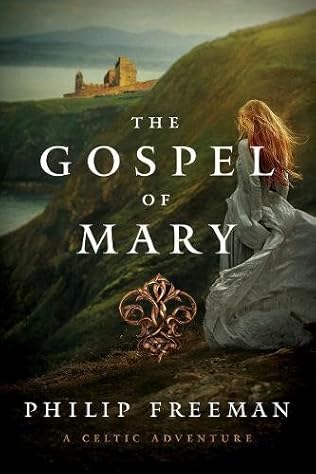
Phillip Freeman's "The Gospel of Mary": Book Review


book cover of 

The Gospel of Mary
Since I was a teen reading James Michener's "The Source," I've had a weakness for "So-and-so has discovered a missing Gospel" yarns. I liked the prolific Professor Freeman's recent Oxford UP retelling of Celtic mythology, so I gave this a try. Via an e-galley, I did not know until I finished that this is the third in his Sister Deirdre series. That explains some backstory I kept wondering why not more was divulged herein. I had no trouble following along, but it's better I assume to have caught up with the previous books, for the main character evidently has a complicated past and much to tell.

Not be confused with another, recent Irish-oriented story, Colm Tóibín's drama "The Testament of Mary," Freeman's "The Gospel of Mary" features the rapid pace, genial tone, and expository dialogue that fills us in on an Ireland when Christians still number few. Deirdre's grandmother was a druid and she claims the same identity, although when her mother died, her grandmother fulfilled her promise to raise Deirdre in the new faith. With allusions to a failed marriage, other past liaisons, and a child who died young hovering about, it's clear that Freeman's protagonist has had more adventures than most nuns might have, at least in later times. She lives with her friend and sidekick Dari in a monastery founded by Brigid, which to Rome's discomfort hosts celibate men and women together.

Rome's unease deepens as it sends a clever emissary to find out what the truth might be to a manuscript smuggled into the island with haste, secrecy, and danger. It is, naturally, the tale of Jesus told by his mother, and its passages intersperse, as they are translated by Dari from the Aramaic, with the fate of the two women as they get caught up in keeping their treasured text safe from the Church. The Church, after all, fears that its integrity will crumble if Mary's words are proven true, and even if they are not able to be verified, that the heresies and tumult generated by them will bring down Rome

It all moves satisfactorily. I read it in a sitting. Freeman has done his biblical homework, and he blends it with a quest that dashes about Ireland. There's plot complications, but the story line as a whole does not surprise. It's a pleasant narrative, and it likely will educate as well as entertain you.
(Amazon 9/5/17)

Monday, February 3, 2014

Éamon Carr's "Deirdre Unforgiven": Book Review

As a musician and poet, Éamon Carr came to prominence in the Irish counterculture in the late 1960s, and as drummer for Horslips, he memorably created lyrics blending the Ulster Cycle and other Celtic tales into hard-charging or softly lilting music. Now, he returns to these inspirations, but, in the intervening decades, the impacts of Northern violence, itself recapitulated, mythologised, and raw, darken this play, subtitled "a journal of sorrows".  For, during the 1990s, Carr as a journalist revisited places he had toured as a musician, and he heard new stories of strife, vengeance and suffering again.

In a spare but eloquent style, Deirdre Unforgiven by its title conflates the tragic protagonist, enslaved and compelled to wed lusting, selfish usurping King of Ulster Conor, with what I sense as an echo of Clint Eastwood's compellingly and similarly haunted anti-hero, himself unhinged by lost love and simmering sorrow. As Professor Shannon McRae's preface and Carr's introduction explain, these verses adapt Yeats' Japanese Noh ritual to drama. Enhanced by John Devlin's drawings, this is a pairing well suited for Carr (see his 2008 poetry collection and homage to Basho, The Origami Crow [my review]); here he conveys through the stripped-down incantatory recitals of ancient Greek tragedy the structure for his bleak ritual scenario.

Taking place in the "uncertain time" just before dawn (itself redolent of suggestion in charged Irish rhetoric) a triple Chorus precedes a Young Man, a reporter, fresh from an eerie conversation with a crow-like figure on the Shankill. The Chorus and the Old Woman, the Celtic goddess of war the Morrigan, fill out Deirdre's backstory "of yesterday's news that is heard too soon". Meanwhile, the reporter recalls as of 1999 yet "another bad day at Drumcree" between marchers and protesters.

The ghosts of Deirdre and of the unforgiving ruler over Ulster, Conor, masked as is the Old Woman, tell their side of the saga. They reveal Conor's thwarted frustration and Deirdre's desperate elopement with Naoise. Deirdre arises to warn: "There will not be enough mourners to lament/ those who fall" but as the Chorus speaks for so many witnesses: "They listened/ and dismissed her concerns".

Opening the second scene, the Young Man recounts more victims: footballers caught in a blast, a grave for one who died too young, three boys at home as they slept blown up by a petrol bomb. Deirdre bewails her passion for Naoise, for it blinded the pair: "we didn't see the blight".  She tells of her doom after that of Naoise and his brothers, and as she collapses, the Old Woman continues her tale. The Chorus repeats the triple spiral of lore: "Pure black banner/ Pure blue sky/ Pure red blood". Conor's desolation and the reporter's despair combine, for both lack words to assuage their torment.

The Young Man, in a very Yeatsian image of how the off-kilter past whirls into the present, sums up their predicament: "Somewhere, whip in hand, a laughing child/ sets a wooden-top spinning./ Now ask,/ for this world to keep turning/ must we all,/ each one,/ hear the lash sing?" Silence follows.

Deirdre chose to fling herself on a rock, to dash out her life rather than submit to Conor. Her defiance, commemorated by a memorial tree "that when the wind blows/ sings of infinite sadness", represents the capitulation of the female to the male, the injustice perpetuated by the cocky and headstrong over those perceived or outfoxed to remain weak. The Old Woman, no stranger to this anguish for she herself embodies its mythic atavistic force, concludes: "For wherever there are dead men/ that's where you'll find me./ My wings forever wrap the fallen/ who so wanted to be free".

Carr's play invites no easy resolution. As Yeats did, so does he. Deirdre Unforgiven presents a stark reminder of the brutality behind the cant, and the cost incurred by too glib a chant or rousing ballad.
(Slugger O'Toole 11-15-13. British Amazon 11-15-13 and Amazon US 11-14-13 all without OC link)

Sunday, October 13, 2013

Tony Bailie's "A Verse for Murder": e-Book Review


This cover merits study--it's well chosen and ties into the mystery elaborated by an informant. The title, a play off of the "murder of crows," echoes in the name of Barry Crowe, a Belfast journalist (or is it "sleazy tabloid hack"?) pursuing the backstory behind the sudden demise, apparently by auto-asphyxiation, of Northern Ireland's leading poet. The compromising circumstances unfold neatly in this e-book novella.

Bailie, whose novels The Lost Chord and Ecopunks delved into respectively gnosticism and New Age quests, continues his application of Celtic and esoteric themes into his fiction. As a Belfast-based journalist (and a poet), he enjoys sending up his profession(s) and their shared pretensions. His short story "The Druid's Dance" in the anthology Requiems for the Departed by Irish mystery writers incorporating Celtic myth and archetypes anticipates the mood and tone of this new tale.

Reviewing a mystery, one cannot give much away. The blurb at Amazon sums up the premise enticingly. It's not betraying the story to admit that the set-up elaborates into, over 74 quick pages, an entry into the symbol of the spiral and the Triple Goddess of Celtic lore. Drawing on, in my "guesstimation," theories of spacetime and the earlier attempts of Irish writers Denis Johnston (The Brazen Horn) and Francis Stuart (The Abandoned Snail Shell) to plunge into the liminal, the results for Barry recall those of the warp-spasm of Cú Chulainn, and the cosmic terror that seems to cross generations and centuries as Bríd, Andrea, and Alma enter the lives of Barry and his cop pal Dervla.

Phrasing sharpens: "curtains all along the street begin twitching in a semaphore of suburban noisiness" updates Brinsley McNamara's once-famous novel about a gossiping lot, in the "valley of squinting windows."  Rowan Tree "looked like a poet should do, elongated body, gaunt face, exploding hair and eyes that suggested insanity." Another, once-promising, poet's eyes "retained the primal urgency of someone who wanted to say something but had no idea of how to say it."

Futurist couplings of poetry as violence, "sexual electricity," a jealous bard Rowan Tree's curse in verse, hallucinogens, nods to Robert Graves and pagan rituals still alive today in the heart of the city: these exemplify the details Tony Bailie adds to enrich his narrative. If you find this enticing, you will find this efficiently conveyed but pleasingly allusive tale a pleasure. I'd like to hear more from Barry.
(Amazon US 10-31-12 and British Amazon; slightly edited and expanded for Slugger O'Toole 10-22-13. P.S. See also my brief review the same day of his electronically delivered short story "Sacred Santa" on Amazon US and British Amazon)

Thursday, November 17, 2011

Elizabeth Cunningham's "Red-Robed Priestess": Book Review

Imagine Mary Magdalen was born a Celt, foster-daughter of a hero who then rapes her. She then falls in love with a certain gifted foreign exchange student who comes to (what is now) Wales from Palestine. She rescues him from sacrifice by the Druids, so they must flee back to Israel. They will create a daughter, together. There he will meet his fate with --and apart from-- her. Meanwhile, her first-born daughter, taken from her by the Druids, a “misbegotten child of a misbegotten child,” grows up to lead a native rebellion against the Romanization of Britain.

After a career roaming the Levantine, where not only Jesus but Paul of Tarsus embraced her with various consequences, this red-robed priestess, born Maeve Ruadh, Mary the Red, sails from Gaul across the Channel. Her hair now faded to grey, at sixty she returns to the land of Britain where she was raised, to seek out her first-born daughter, rebel queen Boudica. During an uprising in Britain a generation after the Crucifixion, Maeve will witness through her shape-shifting self the fate of her homeland and the decisions made by both her headstrong daughters.

This ambitious novel completes Elizabeth Cunningham’s lively series, The Maeve Chronicles. As a first-time reader of Maeve’s adventures, I found the start of this complicated saga slower going. Still, Ms. Cunningham integrates the past gossip and guises of her appealingly flawed, wittily droll heroine deftly. The author blends what can be known from the historical record—as with the three earlier installments—into a winning mixture of fantasy, romance, epic, and meditation upon the struggle between Christian notions of peace and pagan insistence upon power, and how these principles themselves warp and mutate and shrivel as the cause of the Celtic Britons clashes with that of the Roman (or Romanized) imperial settlers.

Without taking herself or her creation of unpredictable, seductive Maeve too seriously, Ms. Cunningham manages to extend the relevance of this novel beyond a mash-up tale of “Magdalene returns to the Druids”. Her pace rarely pauses to allow us to catch up, but Maeve can shift via dream states conveniently across Britain if necessary, a helpful narrative device that compresses the defeat of the Druids on the Isle of Mon (today’s Anglesey off the northern Welsh coast) with the rebellion of Boudica that burned down London and two other Romanized cities before the Celts were crushed by the Roman forces. The predestined nature of the true part of this tale, therefore, requires skill in keeping the reader involved in a doomed epic. It is a testament to Ms. Cunningham’s ability that she can keep the plot moving rapidly while insisting upon depth given to the magical and mundane characters from history and myth who hurry across these busy pages.

Maeve, telling us her tale, muses early on about her relationship with the Roman commander. She recalls how both of them “kept straying into each other’s story, as if some incoherent dream insisted on inhabiting waking hours.” The chronicle, colloquially rendered in modern-day English, succeeds in avoiding the mustiness of many alternate histories. Maeve addresses herself to our time as well as hers, and this allows Ms. Cunningham to connect her predicament with that of anyone forced to take the side of those who murder or those who will die.

Tangled into the machinations of Celts and Romans, directed by the come-and-go voice of Jesus and the messages from earlier chronicles in this series now and then, Maeve struggles to make the right decisions, as her daughters must confront the presence of their mother in unexpected circumstances, and as she must admit uncomfortable revelations about her own background and her own long absence from the lives of her two girls.

“I sighed. Once again, the choice. Suddenly I was tired of spinning tales, spinning the truth, tired of spinning. They say deceit weaves a tangled web. But fabrication is an art form. The truth is the raw, and often unappealing, material.”

Maeve’s admission compels her to alter allegiances, and to test her loyalties. Ms. Cunningham presents a fair-minded portrayal of both sides in this British conflict, and this is enriched by Maeve’s own understanding of the lessons left for her by Jesus. “What does it mean to love your enemy on the eve of battle? Do you spare your enemy even though he won’t spare you? Do you kill him, because he will kill you? Which is worse, death or murder?”

The tragic resolution of this dramatic showdown comes after hints of stories perhaps nearly as ancient, the roots of King Lear and Hamlet, as well as plenty of Celtic divination and Druidic debate. Ms. Cunningham notes how she had to return, a final time, to allow her heroine the chance to return to her homeland, to settle the last story which Maeve’s long life had created. This final episode in The Maeve Chronicles, for all its carefully recreated battle and bloodshed, lingers in the mind equally as long for its introspection and revelation. This offers a welcome examination of the ties of love and the conflicts of loyalty on the intimate as well as epic levels. (Featured at the New York Journal of Books 11-15-11; Author's website.)

Friday, December 5, 2008

Blodewedd, Bean Bláthannái & Ulchabáin.

Is Blodewedd, nó Blodeuwedd/ Blodeuedd, bean finscéalach í. D'inis seanscéal Breatnaise ina 'Mabinogi' fúithi. Tá scéal aici seo ag scríofa ina ceathrú roinnt, 'Math'.

Rinne Math agus Gwydion Blodewedd. Bhain siad sísean de bláthannaí doire, giolcachaí sleibhte, agus airgid luachra. Is ciall mar 'aghaidh bláth' as Breatnais. Is bri é a ainm.

Blodeuwedd a tugadh uirthi seo níos deanaí, mar sin féin! Cén fáth? Ar dtús, bhí sí bean Lhleu mac Arianrhod. Bhí sí is áille aice féin, ár ndóigh, ban uile ar fud an domhan.

Ní raibh Lleu ábalta beann bhásmhar a phósadh. Thóg sé bean chéile ag déanta bláthannaí. Ach, tharraing sísean féin ar fear eile. Fuair Gronw Pebr sí. Rugadh sí é ar ais go raibh ag dul san fiach fia fireann air.

Thugadar grá da chéile oíche céann sin. Iarr beirt a dúnmharú Lleu. Ní bheadh go furasta. Bhí cumhachta draíochta air.

Scéal mór fada eachtrúil áta ann. Ní dhearna an lánúin dana ag fáil saoirse. D'fhoglaim sí rún mortlaíochta do fír chéile aice. Mhairaigh Gronw Lleu.

Bhuail Lleu Gronw. Fuair Gronw bás. D'athraigh Gwydion mar ulchabáin sí. Chaill an h-ainm 'Blodeuedd', mar sin 'bláthannaí'. Anois, faigheann ainm 'Blodeuwedd', no 'aghaidh blátha' amháin. Is cosuil ulchabáin í go deo.

Chonaic mé le deanaí léaráid seo. Chuir Gethin ab Iestyn sí ar a bhlog. Tá 'Ríochtaí Ceiltigh' anseo. Déanann sí íomhá di leis gréas stílithe mar críochnochta. Níl fhios agam an cúis. Cad chuige? Is cuimhne liom seo faoi an dealbh bhansagairt (nó bhandia?) Mhinoa ag coinnaigh suas dhá nathair.

Blodewedd, Lady of Flowers & Owls.

Blodewedd, or Blodeuwedd/ Blodeuedd, is a legendary lady. The Welsh legend in "The Mabinogi" tells about her. There's her story written in the fourth section, "Math."

Math and Gwydion made Blodewedd. They brought her out of the flowers of oak, broom of the mountain, and silvery rushes (=meadowsweet). The derivation of "face of flowers" is from the Welsh. It's her name's meaning.

Blodeuwedd was named this later, however! What happened? In the beginning, she was the wife of Lleu son of Arianrhod. She herself was the loveliest, of course, of all women over all the world.

Lleu was unable to marry a mortal woman. He took a wife made of flowers. But, she herself drew towards another man. Gronw Pebr found her. She caught him after he was going hunting for a stag.

They were lovers that same night. The couple wished to murder Lleu. This would not be easy. He had powers of magic.

It's a long, adventurous, story. She learns the secret of her husband's mortality. Gronw kills Lleu. The bold lovers don't find freedom.

Lleu beats Gronw. Death finds Gronw. Gwydion changed her into an owl. She loses the name "Blodeuedd," that is "flowers." Now, she gets a name "Blodeuwedd," or "flower-face" only. She resembles an owl, forever.

I saw this illustration recently. Gethin ab Iestyn put it up on his blog. It's "Celtic Realms" here. She's depicted by conventional style as bare-breasted. I don't know the cause. What's the reason? This brings into my mind the figurine of a Minoan priestess (or goddess?) holding up two snakes.

Friday, August 15, 2008


John Riley Perks' "The Mahasiddha & His Idiot Servant": Book Review.

I'm probably in the minority, coming to Perks' earnest and rambunctious account via my research into Celtic spirituality rather than Buddhism. So, I had no bias really one way or the other starting this brisk book-- regarding the reputation of his idiosyncratic "mahasiddha." Having known only of Chogyam Trungpa's reputation by its coverage in Rick Fields' "How the Swans Came to the Lake," read over a decade ago, Trungpa's hazy to me. Francesca Fremantle, a student in the same era as Perks (although she's unmentioned by him here) and co-translator with Trungpa of the "Tibetan Book of the Dead," mentions him with affection in her preface, but somewhat gingerly regarding "crazy wisdom" in her scholarly commentary on the TBoD, "Luminous Emptiness" (also reviewed recently by me). So, when I found out Perks' current interest in "Celtic Buddhism" via a websearch, I tracked down this autobiography of the servant and the man he served.

It's advisable-- as probably the vast majority of readers will already possess-- surely to know about Buddhism first. As one of the few opening this narrative with rudimentary understanding, it helped that footnotes explain most of the terms. The book does skip about, and it's wise that Perks interspersed short chapters analyzing his earlier escapades from a somewhat more chastened perspective. It's fast-paced, if heavy as many such first-person, small-press tales tend to be, on whatever the author wants to chat with us about at the moment.

As another reviewer found to his disdain, but I thought typically off-kilter for Perks' attitude towards his adventures in its unexpected profundity (but I have an unpredictable mind too), the juxtaposition of a consideration of oral sex with our passage through the birth canal showed how Perks' erotic and spiritual tutelage under one who appeared quite experienced in the sacred as the profane had progressed to fruition. However, Perks' embrace of the promiscuous and the liberated under the guise of enlightenment and privilege also led me into growing unease at the course such an example might have effected the trust of many followers, not only Perks from his intimate level of observation.

Perks, as Elbert Porter's detailed review summarizes, covers his checkered past with vim. Our protagonist's obviously quite a conniver, and he reckoned Trungpa'd be no match for him when he stumbles across him in the early days of hippiedom in Vermont. But how, I kept asking myself, did such an extended lost weekend sustain itself practically? I did wonder, reading the jet-setting flights, the frequent globe-trotting holidays, and the considerable expense that kitting out a retinue of servants and hangers-on as the entourage of "Shambhala" masquerading as the royal retinue of Bhutan cost, as it trundled across the Aquarian Age into the Me Decade. How many students paid tuition for a three-month "seminary" retreat in good faith that these funds would be furthering serious investment in Buddhist teaching in America? I wondered at what seemed to me the play-acting, the role-playing, the debauchery and drinking and drug-taking under such auspices.

Perks does wrestle, as anyone with a conscience, with such dilemmas, even if he does not in the text articulate the ethical conflict as I have. It's more visceral: Trungpa's alcoholism and his decline. I sensed when I read Fremantle's carefully worded longing an echo of the feeling that the master must have inspired in his servants, but I also wondered about the damage done by such a leader in the eyes of those not as skilled as the inner circle of Shambhala's court jesters. Perks circles around this delicate matter, but I wanted him to take it on directly.

Perhaps, like Fremantle as another intimate, Perks cannot do this wholly. The contradictions may be too painful. The moral relativism of the Seventies certainly presents a far different guru than the Dalai Lama's monkish asceticism, and I understand intellectually Perks' struggle to reconcile the hedonistic "holy fool" with his relentless testing and teasing of his self-appointed butler.

Still, there's a jarring gap between ideals and reality here, and no wonder Perks felt he tempted madness in navigating between subservience and dominance of quite an unstable individual. I wonder what ever happened to Max's poor dog, Myson? I get the point of Trungpa's lesson in attachment and renunciation, trust and discipline, but it does appear needless cruelty to a trusting pet to teach Perks his dharma lesson. Did Myson ever return from running out the door into a Vermont chill?

That being said, the narrative does give, in perhaps inevitably uneven fashion, how one gets initiated into wisdom as a devoteé of a guru. It's an unsettling tale for those of us less courageous or daring, but the insider's entry into a heightened state-- with or without drugs-- I found engrossing. Not sure how Perks' respectful if irreverent story compares with Stephen Butterfield's equally controversial version of his stint under Trungpa, "The Double Mirror"!

I was also intrigued by Perks' extended "dream" of Celtic and Buddhist goddesses. I wanted more, given my druthers, on the fusion of these visualizations, and how they came about. But, except for a hint early on that his mother was a Wicca healer when he grew up in Kent around WWII, there's nothing much until very late about Trungpa's encouraging him to look into Celtic parallels. Not even any (if any) significance of why his middle name's Riley. The book does touch upon Celtic matters, but only superficially. A page on an Irish visit and half of that's a guy spewing up Guinness. I'd have expected more clarity and depth here.

Then, suddenly, a few pages discuss "Celtic Buddhism" again-- but only in general terms near the end. However, the blurb tells us that Perks now's writing a book on this subject. I wish I learned why he felt he had to break with the Tibetan teachings to form what appears to be a new grounded in Celtic tradition, but perhaps this upheaval awaits his sequel. I'll be reviewing it, certainly.

(Posted to Amazon US today with the heading "Before P. Diddy, another butler, another celebrity.")

Monday, February 25, 2008

Two Táin Translations: Kinsella & Carson Reviewed


Two Táin Translations: Kinsella & Carson Reviewed

A few weeks ago here and on Amazon, I compared the new Oxford UP translation from the Middle Welsh by Sioned Davies of "The Mabinogion" with the standard edition by Patrick Ford, from U. of California Press. The Old Irish equivalent of a medieval Celtic epic that for most of us represents the epitome of ancient adventure and mortal combat, "The Táin," now can gain the same comparison and contrast. We can finally study Thomas Kinsella's 1970 Oxford UP edition next to Ciaran Carson's 2008 Viking-Penguin hardcover. As with my comments (on this blog and on Amazon) about the two competing Mabinogi, I will select a favorite passage from the Irish, and then transcribe how Kinsella and Carson render it. Poetic Champions Compose!

Old Irish text, somewhat reduced:

‘Geib, a Ferguis,’ bar Medb, ‘scíath díten dar éis fer nHérend goro síblur-sa m'fúal úaim.’ ‘Dar ar cubus,’ ar Fergus, ‘is olc in tráth & ní cóir a dénam.’ ‘Gid ed ní étaim-sea chena,’ bar Medb, ‘dáig nída beó-sa meni síblur-sa m'fúal úaim.’ Tánic Fergus & gebid scíath díten dar éis fer [4830] nHérend. Siblais Medb a fúal úathi co nderna trí tulchlassa móra de co taille munter in cach thurchlaiss. Conid Fúal Medba atberar friss.

Ruc Cú Chulaind furri ac dénam na huropra sain & níra gonastarsum; ní athgonad-sum 'na díaid hí.

[. . . .] ‘Rapa chomadas in lá sa indiu ám i ndíaid mná,’ ar Fergus ‘Condrecat lochta ra fulachta and so indiu’ bar Medb ra Fergus. ‘Ra gattá & ra brattá in slúag sa indiu. Feib [4850] théit echrad láir rena serrgraig i crích n-aneóil gan chend cundraid ná comairle rempo, is amlaid testa in slúag sa indiu.’


Kinsella:(Ch. XIV. pp. 250-51)

"Then Medb got her gush of blood.

'Fergus,' she said, 'take over the shelter of shields at the rear of the men of Ireland until I relieve myself.'

'By god,' Fergus said, 'you have picked a bad time for this.'

'I can't help it,' Medb said. 'I'll die if I can't do it.'

So Fergus took over the shelter of shields at the rear of the men of Ireland and Medb relieved herself. It dug three great channels, each big enough to take a household. The place is called Fual Medba, Medb's Foul Place, ever since. Cúchulainn found her like this, but he held his hand. He wouldn't strike her from behind.

'Spare me,' Medb said.

'If I killed you dead,' Cúchulainn said, 'it would only be right.'

But he spared her, not being a killer of women. [Cúchullain watches them depart. The battle is over, the Connacht forces defeated, as Medb tells Fergus. . . .]

'We have had shame and shambles here today, Fergus.'

'We followed the rump of a misguided woman,' Fergus said. 'It is the usual thing for a herd led by a mare to be strayed and destroyed.'"

Carson:(Ch. XII. pp. 206-07)

"Then Medb got her gush of blood.

'Fergus,' she said, 'cover the retreat of the men of Ireland, for I must relieve myself.'

'By god',' said Fergus, 'you picked a bad time to go.'

'I can't help it,' said Medb, 'I'll die if I don't go.'

So Fergus covered the retreat. Medb relieved herself, and it made three great trenches, each big enough for a cavalcade. Hence the place is known as Fúal Medba, Medb's Piss-pot.

Cú Chulainn came upon Medb as she was doing what she had to.

'I'm at your mercy,' said Medb.

'If I were to strike, and kill you,' said Cú Chulainn, 'I'd be within my rights.'

But he spared her, because usually he did not kill women. [. . . .]

Now that they had lost the battle, Medb said to Fergus:

'The pot was stirred, Fergus, and today a mess was made.'

'That's usually what happens,' said Fergus, 'when a mare leads a herd of horses -- all their energy gets pissed away, following the rump of a skittish female.'"

To me, Kinsella opts with alliteration like "shame and shambles," and "shelter of shields" to convey a balance, a slightly archaic register. Hypotactics heighten orderly parallelism like "strayed and destroyed" and "was stirred" and "was made." A dignity remains despite the scatological content. For Carson, an edgier, conversational tone stresses slightly the bitterness that Fergus feels, and the gloating that Cú Chulainn indulges, when the hero's finally cornered his arch-foe-- only to catch her with her skirt down.

The two editions complement each other. Carson notes in his introduction that he had resisted initially the temptation, but wound up peeking at his predecessor and eventually "checked every line of mine against Kinsella. I trust my translation is different." As I found with Davies and Ford, so with Kinsella and Carson. In the latter poet's estimation, you can see that "there are occasions when my words do not differ a great deal from his. That is inevitable when more than one translation emerges from more or less the same text. And for better or for worse, my translation will be seen as a commentary on Kinsella; I hope it will also be taken as a tribute." (xxv)

The two editions use the same base text, Recension I. Carson re-orders some episodes, and adds a bit to Kinsella's content. Both authors package the many small sections of the original Old Irish into chapters; Carson has one fewer than Kinsella. Kinsella prepared seven 'remscéla' or prefatory tales; Carson summarizes these in end-notes. Both try for, Carson explains, a non-literal translation. But, where Kinsella allowed some "relatively free verse, I have kept to the original syllable-count of the lines," with a few exceptions that proved impossible. (xxvi) Rhyme and assonance, Carson adds, had to differ too from the original's 'aabb' pattern that would've been "difficult and tedious to replicate in English." He sticks to Cecile O'Rahilly's scholarly recensions in their spellings. These names dependably provided ironic commentary on the action, embedded for an Old Irish audience.

Both editions feature brief introductions, a translator's prefatory note, end-notes, and a pronunciation guide. The elegant design in the earlier Oxford UP paperback that incorporated Louis le Brocquy's magnificent brush drawings, and the typographical elegance of the 1969 Dolmen Press original, along with three handsome maps. Kinsella matches his denser end-notes to the text's pages; Carson uses numerical indicators keyed to fewer end-notes. Kinsella remarks on topography and the manuscript's tradition. Similarly, Carson discusses "landscape as metronymic map" and the concept of 'dindsenchas,' or place-name lore, helpfully. Neither translator gets bogged down in this topic, but they nod to it meaningfully. Their end-notes treat it at more length. Therefore, both poets strive to keep the integrity of the text primary, and relegate helps for us today to their own separate niche, as is both helpful and proper.

Carson's book weighs in at just over two hundred pages, about eighty less than Kinsella's. That version, of course, featured illustrations and typographically and graphically keeps its advantage. Carson's, smaller in heft and on less durable paper (even in the hardcover, disappointingly), otherwise remains neck-and-neck in both style, scholarship, and swiftness.

Review posted to Amazon today with the exception of the Old Irish. I'm happy to append that Carson credits another 1970s popularization that followed Kinsella's presentation. "In 1973 the concept of the Táin was brought to an even larger audience when the 'Celtic rock' group Horslips released an album of the same name, with songs and music inspired by the Kinsella translation." (xxvii) Maith sibh!

Old Irish 'Táin Bó Cuailnge'
Images: I prefer the older cover of the Kinsella for its le Brocquy drawing; Gregory Mollica's Black Bull's splendidly gracing the Carson edition. There's a different British illustration for the Penguin, a bull turning back, on a red cover.

Saturday, January 26, 2008


Mabinogion: Sioned Davies & Patrick Ford's translations: Book Review

Patrick Ford's standard version of the Mabinogi has been out for three decades now. In fact, it'll be reissued this March by U. of California Press. I wish I had been able to study with him at UCLA as a grad student, but pressures of having Old & Middle English and Latin to master along with the required array of seminars and courses outside my medieval emphasis already constituted a heavy burden. Harvard spirited him off anyway, the middle of my arduous slog to a Bruin Ph.D. Old Irish and Middle Welsh, it appeared, would have to wait as luxuries neither my schedule, my research, nor my endless grind of teaching frosh comp could accomodate. But, in either my mid-life crisis or my maniacal prime, I try to learn more about both Irish and Welsh in their venerable cultural guises and contemporary linguistic fashions.

My question today: How does this handsomely bound new rendering by Sioned Davies, Chair in Welsh at Cardiff, compare with Professor Ford's? Will his "30th Anniversary" U. of California paperback reissue of his widely praised and often chosen standard version find itself in a dead heat with Davies in this elegant Oxford U.P. edition? The race may prove a photo finish!

I compared their translations of a favorite passage of mine early on in the First Branch, Pwyll's tale. Arawn's just been reunited with his queen after the year's test by unwitting yet steadfast doppelganger Pwyll. She wonders, post-coitally after a long year's lapse, why it's been so long since her husband made love with her.

Here's Ford (1977 ed., p. 41) first at bat.

"Shame on me," she said, "if from the time we went between the sheets there was even pleasure or talk between us or even your facing me-- much less anything more than that-- for the past year!"

And he thought, "Dear Lord God, it was a unique man, with strong and unwavering friendship that I got for a companion." And then he said to his wife, "Lady," he said, "don't blame me. I swear to God," he said, "I haven't slept with you since a year from last night nor have I lain with you."

And he told her the entire adventure.

"I confess to God," she said, "as far as fighting temptations of the flesh and keeping true to you goes, you had a solid hold on a fellow."

"Lady," he said, "that's just what I was thinking while I was silent with you."

"That was only natural," she answered.


--You can feel the hesitant insertion of the teller's dramatic pauses implied with the "saids." These intensify rhythms of the poet's strong, confident prose. A few contractions and the well-placed dashes quicken the dialogue's pace. The language avoids the flowery exactitude and chivalric diction that marked Gwyn and Thomas Jones' 1949 Everyman edition. But, neither does Ford choose an entirely modern register. He keeps a slightly elevated style while emphasizing verve and a gently sophisticated voice for the couple.

--Compare and contrast Davies (2008 ed., p. 7). As in other pages I spot-checked, the two professors run neck and neck and overlap considerably-- a sign of how both scholars channel what Ford calls the "restraint" in this passage as well as its humor and tension.

"Shame on me," she said, "if there has been between us for the past year, from the time we were wrapped up in the bedclothes, either pleasure or conversation, or have you turned your face to me, let alone anything more than that!"

And then he thought, "Dear Lord God," he said, "I had a friend whose loyalty was steadfast and secure." And then he said to his wife, "Lady," he said, "do not blame me. Between me and God," he said, "I have neither slept nor lain down with you for the past year."

And then he told her the whole story.

"I confess to God," she said, "you struck a firm bargain for your friend to have fought off the temptations of the flesh and kept his word to you."

"Lady," he said, "those were my very thoughts while I was silent just now."

"No wonder!" she said.


--Davies in her preface emphasizes the "performative" qualities in her edition. In this passage, she appears to let the lines go longer rather than reining them in to English syntax. They drift away slightly before coming back to us. Perhaps this echo demonstrates Davies' own scholarship in the medieval Welsh interplay between orality and literacy. The author of two books on the Mabinogi, she stresses the "interactive" nature of the manuscript to be read aloud for the "acoustic dimension" embedded in the Welsh texts and through alliteration, tone, and beat, she tries to give us a feel for this tempo, albeit imperfectly conveyed perforce into our clunkier English.

--Both Davies and Ford include the four branches: Pwyll, Branwen, Manawydan, and Math. Both include Lludd & Llueyls. But, reflecting textual differences in the original manuscript anthologies, they also differ. Ford's tales attributed to Gwion Bach & Taliesin, Culhwch & Olwen, and his appendix on Cad Goddeu do not appear in Davies. She provides Peredur, The Dream of the Emperor Maxen, The Lady of the Well, Geraint, and Rhonawby's Dream.

--Both editors explain their textual choices and open with prefaces. They both add glossaries, pronunciation guides, and bibliographies. Ford situates the tales in Indo-European contexts and Davies delves into their delivery as recited stories. Ford begins each tale with a short introduction; Davies adds explanatory notes in a detailed appendix, keyed to asterisks in the body of the text. Davies keys her "Index of Personal Names" to pages in the text while Ford does not. For study and teaching, it looks like the competition may result in a dignified and spirited draw. Most serious readers doubtless will want to consult, as I have, both fine efforts side-by-side.

(This review's, fittingly,-- sans the personal lament-- at both the Ford [1977 ed. as the 30th Anniversary one has not come out yet-- as of 2008!] and Davies listings on Amazon US. May both translations flourish.)

Image: Y Lolfa's graphic novel version in Welsh by Gwyn Thomas, illustrated by Margaret Jones. http://www.ylolfa.com/dangos.php?ISBN=0862438993

This cover reminds me of the Cló Mhaigh Eo tetralogy of colorfully depicted Irish tales from Colmán Ó Rathallaigh that I've commented upon earlier on my blog regarding his "Táin." Jones' elongated style recalls the hieroglyphic-Amerindian draftsmanship of the Cló series.
http://www.leabhar.com/Colman.htm

Saturday, December 22, 2007


Rooted in the Body, Hidden in the Ground: Searching Beyond the Celt:


My review, in Epona 2 (2007) 1-6: Stephen Oppenheimer's "Origins of the British" & John Waddell's "Foundation Myths."


Images: figurine of a perky Epona, the Celtic horse goddess.


Reminded me of the 7-6 c BCE Hallstatt figure from the "Cult Wagon." Cowgirl up!


Sunday, May 20, 2007


Celtic Women: Mystic Maidens of Avalon?

And not the harried slatterns who fled that Catalina Island's resort last week as fires crackled all around them, the domain of buffalo, the wealthy, and those who serve them and the tourists in their glass-bottomed boats and big-bottomed jeans? Avalon as the "isle of apples," the Arthurian version of Hy-Brasil, the western isle, the Tir na nOg, the land of the neverending story?

A slow month. Even Layne's down in blogging. Not much noteworthy.

Claire Dederer in the NY Times has a worthwhile article on the "Celtic Women" phenomenon. I guess I am heartened that for once a "younger demographic" for PBS includes me as among "forty- and fiftysomethings." I mused only yesterday how little I care now for whoever LA Weekly includes among its top 50 Angelenos, never having seen any of them but Henry Rollins from afar on stage once in 1979 at LMU and Jason Lee on Michillinda way up in the Silverlake hills as he sat in his Range Rover by the curb of his house down the street from Leo's friend's family (Hollywood editor or the like) a year ago when I picked him (not Jason, father of Rocket Pilot or some such monikered goateed spawn and tatooed you baby boy) up. Is this to be encouraged?

The LA Times gave a similar wake-up call last week to those old enough to recall the days of Beyond Baroque circa 1980 when it reviewed a wizened hipstress Johanna Went and her penchant at her latest appearance as a version of Sha-Na-Na plays the State Fair, over a quarter-century later, for spilling fake blood over herself out of a skull while standing in a wading pool on stage as some homage to performance art. Even Iggy Pop stopped smearing peanut butter on himself at one point, although "hope I die before I get old" Pete Townshend still must smash his guitar each gig I suppose to please the punters.

Here's the Celtic Women piece. They even spelled the lass with the Irish-language name correctly. Cool pic, no?
http://www.nytimes.com/2007/05/13/arts/television/13dede.html?ex=1336622400&en=97b630c802a32520&ei=5124&partner=permalink&exprod=permalink