Showing posts with label Jesus. Show all posts

Thursday, June 8, 2017

Phillip Freeman's "The Gospel of Mary": Book Review


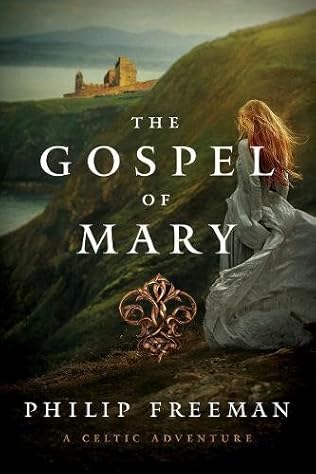
book cover of 

The Gospel of Mary
Since I was a teen reading James Michener's "The Source," I've had a weakness for "So-and-so has discovered a missing Gospel" yarns. I liked the prolific Professor Freeman's recent Oxford UP retelling of Celtic mythology, so I gave this a try. Via an e-galley, I did not know until I finished that this is the third in his Sister Deirdre series. That explains some backstory I kept wondering why not more was divulged herein. I had no trouble following along, but it's better I assume to have caught up with the previous books, for the main character evidently has a complicated past and much to tell.

Not be confused with another, recent Irish-oriented story, Colm Tóibín's drama "The Testament of Mary," Freeman's "The Gospel of Mary" features the rapid pace, genial tone, and expository dialogue that fills us in on an Ireland when Christians still number few. Deirdre's grandmother was a druid and she claims the same identity, although when her mother died, her grandmother fulfilled her promise to raise Deirdre in the new faith. With allusions to a failed marriage, other past liaisons, and a child who died young hovering about, it's clear that Freeman's protagonist has had more adventures than most nuns might have, at least in later times. She lives with her friend and sidekick Dari in a monastery founded by Brigid, which to Rome's discomfort hosts celibate men and women together.

Rome's unease deepens as it sends a clever emissary to find out what the truth might be to a manuscript smuggled into the island with haste, secrecy, and danger. It is, naturally, the tale of Jesus told by his mother, and its passages intersperse, as they are translated by Dari from the Aramaic, with the fate of the two women as they get caught up in keeping their treasured text safe from the Church. The Church, after all, fears that its integrity will crumble if Mary's words are proven true, and even if they are not able to be verified, that the heresies and tumult generated by them will bring down Rome

It all moves satisfactorily. I read it in a sitting. Freeman has done his biblical homework, and he blends it with a quest that dashes about Ireland. There's plot complications, but the story line as a whole does not surprise. It's a pleasant narrative, and it likely will educate as well as entertain you.
(Amazon 9/5/17)

Wednesday, December 24, 2014

Robert M. Price's "Killing History": Book Review

This New Testament scholar dismantles the quasi-historical claims asserted in Killing Jesus, by pundit Bill O'Reilly and co-author Martin Dugard. Robert M. Price, with considerable learning and abundant snark, demonstrates O'Reilly and Dugard's credulous acceptance of the myths, legends, and contradictory accounts filling Acts and the four Gospels. Countering with a lively argument based on biblical Higher Criticism, he encourages readers to accept the pair's take on the last days of Jesus as speculation rather than any testimony derived from dubious fact. Their bestseller may edify, but it has no place on the shelf alongside the criticism Price and his academic colleagues assemble against it. Grounded in reason, they defend skepticism.

Price begins by wondering why O'Reilly does not take the same cautious approach to assertions in the Bible as he would to provocative guests whom he interviews. In their 2013 bestseller, following books on the deaths of John F. Kennedy and Abraham Lincoln, O'Reilly and Dugard fall for whoppers. If the veracity of the motives for assassination and the identities of those responsible in Kennedy's death remain contested, and if distance from Lincoln's demise muddies research today, all the more to be cautious when going back two millennia. But the pair accept unsubstantiated sources as true, and they stitch together an imperfect quilt, a narrative seeming to be woven at first glance as smooth and solid, but when examined closely reveals itself to be poorly assembled, with loose ends fraying all around.

Basing his critique on Burton Mack's proofs that much of the Gospels have been back-dated, incorporating early into the first century when Jesus is asserted to have lived many anachronisms from later in that same century, or even later, after the Temple had fallen to the Romans and Jerusalem had fallen, Price reveals much of the Jesus story as inconsistent and unsubstantiated. It is a "scissors-and-paste" fabrication, crammed with illogical testimony and awkward dramatization.

Disputes about rabbinical Judaism, which consolidated and codified itself after the Temple's destruction in the year 70, creep back into the New Testament, as in Acts and the Gospels. For instance, the Gospel of John promotes Jesus speaking as the divine Son of God, while, as Adolf Harnack reminds us as cited by Price, the Gospel message of the Father remains the message taught by the itinerant preacher. Followers "retroject" later disputes with Jews into "eyewitness" accounts.

What happens over and over is that disputes between sarcastic Jesus and the stubborn Jews caricature ongoing contentions from the subsequent period when Jewish Christians debated with gentile converts as to which sect merited favor. Rabbinical authority continually struts into Gospel accounts as unstable, undermined by a prickly Jesus, who lashes out at his apostles, propped up as dunces or dupes for their incomprehension of their leader's bold challenges. Set-pieces, as Price documents, keep trotting out dumb disciples and recalcitrant elders, even if the latter contingent in fact had debated many of the same conundrums that Jesus, in the Gospels, is shown falsely to have originated.

Price keeps up the pressure, dismantling O'Reilly and Dugard's many logical fallacies. He compares the duo's attempt to make coherent sense out of the conflicting motivations cobbled together to serve as Judas' rationales for betrayal to a jigsaw puzzle. The authors try to force its mismatched pieces to fit, even if some must be sawn off and others thrown off of the table. Such metaphors help readers enjoy the blend of scholarship and silliness which certainly help distinguish this take on this old tale.

For instance, a Mad TV skit, Dana Carvey's Church Lady from Saturday Night Live, Monty Python's Life of Brian, the storytelling tricks of H.P. Lovecraft, an R.E.M. song, and a recent polemic from David Mamet feature among the more stolid sources he cites. He even finishes, satirically, the tale left off at the Resurrection by O'Reilly and Dugard, channeling their own awkward style with clumsy asides and attempts at wit. All of this does rush past, and some weighty or learned assertions needed clarification. Price addresses this at the general reader, but as with many academics, now and then he forgets to slow down to explain. Context on the "two-headed dragon" from the I Love Lucy episode Price alludes to was needed, and what Herod's soldiers bent on "frog-gigging babies" must mean may be faulted to the galleys this reviewer was provided. All the same, this delivers a spirited study, from which a reader less informed about biblical scholarship can emerge educated and entertained.

Surprisingly, the account of the time on the Cross passes rapidly, for the emphasis wisely chosen by Price focuses on the contorted reasoning marshaled to invite Caiphas and Pilate as walk-ons and stage villains in the various Gospel versions. These all trot out a very clunky premiere of a Passion Play. Price shows how these distortions of true history shove us to a foregone conclusion of this unbelievable storyline, as a wobbly wheel forces a shopping cart into one direction. For the Gospels, this turns out to be the Resurrection, and acclaim given a Messiah who does not match Jewish ideals.

It creates a memorable story, but not an historical narrative. Price concludes with two appendices, to strengthen some of the counter-arguments raised earlier in the text. These deserve attention, for they cement what earlier chapters may have left slightly shaky. The first appendix sides with very delayed dates for the Gospels, much later than many earlier scholars have suggested. The second appendix clarifies what impacts delay may have had, once Christian texts are compared with classical sources.

Tacitus gives no proof of the historical Jesus, recounting instead only what Christians promulgated in the early second century. Josephus, with his own particular agenda to promote or muddle, may have inspired elements in the gospels attributed to Mark and Matthew. That Jewish survivor turned Roman apologist after his nation's defeat is vague as to who "Jesus called Christ" may be, given that a Greek form of Yeshua as an "anointed" priest may not be that uncommon an identifier for more than one candidate after all. Price reminds readers, in wrapping up his cautionary tale, that classical writers were not "front-line reporting" but rather passing along accounts long after the fact--or the fiction.

Readers are left, then, to face the results of their own post-apocalyptic encounter. When the Gospels and Acts are shown to rest on shaky ground, and when proof-texts trotted out by apologists and advocates in recent times who attempted to reconcile history with the Bible are shown themselves to be flimsy support for messianic claims and divine incarnations, pseudo-history itself, in Price's book, crumbles into its own ruins. What remains, in Killing History: Jesus in the No-Spin Zone, may make readers' heads spin. Freed from pundits or preachers, sober examination uncovers not history, but, fittingly or frustratingly depending on the reader's reaction, some gospel tales that beg to be believed.
(NYJB 9-2-14;  P.S. I later found this excerpt: "5 Reasons to Suspect That Jesus Never Existed".)

Monday, May 19, 2014

"The goodness of privacy in a warm room with books"

In books as in music and I reckon all my daily life, I favor the inevitably flawed rather than the perfect. While some of these picks betray a lapse of narrative flow or structural stability, I recommend them, for in such moments, they remind us of our human predicament and our own gaps. PopMatters gives 9's to nearly perfect and 10's to perfect, but while twelve selections below were reviewed by me for PM and none scored quite that high, they all will grace a warm room. Of those three not reviewed here, two delve into ideological concerns which, although beyond the scope of this publication, invite speculation or consideration of worthy topics, by wise writers. And certainly George Saunders' increasingly deft navigation between satire and sentiment merits a special mention.

The range spans rock music, belief systems, mind-altering possibilities, suppression and liberation. It starts in Manchester, moves around Britain and Ireland, sides Stateside, and takes in places as different as Prague, Ceylon, Jerusalem. Tellers tend to focus on the near-present, but many look back.

Shifting from song to print, Steven Patrick Morrissey keeps his suave air and deepens his cultural allusions. His raw but sometimes reticent Autobiography ** drawn from popular and erudite sources will appeal to his fan base, but this uneven if spirited contemplation of five decades deserves a wide readership. Morrissey’s decision to let the flow slacken as his fame grows and the albums, from the Smiths and solo, accumulate may reflect the verisimilitude of how he views his later life, one more gig, one journalist after another to spar against, one more star to share his sorrows and joys with.

Similarly, his Manchester colleague Peter Hook skirts the typical rock-star's telling of his tale as Unknown Pleasures: Inside Joy Division. ** While chronological, Hook mixes humor and history in a sly but sensible fashion. (Morrissey appears more than once.) Joy Division's timelines feature comments on gigs, album tracks, and studio work among chatty chapters narrating the band’s fortunes. Hook shepherds us rapidly along as punk bursts and fades as quickly into a cold future.

Any British child of that punk generation grew up with rock on the radio. Beatles vs. Stones ** captures the battle for #1. The conventional wisdom claims both bands loved each other; any rivalry was only hype. Historian John McMillian marshals evidence, gleaned from chronicles, biographies, interviews, and his own expertise as a scholar of the underground press, that suggests the contrary.

Even a humble English product conveys the burst of pride that nation enjoyed during the 1960s, as well as the gloom that permeated Morrissey and Hook's childhood before Beatlemania, and the 1970s decline of their homeland after that band broke up and left the Stones as claimants to the title of the world's greatest band. Chris West in A History of Britain in Thirty-Six Postage Stamps ** documents how the Beatles boosted revenue. West’s fondness for a “true Summer of Love” during 1966, when Revolver appeared, while the Kinks’ “Sunny Afternoon” provided the season’s theme for Swinging London, makes England’s World Cup triumph proclaimed on a stamp all the more splendid.

Certainly Psychedelia: An Ancient Culture, A Modern Way of Life ** as Patrick Lundborg's massive study testifies to another source of energy during that Summer, and many before and after. Hefty if unwieldy as a paperback, it’s a solid resource on what’s been too often left for silly flights of fancy or sophomoric pronouncements an ephemeral topic. Lundborg, as a diligent tour guide through his theme in theory and practice, keeps moving forward in time and space. But like his swirling subject, he cannot help pursuing byways, tracking trains of thought, and wandering off on rewarding detours.

In related distortion, what may appear as a footnote expands into its own revealing dimension. The impact of the East on the West and vice versa finds welcome exploration in Buddhism in Ireland: From the Celts to the Counter-Culture and Beyond. Sociologist Laurence Cox applies theories of social movements and Marxist humanism to reveal how Ireland and the wider world intersect, in a dimension beyond the stereotypical limits of sectarian belief and cultural practice, there and abroad.

Those limits conspire to preoccupy John Banville. Writing under the name of Benjamin Black for the sixth in his Quirke series under the suggestive title of Holy Orders,** the connivance of a compliant, cowed government with the lordly Church in this oppressive era of postwar Irish history looms; it’s very difficult to shake the sensation that this novel of a pathologist-playing at detective is not happening over a half-century later, amidst continued revelations of clerical abuse and conspiracy.

While the Ireland of this postwar era may not appear ideal to many overseas, the Midwestern writer J.F. Powers moved there, and back again, four times during that period. His daughter, Katharine Anne Powers, tells in Suitable Accommodations: An Autobiographical Story of Family Life--the Letters of J.F. Powers, 1942-1963 ** how her mother and siblings coped with her willful father's combination of idealism, thrift, and stubborn determination to resist Ike's American war machine and capitalist propaganda through an appeal to Catholic, pacifist resistance. J.F. conveyed his radical conservatism subtly in stories, many about priests, and in his own headstrong refusal to make an easier living.

Rebellion in that same generation, for Ivan Klíma in Nazi- and Soviet-occupied Czechoslovakia, represented a danger that captured more Jews than Catholics, no matter their personal irreverence. He begins My Crazy Century: A Memoir ** by noting how most young people like to rebel, and how this mood led to the Stalinist takeover of his homeland, where, having survived the Nazis as a teenager, he came of age bristling against another regime as an underground novelist, dissident, and gadfly.

Contrary to persistent promotion of the inspiration for such Communist regimes as a relevant prophet, Jonathan Sperber in Karl Marx: A Nineteenth-Century Life. ** argues his ideas have run their course. More a product of the French Revolution and Hegel, early English industrialization and political economies of the emerging modern age, than any avant-garde inspiration, Marx “is more usefully understood as a backward-looking figure”, who from his own century’s first half took the facts "and projected them into the future”. We may credit Engels more than Marx for much of our "Marx".

Another founding figure boasts as wide a reach as Marx, at least, and certainly for far longer duration. While the gist of Reza Aslan's popularization of critical biblical scholarship in Zealot: The Life and Times of Jesus of Nazareth  may not be that revelatory to those who have studied these arguments in academic or theological circles, his engaging telling of how a human Jesus transformed by re-branding via market research, so to speak, through ancient contexts, into an elevated and divine Christ merits inclusion for its ability to maneuver between arcane and accessible arguments deftly.

Power once claimed by Christians or Communists in a post-9/11 decade appears dispersed into more accessible if no less domineering channels. In Bleeding Edge ** the networks of DeepArcher beckon as “a virtual sanctuary to escape from the many varieties of real world discomfort. A grand-scale model for the afflicted, a destination reachable by virtual midnight express from anyplace with a keyboard”. From this appeal, this being Thomas Pynchon, a shaggy-dog tale set in 2001 Manhattan unfolds. Another curious sort plays detective. She finds, loosely unraveled, conspiracies that stretch far beyond the scope of a Catholic Irish hegemony or even a Czech totalitarian system. They span the wires you and I share to read this review. And they contain "inside them forces of destruction" for all.

Merging a compatible view of corporate conformity and social commentary with satire, George Saunders' stories in  Tenth of December sustain his trademark style. He mixes send-ups of how Americans think and speak in a commodity culture full of pop psychology and catchphrases with sensitive subjects which edge into sentiment. As a funhouse mirror of our fragmented nation, he reflects back how we keep evolving, to resemble the caricatured citizens in a Pynchon saga itself.

This psychic dislocation, as people relentlessly must sell themselves or be sold, wears down the characters from two Southern California-based chroniclers. The King of Good Intentions ** conveys  what it could have been like for John Andrew Fredrick to try to make it in the early-90s indie music scene in Los Angeles, when college radio mattered (a bit). At a party full of star-struck wannabees, pursuing a comely lass, the probably only slightly fictionalized John reflects: “Tonight I am lost and have eyes like a spirograph in the hands of a child on methamphetamine and utterly out of my head on good drugs and bad alcohol.” Poetic or introspective registers carom off John’s R-rated vernacular, the usual Angeleno’s articulation, or its lack. Infusing this spirited or spiteful melange of mundane rants and muttering satire, the novel celebrates an egghead’s low-life lived at the margins of celebrity.

Finally, at those same margins after a career ranging from plumbing sales to an assistant on Jeopardy!, Jim Gavin portrays the predicament of Angelenos caught between fame and misfortune. In this insular, congested, dirty, and sunny terrain, his characters, stuck at start-ups or peddling goods, wonder what keeps them there, and makes them face another day on the freeway. Gavin’s driven the same roads and done the same tasks, and his short story debut Middle Men ** dramatizes, in odd or mundane circumstances, the surprises that quiet epiphanies can present to the attentive wanderer.

Morrissey begins his Autobiography with a strongly Joycean evocation of post-war Manchester. Hook wanders the same streets. Both form bands as influential for such as Fredrick or Gavin's post-hippie cohorts, arguably, as the Beatles or the Stones for West. Then, allure of Jesus, Marx, or Stalin diminishes, even if the blowback to Aslan's book betrays the refusal of some true believers to accept as gospel truth the gospel's truths via scholarship. Powers' letters, Cox's study, and Black's story share an Irish tension as concepts filter in from the wider world to challenge cohesion and resist coercion, when reform and radicalism seep in to weaken theological verities. Against ideology, Klíma, Pynchon, or Lundborg who welcomed the 1960s and liberating sounds attest to the control exerted by popular culture pitted against political convention. Yet, Saunders warns of the subversive backlash which newer forms of technology and surveillance possess, able to spur us into submission.

Collating this list of fifteen books, fiction and otherwise, and some in-between, connections form. We all search for escape, and while music, drugs, radicalism, or fame may ease the monotony, the protagonists of so many of these tales find themselves at the end of their narratives still constrained. Echoing Pascal's complaint that "all men's miseries derive from not being able to sit in a quiet room alone", let Morrissey in this nod to revelation by reading conclude this 2013 culling. “Finally aware of ourselves as forever being in opposition, the solution to all things is the goodness of privacy in a warm room with books.” Restless as many of these characters prove, lots of them wind up reading.

(PopMatters 2-4-14; Photo: c/o Tom McLaughlin, Electronic Distraction)

Sunday, September 1, 2013

Reza Aslan's "Zealot": Book Review

"No lord but God" echoes as still relevant among religious radicals, or reactionaries. That was the Zealot party's battle cry. An Iranian immigrant, Reza Aslan as a new Californian briefly left behind his Shia heritage for a teen stint as a born-again Christian. Now a professor of religion at UC Riverside, and long interested in ecumenical as well as jihadist studies, Aslan freshly times his lively look at Jesus. He mixes scholarship with social media; as a Muslim and a CEO of a studio covering Middle Eastern issues and the diaspora, he shows awareness of how to package a very familiar subject in attention-getting ways. N.B.: If you come to this review ready to attack Aslan before reading the book or my last paragraph, kindly reconsider, as this careful study deserves a patient reading; my already long review elides much. I emphasize that that nearly a third of Zealot is endnoted; Aslan, a UCSB Ph.D. in the sociology of religion, has done his homework in two decades of meticulous investigation. Here's my summation.

At least since Ernest Renan sparked controversy with his 1863 life trying to make Jesus more human by making him less Jewish, so as to be more "Aryan" Christian, learned biographers seek to understand a Jesus making sense to today's rational, contextual, and text-based mindset. The "higher criticism" of the mid-19th century popularized (more in seminars than seminaries) this. Aslan emphasizes a rebel alongside the two "thieves" really assassin-revolutionaries ("lestai") crucified: a trio condemned for resisting the Roman empire and its Jewish collaborators. Reminding us that the Sicarii were "daggermen," he places Jesus within a cabal closer to today's insurgents in this same region than with honey-voiced peacemakers, or wistful redeemers with flowing locks and fair or dark eyes that follow you across a room. What follows is my paraphrasing of Aslan's brisk re-reading.

While this version of the Son of God as warrior has been preceded by liberation theology with a Galilean upstart rallying peasants and workers to an uprising, Aslan in presenting a vibrant, tense depiction for today appears to want to wake us up out of complacency, vividly. His appended annotations support his interpretation but this scholarship is subtle, to opt for verve. For instance, the narrative proper starts not with a manger scene or Annunciation, but a well-paced informative depiction of the Temple, ending with the assassination of High Priest Jonathan in 56 CE by a zealot.

The Zealot Party did not exist until a generation after the death of Jesus; Aslan after taking us forward to show their revolt and defeat (Masada as the last stand) moves backwards then (not sure why this provides the book's structure, but he keeps this often-told tale quite entertaining, precise, and provocative, certainly its best feature) to the Gospel narratives. He cautions readers who expect the historical Jesus to match the mythic Christ; he explains the backdating of all new testaments about Jesus functioning as an heroic tale so that even those in the know or closer to the real events that may have supported the Church's revisionism would understand. As these Christian scriptures are not meant as eyewitness accounts but fulfillment of prophetic "truth," this literary activity makes whatever can be extracted out of the accounts (and those which fill in the story outside the canon) tendentious. Rather than cherry-pick chapter and verse (although I suppose any biographer of Jesus or biblical critic may fall into this occupational hazard), Aslan strives to frame his arguments 'in situ.' (Again, I anticipate disputes may arise from those who do not ponder his endnotes within their own context, or recite rote objections or quibbles without the academic training of Aslan and colleagues.)

He tries admirably for an accessible prose style, not to mention keeping his narrative free of academic contention, while integrating many ancient sources smoothly and modern scholarship tacitly. Aslan argues for a "Fourth Philosophy" (i.e., after Pharisees, Sadducees, and Essenes) zealot-friendly Jesus. "Give back" what is Caesar's by linguistic study becomes the telling phrase, and this is not "render unto" the imperial powers in submission by the downtrodden Jewish nation, but a defiant in your face sort of response to that tricky question. As a defiant Jew, Jesus is shown as telling his disciples in guarded analogies and curious parables his messianic "secret" when he would rule his homeland, for these "aspirations" persist as the "singular fact" that led to his crucifixion, with "The King of the Jews" posted above him not as a taunt but as was Roman custom, the reason for his conviction.

The Kingdom of God challenged the Temple authorities. He detested the scribes as well as moneychangers; quislings like Caiaphas in league with Pilate (revealed as a ruthless ruler, not the hesitant caricature) represent the Caesar whose imposition of taxes and servitude rankles Jesus and his careful group of chosen apostles. He asks them who people say he is but cautions them to keep quiet. Aslan interprets this as subterfuge until Jesus can come to Jerusalem to take on his opponents. Until then, as an "itinerant exorcist and miracle worker," the real difference of this purported carpenter (that steady line of work is so doubtful in mud-brick Nazareth it's likely apprentice Jesus and his brothers had to labor to rebuild the resort city of Sepphoris): he offered his magic for free.

Rather than a "utopian fantasy," the Kingdom of God "vindicates the poor and oppressed. It is a chilling new reality in which God's wrath rains down upon the rich, the strong, and the powerful." While some parse turning the other cheek or loving one's enemies as assurances of pacifism, Aslan rejects this. He reminds readers (unlike Renan's work) that Jesus is a Jew, and has the back of his own people, as any faithful Jew would in occupied Palestine as in defeated Judea or ancient Israel. "He understood what every other claimant to the mantle of the messiah understood: God's sovereignty could not be established except through force." John the Baptist and other rebels set this in motion.

The curious title "the Son of Man" Aslan shows as part of the necessary secret. Jesus promotes this as a sort of overt identity to cover the messianic title that his followers bestow upon him. "This man is the messiah" as confirmed by early hearers of his message betrays the tension: this equates (in my phrasing) to a deadly terrorist threat today spoken against those in charge. Sedition=death.

Novelistic touches, as in the high priest's assassination or the prayers in Gethsemane, reveal Aslan's talent for enlivening with careful detail the greatest story ever told over and over for two millennia. Why Jesus when arrested stays largely silent seems logical: three years of a ministry bent "on destruction of the present order and the removal of every single person who stands now in judgement of him" speaks for itself. Aslan reasons that later Christians glossed over much of the radical context he extracts as to the rebellious nature of Jesus as fractious Jew before he was elevated to Christ for all Gentiles. If you remain curious as to how the passages he must select have been judged by scholars as more trustworthy than others, this appears embedded in his appended research but submerged in the main body of narrative. (I have an e-galley proof to rely on; at 70% Aslan's afterword and annotated endnotes begin, to document his range of scholarship, nearly a third of the entire text under review.)

He does often show how "patently fictitious" certain iconic sections are. As with the "trial" offered by Pilate to the rabble, often Mark and later writers (aimed at certain audiences) distance themselves safely from any sympathy with the rebels in the wake of the destruction of Herod's Temple. Such back-dating must always remain foremost in mind by any educated reader of the Christian scriptures.

This revision for non-Jewish readers meant the Gospels had to be sanitized of "revolutionary zeal": Jesus had to be recast (in each succeeding gospel in more outlandish form) as peacemaker and the Romans as free of what now the Jews were given full blame for: his death. Caiaphas proves the heavy; Pilate plays his pawn. In "passion narratives," for "liturgical purposes," a ritual sequence of events arises that early Christians can re-enact. The end is a given: Jesus as crucified messiah. Aslan strips accretions off and looks at the crucifixion for sedition, but then jumps ahead to the first martyr.

Stephen, as imagined soon after Jesus' death, learns his resurrection is attested as confirmation of him as the messiah. But this does not jibe with Judaism, "awaiting a messiah who triumphs and lives." Yet, as Stephen does not live in Jerusalem, is not a scribe or scholar, and so does not know the prophecies that Jesus' followers reinterpret, Aslan figures "he was the perfect audience" for a new pitch "being peddled by a group of illiterate ecstatics whose certainty in their message was matched only by the passion with which they preached it." 33-35 CE, Acts reimagines Jesus' trial (while repeatedly misappropriating Jewish scripture) as Stephen's speech to his persecutors before he is commemorated as the first one to die for his savior. He makes the speech recasting the resurrected, messianic "god-man" in otherworldly, apolitical fashion: blasphemy to the Jews. Then the stones fly.

For Aslan, this marks the end of the historical Jesus and the start of the Christian cult: Jesus as God.  Nobody who knew Jesus (don't trust names titling Bible books) wrote anything. Illiterate apostles, while Jesus' family waits for his return, hunkered down rather than evangelize as Paul did: this limited who defined Jesus' message. Greek-speaking Jews and then non-Jews in the diaspora wanted not a "revolutionary zealot" but "a Romanized demigod" who preferred to stay celestial. The veil of the Temple rent, direct access to God's Son ended any need for Jewish ritual or Torah-true teachings.

Yet, why did Jesus persist among his followers as the accepted messiah, when rival claimants did not? Aslan credits "fervor." A true messiah could not die by Mosaic Law. So, "a stumbling block to the Jews" as Paul notes let alone a contradiction, return from the dead had to be claimed so as to establish a risen Christ's victory. Verifications "according to the scriptures" ensue: "they are carefully crafted rebuttals to an argument that is taking place offscreen." Earthly rule faded; heavenly rule rose.

Diaspora Jews relying on Greek were more open to arguments that appealed by metaphor and symbol beyond the Hebrew-based, less sophisticated community in Jerusalem of Jesus' family and followers. After Stephen's death, intriguingly, the Hellenized community was sent away, and they increased the ranks among urbane, Greek-literate Jews who would be the first to be called Christians in Antioch. Rather than fulfilling the Law, Jesus did away with it. National concerns of reforming the priesthood in Jerusalem did not matter compared to the doing away with the Temple ritual entirely, and then incorporating the Gentiles within a missionary movement for non-kosher, uncircumcised converts.

There's less concentration in Aslan's survey on the Gospels, for his analysis takes up only about 20% of this book. Zealots for the first 30%, and then halfway on, the post-Resurrection reactions to Jesus. Paul, a repentant Pharisee, claims himself as the first apostle. He justifies his outreach rejecting Torah as "a ministry of death, chiseled in letters on a stone tablet." While Jesus can be held (depending on which verses: refer to endnotes) as upholding the Law, Paul abandons Jewish history. Given Paul's extremism, creating a Christ mattered, not a human Jesus or Roman rule during that violent century.

James differed; Paul dissented. Rival versions of the message angered Paul, and after meetings in 50 and 57 CE with those in Jerusalem, his former enemies, Paul finds trouble. The latter visit is poorly timed, for he is mistaken in the crackdown after Jonathan as a rebel leader of 4,000 Sicarii, "the Egyptian." Meanwhile, this chaos leads James' Hebrew sect to anticipate the Second Coming. This unrest leads to Paul being extradited, supposedly under house arrest, to Rome. There, Gentiles listen. Peter seems to have preceded Paul to preach there; both are said to have been killed under Nero in 66.

For James, 62 CE marks his stoning by the Sanhedrin amidst Roman reprisals in Jerusalem. His unjust fate, not that of his brother, is the main focus of Josephus' quick glimpse, the first non-biblical mention of Jesus "the one they call messiah" extant. Aslan reads this as evidence of James' stature (rather than Paul's) as leader of the Jesus movement. Why James gets short shrift may be due to later promotion of the perpetual virginity of Mary, and distrust of dynastic inheritance by the early Church.  Priestly power--expanding by a Christian, Romanizing empire through Constantine and his Rome-dominated council of clerics--fits well into Peter's papal placement as "bishop of Rome." The Nicene Creed set down Jesus always as God, and not as once human, codifying imperious tradition.

Aslan does not editorialize about his presentation. He leaves it up to us to judge the efficacy of such a bold messiah. He expects a mature readership able to handle revisionism and historicity. Certainly any new book examining this most debated of all figures will spark denial or dissent. I leave experts to parse claims advanced in the narrative; suffice to say Aslan's endnotes strive to support what my summation above and his main-text presentation must simplify for clarity. Whatever scholars say, providing this very readable and engaging set of reflections on Jesus, his times, and his impact, Aslan deserves an attentive audience willing to reject tendentious Sunday school tales, for a rigorous study.

(P.S. I reviewed this carefully for Amazon. As Aslan explains: "Anybody who thinks this is an attack on Christianity has not read it." Note sadly this "ad hominem" attack by a Fox News interviewer: she clearly had not read it, nor many on Amazon who attack this. I tried to be fair, but many are closed-minded to a scholar's right to write about religion objectively. 7-16-13 to Amazon US)

Friday, March 29, 2013

Malachi O'Doherty's "Iscariot": E-Book Review

This Belfast journalist's previous non-fiction combines memoir and cultural and political observation well. The Trouble With Guns astutely analyzed the Provisional IRA's machinations within the Northern power structures; The Telling Year: 1972 examined the tension as he reported for the press that dramatic year about his own neighborhood; I Was a Teenaged Catholic juxtaposed his Catholic upbringing with his stint under a Hindu guru in hippie-era India; Empty Pulpits treated the retreat from mainstream Catholic dominance over much of the island this past generation. I liked each one (see my 2009 reviews on this blog or Amazon British and/or US).

It's intriguing to trace similar tension within an earlier, far more mythologized time and place: Palestine under Roman occupation in the company of Yeshua. He's "almost your double," as the narrator, Judas, tells his twelve-year-old friend, "Ben Joe," son of Yusef and Mary. Judas' own father is suspected, in the taut opening scene, of collaboration with the empire. His son, humiliated at fourteen, vows "to kill a Roman soldier." Judas by small steps--a dove, a dog, and then by mock practice with his pal--learns to take life with a knife. Certainly the shift from Ben Joe's assistance with Judas in "operations" against troops and his next encounter, watching his "double" debating Temple elders about the Book of Jonah, demonstrates a bold take on Scriptural piety. We also see the insistent resonance that widens dissension between the two youths. The puzzler that Ben Joe articulates, as Judas filters it: do you do nothing for yourself, or do you resist authority?

The combination of today's colloquial and off-color dialogue with biblical scenes enlivens this tale. Ben Joe argues that it's no crime for guerrillas to murder in the name of an oppressed people, however futile the revenge. They panic and divide the outwitted Romans--"soldiers just flailed among themselves, like a woman who has startled bees"--and stab "at close quarters" as if it's bear-baiting.

Cana's wedding, the Magdalene, the parable of the steward, and the resemblance between a pretend and a genuine preacher in Galilee complicate matters in unexpected non-Scriptural fashion. At sixteen, Ben Joe joins the zealots. The next section puts the narrator under the headstrong, wasteful command of brutal Barabbas. Pacifism meets with annihilation; the Temple rabbis counsel cooperation with the occupation. Godless Barabbas presents a compulsive alternative: more revenge.

Before murdering a man, Judas reflects: "You must either try to ignore his character or look for something in it to hate, or you will not be able to kill him."  He tells of how people expect to see what they do, as sudden death follows predictable course to provoke reprisal and worsen oppression. The pointless slaughter drives him away from the zealots.

The narrative shoves us into the baptism of the Nazarene at the Jordan by John; but confusion persists who that new preacher might be, for Judas. Yeshua's Sermon on the Mount and the loaves and fishes, however, signal a transformation. Hope arrives for Judas. He learns to put down his decade of burden. The Nazarene's sensible message is as brief and straightforward as himself, and he soon leaves the crowds for the desert.

Ben Joe, now cynical and cruel, awaits in Capernaum, where he sends out followers to do miracles and shake up the establishment, so as to further his own "authenticity." He presumes to speak for the spirit, while Yeshua restored it and taught one to listen to it. You can see how this will unfold: the preacher advocating gentle, personal transformation vs. the one defiantly rallying communal fervor against injustice. Judas must decide which Galilean to go with, and this entangles his fate once more.

Martha and Mary assist him, and they all learn of a popular preacher's arrival. The story of the "woman caught in adultery" takes a deft twist, as does that of the Samaritan, Lazarus, the Prodigal Son, and rejections of the Pharisees under a clever imperium always looking after its own interests. Back in Judas' hometown of Nazareth, complications ensue as Yeshua visits the Rabbi's home, sees Mary the mother of James, and preaches at the synagogue. "Yeshua might be a prophet, perhaps the only one to our generation, and yet mimicry and gossip had made him ridiculous." The twinned relationship skews the biblical saga; its tilted representation keeps the reader as off guard as Judas.

The novel then deepens the mystery of appeals to a wavering one's "better nature." O'Doherty's Judas filters the author's unease at subservience to another, no matter how eloquent the message or assured the medium. Yeshua confronts Peter: "Who do you think I am?" Suffice to say that the later stages of the conventional Gospel tropes of an angry and a composed, wonder-working or contemplative Jesus, a thieving Barabbas, and the conflicted narrator gain integration enriched by imagination.

The final third takes place in Jerusalem, at the Day of Atonement. Yom Kippur's autumnal timing doesn't align with the scriptural chronology naming Passover, but it allows O'Doherty to bring back the sisters and Lazarus at Bethany neatly, the cursing of the fig tree, and the entry by beast of burden into Jerusalem. It also helps him with the climactic rationale that Judas will confront. Driving out the traders from the holy precincts makes sense rearranged, as does the placement of the threat that a subversive preacher brings to the Roman citadel and Antipas and the power center of Jewish priests under Caiaphas. Parts in the home stretch, despite the natural excitement that accelerates as a fresh retelling keeps us wondering, did lag by comparison with O'Doherty's earlier revisions of the Gospel narratives. Lots of conversation slows this, as the author has to shuffle episodes around to move the logic along, and to connect characters who appeared earlier on with the action that adapts the Gospels. Admittedly, it's ambitious. Some characters felt too mustache-twiddling and backroom-conniving as villains, as the climax delays; energy lessens, explication grows. Still, you will read on, wondering how what we've long "known" of Judas' fate will square with this shape-shifting novel.

The kiss of Judas at Gethsemane earns pathos. The poignancy of the narrator's decision intersperses with the hardening of the heart. Contradictions within the Gospels, for O'Doherty's version, find commonsense solutions as he blends his fictional resolutions into those tales from the testaments--and those peddled by the apostles, Judas' "former friends." Wishing for an end, perhaps, may be salvation.

The matter-of-fact manner in which what's soon legendary starts as the mundane, mixed up by rumor by the credulous into the miraculous and manipulative, reminds me of the retellings of the Exodus and settlement of Canaan in Shulamith Hareven's trilogy Thirst (see my June 2012 review)."Iscariot" similarly reveals how it might have been, before sanctimony got the better of the secular struggles. (Kindle review to Amazon US 1-7-13)

Monday, October 3, 2011

Jose Saramago's "The Gospel According to Jesus Christ": Book Review

Reminiscent of the raw, magical, harsh parts of Mark's Gospel, this novel imagines the son of man, Jesus born of Joseph as he finds himself taken over by Christ, born of God the Father. Jesus hesitates to call himself God's Son, but a demon recognizes him, and his divine cover's blown, or revealed, to his followers. Saramago inverts the traditional accounts so we don't see the public ministry commence until sixty percent of the narrative has shown us the journey to Bethlehem, the "hidden years" in Nazareth, the death of Joseph on a cross by mistake during a Jewish uprising against the Romans, and the desert temptations powerfully conveyed as more understandable and less theatrical.

The lamb of God takes on great poignancy in its appearance, and "resigned to his virtue," the young Jesus ponders the voice of God heard as he submits to the divine commands to die as His Son so God can establish power over the whole world, to make all men love Him, rather than just the Jewish people. This forces Jesus into a compromise with his human side, and his tender relationship in the full sense of the word with a marvelously rendered Mary Magdalene deepens this accessible, modest, and slowly miracle-working figure as one we can recognize as one of us even as his transformation of fish and bread, waves and the possessed, angers fishermen and swineherders and causes ordinary folks to wonder who Jesus really is.

Sentences in Saramago's characteristic style, as in "Blindness" and his last work, related to this as a biblical take on God's demands and human reactions, "Cain," [see my blog review] prefer a headlong rush over paragraphed neatness. He forces you to get carried into his flow, and dialogue is subsumed within the long paragraphs that demand, therefore, careful attention.

This is a thoughtfully composed narrative, rich in detail. Saramago's narrator is omniscient, knows of Portugal, and comments wryly on what God chooses to remember and what He forgets about this world and its creatures. Over it all, "the indifference of emptiness" soars. Not even the narrator has it all figured out, about man's destiny and fate. In Palestine, on the edge of and in the desert, nature waits, remote from the living beings God claims to care for.

Brutality and poverty dominate the lives of the fishers and herders, the servants and beggars who populate the little villages, while the Temple rises in Jerusalem in a vividly rendered contrast of mercantile activity and priestly slaughter for the birds and animals killed for God. Jesus reacts to this as a compassionate boy, but his resistance to the system falters, and in a wonderful scene where he, Pastor the clever, skewed, devilish desert companion, and God Himself sit in a mist on the sea and discuss the big questions, Saramago demonstrates his ability to make such timeless concerns fresh.

Passages also leap out of Giovanni Pontiero's translation that arrest one's gaze. Jesus and Pastor debate back and forth in the compressed style rendered by Saramago: "Like my sheep I have no god. But sheep, at least, produce lambs for altars of the Lord. And I can assure you that their mothers would howl like wolves if they knew. Jesus turned pale and could think of no reply."

The story starts with the crucifixion and the beginning is a bit shaky, as it's hard to get pulled in to the story from a distancing narrative tone. But as the familiar tale goes back, it gains depth. Mary's bitterness at her son's reaction to her own supposed connivance in the slaughter of the holy innocents (this makes some sense in context of Jesus' knowledge secondhand, but gets teased out gradually), the debate in the Temple with the elders, the death of Joseph and the departure of Jesus for the desert, the way he finds out about what happened when Herod struck down the babies in Bethlehem, and his reaction to this haunting scene that drives him deeper into self-awareness--are all imagined intelligently,

You read this with an inverted sense of the gospel inspirations. Here, the previous stages to Jesus' ministry gain center stage, and his public life becomes almost secondary to his own struggle to comprehend his salvific role. A challenging representation of a sensitive and searching man who finds God speaking to him. claiming to infuse him with His own force, and ordering him to follow His will, this is accessible to anyone curious about a fresh perspective on Jesus from a very human perspective. However, if appropriately for a human telling, the book ends rather hastily and suddenly on the Cross, as if Saramago wanted to finally stop his imagination from weaving more out of the evangelical stories and the midrashic legends that may have inspired this depiction of the sacrifice of Jesus from a memorable, but ultimately enigmatic, compliance.  (Posted to Amazon US 8-16-11)

Wednesday, May 11, 2011

Shusaku Endo's "Silence": Book Review

With 71 earlier reviews [Amazon US] most praise this incisive, painful novel's merits. I'm adding a note about translator Fr. William Johnston, S.J. Born in Belfast in 1925, he died in October 2010. With the attention to this book perhaps surging as news of it as a Martin Scorsese film with Daniel Day-Lewis & Benicio del Toro spreads, I wanted to alert you to this context, relevant for a Western audience and for Endo's theme about trying to overcome cultural and religious barriers to understanding.

When I read this (it flows seamlessly and often sparely and peacefully despite its subject, in English) shortly after it appeared around 1980, I heard about it via Graham Greene's acclaim. Then, I read it via a very Catholic mindset. I remembered it for very graphic, very brutal depictions of martyrdom.

In fact, the descriptions are hinted at, not shown in detail. They linger more often as threat, rumor, report, or murmur than observed reality, and therefore remain all the more frightening. I decided to re-read this, despite its grimness, after finding a mention of the real-life Jesuit apostate, Christovao Ferreira, in Michel Onfray's polemic, "Atheist Manifesto" (reviewed by me recently). Onfray notes Ferreira's contribution, one of the earliest published, to anti-Christian debate, but he dismisses him for not being "atheist" enough, as he adopted Zen. I couldn't find this denouement explicitly mentioned in Endo's details (it may well be hinted), but I was spurred to relive this powerful, grueling narrative myself.

Since I last read it, I've the past few years been reading a lot about Asia and Buddhism, so my perspective shifted. I better appreciated the defense against the Jesuit incursion, even as I sympathized with the liberating potential of Christianity for those converts, brutalized by the feudal system of their native Japan. Endo came to this material out of his own baptism, at 12, after his then-widowed mother went to live with their Christian aunt. Endo's own ambivalence, about his Japanese loyalty vs. his Catholic allegiance, can be felt on every page.

"Now you are going to perform the most painful act of love that has ever been performed." (258-9) Fr. Ferreira tells this to his former student, Fr. Rodrigues, near the climax of this unforgettable (and this may be in a harrowing sense more than an uplifting one) story.

What lingers, as the leitmotif, is the face of Christ. Fr. Rodrigues meditates on it constantly, and this quest to find it out for himself reaches its utter transformation near the conclusion. We learn what separates the strong from the weak, and remember that Jesus came to save the weak. The parallels to Judas, and what Jesus knew about his betrayal by his comrade, intertwines ineradicably as the plot reaches its resolution, if not release.

Fr. Johnston, from Belfast, knew about being the minority, about what it means in one culture to assert another one seen as disloyal to the dominant mentality. Sent to teach at Sophia U. in Tokyo, he became a Zen practitioner, and remained a faithful Jesuit. Pasted from the Irish Jesuit AMDG website after he died 12 Oct 2010:

"We agreed that the clash of civilisations continues in the hearts of the people, particularly in the hearts of Japanese Christians. It is described dramatically by the distinguished Japanese novelist Shusaku Endo. A committed Catholic with a personal love for Jesus Christ, Endo brought many Japanese to baptism, yet he felt uncomfortable with the exterior trappings of Western Christianity. He, a Japanese, was wearing Western clothing. His vocation in life was to change that Western suit into a Japanese kimono.

Asked concretely what the problem was, Endo replied that Christianity was too much a Western religion. It was dogmatic, uncompromising, patriarchal. It saw reality in terms of black-and-white. Its history was full of "I am right and you are wrong", bringing inquisitions, intolerance, punishment of dissidents and downright lack of compassion.

Asian thought, on the other hand, was "grey", flexible, tolerant. It stressed "both-and" rather than "either-or". Above all, Asian thought was feminine, grounded in a predominantly yin culture. Endo often said that his faith came through his mother. I recall showing him a book about Julian of Norwich and "the motherly love of Jesus". He smiled enthusiastically. "Father, give me that book!" he said.

The clash of civilisations in Asia has indeed been fierce. Colonialism and religion are at its core.

As we move into the third millennium, however, one great event gives ground for optimism: the clash between Buddhism and Christianity is becoming a powerful dialogue in which both religions are mutually enriched. Christians listen attentively to the wise words of the Dalai Lama and Sogyal Rinpoche; they learn meditation from Thich Nhat Hanh and Zen teachers. Likewise, Buddhist teachers quote the gospels, and Buddhist scholars in Kyoto have made profound studies of the Christian mystics, particularly Meister Eckhart. And all this is complemented by cooperation in helping the poor and in working for world peace. Here there is real friendship."


(Please read it all! Excerpted from the AMDG site, archived 12 Oct. 2011 obit for Fr. Johnston. Part of an article he wrote "The Path from Hate to Love" in "The Tablet.")

[Posted in different versions to Amazon US 5-8-11 without the links & in another form to Lunch.com.]

Monday, June 29, 2009

Daisaku Ikeda's "Buddhism: The First Millennium": Book Review

Reprinting this 1977 history translated in 1982, this welcome overview summarizes early Buddhist attempts to formulate a canon, institute practices, and solve disputes. Ikeda constantly laments the tendency of monks towards argument, but he reminds us how, unlike most religions or ideologies, debates ensued rather than for those who refused to compromise or submit to authority. For, Buddhism departs from centralized, external rulers by encouraging the seeker to look within to find the same teaching that the historical Buddha insisted can be found that leads to freedom.

A freedom based more on interior realization rather than social revolution has unfairly caused Westerners to stereotype Buddhism as nihilistic, passive, and disengaged from life. While the monastic tendencies early on strove to control the dharma's compilation and interpretation as it passed from oral to written form, their understandable worry about the dilution of the original message did push much of the control over the dharma out of the reach of lay people. Ikeda, as a leader of Soka Gakkai, a Japanese movement determined to bring the dharma into everyday, non-clerical dissemination, seeks the same tolerance and respect within the Buddhists who, in the Mahasamghika and later the Mahayana version, followed their reformist zeal.

The saga reminded me often of how St Francis of Assisi late in his life struggled against those followers who bickered over how the Rule was to be practiced; analogies to the Reformation certainly also will emerge for readers studying the dogmatist vs. revisionist tensions that may have led to schisms, but at least bloodless ones rather than burning alive heretics. This lesson teaches us all!

Ikeda, speaking of Christian parallels, considers suggestive if largely unverifiable ones that show how the spread of Aramaic throughout the Persian empire may have allowed influences to travel from India to Palestine at the time of Jesus. Even if indirectly, common conclusions about lofty wisdom, "doctrinal breadth and depth, and this invariable rejection of class distinctions and narrow racial and national concepts" can "qualify Buddhism and Christianity as world religions." (75) As in the previous volume (also reviewed by me) "The Living Buddha: An Interpretative Biography" in this newly launched series, Ikeda in Burton Watson's efficient translation employs "religion" for the non-theistic philosophy of Buddhism, but this does correspond to common if not technically precise usage among Westerners.

With the stories of King Ashoka, great reformer and disseminator of the dharma to even the West within Alexander's heirs in Hellenistic Asia Minor, Ikeda makes a subtle argument. Those familiar with Soka Gakkai in its Japanese manifestation as not only a social movement but a political party may recognize what's alluded to only here. Ikeda uses Ashoka's example to show how a leader can embody the dharma while still allowing others within a polity to follow freedom of religion; the dharma's universality remains untainted by reform, rather it is perfected as people bring Buddhist ethics into the world beyond the monasteries.

Naganesa's dialogue with the Greek-rooted King Menander of Bactria, in the "Questions of King Milinda," shows the power of dialogue between Eastern wisdom and Western reason as standards by which we judge truth. (A recent comparison: see my review of Jean-Francois Revel & Mathieu Ricard's "The Monk & the Philosopher.") Still, the question of how "transmigration" differs from rebirth or reincarnation deserved more elucidation.

Another interpretative crux, raised in my review of Ikeda's Buddha biography, also enters this sequel. The Therevada version of Buddhism favored monasticism, inward direction, a negative view of what keeps the person from freedom, and a liking for the pattern of earlier Hinduism repeated in the "arhat," the realized-one who as a "voice-hearer" finds enlightenment, if of a lower level. The Mahayana encourage the outward direction, the goal of a bodhisattva that after being freed stays in future incarnations to help others towards "salvation" (another word taken in this translation that may need caution for a Westerner's understanding within Buddhism).

The move from the Therevada's negatively tinged escape from this life's snares into a Mahayana embrace of the possibility of perfection by not individual endurance and renunciation so much as collective advancement may reflect again Ikeda's perspective. The Japanese title, after all's, "My View of Buddhism." Actively overcoming obstacles, bettering society, and enacting suffering as a means to rid one's self of its drawbacks give Ikeda's view energy and impact. Later chapters may flag somewhat by comparison with the historical ones about the dharma's spread, but the sincerity with which Ikeda carefully sifts legend from fact, textual claims from enduring revelation in the Lotus Sutra, do reveal the passion and the clarity of his encounter with the roots of his practice.

The book's appended with a helpful glossary and throughly cross-referenced index. Nearly all of the sources, however, are documented only in Japanese; I'd have loved to be able to read some of these that suggest fascinating research about earlier East-West contacts. In the meantime, those of us lacking Japanese can learn about the often overlooked attempts to widen the message of Shakyamuni's dharma to Asia and even beyond, as gleaned from scraps of chronicles, recovered carvings, and massive heaps of textual compendiums. (Posted to Amazon US at 1982 version 6/24/09. To be reprinted August 2009.)

Friday, June 26, 2009

Thich Nhat Hanh's "No Death, No Fear": Book Review

From a flame and a cloud, these pages teach impermanence and no-self. Simple terms, complex doctrines made concise, meditative, and calming. I read this after my father's death and when parents of friends of mine died. While familiar with Buddhist basics already, I'm challenged by the intangible idea of continuity that transcends form and duration.

Nhat Hanh repeats his lessons. He returns to the cloud analogy, transformed into rain and water, milk and grass, cows and ice cream! In a cup of tea, our DNA, a burst of diffused fireworks, a plum tree's pit, he directs us to recognize life as it's sustained rather than ended. As cells live and die, so our consciousness comes and goes. Rather than "creation" or "departure" the monk prefers to say: "Manifestation and the cessation of manifestation are constantly taking place. We do not remain the same in two consecutive moments. The same is true of the river, the flame, the cloud or the sunflower." (71) This sums up the two hundred pages, but again, in the flow of the discourse, the recapitulation and elaboration of the spare lesson, we hear as if with a musical motif the theme deepened, played with, pondered, and intoned.

Christians may find this book especially helpful, for it explains some dharma teachings while comparing them to the Living Christ resurrected in our world. He notes how Christmas should be more a "Continuation Day" rather than a birthday of the One incarnated but not "created"; similarly, we are encouraged to think of ourselves as part of a continuum that has never begun or ended in the universal scheme that defies easy summary, but whose wisdom will, by "skillful means," blossom.

The latter half of the book shows how this can happen. "Touching the Earth" in three meditations offers ways to inculcate the notion of emptiness, impermanence, and how we connect to our ancestors and our progeny in non-theistic guided thoughts that anyone, regardless of their beliefs, can incorporate. While this book would not serve as a primer on dharma (try perhaps Dzongsar Jamyang Khyentse's "What Makes You 'Not' a Buddhist" or "Buddhism Without Beliefs" by Stephen Batchelor for comparable introductions, both reviewed by me recently on Amazon & my blog), it can provide a welcome companion for those bereaved or mourning.

He reminds us how the Buddha continues in the people we see, and in our selves if we pause to reflect on our true nature and practice awareness. Again, fundamental truths, but ones often obscured and abandoned to our peril. "Practice like a wave. Take the time to look deeply into yourself and recognize that your nature is the nature of no-birth and no-death. You can break through to freedom and fearlessness this way. This method of practice will help us to live without fear, and it will help us to die peacefully without regret." Taken in slowly, this will begin to make more sense than many of these statements may seem initially to contain, if a reader's facing Buddhist discourse such as this for the first time.

He also adds in the final chapter advice on comforting a dying person, and ways that we can ease their pain and ours with confidence that "emptiness is not the opposite of existence." Rather than existing or not existing totally, Nhat Hanh interprets the Buddha's teaching as telling us that "notions of being and non-being cannot be applied to reality." This seems contradictory, but just as matter changes into other energy even if invisible to us, so does our consciousness manifest or cease; neither nihilism nor eternalism substitutes for this profound but, for Westerners, often elusive concept to conceive of, this notion of "nothing is born, nothing dies." The chapters pace themselves as if dictated from the meditative mind, often a few paragraphs suffice for a shorter reflection within each section. This makes therefore an ideal resource to dip into for spiritual refreshment and emotional support.

I read this on my birthday, and turned to find that "the vertical line" with a year inserted of the reader's imagined birth and death-date fit, at least so far, mine-- eerily to the year of my conception! I wondered about this coincidence, when news of Michael Jackson's sudden death then came into my household: a small reminder of the lessons this Buddhist monk warns us about, to never take the future for granted, to look not to fame or riches but to family and neighbors as our bodhissatvas to show us the way to a surer path to ultimate reality beyond the temptations and distractions peddled by so many in our world. There's no talk of karma here, only confidence that continuity demands us to accept that we must die to live again, and to leave fear behind to embrace love. (Posted 6-25-09 to Amazon US)

Thursday, April 9, 2009

Pax Christi, Passover

Yesterday I read about Franciscan friar Louis Vitale, 76, arrested for one of his hundreds of protests against nuclear weapons. This inspired my memory. I registered as a "selective conscientious objector" in college with Pax Christi. Reagan thundered as El Salvador and nukes rather than global warming and Iraq filled headlines, alongside perennials: economic crises and political anxiety. My bad dreams anticipated a second Bay of Pigs, sparked by Central American Cold Wars.

Fr. Vitale's energetic and media-savvy stance as covered in the hometown paper, him white bearded and bespectacled in his brown habit and knotted cord, reminded me of the more circumspect but similarly garbed Irish Capuchins with whom I stayed the summer I turned nineteen. I was thinking of joining them, but as I'd fallen predictably in love my freshman year before my visit, I suppose I was fated not to stay. However, as the Mexican nuns at Poverello of Assisi kindergarten inspired me as a lad of five, and as I chose the clunky name "Francis" as my confirmation patron, I like the saint if not his nerdy moniker.

I learned how to count to ten in Spanish from nuns in habits as distinctive as those of friars, same cord, same color; Vatican II ended a couple of years before. Convents had not yet emptied. They soon did at the parish of my teens. Immaculate Heart's women deserted en masse. Their leftist, artsy community after bitter battles with the Los Angeles cardinal largely laicized. One of the parish's liberated sisters joined the sugarcane harvest in Castro's Cuba.

My attraction to Francis paralled mine to the Jesuits; that congregation may number as few today at my alma mater as friars who still wear habits, not to mention the dwindling veterans of the counterculture once Immaculate Heart's conventual sisters, but the restlessly combative scholarly and ideological legacy of the Jesuits did linger, if you sought it out, at the campus I attended. (California's Franciscans had a radical reputation similar to Jesuits and IHC; unfortunately the Order locally's been embroiled in a $2 million lawsuit for sexual abuse of boys occurring in the 1970s.) I'm glad that at least the original spirit of the founder has been continued by such as the frail feisty friar. Fr. Vitale (who also earned a doctorate where I did, at UCLA) went to my college too, but three decades earlier I imagine its ambiance might have been very different: all-male back then, and probably far more regimented.

If you attended LMU when I did, outside of the chapel's bells and curricular requirement for two philosophy and two theology (renamed after I was there from "religious studies") courses, you might barely register its Catholic imprint. I sought it out, despite or because of my own wavering faith in its tenets, I served on a student committee then with a phrase still not clichéd, "Social Justice." I later worked for an ex-Immaculate Heart professor and studied under ex-Jesuits. Such ex-clergy taught at LMU; they probably outnumbered those colleagues still vowed!

At UCLA, I was busier with my studies, but a classmate told me she'd gone to hear Martin Sheen one evening; this was at the height of the Contra debacle. After the talk, she asked him if he'd like to continue the chat over coffee, and he did. This kindness impressed me, and in the article I learned that Sheen's inspiration came from such men in turn as Fr. Vitale. Despite my on-again, off-again fidelity to the Church during my college and grad school years that decade, my involvement in principled opposition to the voices demanding death plunged me into a formative milieu full of Catholic Workers, who believed utterly in total pacifism. "Pax" is the simple, eloquent, and uncompromising Franciscan motto: a hardcore word, "Peace."

I am not a pacifist; I registered as required legally. I also had to if I wanted financial aid for LMU. The accident of my birth date entered me in the first year ever called up for Selective Service under Carter's doomed end-of-term Persian Gulf Doctrine. As a pessimist, I didn't count on my myopia or even my recent and severe knee ligament injury-- which happened when I was at the Capuchin friary visiting one weekend, providentially perhaps, playing sports-- keeping me out of what loomed as inevitable conflict. I figured we pencil-necks would get dragooned into being stretcher-bearers in a malarial Salvadoran swamp. In hindsight perhaps I exaggerate the call-up threat, but more than once I felt the pressure exerted in the early 80s. One night I talked over tequila with a friend and his older brother in the dorms; older brother attended LMU ten years before. Until drafted for Vietnam. He told us of what he had seen, and of the fate of earlier classmates from our same dorms.

I also asserted, in my letter on file with Pax Christi, a Boston organization, that I was a "selective C.O." who did not equate a moral struggle against Nazis with a geopolitical foray against Contras. This nuanced explanation did not jibe with Draft Board definitions, but it did document that prior to any Armageddon that might erupt as we stared down the Evil Empire, how I was no sudden shrinking violet. I admired Thomas Merton's stance as a total C.O. during WWII, and recalled his sorrow at his brother's death fighting in that same war. But, I knew I lacked the conviction that Merton held, and as a shadow of my boyhood defense against schoolyard bullies, I suppose as a snarly Irishman I also recognized the necessity for putting up your fists, even if no geopolitical brawl met facile slogans as "the good fight." As I've matured, I cannot even cheer on the demise of Spanish fascists or screen Nazis. I wonder why I've changed. I'm still rather mean-spirited and misanthropic otherwise!

At the same time I opposed U.S. policy, I favored the Irish physical-force tradition, as its republicans parsed that phrase. I defended the IRA as a legitimate reaction to the abuse of power and the imposition of illegal rule over a people seeking freedom against another empire. This was also the time of the H-Blocks, the blanketmen, and the hunger strikers, speaking of another legacy that ran askew from that aligning martyrdom with devotion, defiance for a cause, and the suppression of the body's desires so as to empower those of the spirit. Against imprisoned and scourged figures draped in rags akin to the first friars and the perpetual poverellos, far more gaunt than many Franciscans to follow, there were arrayed the police, the troops, and the will of one statelet ruled figuratively by an wicked queen and truly by an Iron Maiden. During the 1916 Rising, Dublin's Capuchins counselled the rebels in prison and heard their confessions before their executions.

I knew less as a child about those Irish revolutionaries-- also "voices demanding death" in a complicated moral calculus that as a younger man I could not sum up and still try to reckon but clumsily now-- than Yanks vs. Krauts. I grew up pretending that my baseball bat tucked under my arm was a rifle, as I played with bags of plastic soldiers I tried to melt under a magnified glass's sunbeam. But even my conservative parents never let me hold a toy gun. Fascinated by WWII as a child, I pored over histories. I received an illustrated tome, full of Life-magazine types of black-and-white photos that documented six years of terror. One shot, of a three dead Marines sprawled in the half-ebb on a deserted Pacific beach, moved me greatly. "From Here to Eternity" indeed. That may have been the crucial image that turned me away from a boyhood dream of entering (if my vision cleared) the "Silent Service" like two of my cousins had recently, in Navy subs off the embattled Vietnamese coast.


Named after my mother's only brother who died (while navigating a "duck" or small landing craft as you see in this photo taken by Life magazine in 1943) in the invasion of Saipan in WWII, I inherited an awareness of both war's futility and its necessity. Neither of my parents despite their considerable leanings towards the right cheered on any hostilities abroad. My mom once remarked on her inability to forget the day the telegram arrived with news of her only sibling's death. My dad commented once, despite his blue-collar Reagan Democrat, lunch-pail conservatism, of how nobody wins in war.

He remarked one night to me, when I was probably about seven or eight, as Walter Cronkite recited on CBS the day's duly reported totals of US, South Vietnamese, and Viet Cong casualties, how unbelievable the count seemed. Our enemy died in numbers far exceeding ours and even our allies, but still, we were losing. This lesson, only a casual aside by him, but the sort of conversation you grow up never forgetting.

So, something resisting the dominant media message and affirming the Christian alternative must have stuck with my parents and then with me. Needing a confirmation name, I learned more about my patron saint. I admired his offbeat humor and uncompromising stance, even if as a brainy sort I wished the Franciscans boasted the intellectual passion of their rival Dominicans, not to mention the famed infamous Jesuits (they always seemed to have the coolest and most daring name, the bold congregation of cosmopolitan Sorbonne grads branding their corporate logo not after a Marian apparition or a misogynistic anchorite, but Jesus Christ Himself).

By contrast, Francis chose for his band of brethren a diminutive: "little brothers," to contend against the corrupt popes and the mighty emperors. The reason Fr. Vitale joined the Order was because of its sense of humor. An aspect I doubt inspired any postulant for the cassocked Jesuits. Nobody cements planters of St. Ignatius next to those of jolly Buddha or gentle Poverello preaching to Brother Sparrow by the birdbath. Still, we often forget that Francis could be fearsomely zealous, and his uncompromising abuse of "Brother Ass" his body wore him out at about my age. (You can read a straightforward account of his life by Adrian House, which I reviewed a few years ago on Amazon US.) To me, it's a pity that he did not live to Fr. Vitale's eminence; perhaps Francis could have curbed the rapid dissolution of his ideals. But then, the truly committed share with those committed for insanity perhaps an inability to conform; I could never eat coaldust or kiss lepers as he did.

The Franciscan combination continues memorable showmanship. As the photo shows, Fr. Vitale wears his habit when he's arrested for the two- or three-hundredth time. Yet, at least as originally intended, there's a self-effacing reserve expected of a friar, akin to that in the Jesuits. You've never heard of him. The man matters less than his mission. This energy did endear the friars to me. Yet, for a young man, there's not much of a place to learn from them if you're academically inclined-- given their founder's distrust of scholarship over service. Therefore, nearing their eighth century, Franciscans run hardly any universities. Compare this absence, being instead in parishes and prisons, with the Society of Jesus, who nonetheless faithful to their founder's apostolate are administering if in theory more than practice over two dozen colleges in America.

Apropos of education, and nodding to Fr. Vitale, he speculates if Francis may have suffered PTSD. I have taught students who come back from Iraq as mentally wounded and physically crippled. For years, nearly every course of mine has had veterans; a large VA hospital's nearby and the city where the campus sits also attracts many here for rehabilitation who take college classes under their deservedly earned benefits, along with coping with their recovery from trauma. I see the legacy of our War on Terror, and my wife's loyal worker has two daughters now enlisted, one off to Afghanistan soon, and his third girl's married to a soldier.

The Peace of Christ may be a luxury that only a majority religion can entertain. Moses killed the oppressive overseer beating a slave. Only a miracle drowned pursuing Pharoah's army. Battles against Hebrews tend to favor their opposition, otherwise. That may be why the Zionist army's called the "Israel Defense Force." The folk memory of always having to be on the lookout in hostile territory, even when one's seen-- by history's spectator but not the Hebrew participant-- as safe at home.

The previous night at our seder, Layne announced that there were nearly two billion Christians and almost a billion-and-a-half Muslims. Facing them: fourteen million Jews and declining rapidly. She wondered if Leo and Niall along with their peers gathered amidst matzoh crumbs and sticky grape juice would profess any allegiance to the faith within which we've tried to raise them, and seemed as I do tacitly to doubt this. Our discomfort with eternal verities grows with our age. I guess we transmit this meme. Richard Dawkins would approve, if not the rabbis and priests. Such a cultural meme may be viral, as Jews of our generation finally find themselves not much different than anyone else, unless they want to dress up as so.

Like the nun or friar who chooses to wear the habit, they make the decision now to stand out, while the Jesuit or Immaculate Heart member blends in. In Francis' time, he wore what the peasant wore. In Egyptian times, all women wore the veils that now only a few Sisters, long descended from such monastic recluses, choose. Sartorial status now is theirs, not imposed by the outside-- for some communities in Jewish laity as Catholic clerisy enforce the fashion, and others do not-- so much as sought by one who selects to take on the outward sign of conformity from the interior passion for discipline and faithfulness to one's promise before one's Maker.

Before that ambiguous Creator, some at our seder table denied heaven or Moses. Others, unaware or uncaring of such precision that fails to align the reenacted seder's Exodus with the historical record, regaled-- if college students of another generation as distant from mine as Fr. Vitale's collegiate experience was-- with chat about condoms at the grown-up's table. At the "kid's table," those mostly teens chattered away as is their wont. Those bar mitzvahed dismissed attention to the Four Questions; no youngsters wore the kippah proffered. Perhaps for aesthetic reasons.

Layne spoke to eighteen people in our home. All but one single man and one family of four were from families less than "entirely" Jewish by its strictest standards. And/or by their own preference. We at the table attest to a change in American Judaism equal to that in the past half-century of its Catholicism. Technically minorities, but no longer relegated to the margins. "Bridget Loves Bernie" in my childhood, "Abie's Irish Rose" in that of my parents; in our pantry we have a bottle of "Soy-Vay" sauce hawked by the nice Jewish guy who met the smart Chinese gal, and vice versa: this millennium's model for assimilation, culinary and coitally.

For mass appeal, it's even more lucrative farther downscale: a Judd Apatow casting choice for the caricatured parents of the designated Jew. Usually the groom (as Hollywood's makers enact their family romance onto the screen), less often the pivotal moment around which the screenplay tenses or the obstacle by which its shlub-like protagonist finds his amorous pursuit of the majority's trophy wife-to-be queen bee constrained. (That Jersey director's married to one rather untalented, prototypically blonde shiksa inevitably as earnest life mirrors hamfisted art.)

Of course, as my wife inevitably chimes in, "Jewish enough for Hitler" is another story. I read how the Wittgensteins, children of Catholic converts in that opportunistic if understandable lateral move that Austrian Jews in the early last century often ran, had to apply to no less than Der Fuehrer himself for dispensation from the Nuremberg Laws, for they had three grandparents tainted: this added up to "full Jew." While the Gestapo commandeered the W's considerable assets, the deal the family brokered earned them reclassified by a legal fiction, as if descended from an Aryan count. Newly half-breeds, mischlings, this status allowed a couple of compromised sisters to emigrate-- despite their earlier naivete when they tried to flee with bogus passports procured in some backwater like Serbia. Such are the tragicomic complications of allegiance, change, and survival when we try to slip away from our uncomfortable past to accommodate to an equally shifty present.

She also read from three letters she'd recently received. These too spoke of past pressures leading to present predicaments, under the imposition of law and order. Three long-term prisoners, one in for life without parole, contacted her through an activist group linking those in jail with Jewish pen-pals. George, Alan, and Joe were not raised in Judaism; all of them were no more than "mischling" themselves, if often fractionally less. All three lacked sustained exposure growing up to whomever were their Jewish forebears. In middle-to-late age, they all had begun behind bars to explore their heretofore submerged or unspoken Jewish ancestry. Now, they all groped for meaning within unfamiliar songs, stories, and rumors from their families, less spoken of by them than silenced.

They will probably not pass along such a legacy to their descendants. Our children, like their own, will bear surnames and probably punims that nobody will peg as Ashkenazi. They will blend in. Perhaps their cousins and children may read such letters and look backwards to their stories, as Marranos dared to in secret or those in New Mexico do today in public. The Jewish whisper often gets drowned out by the larger presence, in a family tree or on the local train. The seder, as we hope for our boys and the other children there, may represent a glimmer that will shine in their unpredictable and perhaps dark futures.

We never know when meaning will strike us in our moment of need. Jailhouse conversions, foxhole atheists, wake-up calls. This morning, coming to work, I began pondering Fr. Vitale's witness. He grew up one town over from me, in San Gabriel. But, a generation earlier, he came of age in an era when Catholicism still permeated the culture within which he studied. However, from a wealthy family, like Francis he grew up without much piety. Like Francis, he was in the military. He dated and lived whatever passed for the postwar fast life.

As a navigator in the Air Force, Louis Vitale had been ordered to shoot down an unidentified plane. He hesitated, and saw then two women waving to him through their commercial craft's window. Shaken by such calculation, he gave up his playboy lifestyle, sold the roadster, and entered the Friars Minor. When he was ordained, he emerged into the Civil Rights era, and did then what St. Francis would have done.

He restored a parish sanctuary, St. Boniface's on the Tenderloin, and when century-old pews were polished, he invited back the homeless of his saint's city to sleep there. A very Franciscan action. Francis' first act that set him on the road to sanctity was when he repaired San Damiano's fallen chapel after a voice from the crucifix directed him to, symbolically and practically, fix the broken Church.

Anthony McIntyre over at "The Pensive Quill" blog exchanged views March 31 ("Kick the Pope") with one anonymous commenter who critiqued A's contempt of what he's called "priestcraft"-- A's supposition that religion cannot be credited with any corner on the market of good works. In his riposte, it's likely that now, such repairs to our shattered world as moved Francis or Fr. Vitale to enter the vowed life may now draw others into, say, Doctors Without Frontiers or a UN-sponsored charity. The secularized expression of one's social conscience can break away from any spiritual foundation.

It's a thoughtful rejoinder to the defense that many make for organized religious communities in need of restoration after so much institutional rot. Yet, I consider the sacrificial weight added to the religious balance in favor, for a few able to take on such a Franciscan level of craziness, of such unworldly obligation. For a few people, and Catholic lay volunteers along with celibate clergy can be counted here, there's an added impetus of giving up one's goods, one's sexual expression, and one's will to do as one wants for a higher cause. I knew a few classmates who entered the "Jesuit Lay Volunteers" on graduation, going off to teach in Micronesia.

The celibacy issue aside-- I argue for parish clergy to marry but not those in religious orders-- I can find relevance for those who, as with the military, give up success for an ideal. Now, the same of course for the U.S. Peace Corps, but it's rarer to find those who give up their whole life in pursuit of ministering to the poor and needy. The structure-- as with the Jesuit program-- appears to shift towards short-term volunteers under supervision of a few "lifers." Most Orders and monasteries can't sustain their schools, hospitals, shelters, and parishes without "layfolk." Post-Vatican II, the Church had to seek this direction out of necessity, even if future popes refuse to alter the stricture for clerical celibacy.

Those who, in a century that offers so many possibilities formerly denied but a few who chose the religious life over a dead-end one, continue to make with sincerity the big commitment earn my respect. Such a lifelong (or if military, career) choice meets with my admiration despite my differences with the particulars of the powerful ideology furthered! I teach those who served in the military, and I have classmates who were ordained priests. They strive towards good lives and aim at good works probably more often than those who carp and snipe at their daily decisions. Their organizations may fail at their lofty goals of protection and persuasion, they do attract the unworthy along with any other human profession, and their ethical stature rises and falls by the same levels of mortal weakness and strength we others live and work within under doubtless less scrutiny.

The military has taken some of my students from the ghetto and barrio out of gangs, away from prison, and given them self-discipline, self-motivation, and self-confidence. Similarly, even if the Catholic model of renunciation is not one I can condone unreservedly, this time-tested regimen does motivate a few very good men and women. Freer from the necessity of making a living and the temptation of wasting one's time away in distractions than the rest of us, they can contemplate great achievements that, if tethered to family, possessions, and selfishness, would not push them to scale such heights of self-sacrifice.

I wish that we had more Peace and fewer Marine Corps within which such aspirations could be achieved, but until lions lie down with lambs, given our evil natures and the need for vigilance, I cannot dictate or fund an alternative to our military structure for many youths who look for a quick way up, out of poverty and ignorance. Fr. Vitale, to his credit, seeks such an alternative, and protests at the military bases. He follows the message of Christ and his Founder. He brings us closer, as do the pen-pal providers and the medical workers in the Congo and the literacy instructors in Kabul, towards the Franciscan vision and the Messianic age of harmony. Maybe Hamas will never lob a rocket from Gaza; maybe Israel will never have to send one back? I admire these utopian panoramas, but until the government funds schools with as much largess as soldiers, this embattled path towards education, through perhaps trauma, is the flawed compromise with Caesar that parallels that paid to Christ. Or, our taxes for the Peace Corps and the U.N. with its olive-branched seal.

I waited for the light rail the day before Good Friday, thinking about Fr. Vitale, who fasts every Friday. I wondered if he ever got used to it. Did he wear his robe out in public when he wasn't protesting? I'd never seen a friar do so. How would you know a Franciscan if he wasn't in his habit? The whole impact of Vatican II appeared to negate this.

But, I wondered, like I did when as a first grader I was shocked when the nuns showed up with hair and not veils one day, and seemingly overnight abandoned the dress within which they were once concealed. Can a Catholic sister or priest, if one blends in totally with one's peers today, as effectively proclaim the Gospel in the cities to which their Founder called them to work among the weak? Those few congregations that insist on traditional habits have drawn more vocations; those like the IHC and Jesuits who did not have not. On the other hand, Jesus would have looked no less Jewish than Moses, no less one rabbi than any other in Jerusalem then as now. He managed to make an impact. Do preachers do so best as anonymous, or when noticed?

I boarded the train to go to work. Near me, a black man about sixty with a bible on his lap lectured loudly a white man about forty with a bicycle helmet on his head. As downtown swung into view, graffiti and abandoned factories, new lofts and bleak concrete river, sluggish freeways under a grey sky, he proclaimed the arrival of the Abomination of Desolation. Homosexuality signified this collapse of morality; the standards had fallen apart all around us in these, definitely the last times. He warned of hostilities and predicted doom.

We passed Fr. Greg Boyle's handsome new Homeboy Enterprises and Homegirl Bakery, nestled near the Chinatown platform, as the man on the Gold Line preached. These businesses help redeem ex-gang members by creating jobs and nurturing skills. I wondered what the Jesuit activist would tell his fellow Christian. How would Fr. Greg exercise his spiritual discernment, as Ignatius counselled, to listen to such a Bible-thumping man out of a Flannery O'Connor story as he'd meet on this MTA train?

That fellow explained his 10/26 arrest. He'd been in jail many times. The train curved around the bend where on one side the tracks look over a few trees under which homeless men camp on a lot full of concrete that promises for lease "4 Acres: Vignes Tower." I see their heads from the angle where I peer out from the train door sharply down. I can see black hair, napped and tight, the same tonsures I have seen many mornings before. The men sit in front of plastic tents, and always appear to be convening for a coffee break from whatever else occupies their time. Among such a raffish crowd, we are told Jesus and the most Jesus-like fanatic of them all, Francis, ministered.

Ignatius, the wounded mercenary who like Fr. Vitale had his epiphany while recovering from the shock of being a soldier, told his elite recruits they could own nothing except in common, forming them into military ranks and steeling them with their own decade-long boot camp as rigorous as any gang initiation homeboys and homegirls might have faced, in and out of incarceration. Across the rail terminus, the L.A. County Jail rises. A lot next to the caffeinated encampment fills with abandoned LAPD cars.

The Gold Line holy man advised his listener to read his 42 books. He encouraged him to look out for his latest, "The Third Tradition." It's "the greatest story never told because it is too long to ever tell," in his parting phrase as we arrived at Union Station.

About a half hour later, on the Metro Blue Line, despite my concentration on my novel-- by a Basque writer from Loyola's homeland, a story opening in San Francisco-- over my iPod I could clearly hear a black woman in her thirties haranguing a black man about the same age across the aisle. I felt again as if transported not past Compton so much as through Carolina. Her exordium culminated in this conclusion: "Which side will you be on? There has been a great falling away but that does not excuse you. Jesus will demand your soul and your life." She then returned to her glowering silence; I don't know what sparked her loud outburst with the man, but her homily may have been in progress before they boarded. Bearing not an olive branch but a sword, the gospel in these streets darkens. In my city Jesus' message resounds apocalyptically this day before billions commemorate that crucifixion of our Prince of Peace.

P.S. As I prepared to post this, I received this Good Friday a Facebook message from an old classmate. Our (now defunct) high school stood next to a mission built two centuries earlier by friars who founded the same province that Fr. Vitale once led. Sister Leo Francis O'Callaghan, CSJ, our chemistry teacher, is now ill. My speech teacher, Sister St. George Skurla, CSJ, and another sister visited her and sent along this report. The names echo on, and only now do I recall that my uncle bore the same confirmation name I do.
Sister St. George and I went to Carondelet Center with Easter baskets today and in the course of it saw Sr. Leo. She looked extremely thin, her hair was a bit disheveled, and I am sure she didn't know who I was. We also met the Sister in charge of the nursing floor, and she told us that they had noticed a definite change in Sister. In fact, they were beginning to do some remote preparation for her funeral vigil and liturgy!
"Protesting Priest's Path Leads Repeatedly to Jail". Richard C. Paddock, Los Angeles Times. April 8, 2009. Photo caption: "Father Louis Vitale greets activist Mariah Klusmire, 19, of Albuquerque before a rally protesting military interrogation training at Ft. Huachuca, Ariz. Klusmire's mother attended events organized by the Franciscan friar before she was born."

P.S. Here's a fine summation:"What St. Francis Did for Humankind."