Wednesday, February 8, 2017

Self-care or no-Self


Comfortable: EMERGENCY CARE WALL for sadness for loneliness for self ...
1. Don't use his name; 2. Remember this is a regime and he's not acting alone; 3. Do not argue with those who support him--it doesn't work; 4. Focus on his policies, not his orange-ness and mental state; 5. Keep your message positive; being angry and fearful is the soil from which their darkest policies will grow. 6. No more helpless/hopeless talk. 7. Support artists and the arts. 8. Be careful not to spread fake news. Check it. 9. Take care of yourselves; and 10. Resist! So encourages a FB post that I shared, curious about its reception. The answer--my friends agreed. On the other hand, or a related finger, a right-wing site documents this update on this twist on post-1984 Newspeak: Google defining fascism as "right wing"

As I write this, "fear" enters two FB articles alerting the kitty ear-capped and sign-waving masses to the need for a word two friends of mine, both living in Silver Lake, the gentrified, bien-pensant bastion, noticed in the caffeinated and dog-park walking ambiance between the rain we're welcoming.

"Self-care." While I could find no illustration of this amid the current national nightmare many claim we're entering, this phrase, which I had not noticed, appears, as one friend reasoned, better than the 70's-tinged "self-help." Which in turn reminds me of the November-timed billboards each year where Big Med confesses a sudden concern for our "wellness" (why not health?) akin to the attention we voters get every election season, only to be used and abused by the powers that be every other time.

Voters certainly resemble the "enabler," to grab another trendy term, lining up to dote on the object of affection, only to be discarded over and over. And unlike love, lust or substance abuse, the regularity of these symptoms can be perfectly timed as closely as an Olympiad. Still, we race to the bottom, desperate to clutch at the pantsuit or toupee, canonizing Her or Him as our savior and our role model.

As Roger Balson updates the imperial Roman model of handling us:  T. "is only part of what I would call the Great Diversion -- the alleged source of all of our troubles, when in fact the real problem is a ruling structure coupled with a compliant population bribed by bread and distracted by circuses."

Meanwhile, C.J. Hopkins at Counterpunch suspects both sides, the "Resistance" and No Name's ilk. 

What is being marketed to us as the “resistance to Trump,” technically, is a counter-insurgency operation … the global neoliberal establishment quashing the neo-nationalist uprising. But that kind of thing doesn’t sell very well. What sells much better is Hitler hysteria, neo-McCarthyite propaganda, and emotionally loaded trigger words that short circuit any kind of critical thinking, words like “love,” “hate,” “racism,” “fascism,” “normal,” and of course “resistance.”

It's deep in our amygdala that our savanna-engendered primitive responses to the Other originate. We're attuned to the 99% of our existence in primal rather than privileged surroundings to suspect the foe. Media thrive on this raw reaction within us. "So let’s not be too hasty in how we judge the impact of brain-based biases on our opinions and our votes. Nobody is innocent when it comes to deep brain wiring. Yet, whether we’re considering race or party affiliations, reconciliation can win out over bias." Mark Lewis in The Guardian warns of this slant, and suggests remedies to overcome.

Reflecting more lately rather than reacting, I encourage my wife to reduce her addiction to CNN. My friend who discussed with me the concepts I am elaborating here the other day noted how that channel, more than Fox or MSNBC, thrives on peddling conflict as it purports to be a centrist network. I agree with his notion, although I fault CNN for ignoring Bernie's campaign policies in its wish to entertain us with Him, and eliminate from HRC and the DNC's media range any strong contender against Her. The collusion between CNN and the pols can be found, if one trusts "leaks."

Anyhow, my friend also connected this to Buddhist reminders of no-self. We anchor ourselves to reality by tribalism, I realize more and more, as if a "contingent truth" akin to Nagarjuna's teaching. The underlying "truth" is unstable, but for our daily sustenance and mental survival we accept as if true that it's all solid beneath and around us. Of course, according to Buddhist philosophy it's not. 

That illusion that permanence persists in our parties or our poster-boy and -girl idols. Memes and slogans tempt pink pussy-knitted protestors. Their Obama was worshiped in Soviet-inspired graphic propaganda. She was promoted as the reason why to vote for Her, on the basis of those pronouns. Many mocked Bernie as a dithering Jewish pinko. Godwin's Law dominates post-election discourse.  

Rushing to "resist" reminds me of the Marlon Brando pose from The Wild One. Mildred: Hey Johnny, what are you rebelling against? Johnny: Whadda you got? And like that padded icon, his stance on political opposition may come off sounding more patronizing (as the Oscars showed and will again surely) than encouraging. If the failed policies of Obama and the Clintons are all the earnest marchers have to cheer for their predicable outrage as a nostalgic restoration, getting stuck with another Democratic administration will snare us into the identity politics and special pleading of every special interest claiming "outrage." We need a class-based, direct action, non-partisan response, not one divided among divisions that He exploited and She enticed--or enraged, depending on your "truth"...

Finally, we need a way to incorporate instability as a given. Clinging to groupthink, a "resist" against inevitable change and let-down, magnifies illusion. I hope those on the high of acting out can come to see the wisdom of settling in, for the long haul and not the short-term spotlight. As in contemplating direction rather than stimulating soundbite reaction. As the poet-practitioner Ben Howard reminds us: “Zen master Shunryu Suzuki summed up Buddhist teaching in this simple phrase: ‘Not always so.’”

Monday, February 6, 2017

Robert Graves' "Claudius the God": Audiobook Review

Claudius the God CLAUDIUS THE GOD 4D (CSA Word Classics (Audio))


"Messalina meets her match"
What made the experience of listening to Claudius the God the most enjoyable?
Who else but Derek Jacobi would be the choice for this interpretation? He's ideal, and he provides the ironic pauses (if none of the stammers made famous in his BBC acting role). He allows us to understand the considerable erudition of Robert Graves' version, intelligently.

Would you be willing to try another book from Robert Graves? Why or why not?
Perhaps. Graves can be windy with his prose, and I'm unsure if he works as well in audio. His learning expects us to keep up, but few of us inherit his classicist, donnish education.

What does Derek Jacobi bring to the story that you wouldn’t experience if you just read the book?
The humor and the wit emerge. He tells of the British invasion (the original one!) and of his wife's machinations spiritedly. I think if I'd been left to the unabridged book, my interest would have palled. The abridgement is less chopped up than I, Claudius and the episodes are longer and more sustained. This helps coherence, even if parts weren't as engaging or vivid.

If you were to make a film of this book, what would the tag line be?
Becoming a God means battling your demons

Any additional comments?
Not as successful as the predecessor, but Jacobi does his best with Graves' material. (Audible 2/7/17)

Saturday, February 4, 2017

Robert Graves' "I, Claudius": Audiobook Review

Historical Fiction
Overall
Performance
Story
"At last I will find readers for my histories "
Where does I, Claudius rank among all the audiobooks you’ve listened to so far?
Derek Jacobi enlivens the prose and brings depth to the proceedings. I'd rank this pretty high

What other book might you compare I, Claudius to and why?
With its self-conscious chronicler, perhaps the last book I heard at Audible, the equally erudite combination of mysterious murders and historical intrigue, The Name of the Rose.

Which scene was your favorite?
The climactic one, as the predecessor to Claudius gets his comeuppance.

If you were to make a film of this book, what would the tag line be?
Watching the defectives

Any additional comments?
Robert Graves' novel is heavily abridged here, broken by classical music interludes, but the plot is seamlessly edited. I wish there was more dialogue and less reporting. Rarely do you hear characters speak, and it's almost a shock to hear both fey Caligula and stammering Claudius engage in an extended conversation. (Audible US 2/3/17)

Thursday, February 2, 2017

Umberto Eco's "The Name of the Rose": Audiobook Review

Download The Name of the Rose Audiobook | Umberto Eco | Neville Jason ...
Overall
Performance
Story
"Hic sunt leones
Would you consider the audio edition of The Name of the Rose to be better than the print version?
I read the novel when it was translated, in the early '80s, in William Weaver's fluid voice. Hearing it, decades later, enlivened the discussions on theology and poverty, truth and superstition, that enrich so much of these erudite pages. I recommend the audio version.

What was one of the most memorable moments of The Name of the Rose?
The climactic scenes carry along the antagonist and protagonist's clashing perspectives on what should be known by people, under authority of an organization or leader. versus what they are entitled to speculate upon and figure out freely. It sounds dense and can be, but Umberto Eco's skill survives the translation and audio renderings, and it's engaging debate.

What does the narrators bring to the story that you wouldn’t experience if you just read the book?
The three narrators (uncredited alas as to who does what) convey the accents of some of the more memorable monks and ecclesiastics well. The Latin is read very smoothly, and with an understanding of it, for those of us who can remember our courses in it, and the challenge of keeping in-depth discussions lively as well as the central mystery succeeds by their talents.

Was this a book you wanted to listen to all in one sitting?
No. I had to portion this out an hour or so at a time. It's a lot to take in, the pace can be slow, and the demands of the ideas presented as well as the strange setting and medieval mindset all reward concentration in smaller segments. It can weary you at longer intervals.

Any additional comments?
It's a credit to Eco, Weaver, and these three actors that they managed to make debates over the poverty of Christ and the role of Aristotle so gripping, in my opinion even more so than the central whodunit intended as the page-turner. This is a rare novel of ideas that succeeds. (Audible US 2/1/17)

Tuesday, January 31, 2017

Bram Stoker's "Dracula": Audiobook Review

Dracula [Audible Edition] Audiobook | Bram Stoker | Audible.com

Overall
Performance
Story
"More English reporting than Transylvanian action"
If you could sum up Dracula [Audible Edition] in three words, what would they be?
Menacing. Meandering. Maddening.

How would you have changed the story to make it more enjoyable?
Shift all action onto Dracula's home turf. So much of this narrative is off-stage from the Count, in the second location of England. Characters debate how to fight the force, but from a distance. They talk and talk about Dracula, but take a long time to form a big showdown.

What about the narrators’s performance did you like?
The "all-star cast" fulfills its mission. The voice for Van Helsing is effective, and the report of the Russian sea captain and that of Mina's trance-like message both add depth and doom.

If you were to make a film of this book, what would the tag line be?
It's faster than the novel.

Any additional comments?
Revisiting this after thirty years, the layered narratives are inventive ways to tell a tall tale. But their cumulative power dissipates as the antagonist is tucked away as it were for a great part of the plot. This diminishes rather than increases his terror. Stoker's inventive staging of the novel in many reports and letters remains admirable, but the force of it all is lessened. (Audible US 12/6/16)

Sunday, January 29, 2017

Geraldine Brooks' "Year of Wonders": Audiobook Review


Overall
Performance
Story
"Another Journal of the Plague Year"
Is there anything you would change about this book?
The epilogue could have been expanded into a sequel.

What was the most interesting aspect of this story? The least interesting?
How a Derbyshire village (based on a real one) chose to quarantine itself in 1665-6. Certainly a fascinating idea, as Geraldine Brooks mentioned in her afterword. Full of dramatic potential. The herbal lore and midwifery showed her research come alive. But the plot failed too often to grip my attention. Characters did undergo change, but the daily elements were somehow less vivid despite the descriptions of the plague and the violence that ensued. It did not immerse me into the experiences as much as a better novelist could have achieved.

How did the narrator detract from the book?
Her soft voice for the protagonist was unable to convey in male characters the range of emotions and timbre necessary. While the tone grew on me for the main character, it could not capture the others in the village sufficiently, in a sing-song muted register throughout.

Could you see Year of Wonders being made into a movie or a TV series? Who should the stars be?
It could be a movie. Perhaps with Benedict Cumberbatch as the reverend, and Emma Stone as Anna Frith.

Any additional comments?
To her credit, Brooks summons the phrasing of mid-17c British diction well. The book does feel genuine in the rhetorical and tonal choices she makes. Maybe it'd work better on paper.

Friday, January 27, 2017

Boys for Pele


I was asked by a colleague who is a PhD in psychology but also a practicing curandera (learned from her grandmother) if I had an encounter similar to those I'd be asking you all.

When my older son was about four, we visited the Big Island of Hawai'i. I drove to a sacred monument site with him, to give him a chance to get away from the hotel and his little baby brother. It was very hot.

On the main highway, I passed a woman going south on the side of the road, on the left-hand edge. It was the middle of a dramatic setting, more barren, bleak and moon-like on that side of the island than you may imagine. Nobody was around. I noticed she was very striking, a middle-aged woman but very confident in her pace and spirit. She had a white flowing longer dress, her hair was salt-and-pepper wavy and thick, and the wind made it fly around her dramatically. As I passed, I wondered what she was doing there, as she was not hitching a ride but simply moving along as if carefree.

My son and I visited the sacred site up the road, where it made a fork to the left of the main highway. After we visited, we saw her again, but (it is hard to explain) she seemed coming from another direction, somehow, as if geography or the road or time did not matter. It did not seem to square with where she had been a few minutes earlier. She caught my eye and we exchanged smiles.

Later, I wondered if it was the fire goddess of the islands Pele. I know this is fanciful; she was probably just a native woman out for a walk, but the eerie isolation of the setting, the fact it was very hot and empty there, and the warmth the woman seemed to project all linger. I've never had any uncanny or transcendent experiences, but this one somehow stays with me in a way no ritual or service I have attended has done.  (This entry comes from a online discussion in my Comparative Religions course. I have never heard the Tori Amos album that titles this piece, but it seemed apt.)

Wednesday, January 25, 2017

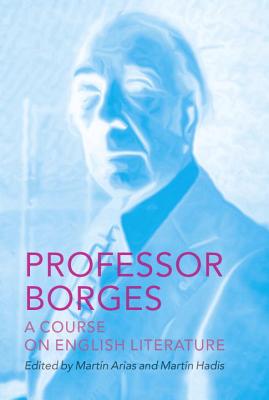
Jorge Luis Borges' "Professor Borges": Book Review


Professor Borges Cover
These 25 lectures from 1966, editors Martin Arias and Martin Hadis confess in their introduction, defied easy transcription. For they were taken from tapes (now erased) by students in Jorge Luis Borges' fortieth term of teaching English literature at the University of Buenos Aires. The garbled nature of the names and verses set down, especially in the Old English dominating the first half of the course, must have challenged both the Spanish-speaking audiences and the scholars searching sources. Borges, nearly blind, knew these texts intimately. Amazing to think that he lectured mostly from memory, and that quality, so memorialized in his fiction as well as his criticism, informs this.

The talks themselves vary in length, perhaps due to whomever wrote them down. The classes appear oddly tilted. For after half a dozen sessions with very in-depth coverage of the Anglo-Saxon era, we jump from the eleventh to the eighteenth century.  You get a look at Samuel Johnson, then it's off for Blake, Coleridge, Carlyle, Dickens, Browning, Rossetti, lots of William Morris, and R.L. Stevenson.

Therefore, the Argentine audience must have come away with an intimate if skewed examination of key authors. The idiosyncratic nature of the course, as in the latter lessons when students recite portions of Morris' poetry, must have made the presentations come alive. One wishes the tapes were extant, but this anthology compiles what Borges was like in the classroom, an aspect we lack otherwise much record of. Despite some typos, this is a useful compilation. The footnotes are extensive and helpful. And even experienced students of the literature may pick up some factoids.

For me, I forgot that Beowulf comes from the typical Norse phrasing for "bee+wolf," or bear. A simple reminder, but one many professors never mention. Learning how Dr. Johnson hoisted and threw a folio volume at a bookseller, with Borges' wry aside that such a tome was indeed difficult to toss, makes the lexicographer's orneriness come alive. And realizing that such disparate texts as Morris' "The Earthly Paradise" and Virginia Woolf's "Orlando" have in common the silence of respectively Chaucer and Shakespeare due to their eminence reminds us of Borges' vast knowledge. (Amazon US 12/3/16)

Monday, January 23, 2017

Dante's "Divine Comedy": Audiobook Review


Overall
Performance
Story
"You are not a child anymore"
If you could sum up The Divine Comedy in three words, what would they be?
Inspiring, instructional, immersive

What did you like best about this story?
This encapsulates through a clever three part (!) layering the Tuscan verse of the original, the pilgrim Dante in deft translation, and the recollections of the poet Dante. It refreshes even for veteran readers key themes and characters, and it moves along with momentum.

What do the narrators bring to the story that you wouldn’t experience if you just read the book?
The tender but firm teaching of Beatrice, the dignified guidance of Virgil, the plaints of the lost, and the praise of the purged and saved souls, all are given nuanced texture. The music is aptly chosen, the sound effects are convincing, and the scope of the otherworld in this audio rendering are evoked dramatically, but soberly and sensibly, clear of unearned emotion

Was there a moment in the book that particularly moved you?
The gasps as Dante sees Christ, his struggles to comprehend the Trinity, and the final scenes as his consciousness blurs with the Beatific Vision are portrayed convincingly. Not an easy feat, given the limitations inherent in even a BBC radio drama's compressed format.

Any additional comments?
The humanity of the quest and nimble explanations of how God's will is enacted in his creatures caught or liberated here by grace. love,and by choice earns respect. Whatever your own views on theodicy, this thoughtful presentation rewards reflection. A set of masterful and insightful performances allow us to enter into the mindset of eight hundred years ago. (Audible US 1/18/17)

Saturday, January 21, 2017

Goldman Sachs Wins Either Way


My FB feed fills with contempt today, as nearly all my "friends" lament His swearing in. I admit to sharing this poster from the IFC broadcast of "A Face in the Crowd," which is admittedly apropos no matter which side you're on for its post-HUAC pinko 50's Hollywood spin on cornpone homespun cant. But that's it. I may send my pals commentary as messages or as e-mails, but I am not furthering histrionics or hatred. Satire, naturally, no less than for the previous occupant on Pennsylvania Avenue

Paul Street reminds us in Counterpunch how one personality cult replaces another. Goldman Sachs still wins. The departing Oval Office occupant received the most contributions from Wall Street ever. Certainly his would-be anointed successor would not rail against those who paid her speeches. "For all their 'concern' for ordinary voters and beneath all their claims of bitter, personal, and partisan contempt for their major party electoral opponents, the Republican and Democratic 'elites' are united with the capitalist 'elite' in top-down hatred for the nation’s multi-racial working-class majority."

He accurately limns how class war plays out in the workplace, an often overlooked aspect among these elites. Even if they claim solidarity and sympathy, the literati, the tenured, and the sinecured lecture the millions, who it's doubtful half-hear them beyond the mainstream media, let alone the journals, reviews, and essays of the New York-based (well, maybe Seattle and San Francisco too, if they can afford their lofts) and Ivy League-educated creative classes. Street elaborates the critiques made by John Pilger this week and three years ago by Chris Hedges. Both scolds, sure, but both daring to call out posers. All three critique the condescension given the mocked white working class, which along with its diverse counterparts, gets shafted no matter who swears on Lincoln's bible.

Dismantling the claim that the Rust Belt and Bible Belt defected, Street counters that the Dems lost more working class votes in the 2012 and 2016 elections, outnumbering the GOP gains. In brief, Bernie might well have won. Second, neo-liberals Jimmy Carter and Bill Clinton, like Barack Obama, presided over the shift of wealth upward to an ever-narrower strata, as happily as their rivals.

The commentator denies a 99% divide. "Among other things, a two-class model of America deletes the massive disparities that exist between the working-class majority of Americans and the nation’s professional and managerial class. In the U.S. as across the world capitalist system, ordinary working people suffer not just from the elite private and profit-seeking capitalist ownership of workplace and society. They also confront the stark oppression inherent in what left economists Robin Hahnel and Mike Albert call the 'corporate division of labor'-- an alienating, de-humanizing, and hierarchical subdivision of tasks 'in which a few workers have excellent conditions and empowering circumstances, many fall well below that, and most workers have essentially no power at all.”'

He continues: "Over time, this pecking order hardens 'into broad and pervasive class division' whereby one class — roughly the top fifth of the workforce —"controls its own circumstances and the circumstances of others below,' while another (the working class), 'obeys orders and gets what its members can eke out.' The 'coordinator class,' Albert notes, 'looks down on workers as instruments with which to get jobs done. It engages workers paternally, seeing them as needing guidance and oversight and as lacking the finer human qualities that justify both autonomous input and the higher incomes needed to support more expensive tastes.'That sparks no small working class resentment."

An understatement. But I like how Street straightens out the under-reported divisions that drag down so many, even many in the non-working class system in status if not always in pay. I had a student who made over twice my pay with a h.s. degree, and he labored damn hard for that amount. Still, it sparked reflection about my years in grad school, my delayed hopes, my own struggles, and the two-plus decades in my position, about where the value lies in hard work. He earned a handsome salary but was gone often to Nevada on pipe-fitting projects, while I admittedly spent many hours then as now not only in a air-conditioned classroom, but toiling away at the relative ease of this keyboard.

Street does elide the bridge between whites and that multi-cultural majority of workers in total. Ravi Iyer at Civil Politics shows how Josh Quinn in Columbus, Ohio, one of those swing states both parties courted and both parties knew counted for the Electoral College, popular votes notwithstanding, convened his neighbors to talk it out, rather than fight it out, an encouraging move. And my wife and younger son plan to march tomorrow. Typically, she tried to join a healthcare protest last Sunday, but parking was so non-existent that it ended before she could find any. So she and my younger son in town went for tacos. Somehow symbolic of a Los Angeles liberal outing.

I am not sure how Street gets from this sort of "ought" to "is," to paraphrase my own elitist, Hume. However, Street's attention to how both parties manipulate populism to serve their capitalist ends, both sides strategically dismissing their deplorables and bitter-clingers, as one might coin a phrase or two, remains instructive. He concludes by citing Upton Sinclair, who battled for socialism in the same city where I teach working-class and immigrant students, first-generation and veterans many among them. Get away from "two wings of the same bird of prey." A few of them have still read excerpts at least from The Jungle, and in its original tabloid format, that phrase appeared. A lot of local students in my city are schooled as I write this to march and chant in two languages against the new president. I'd be happier if their civics lessons led to critical thinking and direct action beyond fealty to the other party. As it is, these children seem poised to follow the path of a maternal imprint.

Thursday, January 19, 2017

Philip Pullman's "The Amber Spyglass": Audiobook Review


Overall
Performance
Story
"Tell them true stories"
What did you love best about The Amber Spyglass?
I loved the evocation of the underworld of the dead souls. Philip Pullman may draw inevitably from Homer, Virgil, Dante and Milton, but he uses these venerable sources well. He reshapes his last volume of His Dark Materials to expand his vision of the cosmology that promises a second chance at Eden, if one tempered by realities not even fantasy can avoid.

What did you like best about this story?
The boatman's warnings as he ferries certain characters across to the land of the dead remains haunting and moving. It channels classical motifs inventively and engagingly.

What does Philip Pullman and full cast bring to the story that you wouldn’t experience if you just read the book?
Again, the range of voices makes the slower parts (and there are many, alas) move along. If I'd have just read this novel, I might not have pressed on through the particularly perfunctory parts often involving a character returned from the second installment, Mary Malone. Also, the disjointed nature of much of this plot challenges patience, even if moments glimmer.

If you were to make a film of this book, what would the tag line be?
Adversary or Authority: who do you love?

Any additional comments?
Like even the beloved Tolkien, fellow don Pullman falters when he tries to wrap up his trilogy. The climax happens well before the end, and a particular character's fate is almost an aside, barely seen, when other writers would've made this a blockbuster showdown. Pullman elaborated so much earlier that too much of this feels didactic and not adventurous. Still, despite the structural clunk, his characters can tug at your heartstrings and even the walk-on parts evince the author's profound humanism and the Keatsian "negative capability" at work. (Audible US 1/16/17)

Tuesday, January 17, 2017

Philip Pullman's "The Subtle Knife": Audiobook Review


"Upending the Story of the Fall, part 2 "
If you could sum up The Subtle Knife in three words, what would they be?
Inventive, unpredictable, menacing

What did you like best about this story?
Philip Pullman's second installment delves into the tale of the Fall and the rebel angels, combining this with speculations about dark matter and parallel worlds, in an engaging manner. I like the intellectual underpinnings of this segment, more than the main action.

Have you listened to any of Philip Pullman and full cast ’s other performances before? How does this one compare?
Yes, and this compares equally to the first I heard, The Golden Compass. More witches this time, and we are introduced to Will Ransom as a co-protagonist in another Oxford. He seems hesitant and petulant, but we learn why this may be if we stick to the storyline ahead.


Was there a moment in the book that particularly moved you?
The showdowns of two main characters ending each of the two last chapters.


Any additional comments?
I liked the introduction of Mary Malone. Her demeanor changes from chipper to awed, understandably, as she learns verification for some of her far-fetched research. The return if briefly to the academic setting where the first book began is welcome. It's Pullman's milieu. (Audible US 1/10/17)

Sunday, January 15, 2017

Philip Pullman's "The Golden Compass": Audiobook Review

The Golden Compass By Philip Pullman"Against the powers that be"
Would you consider the audio edition of The Golden Compass to be better than the print version?
Did not read the book, but I reckon this works well on audio, as it's been recommended as one of the best such adaptations we have of a novel by an ensemble cast.

What did you like best about this story?
The inventive, slightly altered world. We have amberlit, chocolatl, coalsilk, and smokeleaf as indicating this realm nearly like our own, in the wake of Pope John Calvin and the lands of New Denmark and New France indicating a bit of a shift from our own time and society.

What about Philip Pullman and full cast ’s performance did you like?
Philip Pullman handles the narrative evenly. I liked the variety in the bear and human and witch voices. The children and adult roles both meshed smoothly.

Was there a moment in the book that particularly moved you?
Two. The fate of the sundered daemons, and Serafina Pekkala's lonely admission.

Any additional comments?
The story has plenty of sudden turns. That kept the pace lively. But some of the latter half dragged for me, not enough to ruin the storyline, but enough to make me wonder if the next two installments will turn didactic or talky." (Audible US 12/16/16)

Friday, January 13, 2017

Mark Williams' "Ireland's Immortals": Book Review


How the Christian Irish regarded their island's pagan divinities, in medieval and modern times, comprises the two halves of Ireland's Immortals: A History of the Gods of Irish Myth. Mark Williams, an Oxford medievalist, unravels the tangled threads in texts that challenge even the skilled interpreter. Old Irish remains formidable for scholars, and the fact that the evidence exists only in copies centuries after its first renditions onto parchment, deep within already Catholic times, complicates any explicator's task. Dr. Williams remains steady throughout this study. His accessible style remains academic but blessedly free of jargon or cant. His glossaries summarize key concepts and his footnotes address arcane debates.

His history of the gods of Irish myth examines key writings left by the monks and scribes, from the period after conversion. Williams estimates that within a half-century after the Patrician period, Ireland would have been effectively under Christian control. Although pre-Christian practices may have endured, they diminished rapidly, despite the imaginations of later bards eager to insist on secret continuity with centuries nearly up to our own. Williams separates the archaic from the innovative elements inserted into these stories and chronicles preserved within monasteries. Although these tales and accounts were tamed, a "ferocious weirdness" persists in surreal or juxtaposed scenes, distinguishing imagery from the dour scenarios in Anglo-Saxon sagas such as {Beowulf}, for instance.

These Irish pre-Christian versions resemble (as in the Book of Invasions, a chronological origin myth of successive waves of those landing on the nation's shores) the configurations of Romanesque architecture.  Williams compares the sagas to these simple, repeating structures which are decorated with teeming surface details. The medieval corpus, furthermore, rises as a massive edifice, if resting on slender foundations. Pseudo-scholarship at its most ingenious labored to match biblical lore with Celtic supposition. This tension, concentrating around the meaning of the "god-people" the Túath Dé sustains itself within the literature Williams examines. As a blend of inherited narratives with concocted alterations shaped into a Christian mindset, these tales' impact faded by the end of the Middle Ages. The Irish seemed to lose interest. Only in the nineteenth century did curiosity revive about gods.

Part two delves into more recent re-workings of the myths of the Irish gods and goddesses. Romanticism, antiquarianism and the occult all generated speculation. W.B. Yeats and George Russell epitomized the poetic turn of the Celtic Revival at the end of the Victorian period, in the wake of a British passion for the classics and the pagan to counter the tamed, the scriptural and the stolid. Gods, as redefined by the Irish revivalists, emerge as "spiritual entities." Among the Anglo-Irish gentry emerge intellectuals eager to fabricate a past for their country, rooted in wisdom of the earth and appeals to the forces lingering, despite the reign of Christendom, supposedly on fringes of the Celtic homeland.

The ninth chapter introduces William Sharp (1855-1905). Taking on the feminine alter ego of Fiona Macleod, Williams engagingly shares this fantasist of Gaelic Scotland. In Fiona, we encounter a fabled "self-sequestered Highland visionary." Williams labels her as "an imaginary personage, albeit an alarmingly insistent one." Characteristic of this author's tone, he keeps his investigations lively even as he grounds them in careful judgment. He counters the bent suppositions and fey imagination lavished upon sources that, in modern times, create a "feedback loop." Williams analyzes distortions within American anthropologist Walter Evans-Wentz's The Fairy Faith in Celtic Countries. He adapted his Oxford dissertation oddly; this 1911 compendium persists as a New Age "crank piece."

For Mark Williams' predecessor at his university proved both an "exorbitant Celtophile" and a misled eccentric. Evans-Wentz conjured up the peasantry as informants for a pan-Celtic fairy belief system. He incorporated an unnamed mystic's testimony. Yet this was none other than George Russell. Williams reasons that Evans-Wentz betrayed a "spiritual crush on Russell." Testifying as to the endurance of this account lies beyond the scope of Williams' work, but he admits he had to cut a third of his own draft. The results remain impressive, even if the source of that apt John Cowper Powys colophon beginning Chapter Nine lacks attribution to that fabulist, as obsessive as many in this volume, of strange magic.

Nowadays, Williams tracks a second arc, again with diminishing attention to the old gods, among Irish writers. The Túath Dé and their replacements, the Túatha Dé Danann, as the Irish supernatural race, endure within the "wide uptake" by creative classes outside the isle. The fine arts alongside Celtic Paganism and Celtic Reconstructionism enshrine goddesses, notably the fire spirit of Brigit.

Unfortunately, opposition to the ancient forces still exists. Vandalism of historic sites and a modern sculpture to the Celtic sea-god testifies to the powers of these representations as feared by evangelicals. Unlike other cultures where monotheism replaced paganism, Williams concludes that in Ireland, a "restless refusal to resolve" the ambiguities of the survival of the venerable if often barely recalled deities within a Christian context distinguishes that island's literary legacy within the extant sources.


Fittingly, Williams ends his six-hundred page survey with a tribute to the late John Moriarty, a philosopher and shaman from County Kerry. Moriarty's "ecological and psychic sensitivity" to summon up again the mythic terrain's specters signifies the restoration of "imaginative vitality." In a nation divided by income inequality and sectarian squabbles, Moriarty's vision and Williams' precision combine. This learned volume contributes valuable insights that may guide all those who look to the Irish tales and Celtic heritage as a relevant force of energy.
(Interview with Mark Williams here. Amazon US 1/11/17 and Amazon British 1/12/17)

Wednesday, January 11, 2017

"MYFAROG": Book Review


How far the creator of this My(thic) Fa(ntasy) Ro(le-Playing) G(ame) can be critiqued as for his creation, like many controversial artists of all sorts, I leave to the inquirer. Some have slagged off this tabletop RPG on hearsay or rumor; it's unclear how many naysayers have actually played it and found it wanting. To be sure, it's challenging. These 160 closely printed pages fill with charts and directions, even if version 2.6 is streamlined. The author encourages novices to follow suit, and as with younger players, to leave off the stamina and power modules. I am in the minority, for I have nobody to play this with. But, given my research into Ásatrú and native European spiritual and cultural pursuits, MYFAROG sparked my curiosity.

For now, I'll look at the context within which this RPG unfolds. Perhaps solo practitioners may cobble out a way to invent scenarios? I also wonder how those incarcerated, or lacking a GM and others available to join in, might deploy the characters, settings, beliefs, and actions entertainingly. I welcome any suggestions as to how players have modified or customized this for such applications, even if this logically may contradict a RPG.

You can play as various types of humans, or as a wood elf, Fairling, or god-fathered or divinely born. Traditional magic followed by natives appears there on Thule to be giving way to religion as Ásatrú. Groups on the islands correspond roughly to nine nations of ancient Europe. This text refers to a map included in the book, but this is superseded by an eponymous online site where the maps of these locations can be downloaded via pdf's.

Scanning the contents, you'll see on the first page nods to Homer, Tacitus, the Stoics, the author of Parsival, Lovecraft, and Tolkien among others. That anticipates the brickbats tossed at this game for its labeling of some races along with species beyond the Thulean natives and nobles. Surely some of these venerable storytellers also stand accused under contemporary standards promoted by many as suspect of bias and imbalance? The frank fun of such narratives generates good and bad forces, those seeking to subvert and infiltrate, and those trying to resist and fight back. In other conflicts, these may take the name of vampires, zombies, or aliens. And as the writer reminds us (156): Thule can be reassembled to be what the participants want it to be. It's not historical. Perhaps those hostile to MYFAROG did not reach this penultimate page of the text proper.

It is, however, intriguingly based on a stretch of northern Norway that may have been free of glaciers even during the last Ice Age, thanks to the Gulf Stream. Thule corresponds to this territory, and suggests that its proto-European peoples may have survived from times far before. Their struggles can parallel realms as far back as the Stone Age for some, transitioning into the Bronze, or for others, the Iron Age. "Be prepared to enter a world very different from our own" (4) is advice to take to heart. It's fantasy, and exists on its own terms, which one is welcome to tinker with.

Gender, social class, birth place, life stance, tribe, age, origins, and talents all inform one's character role. Dice serve to toss in the element of chance or luck, as in every existence. Gear must be donned and skills amassed as much of the material relates in such a barbaric location to battle, quest, attack, and defense. While the laws may not be those of our own era in regards to sexual behavior, the code is based on pre-Christian and pre-Roman standards of honor above all. Fidelity is praised; non-conformity often receives the force of consequences for resistance.

Outside the Thulean circles to be guarded, bands of rivals lurk. This creates conflict, for no land in this cosmology rests unperceived by intruders. As with any contest, the enemies are subtle and their methods sinister. Betrayals can happen, but the price for exile or outlawry is harsh indeed. Animals, animated objects, nymphs, human NPC's, trolls, and the fearsome ettins (a particularly inventive set of foes) eye Thule with their motives.

Names, a calendar of festivals and feasts, deities, and samples of character sheets fill out this volume. The level of detail may seem excessive, but as with any visionary landscape populated by the enchanted witness turned seeker, this will not seem neither superfluous nor extraneous data. (Amazon US 1/7/17)