Monday, January 9, 2017

Michael Moynihan + Didrik Soderlind's "Lords of Chaos": Book Review


This book has sparked much attention, considering its volatile subject. Reading it at a distance of 15-20 years from the events, the subtitle "the bloody rise of the Satanic metal underground" betrays the gist and the gore of the account. That is, it examines the media role in "satanic panic" while it responds to it. Michael Moynihan, joined by Didrik Soderlind, extracts the roots of the black metal scene, especially in Norway. The first three chapters range widely, with surprising scholarship sprinkled into the narrative, with engaging metaphors and clever asides. Entertaining and educational, this start bodes well to expose this scene for everyday readers, who likely lack knowledge firsthand.

The authors then delve into the "bloody" events. They preface their manner of investigating this milieu in an "unflinching fashion" with a reminder some may overlook. Twice on pp. x/xi they remind us. "It is not our job to pass judgment on our subjects; we expect our readers to have the intelligence to do that for themselves." And, noting our our world needs "dangerous ideas more than ever," even if it "may not need the often ill-formed and destructive ideas expressed by some of the protagonists" in this study, nevertheless "we felt all along that this is an issue for the individual reader to decide." Intriguingly, my public library system shelves this in the Young Adult musical section.

While the central characters are well-known within the small black metal community, the authors enrich their presentation with scholars and observers less expected. For instance, Jacob Jervill, a Christian minister, laments the decline of attention paid to evil within the State Church of Norway, and he analyzes the vacuum left by the diminished force of that tradition in a system where affluence, conformity, and comfort spark not contentment but unrest among some growing up feeling outsiders.

Likewise, in Ch. 10, critiques by the members of Ulver, by Simen Midgaard, and by Pal Mathiesen deepen one's understanding of the forces tempting youth towards acts of destruction and sounds of despair. Varg Vikernes, as a lightning rod for such energies, typically avers: "I never say anything to 'provoke,' but I 'provoke' intentionally to say something." (qtd. 162) His pronouncements fill many pages of this work, and the authors editorialize vis-a-vis his "ex post facto revisionism" his habit to frame previous remarks in light of his present concerns. These do evolve or shift, as the Nordic concentration among this set turns from a youthful dalliance or dance with the "adversary" to a more folkish and saga lore-inspired Odinist or Ásatrú focused revival of the suppressed old beliefs. (213)

Michael Rothstein speaks of the willingness of certain believers to then turn to Thule and UFOs as extended forays into Northern occultism. These searchers then find authorities, however discredited, to support their worldview. (188) So, Lords of Chaos (the title taken rather anti-climatically from a clique of Ft. Myers, Florida, teens led by one of their number who called himself God) serves too as a reminder of how alternative and fringe movements gravitate towards earlier conspiracies and cabals.

For this, Hendrik Mobus' interview offers the most in-depth example. Calling himself a scapegoat like a "modern Loki," (292) he and Varg (p. 162) justify a shared ambition to recast black metal in a "militant heathen" (303) mode of attack. In retrospect, the authors place the satanic adjective of their subtitle in a time period late in the 20c, waning more than waxing by the time of the 2003 2nd ed.

But as Vikernes rationalizes, the dramatic claim of why medieval stave churches were burned across his homeland echoes, even as the mindset of the perpetrators may move with the times, new and old. "Show Odin to the people and Odin will be lit in their souls." (96) Many may scoff at this confident proclamation, but a few do seek out heathen ways as more invigorating than Christianity's claims.

P.S. This book while footnoted could have been improved by an index. The chapters skip about and transitions diminish as the pages add up. It aims for an international coverage but this weakens the later sections. As it progresses, it's as if journalism has been inserted or recycled. Women barely appear; this may not be the fault of the authors, but it symbolizes a lacuna worth questioning. The clip art and illustrations may lighten density but it lessens the impact as not all are necessary. It could have listed a discography, to supplement URLs for indie labels and told more about the music itself from leading bands as well as their deeds, crimes, and punishments. A needed if now-dated resource.
(Amazon US 1/4/17)

Saturday, January 7, 2017

Brad Warner's "There Is No God and He Is Always With You": Book Review

There Is No God and He Is Always with You: A Search for God in Odd Places
I've enjoyed the series of engaging books by Brad Warner joining his Zen practice to his life and music. He writes naturally, in a conversational style, and roams widely in his speculations. His new book takes on the God question. He adapts "inmo" from his mentor Dogen for the title "There Is No God and He Is Always With You." Typically gnomic, the kind of challenge Warner likes taking up.

He makes intriguing connections. Stoner rock, punk, his Japanese work experience, his battles with facing a fatal disease that runs in his family all inform his reflections. Like his other works, this book does feel like a series of extended blog entries or reflections more than a coherent whole, and the informal approach may frustrate academic types of readers. But as in comparing the Buddhist concept of being reborn over eons to the Norse one of Ragnorok, he hits on a few memorable insights overall.

On p. 66, he opines that God exists because we ask questions of him. On p. 77, he cites a song by Om, "Meditation is the practice of death" to remind us of our mortality. I confess that Warner has more fortitude than me or the friend he mentions who stays awake at night fearing self-annihilation. But Warner has always championed a tough-it-out on the cushion method to staring down the truth.

He nods to others who support his own search. Christopher Hitchens' typically provocative statement that even if Jesus was born to a virgin, performed miracles, and rose from the dead, still this track record would not prove to Hitchens that "what Jesus said was valid" (129) fits well as Warner shows with Dogen's skepticism about supernatural powers. While Warner validates his form of Soto Zen, he leaves open the doubts that occupy many of us who may be less convinced by proclamations of any who deem themselves holy. As he reminds us on p. 175, God is "a dangerous word" to bandy about.

Therefore while I may not be as convinced as Warner about the usefulness of adapting this loaded word within a Buddhist framework, he does encourage one to examine the Big Questions. And that, combined with his commonsense style and accessible musings, makes for another worthwhile book, as Warner deals with middle-age, restlessness, and the continual quest that beckons for the thoughtful, contemporary seeker. It's loose and casual, but it also sums up serious, dogged inquiries.
(Amazon US 1/5/17)

Thursday, January 5, 2017

Christopher Hitchens' "The Portable Atheist": Book Review

Details about THE PORTABLE ATHEIST - CHRISTOPHER HITCHENS (PAPERBACK ...

As many reviews on Amazon precede mine, I will offer a sample of the places I found most engaging. Christopher Hitchens received plaudits from some and suspicion from others, even fellow travelers, for what seemed in the wake of his "god Is Not Great" bestseller a cash-in with not as much editing of the inclusions as a rapid assemblage. Too many of the 47 excerpts drag on; a careful compiler would have excised portions and given overviews, while translating passages from other languages and footnoting arcane references as so much material is drawn from sources long ago.

His introduction, on the other hand, pleases. It's a joy to read Hitchens, whether you agree with him or not. Early on his contrast between god-like cats and dogs who treat us like gods (15) establishes his point memorably. His frank question why "semi-stupified peasants in desert regions" receive revelations of their Creator vs. those among the rest of mankind resounds. (18) His humility that whether innate or inexplicable, we can still laugh at our folly of invention humbles us against such faith-claims. (25) As he cites his friend Richard Dawkins, we are all atheists of some sort, for who among us still worships Jupiter? (20) Hitchens thunders against theocracy as the original totalitarianism, the tyranny exerted against anti-theists who take on a more active stance of opposition against the despots determined still alive among us who exact punishment against thought-crime. (23)
Hitchens pithily and typically sums up the struggle: "the main enemy we face is 'faith-based.'" (29)

Among the entries, I perked up with Thomas Hobbes' examination of the four causes for the "natural seed" of religion. (45) David Hume's extended foray into the contradictory elements of a deity demanding both praise and terror serves as an early examination of the force that compels our fealty. (61) Then the poet Shelley tackles both the argument by design (89), and the fact that even two centuries ago, "men of genius and science" championed atheism (94) attests to this venerable legacy.

Leslie Stephens' name may be less familiar than the three mentioned above, but he responds to Cardinal Newman's appeal to conscience for belief in God with the plain admission that such an appeal "has no force for anyone who, like most men, does not share his intuitions." (155) Anatole France wittily captures the conundrum at Lourdes, full of crutches "in token of a cure." His friend points "to these trophies of the sick-room and hospital ward" to whisper: "One wooden leg would be more to the point." (168) Emma Goldman reasons how in every age, God has been forced to adopt himself to human affairs, a petty meddler rather than an eternal, awesome force for goodness. (186)

Bertrand Russell earns his allotted span in this anthology. He encourages the dogmatic reader to read papers of opposing views, good advice still. "If an opinion contrary to your own makes you angry, that is a sign that you are subconsciously aware of having no good reason to think as you do. (275) Carl Sagan wonders logically why God is so visible in the biblical world while so obscure in ours. (318) Dawkins conjures up Mt .Improbable, where the seeker can climb by a gentler back slope towards rational discovery rather than a leap up the front precipice, as a way towards clarity. (387)

Victor Stenger's chapter 37 on cosmic evidence is lengthy but rewarding, as he dismantles arguments. A zero energy universe, rather than a miracle, is exactly its "mean energy density" for one appearing "from an initial state of zero energy, within a small quantum uncertainty" initially necessary. (314) While John Updike's rambling conversation in his novel Roger's Version puzzled me at first, the explanation of how quantum fluctuations or tunnels via Higgs Bosons sparked what became time and space prepared the way helpfully for the learned astronomical discussions by scientists in later pages.

Ibn Warraq's in-depth exegeses from Why I Am Not a Muslim similarly fill out a need here to get away from a steady attack on the Jewish and Christian versions of an Almighty. He also debates the principle within Islam of supersession, a series of revelations urging departure from earlier forms of belief to higher and then single ones. "If there is a natural evolution from polytheism to monotheism, then is there not a natural development from monotheism to atheism? is monotheism doomed to be superseded by a higher form of belief, that is, atheism--via agnosticism, perhaps?" (396) Wise words.

H.L. Mencken, for those contemplating pagan or pantheistic retreats, lists outmoded powers above and below to illustrate the dead voices of forgotten or outmoded forces once called upon by millions of our ancestors. Michael Shermer's discussion of the legend of the Wandering Jew seems superfluous, but Sam Harris' "In the Shadow of God" states a fundamental warning. "Whenever a man imagines that he need only believe the truth of a proposition, without evidence--that unbelievers will go to hell, that Jews drink the blood of infants--he becomes capable of anything." (457) A twist on the Grand Inquisitor of The Brothers Karamazov (the latter tale not here) as to God and morality?

Back to Dawkins, he notes how the Bible fails as a "truly independent guide to moral conduct," serving instead as a "Rorshach test" where people pick out what reflects their own morals and interests. (341) The God in this volume fails, he adds, to ultimately care about his creation. (336) Steven Weinberg seconds this. "But the God of birds and trees would have to be also the God of birth defects and cancer." (372) Salman Rushdie reflects: "Only the stories of 'dead' religions can be appreciated for their beauty. Living religions require much more of you." (381) A.C. Grayling denies that an atheist should label him or herself as one. "The term already sells a pass to theists, because it invites debate on their ground. A more appropriate term is 'naturalist,' denoting one who takes it that the universe is a natural realm, governed by nature's laws." (475) This spins back to Hitchens' start.

That is, he broadens the other contested term. "Religion is, after all, more than the belief in a supreme being. It is the cult of that supreme being and the belief that his or her wishes have been made known or can be determined." (loc. 393) This may be reductionist for scholars of the philosophy of religion. I aver so, but Hitchens tries to focus on the disputes among atheists over an "intervening" divinity. Men and women will continue, he avers, to create such. "We are unlikely to cease making gods or inventing ceremonies to please them for as long as we are afraid of death, or of the dark, and for as long as we persist in self-centeredness." (loc. 385) One last reminder, from the introduction again. "If anything proves that religion is not just man-made but masculine-made, it is the incessant repetition of rules and taboos governing the sexual life." (loc, 418) Hitchens, for all the scattered evidence marshaled here untidely at times against the presence of such a querulous God, endures as a presence. (Amazon US 1/5/17)

Tuesday, January 3, 2017

Fate of my fathers


Last year, I remarked to a FB thread that the Irish might have suffered trauma in surviving An Gorta Mór. A recent study verified this epigenetic transfer to children born to parents who had endured the Holocaust, after all. I was mocked immediately as if I was trying to support white privilege, and as if I was discounting somehow the experience of the Middle Passage and black slavery and abuse.

Not sure how all this equates in the victimhood sweepstakes, but it wasn't my intent to enter that contest. I merely wondered, as Séan de Fréine did half a century ago in his little book The Great Silence, how the impact of the sudden and dramatic loss of one's identity rooted in language, culture, and family might be shattered so its effects were transferred by mores and habits from those effected.

In de Fréine's account, he focused on the nationalist legacy, but I recall hearing Garrett O'Connor speak of this in nature as well as nurture terms twenty-odd years ago. His chapter on this topic in Tom Hayden's The Great Famine collection of essays suggested from O'Connor's treatment of we Irish how this might have come down 150 years later, and left imprints on dynamics and complexes.

My ancestral region has lost 80% of its population since that mass death and emigration crippled its economy, its coping mechanisms, and its people's prospects. How might that have emanated in my forebears? How, huddled in a farmhouse rebuilt around 1851, might they have dealt with this--or not?

Psychoanalyst Michael O'Loughlin explores this, and he lists some of the research advanced. It's no longer apparently a fringe idea, despite my FB deniers. As genetics progresses, so do explanations.

Now, I write this short entry far from my expertise, but I raise it anew as I happened to see one pundit fear how this upsetting behavior undergone by millions now might echo down the DNA so to speak. The shakeup among half the nation in terms of their expectations for the election leaves many around me self-medicating with more pot, more booze, and more indulgences. I lack this reaction, but it may be indeed my inherited detachment from emotion from my own clan, who knows? An useful article in Discover Magazine in March 2013 elaborates discoveries of Michael Meaney and Moshe Szyf.

Apparently I am vindicated. While my own family history is left for discretion off this day's reflections, I can see evidence for supporting patterns I have inherited from stress and separation very early on. While this does not ease my challenges directly, it does offer me explanations for why I am at least in part--is it nature and nurture?-- the way I perplexingly am, facing a topsy-turvy New Year.

Sunday, January 1, 2017

Brian Eno on 2016/17

This post lacks a stable URL so I reproduce it in full for your contemplation. Happy New Year 2017. 

2016/2017

The consensus among most of my friends seems to be that 2016 was a terrible year, and the beginning of a long decline into something we don’t even want to imagine.

2016 was indeed a pretty rough year, but I wonder if it’s the end - not the beginning - of a long decline. Or at least the beginning of the end….for I think we’ve been in decline for about 40 years, enduring a slow process of de-civilisation, but not really quite noticing it until now. I’m reminded of that thing about the frog placed in a pan of slowly heating water…

This decline includes the transition from secure employment to precarious employment, the destruction of unions and the shrinkage of workers’ rights, zero hour contracts, the dismantling of local government, a health service falling apart, an underfunded education system ruled by meaningless exam results and league tables, the increasingly acceptable stigmatisation of immigrants, knee-jerk nationalism, and the concentration of prejudice enabled by social media and the internet.

This process of decivilisation grew out of an ideology which sneered at social generosity and championed a sort of righteous selfishness. (Thatcher: “Poverty is a personality defect”. Ayn Rand: “Altruism is evil”). The emphasis on unrestrained individualism has had two effects: the creation of a huge amount of wealth, and the funnelling of it into fewer and fewer hands. Right now the 62 richest people in the world are as wealthy as the bottom half of its population combined. The Thatcher/Reagan fantasy that all this wealth would ‘trickle down’ and enrich everybody else simply hasn’t transpired. In fact the reverse has happened: the real wages of most people have been in decline for at least two decades, while at the same time their prospects - and the prospects for their children - look dimmer and dimmer. No wonder people are angry, and turning away from business-as-usual government for solutions. When governments pay most attention to whoever has most money, the huge wealth inequalities we now see make a mockery of the idea of democracy. As George Monbiot said: “The pen may be mightier than the sword, but the purse is mightier than the pen”.

Last year people started waking up to this. A lot of them, in their anger, grabbed the nearest Trump-like object and hit the Establishment over the head with it. But those were just the most conspicuous, media-tasty awakenings. Meanwhile there’s been a quieter but equally powerful stirring: people are rethinking what democracy means, what society means and what we need to do to make them work again. People are thinking hard, and, most importantly, thinking out loud, together. I think we underwent a mass disillusionment in 2016, and finally realised it’s time to jump out of the saucepan.

This is the start of something big. It will involve engagement: not just tweets and likes and swipes, but thoughtful and creative social and political action too. It will involve realising that some things we’ve taken for granted - some semblance of truth in reporting, for example - can no longer be expected for free. If we want good reporting and good analysis, we’ll have to pay for it. That means MONEY: direct financial support for the publications and websites struggling to tell the non-corporate, non-establishment side of the story. In the same way if we want happy and creative children we need to take charge of education, not leave it to ideologues and bottom-liners. If we want social generosity, then we must pay our taxes and get rid of our tax havens. And if we want thoughtful politicians, we should stop supporting merely charismatic ones.

Inequality eats away at the heart of a society, breeding disdain, resentment, envy, suspicion, bullying, arrogance and callousness. If we want any decent kind of future we have to push away from that, and I think we’re starting to.

There’s so much to do, so many possibilities. 2017 should be a surprising year.

- Brian

Saturday, December 31, 2016

Goodbye 2016


"For last year's words belong to last year's language
And next year's words await another voice.
And to make an end is to make a beginning."
T. S. Eliot, "Little Gidding."

Yes, many mourn the celebs and rock stars who die, the election results in Britain and then America, this annus horribilis. But look at the height of the plague in 1353, or the Nazi incursions as of 1943. So my wife in her blogpost, with me under a fictional persona, part me that is, has me say to her in comfort. The compassion of a gerbil, that's me, so I'm told. And my character replies gamely how he does have a heart, if hidden, and that he prefers to keep it from the endless lamentations on social media and the constant indulgences of grief against the cold hard facts of mortality and inevitability.

That dovetails with a book landing in my hands entirely by fate this week. Harvard Law's Brazilian political philosopher Roberto Mangabeira Ungar's The Religion of the Future posits a mentality when we can summon up a force against belittlement of our talents, creations, and aspirations fulfilled, but one that somehow--here's the rub--that accepts the reality of our oncoming death, our existential groundlessness, and our insatiable desires to go beyond the limits of time, space, resignation, and life.

A heady work, and I am progressing very slowly, re-reading passages and pondering them. In a true memento mori or vademecum on my Kindle (I bought that e-book from Verso on sale). It reminds me of the scope of a book Ungar rejects for its Axial Age thesis, Robert Bellah's Religion in Human Evolution (2011) which I labored through a few years ago, and a third, which I studied exactly two years ago, Charles Taylor's A Secular Age. Like the time-slowing-to-a-crawl labyrinthine slush of J.C. Powys novel Porius, and the tale of the most irascible SOB ever by Halldór Laxness, Independent People, the discipline of a long immersion, if over a long attenuated timespan, of challenging texts rewards me. I admit I leap between such and lighter fare, but the stimulation of these tomes I like.

Image: "Janus-like" statue, Boa Island, Co. Fermanagh. For the New Year and new hopes for healing.

Sunday, December 18, 2016

Newton's Third Law


Even if New Year's is two weeks away, I've resolved this past year to expand my reading material. The echo chamber's become a common phrase the past few months, derided by some who blame whatever ideology one leans to for keeping half of America tuned out from the other half. Both sides sometimes could care less about the other (small 'o' rather than The Other elevated by one side). But I figure it's stimulating to do so, and besides, I've always had unpredictable (a bit at least) and contrarian ideas.

So, I read Ross Douthat in the NYT regularly. This conservative Catholic intellectual's an anomaly, certainly. His take on the campaigns and culture wars from his perspective reminded me not of my Jesuit college, which was decidedly of the "social justice" tilt, but of a few authors I tried out in the stacks during my stint. I roamed them to find among the Eric-Gill- Hilaire Belloc- Chestertonian axis an argument for distributism, a return to guilds, and a William Morris-inspired direction of a benign reform less hostile to the spiritual than the Marxism and/or liberation theology favored by certain professors. I mulled over these issues in my undergrad years, during Reagan's first term, and while I opposed him, I found that the knee-jerk denigration of those like my family who voted for the Gipper as an antidote to the identity politics promoted by the Dems diminished the voices of "my" folks. Unions declining, education faltering, the Church diminishing, their trusted verities faded rapidly. This white working class is mostly mocked, but I understand it.

Not that I backed the GOP, but I didn't cotton to the attitudes of those limousine liberals either. The earnest Michael Harrington's version of democratic socialism appeared as one option some of my circle entered, if gingerly. We were from the blue-collar ranks, the first to go far with higher ed, from average parishes and schools. But the Jane Fonda-Tom Hayden in the People's Republic of Santa Monica's noblesse oblige the DSA exuded for L.A.'s NPR crowd on the Westside, few of whom were natives and many from New York and other bastions of privilege, rankled me instinctively. (I get that way whenever my hometown is critiqued by airy arrivals from wherever.) And when I questioned proto-Maoist radicals at UCLA a few years later during my doctoral quest, as to where their efforts to recruit among the likes of my father's machinists would wind up, as factories left the U.S., I did not get much response as to a shift to consciousness raising among the temps in their monitored cubicles.

Now, as many may have buyer's remorse as to whom they voted for to bring back those tool-and-die jobs my dad did, the choice of the right-wing, as fickle as predicted in their embrace of cronies from capitalism's elite to fill the Cabinet to come, bodes poorly for reforms. No surprise there. But in retrospect, an April 23rd 2016 piece by Douthat I found this morning in the paper pile shows how the lately fevered fears of certain "alt" sites and voices can be placed within a larger context, one the media pass by. I'm unsure how much aligns with what I stumbled across in college, but here goes.

Douthat documents the roughly 2/3 bias in programs (highest in my field of English Lit) against conservative candidates otherwise equally qualified for a post competing with a liberal applicant. 10% of the humanities professoriate total its right-wing. A minority no advocate lobbies for more spaces in the ivory tower. This movement Douthat labels as '“neoreaction,' which in its highbrow form offers a monarchist critique of egalitarianism and mass democracy, and in its popular form is mostly racist pro-Trump Twitter accounts and anti-P.C. provocateurs." (See here for more on the latter contingent's variety, tallied by one who delights to épater le bourgeois.) Douthat suggests these two phenomena emanate from a common core: "the official intelligentsia’s permanent and increasing leftward tilt, and the appeal of explicitly reactionary ideas to a strange crew of online autodidacts."

The Whiggish expectation that we advance inexorably towards a better future outweighs the Newtonian third law of actions triggering equal and opposed reactions. They may be balanced in that one President follows another, and their racial and social stances may be seen in opposition. But are they equal in reactions? Both kow-tow as any elected figure in the U.S. of any stature to bankers, developers, lawyers, tax-dodgers, connivers, and cabals. A shadow government runs our real system. For me, a change of the front man does not mean the backing band has changed utterly for the better. It's as if the lead singer lip-synchs what the talented songwriter pens, the charmer out of the spotlight,

Going beyond the easy depictions of idolizing Him, Douthat discerns a void on campuses. If a discontent wants to revolt against "tenured radicalism," what to do? Those think-tanks don't attack
"the very roots of the modern liberal order." (Deft spin to the derivation of a less-heralded radical.)

"Deep critiques" abound on the left.. Douthat notes that while scholarship on Carlyle or T.S. Eliot or Rudyard Kipling continues, few publishing on these writers would admit any admiration for their politics. Their often racist and anti-semitic outbursts, akin to the antebellum South, make this sympathy taboo. Yet when we erase polarized opposites of Foucault or Zizek, we may lack contexts.
But while reactionary thought is prone to real wickedness, it also contains real
insights. (As, for the record, does Slavoj Zizek — I think.) Reactionary assumptions
about human nature — the intractability of tribe and culture, the fragility of order,
the evils that come in with capital­-P Progress, the inevitable return of hierarchy, the
ease of intellectual and aesthetic decline, the poverty of modern substitutes for
family and patria and religion — are not always vindicated. But sometimes? Yes,
sometimes. Often? Maybe even often.
Both liberalism and conservatism can incorporate some of these insights. But
both have an optimism that blinds them to inconvenient truths. The liberal sees that conservatives were foolish to imagine Iraq remade as a democracy; the conservative
sees that liberals were foolish to imagine Europe remade as a post­national utopia
with its borders open to the Muslim world. But only the reactionary sees both.
Is there a way to make room for the reactionary mind in our intellectual life,
though, without making room for racialist obsessions and fantasies of enlightened
despotism? So far the evidence from neoreaction is not exactly encouraging. The official intelligentsia’s permanent and increasing leftward tilt, and the appeal of explicitly reactionary ideas to a strange crew of online autodidacts. is also evidence that ideas can’t be permanently repressed when something in them still seems true.
Maybe one answer is to avoid systemization, to welcome a reactionary style
that’s artistic, aphoristic and religious, while rejecting the idea of a reactionary
blueprint for our politics. From Eliot and Waugh and Kipling to Michel Houellebecq,
there’s a reactionary canon waiting to be celebrated as such, rather than just read
through a lens of grudging aesthetic respect but ideological disapproval.
Now, where are the insights Douthat invites? Tribalism has been blamed for the intransigence of the divides into which we are born, are classified within and expected to uphold for a demographic tick-box or a employer-mandated form. Order is fragile, but as with global warming and neo-liberal pieties, do these impacts merit dismissal as we crest into planetary chaos? The ebb of standards in the arts and discussion we lament within the chattering classes (at least of a certain age, before the advent of word processors and smartphones), but we engage in the same technologies and share the same memes as our younger charges. I personally get frustrated by the casual reversion to f-this and s-that all around now, but my peers shrug it off. I'm happy that the definition of family expands to same-sex couples and any whom have long faced ostracism. But I worry about the "single mom" trope as if this origin excuses any criticism of blame for the damage a fragmented home may inflict on young or old.

As for patria, I suspect this when nationalism stands for inbred mores and backward selfishness. Much as I have a soft spot for the Irish Tricolour, I remain detached about flag worship, and even the standing for the Pledge discomforts me as I've grown to realize this compromised U.S. Yet I defy its liberal norm in arguing if fruitlessly against open borders as I believe any jurisdiction by its nature should exercise self-deliberation among its citizens as to how many newcomers it can include. This clashes with everyone around me, but it's a tenet for me squaring with sustainable economies, eco-friendly lifestyles, and populist decision making rather than the centralized dictates that the au courant  musical hit Hamilton champions, if glossing over the real Alex's pro-British elitism and trade that favored the wealthy and the Feds rather than the states and those resisting Beltway power.

Religion needs no debate here. It's been contemplated for all my life, let alone many of my posts. The appeal of the atavistic and the ancestral pulses strongly within me. Its dangers and its delights create discomfort and rouse discussion. Suffice to say that "its strange viral appeal" buzzes in my sly soul.

Friday, December 16, 2016

The In-Crowd


How much do our quick decisions and snap judgments rest on our implicit, innate bias? I have often wondered about how our ancestral groupings, to use Dunbar's Number of no more than 150 people among whom we can establish trust and form bonds, wired into our brain capacity, works in out post-prehistoric cosmopolis. Two NYU psychologists published their summary of an apt experiment.
This finding — that people are reflexively prone to “intergroup bias” in punishment — is consistent with what many scientists believe about humans’ evolutionary heritage. Homo sapiens spent thousands of years in close-knit communities competing for scarce resources on the African savanna. Members of the in-group were presumably sources of help, comfort and cooperation; members of opposing groups, by contrast, were sources of threat and violence. As a result, the tendency to instinctively treat in-group members with care and foreigners with caution may be etched into our DNA.
Our finding sheds some light on the nature of implicit racial bias. Because people frequently form group memberships on the basis of race, the same biases that emerge along group lines may underlie many instances of racial discrimination. This human tendency is almost certainly inflamed when different racial groups are exposed to racial stereotyping and institutional discrimination, but it may start with common instincts driven by the pressures of evolution.
We need not resign ourselves to a future of tribalism. On the contrary, our research suggests that people have the capacity to override their worst instincts — if they are able to reflect on their decision making as opposed to acting on their first impulse. These insights, for example, could inform the types of implicit bias training programs that the Department of Justice is now requiring for nearly 30,000 prosecutors and law enforcement officers.
Acknowledging the truth about ourselves — that we see and think about the world through the lens of group affiliations — is the first step to making things better.
A short entry today. But as I've been mulling over the pull of the tribal and the push of the social, this merits archiving on this blog. Living in one of the most polyglot cities in the world, in a situation few since maybe the few million in ancient Rome have encountered, I wonder about the pressures exerted. Diversity and multiculturalism are taught and seen in the couples and children around me. But the force of the familiar, as in the perpetuation of the old country and the mother tongue, also dominates the local scene, and it does not fade as immigration sustains the counter-assimilation tide.

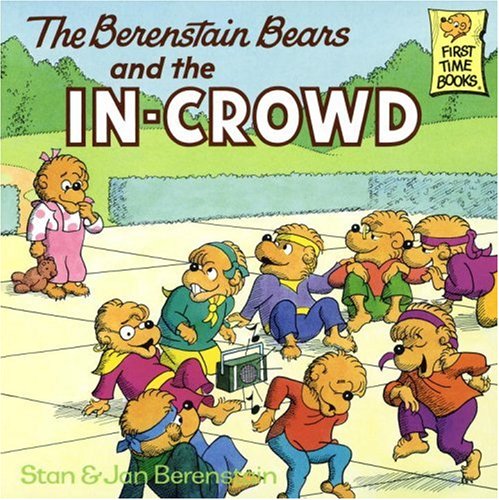
Sorry if you expected me to review this Berenstain Bears title. I can guess the plot, however. There's sure a lot of headbands sported on that playground. It's encouraging to see two bespectacled hip-cubs.

Wednesday, December 14, 2016

Dependent Arising + the Dodgers


At my last sitting, our moderator raised a couple of insights I wanted to share. First, that the fundamental concept of dependent arising, that nothing happens in isolation, in Buddhism connects with the problem many have of taking ideas out of context. Then, extracting phrases, elevating persons, exaggerating points generates the distortions that can plague us when we loosen moorings. We drift from the safety net.

That is, meditation can ground us into a state of awareness, to explore the realm where our mental (and sometimes to me visual if less so than it "appears" most people who report their recollections) constructs solidify or emerge under a contemplative situation. This may seem airy, but becoming more cognizant of how we respond in our interior to forming awareness around an image, a thought, a thing can help us understand how the formative process works within to solidify the intangible, to reify the imaginary, and to harden the fluid. In turn, this reveals how we conceptualize and then may try to hold on to the ever-changing as if permanent. And we see, I'd add, how many huddle around their role model, their candidate, their champion, as if he or she can solve their problems and offer solace or success if only we believe enough in Her or Him to rally to their party, to vote, to hope. Change comes no matter.

As I've stated often, my disengagement with this status quo grows with age. But all around me, pain and unease manifest themselves. In those who fear the new power, in those who cheer the new power. But transferring our own actions and identities onto another clashes with our own capability to create change in ourselves and in those around us, practically rather than politically or ideologically. For those removals of "agency" (a buzzword now, but it works in philosophy...) to a figure we idolize or disdain distances ourselves from the true force of energy and enthusiasm, that we possess within us.

If a lesson in impermanence is needed, it's all around us. Administrations come and go, programs get implemented for better and worse, and campaign promises evaporate more than they find fulfillment. Too many in my estimation have rushed the past year and a half into worshiping one figure or another. They forget that, like rooting in my analogy for the red team or the blue team, that losses will happen and victories may diminish or increase, beyond the desperate intercessions made by the fans.

I used to watch the Dodgers much more (and not at all since they were blocked by cable in their hometown due to an endless dispute), but I realized that their own instability provided me with more worry than pleasure. What should have been entertainment became for me a struggle, as my emotions rose or fell with the hapless Blue Crew too often. So, while I remain loyal, I remain detached. That sort of emotional removal may not work as well for a society where a supposed leader can unleash sorrow or promote joy through his or her policies, but it may be necessary, for one's own sanity.

Part of me wants to engage, part of me to disengage. Within a system I dislike, my atavistic allegiance is to the underdog, the marginal, the misfit. That may include the befuddled home team, who never fail to fail again, since 1988''s World Series. I believe that more self-consideration will benefit me so when I choose a response, it's better informed and less knee-jerk or group-think. Meanwhile, CNN blares in the room above, the newspapers I get grow thinner and more expensive, and the reasons I have to put my trust in the powers-that-be dwindle as I try to look inwards, to take my own path, even if that means I blaze it and it lacks any definition or label, any post or marking.

Monday, December 12, 2016

Hardwired for religion?


saintpeter-paul2
I want to share two competing arguments about the influence that religious aspirations impose upon our neural networks. These do not prove the existence of religion or divinity. But they assert in overlapping analogies the human craving to find explanations in patterns, dreams, visions, yearnings.

In Quartz, Olivia Goldhill admits the shortcomings of a recent report on tests conducted on 19 people, but she finds the neuro-theological research encouraging. "The Neuroscience Argument that Religion Shaped the Very Structure of our Brains" cites Jonah Grafman: Our brains had to develop the capacity to establish social communities and behaviors, which are the basis of religious societies. But religious practice in turn developed the brain, says Grafman. 'As these societies became more co-operative, our brains evolved in response to that. Our brain led to behavior and then the behavior fed back to our brain to help sculpt it,' he adds." Intriguingly, as religious activity takes up so many portions of activity in society, so in the brain. It's diffused, so no particular part generates this locus.

Anthropology is needed to expand this field, and Goldhill warns that it's too facile to generate brain scans as some solution to a very intricate underpinning of our ancient mindset. The manufacturing of empathy, however, appears to overlap with where we think about God, Grafman and colleagues aver.

Last night, reading far afield as a newcomer I explore the topic of the folkish vs. universalist inclusion in heathen and pagan European-centered fellowships, this metaphor intrigued me, speaking of wiring. I leave aside the medium and focus on the message. (From a controversial source. I choose not to have any pingback spark or interference occlude my discussion here.) This practitioner asserts, in my paraphrase, that the "European" native, pre-Christian path is the correct software. If "partly compatible" software is installed, it's akin to Buddhism. If it's "malicious," as with a "virus," it's liable to crash the internal drive, akin to Christian or Islamic teachings. Reboots may delay failure. But unless the system runs with the proper program, the computer will keep failing. "Desert" religions possess within this inherent flaw, as they originated within other cultures. Inevitably, there's one fix.

I've been mulling this over lately, as previous blog entries have shown. My sittings with others revolve around another model, that the dharma liberates all, as a therapeutic program rather than any revelation as if a supernatural imposition into human affairs. Part of me, personally if paradoxically, wonders why the desire among countercultural pagans and heathens requires a faith-based direction. One large stumbling-block is that these very terms are defined by the Christian opposition, those outside the permitted expression of belief and ritual labeled in late antiquity "hicks" in the "sticks."

As the egghead, I ask why, if we have evolved past slavery, cannibalism, the divine right of kings, and trepanation, some insist that the solution to our woes is a rejection of the secular humanist tradition that has tried to overcome our nastier and brutish tendencies. Unlike Saul, I reckon few of us turn Paul on some Damascene road, falling off a horse thanks to a call from on high. Or Luther's fear.

Is the more persistent if more low-key call for a return to the heart's pulse and the earth's embrace sufficient to heal our post-modern, consumer-driven, and market-based mentalities? Can we find solace in any old ways? Isn't the aspiration of no gods, no rulers a truer, anarchist expression of the potential within us to conquer the demons within? Or, is this trust in human perfection itself an ideologically suspect campaign? My wife isn't wired for religious quests as I am, for instance. She suspects what I sustain, if irrationally. I'll continue this investigation next post, adding perspective.

Saturday, December 10, 2016

"The freedom to be left alone"


Reminded by my friend who found a typically endless rant by this addled pantheist during research at the Huntington, I pulled my copy of Porius: A Novel of the Dark Ages off my shelf and picked up somewhere near the two-hundred page mark I'd left off a while back. For this meandering narrative takes eight days in late October, the year 499, and stretches it into a reading experience demanding weeks, at least. John Cowper Powys remains as Morine Krissdottir's Descents of Memory (2008, reviewed by me) attests a difficult, elusive figure to grasp and not always an appealing one to like.

I suppose I was one of the few who checked that bio out of the library never having read the subject. I'd see at the old Bodhi Tree used bookstore on Melrose a big paperback of his earlier A Glastonbury Romance but the silly names within (a deal-breaker for me with Dickens as well as nearly all fantasy save that of the one linguist who knew of what he invented, J.R.R. Tolkien) discouraged me from it. (I have since learned that JCP changed names to protect himself against lawsuits by real Glastonburians.) The Grail and the Arthurian corpus never excited me in grad school, although I did like Excalibur. John Boorman considered filming this novel, fittinglyAnd, come to think of it, I did not mind Malory's realms at all. But I atavistically favor the Celt and the pagan, the resisters to Saxon rule and Catholic imposition, more than I do magic-kal conjuring, dodgy cant, fiery horses or swords.

At least in my fiction. But finding two years ago David Goodway's Anarchist Seeds Beneath the Snow (2006; reviewed by me) revealed what Krissdottir's study had not: the promise of Portius as a hold-all for a lot of my own pet pursuits. Anti-statist/ anti-capitalist libertarianism, Celtic lore, British origins, Welsh resistance, and Joycean immersion. Goodway had I think found some key connections. He compared what Kevin Birmingham has more recently credited as Joyce's "philosophical anarchism" to Powys' retreat from any political fray (which caused differences with his friend Emma Goldman). He assumed that inevitably that freer outlook would prevail--but not for a very long time.

And as for liberation, so far in my return to the 1951 tome, the restoration of a new Golden Age surfaced. The freedom to be left alone, Myrddin Wyllt surmises, is to be desired. No priests, no emperors, no governors, no druids even. This "pagan" yearning, as with Powys and so now, may be quixotic. Where would I be without a dentist (even if my plan fails to cover my teeth; don't get me started on my "vision plan;" Cal Grants and scholarships to cover college, or the ability to stay afloat post-"recession" if not for some nanny state)? Few of us grew up in the comfort afforded the gentrified class of Powys, a vicar's son and a Cantabrigian. Most of us coddled in this world, 1616 years after Merlin, need help to live, not in the glade, but in a toxic megapolis that consumes our soul.

Still, this odd fictional volume, standing by the voluminous epics of Glastonbury and its less-heralded successor Owen Glendower which I've ordered and half keep asking myself why, poses a nagging question that left-libertarians, cranks such as JCP, and misfits like me keep pursuing. Why are some of us born discontented by the system we labor for and live under? Given many of this contingent are soft intellectuals like me rather than hardy folk of the soil like I presume my drizzly Connacht kin, what realistic chance do we have of proclaiming any self-sufficiency when surrounded as JCP was not, of his privileged choosing, once he claimed to inherit his Welsh corner and make himself its returned ruler? I suppose this "lordship" was not entirely in jest. We all bear our own inconsistencies.

Therefore, I will press on. After all, Powys' notion however unverifiable of an "ichthyosaurus-brain" recoverable by concentration as a proto-Jungian mind-memory, a collective guide and individual vision, appeals to me in a VR-sort of literary way (not sure about a real one). Lawrence Millman in The Atlantic admits: "One doesn't read Powys so much as enlist in him." Of Porius (and he wrote in 2000): "it is, I think, Powys's masterpiece. It calls to mind novels as diverse as One Hundred Years of Solitude, Finnegans Wake, and Alice in Wonderland. At times it reads like an extended study of what Powys called 'the three incomprehensibles': sex, religion, and nature. At other times it reads like a magical mystery extravaganza." That promise will keep me plodding along, as Millman in his Arctic.

P.S. Amber Paulen blogged back in '08 about this novel: "It gives me great pleasure not to be finished yet." I wonder how long it took her? Andrea Thompson, in for her a mercifully allotted "briefly noted" slot in The New Yorker, reminds us that over five hundred pages were cut from the original, restored in this 2007 edition. (He preferred little editing, and less as he aged, which can bedevil the most patient of his cult following.) Margaret Drabble (whose surname JCP could have used) begins her review in The Guardian: "The realm of John Cowper Powys is dangerous. The reader may wander for years in this parallel universe, entrapped and bewitched, and never reach its end. There is always another book to discover, another work to reread. Like Tolkien, Powys has invented another country, densely peopled, thickly forested, mountainous, erudite, strangely self-sufficient. This country is less visited than Tolkien's, but it is as compelling, and it has more air." In an undated online entry of what I assume is the original text, Kirkus Reviews sums it up: "Among those who enjoyed the author's previous novels in this historical sequence, there may be some who will find themselves at home in the midst of the tangled beliefs and superstitions of the Persians, the Romans, the Greeks, and the Druids with which these early Welshmen spiced their Christianity. But others will find the obscurities of both diction and dogma almost impenetrable." For the willing bold few, seek ye here .

Thursday, December 8, 2016

"Silence": Film Review

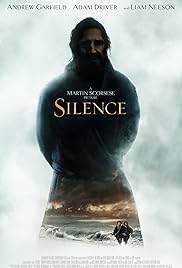
Silence Poster

Back in the early '80s, I bought Shusaku Endo's novel Sílence. Finally issued in paperback, and with me enrolled at a Jesuit university, I rushed to savor it. A harrowing novel (see my linked review), this angered at least on Amazon the likes of sensitive Catholics unable to accept that a priest under pressure after witnessing the torture and death of others who died for one's presence might succumb.

The end of that same decade, Martin Scorsese read it. It was recommended by New York's Episcopal bishop in the wake of the controversy over his adaptation of another controversial work, The Last Temptation of Christ. Marty vowed to make it a movie, if he could figure out how to capture its hold.

He did, and as the scholar of American Catholicism Paul Elie's The Passion of Martin Scorsese in The New York Times Magazine observes: the book and the film join well. For the subject "locates, in the missionary past, so many of the religious matters that vex us in the postsecular present — the claims to universal truths in diverse societies, the conflict between a profession of faith and the expression of it, and the seeming silence of God while believers are drawn into violence on his behalf." Elie locates in the filmmaker's oeuvre a pursuit of the "poisoned arrow of religious conflict" and poison indeed surfaces in the film. I saw it at a premiere in Westwood, a block from the bookstore where I found the novel decades ago. The excitement of seeing this in the Regency, a cavernous 1931 Art Deco palace filled with maybe a thousand people, was palpable, for the director would be there for a panel afterwards. But I was unsure if many there knew what a story they'd face.

Face, as the image of Christ, in the film as Scorsese explained taken from El Greco --for the original work's use of Piero della Francesca did not transfer to the big screen when tested-- confides a human trust in its viewer, that He would accompany its beholder through whatever moral perils lay ahead. The divinity of Jesus is of course in Christian orthodoxy inseparable from his humanity, but for the director, the eyes had it. They convey the distance and the direction proper to a bold Jesuit follower.

The film itself, 2:40, unfolded slowly. It was difficult for me to gain full immersion as a woman two seats down connected as she proclaimed to the producer checked her smartphone regularly, and a man behind me kept chuckling at dramatic moments perhaps taken by the nervous or shallow as comedy. There is a bit of levity, in the tragic Judas-figure of Kichijiro keeps popping up at tense moments begging for the protagonist Fr. Sebastian Rodrigues' confession, Yet that moved me, not to laughter, but to their poignant bond, which gains significance as the narrative turns to the priest's struggles.

That Japanese convert-traitor asks where is the place for a weak man in this world. A common plaint. Scorsese's vision raises up Rodrigues as an alter Christus in Passion Play form, entering twice cities on a donkey while being pelted with stones and abuse. I suppose this fits, on the other hand, any priest. Yet the acting skills and the power of the necessarily didactic script by Jay Cocks and Scorsese project Endo's investigation well. As a child he was baptized, and he questioned here and in The Samurai (set among Franciscans of the Mexican conquest) the ability of a foreign people to truly give in to an invader, or a promise of liberation for the poor within a peaceful and carefree paradise, when the basic tenets of this faith were garbled, as the "Son of God" comes rendered from their native Sun.

As Rodrigues replies, that land is poisoned. Nothing can grow there, the Japanese powers reason, as all rots in this island swamp. The tension between apostasy and martyrdom, fidelity and surrender tightens the energy. Early on, all is painterly fog in the cold and chilly islands where the renegade Christians have gone underground as relentless crackdowns have reduced the 300,000-strong community in the wake of St. Francis Xavier to a remnant, hunted down and all burnt or drowned.

Later, in Nagasaki, clarity returns, amidst the regimented architecture, ranks, and sumptuary distinctions. Rodrigues' predecessor, Ferrara, speaks eloquently for moral compromise, to spare pain. As their translator adds, no man should take away another's spirit. I watched this with engagement. I presume it may not have swayed all (my wife advised cutting twenty minutes and squirmed at the debates I found in jesuitical tutelage as fascinating and stimulating). But as Scorsese mentioned in the after-film panel (joined by production designer Dante Ferretti, actors Liam Neeson, Adam Driver, Andrew Garfield, Issei Ogata, editor Thelma Schoonmaker, and producer Irwin Winkler--and a fawning host who called the director "Maestro"), he hoped the film would bring "peace of mind."

I second his ambition. Elie's skillful article locates the film within the inculturation aims of imperialism and religious missions. (But he overlooks as do many that the novel was translated by a Belfast Jesuit, Fr. William Johnston, who taught at Sophia University run by the Society in Tokyo, and who himself embraced Zen.) Do we insist the newcomers to a practice go over to the practices of the faith? Or as the Jesuits did in China, do we accommodate the faith to indigenous folkways and traditions? St. Boniface, when he preached to the Frisians in the 8th century, was told he should not destroy the temples and groves, but make them into centers of worship and pilgrimage for a new generation. Clever, as this supplants rather than terminates the sacred connection. But the fervent and fundamentalists may refuse compromise, and thus this challenging film and novel remain relevant.

As Pope Francis, the first Jesuit installed in the Vatican as such, told Scorsese on the film's first showing in Rome, may the film bear much fruit. That's a message all of us can applaud, this season.

Tuesday, December 6, 2016

Ritual as the habitual


To follow up my last post, I opened up over breakfast the NYT "T" Sunday supplement. Glossy testament to consumer lure, this pulp alternates homage to jewel-bedecked or heel-fitted beauties with a few articles, mostly about designers and the fourth homes they inhabit in venerable or exotic locations. Still, sometimes in rapidly skimming the pages, I find a bit of  lit-crit or cultural comment.

Emily Witt contributes a "Sign of the Times" column, "The Year of Magical Thinking." You can figure how many ads this has in that my print copy has this at page 63 as the first "journalism" inside. She begins by noting the palo santo fragrance wafting all over the Brooklyn bars and gallery openings. She credits its "sudden popularity" to a "yearning for ritual and ceremony in everyday life."

While my workplace lacks rose quartz crystals in any colleague's cubicle that Witt offers as examples of "believing in magic," I have for a few years now pinned up on one wall a few Tibetan prayer flags to brighten my grey space. They lack any wind to carry their petitions skyward, unless I turn on my little fan in the summer when the a/c fails. I have no idea how many whom I know have an I Ching app on an iPhone, but I know of a few cyber-friends who trust their star signs and trust in charts.

Witt claims: "It is no longer taboo to toss aside skepticism and trust the unverifiable." Perhaps in NYC, but certainly my Catholic friends and family never stopped this, at least on the surface and for many, within their souls. But as Witt explains, the "lack of religious faith so prevalent in our age is an anomaly in history." She continues: "Magic, which usually does not demand faith in a particular deity, or the sometimes exclusionary imperatives of organized religion, allows people to access a sense of the miraculous on the level of the quotidian. The desire to submit to the cosmos, to believe in phenomenal occurrences and to blame a late subway on the trajectories of stars across the firmament comes from a deep-rooted, perhaps inherent human interest in surrendering to destiny." Well-stated.

About "appeals to reason," Witt rationalizes that the holidays can put this perpetual debate in perspective. Without "losing common sense," we indulge in the hanging of mistletoe, the wrapping of gifts, the tree of green cut or the hanukkiah of wicks lit, the wreath of Advent and the solstice candle. Even more party-going signals our draw towards celebration in dark nights. "All the better to partake in these rituals informed by a deep faith in the existence of miracles." And for those of us within which we witness this battle between brain and spirit, soul and mind, we too capitulate to tradition.

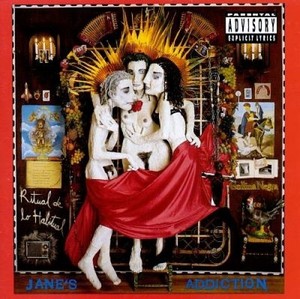
P.S. An image search for "ritual" emanates into, first, lots of shadowy pentacles, circles, and candles. Not a big fan of this band, but I figured this connected with the roots around me, born in East L.A.

Sunday, December 4, 2016

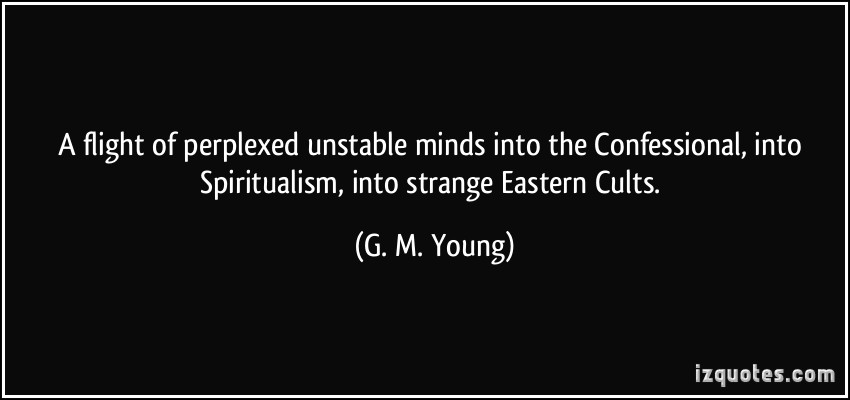
"A flight of perplexed unstable minds"

Perplexity Quotes
My wife and I watched a 20/20 show last night about a Christian couple in Tennessee. They had 18 children. They wanted more. The wife was 44 and had been pregnant for every one of the past 22 years. The husband ran a tree-trimming business and claimed he made ends barely meet. They insisted they did not get any government aid outside of the tax deductions. They shopped at Goodwill, got loans off their oldest son who had his own business, same as his father, and they welcomed the Lord's will if He deemed fit to give them more children. The interviewer asked why they judged birth control a sin, but not fertility treatments. I did not catch their rationale, however.

Not my normal fare, but it got us talking. I reasoned that while I was wired for religion, I understood its good and bad qualities much more as I aged. I figured some of us are predisposed by genetics as well as culture to seek out spiritual paths, even if they were by nature irrational or futile before facts.

As she got older, my wife's felt disenchanted with any organized religion. She's tired of the bickering, money grubbing and score-settling that makes groups deigning to seek the will of the Almighty look so petty as they divide over doctrinal minutiae and territorial land grabs and denominational dispute. I share her discontent, as a few years ago, I found I could no longer tolerate the services we attended. The God-fearing and God-submitting pleas, no matter how explained by ancient precedent, appeared to our mindset relics of an Iron Age sky-god's petulant demands upon beleaguered desert herdsmen.

Sure, none of this is new since if not Spinoza than Voltaire. But the Age of Reason takes a long time coming to many corners of the world and into many souls and/or brains inquiring. Only recently have we reached a third of the American population daring to admit that they are not religious, even if some among these "nones" might lean towards spiritual exploration personally. I wonder how our ancestors felt free to even entertain such thoughts freed from sin and guilt? My wife thinks that our own generation might be (at least in our family cases) the first, and I'd certainly concur as to my side.

It makes me notice, too, a detour that I sense a few around me taking. If the evolutionary process has driven many of us towards monotheism under political and social pressures the past few millennia, the lingering traces of magic, astrology, rune casting, divination, sorcery, witchcraft, and sortilege may appeal to some bewildered by the current rush to destruction. If we are passing now the tipping point of global warming, and if capitalism is hell bent on turning what remains of our planet into a wasteland, we lack political solutions; we face surveillance invading our minds as it has our actions.

Certainly, the rational scoff at this retreat to discredited traditions. If those teachings in scriptures are discarded as remnants of pre-modern superstition, all the more those whom the jealous God rejected before His reign appear suspect. Yet, there may be bits of common sense in how a rejection of the Lord may reveal a less assertive, more modest embrace of the scraps scrabbled from the flakes of ink, the dust from the palimpsest, the air infused with the enthusiasms of the older yearnings in our DNA.

My skeptical outlook dominates. The British Humanist Society's quiz tagged me at 93%. I've been academically trained to sift evidence, and to study the urges in literary culture of the seeker soberly. So, I am predisposed towards objectivity. But underneath, deeper maybe than that altar boy I once was, there's a sympathy for the home team, the old gang, those who looked to Ogham or rivers and trees for direction. I am very far from them, but the centuries intervening still sustain my own quest.

I reckon I will leave this life remembering a phrase from one with whom I have no other inkling in common. Where my consciousness will go I have no idea. I am no wiser than ten billion humans who have lived and then passed on before me. My ashes will or will not be scattered where I love, under redwoods. I will return as all does to dust. Aleister Crowley's last words were "I am perplexed." As one whose first "major band" was a teenage admiration for Led Zeppelin, I can relate to that reaction.

[P.S. Long ago I enjoyed G.M. Young's A Portrait of an Age (1936). Above I use a great quote from it. This historian of the era preceding him would have been about 25 when Queen Victoria died.]

Friday, December 2, 2016

Clann-ish


A friend of Irish and Greek descent living in Germany told me today how "we need to rally together and be the keepers of all that knowledge, skills and wisdom that is needed." In a precarious economy, on a weakening planet, and within political change and cultural clashes, I look within for support. Parties fail us, "leaders" betray, and ideologies writhe. Consider the late Fidel. As his rule over Cuba consolidated as opponents were eliminated and dissent crushed, his citizens learned that saying his surname was judged disloyal. So, his first name was used, or instead, a sly gesture of stroking a chin.

So, the outpouring of grief among my leftist friends leaves me unmoved. Hearing stories of flight from that island by classmates and students, the recognition of the health and literacy reforms the Communists brought are tempered with the cruelty exercised against his foes, and innocent people such as gays, a factor little covered in the media now, as are the 500 executed by firing squad soon after the rebels became the rulers. Of course, justifications for these deeds, the broken eggs for the omelette recipe, emit as pro forma replies by the convinced and committed progressives. Fidelity.

This faithfulness joined Cubans despite their privations and losses of freedom against their foes, conjured or real. The strength of the tribe for and against what Yuval Noah Harari in Sapiens calls "imagined fictions" enabled our ancestors to break out of their territorial and mental bonds. Then, by religion, trade, and money, ancient peoples formed nations and expanded their hold over others, too.

Imperialism has a bad name, sure. But Harari, balancing the accounts of humanity's gains and losses well in his book, warns us against too arrogant a reaction to our past. He shows the benefits of reason, while warning in his new Homo Deus against the rush to trans-human and algorithmic domination. The cost, he argues, of transferring our humanity into information systems rub by corporations caring only about data, and not consciousness, threatens to count out the irrational, the intangible, our ideas.

Reflecting on this, I opened an aging NYT Sunday Review. While the recent coverage of Facebook decries its "fake news" and its implicit blame that the election was lost for Her by His minions in Macedonia planting false sites and misleading memes, the reaction from way back last May by Frank Bruni betrays a deeper concern. In "How Facebook Warps Our Worlds" he begins: "But unseen puppet masters on Mark Zuckerberg’s payroll aren’t to blame. We’re the real culprits. When it comes to elevating one perspective above all others and herding people into culturally and ideologically inflexible tribes, nothing that Facebook does to us comes close to what we do to ourselves." While not a new phenomenon, this technology tracks us and reinforces our own prejudices and priorities.

After delineating the echo chamber and referring to how we distrust institutions and so retreat to our communities of the like-minded for security, risking their scorn and aligning ourselves with their trust, Bruni decries this self-perpetuating safe space. Therefore, he concludes: "It’s not about some sorcerer’s algorithm. It’s about a tribalism that has existed for as long as humankind has and is now rooted in the fertile soil of the Internet, which is coaxing it toward a full and insidious flower."

But the blooms from FB can brighten our outlook. Today I also found in my feed from five years ago this Salon essay from a Rutgers sociologist. Eviatar Zerubavel asks "Why Do We Care About Our Ancestors?" Like many pieces on Salon, it's lifted from a book so it does not read that well in part.

Still, he sums up useful perspectives that align with my own investigation of the yearning for the tribal in alternative religions claiming to remake or remodel native European spiritual traditions.

He wraps up his argument: "long before we even knew about organic evolution (or about genetics, for that matter), we were already envisioning our genealogical ties to our ancestors as well as relatives in terms of blood, thereby making them seem more natural. As a result, we also tend to regard the essentially genealogical communities that are based on them (families, ethnic groups) as natural, organically delineated communities." He notes how this "blood tie" is rooted in evolution itself.

He concludes: "Yet nature is only one component of our genealogical landscape. Culture, too, plays a critical role in the way we theorize as well as measure genealogical relatedness. Not only is the unmistakably social logic of reckoning such relatedness quite distinct from the biological reality it supposedly reflects, it oft en overrides it, as when certain ancestors obviously count more than others in the way we determine kinship and ethnicity. Relatedness, therefore, is not a biological given but a social construct. Not only are genealogies more than mere reflections of nature, they are also more than mere records of history. Rather than simply passively documenting who our ancestors were, they are the narratives we construct to actually make them our ancestors." This ties to the yearning for us to find a famous forebear (for me, all the way back to Conchobar mac Nessa in the Táin) at the expense of the less-heralded. But for me, that ends in 1797, as no Irish records survive before then.

This search for origins I find comforting in this chaotic world reducing us to data-mined digital data. I realize it's a romanticized quest, but not all of us find satisfaction in being reduced to Caucasian-this or white-that. Ever since I used to half-jest in school "I'm not an Anglo, I'm Irish!" I suppose I stood for this impulse. In Irish, there's more than one word for family. Tomás De Bhaldraithe (whose name shows how the Normans with Germanic nomenclature turned Gaelic in their own monikers after they invaded the island and supposedly turned more Irish than...) in his English-Irish dictionary defines:

family, s. 1 (Members of household) Líon m tí, teaghlach m. Family life, saol (an)teaghlaigh. 2 (Parents, children, relations) Muintir f. 3 (Children) Clann f. She is in the family way, tá sí ag iompar clainne. How is your family? cén chaoi bhfuil do chúram? What family have they? cé mhéad duine clainne atá orthu? A family man, fear tí agus urláir. 4 (Descendants) Sliocht m (g. sleachta), síol m. Family tree, craobha fpl ginealaigh. 5 (Race) Cine m, treibh f. 6 Aicme f (rudaí); Biol: fine f. 7 Mth: Number families, uimhirfhinte fpl. Family of sets, cnuasach m tacar.

So, related by blood and members of household appear to overlap, if distinguishable. Children occupy a third category, moving the clan forward in time. Descendants down the line have their own niche, and that of the race, a term we don't carry over as neatly into English, another. The term mórtas cine or pride-in-heritage expresses this well, a reminder of the positive associations in Irish kinfolk.